Monday, May 11, 2009

Review: The Stettheimer Dollhouse


The Stettheimer Dollhouse is a little gem, appropriate enough for a book about miniature art.  The dollhouse itself – designed by, built for, and painstakingly decorated by Carrie Stettheimer from 1916 to 1935 – is itself a work of art.  It is also, to its lasting fame, filled with actual paintings and sculptures created for Stettheimer by some of the leading artists of her day.

The dollhouse is in the permanent collection of the Museum of the City of New York.  The book is a small catalog of the dollhouse exhibit, filled mostly with pictures, with written descriptions of each room of the dollhouse.  There is also a preface by the museum curator, a brief history of the dollhouse by Sheila Clark, and a reprint of the original remarks written by Stettheimer’s sister Ettie when she donated the dollhouse to the museum after Carrie’s death.

What the book was not intended to provide but noticeably lacks is an in-depth biography of Stettheimer.  She and two sisters never married, the three living with their mother in Europe and New York.  Florine was an artist who only came to modest fame after her death.  Her enchanting portrait of Carrie is reproduced in the book and a black and white miniature version hangs framed in the dollhouse dining room.  Ettie was an author.  Unfortunately for her own creative endeavors, the role of house manager and hostess fell to Carrie, who devoted her energies to running the house for the four women and hosting “one of the most notable literary and artistic salons of early twentieth-century New York society."  Carrie's dollhouse was her only artistic outlet.  These sketchy details create a melancholy picture.

Hopefully someone will pick up where this book leaves off and write a definitive biography of the Stettheimer sisters. In the meantime, The Stettheimer Dollhouse is a charming introduction to this distinctive family.

OTHER REVIEWS

Ready When You Are, C.B.
Kittling: Books

Sunday, May 10, 2009

Happy Mothers' Day!


Author of the Day: Kingsley Amis


Lucky Jim is a favorite of mine, ever since I read it in college. Kingsley Amis's description of a hangover being like a huge raw egg rolling around inside Jim's skull has stayed vivid with me for years.

The Old Devils, which won the Booker Prize, was a great novel about friendship, fame, identity, and booze. The Green Man was entertaining, although veered alarmingly into science fiction there at the end. The Alteration, an alternate history imagining England if there had been no Protestant Reformation, was a quick read that gave a lot to ponder.

Amis wrote novels, short stories, poetry, and non-fiction. Those I have read are in red. Those currently on my TBR shelf are in blue. Many are out of print.

1947 Bright November (poems)

1953 A Frame of Mind (poems)

1954 Fantasy Portraits (poems)

1954 Lucky Jim

1955 That Uncertain Feeling

1956 A Case of Samples: Poems 1946-1956

1957 Socialism and the Intellectuals (a Fabian Society pamphlet)

1958 I Like it Here

1960 Take A Girl Like You

1960 New Maps of Hell: A Survey of Science Fiction

1960 Hemingway in Space (short story, Punch Dec. 1960)

1962 My Enemy's Enemy (short stories)

1962 The Evans County

1963 One Fat Englishman (reviewed here)

1965 The Egyptologists (with Robert Conquest)

1965 The James Bond Dossier

1965 The Book of Bond, or Every Man His Own 007 (as Lt. Col. William "Bill" Tanner)

1966 The Anti-Death League (Burgess favorite)

1968 Colonel Sun: A James Bond Adventure (as Robert Markham)

1968 I Want It Now

1968 A Look Round the Estate: Poems, 1957-1967

1969 The Green Man

1970 What Became of Jane Austen? and Other Questions

1971 Girl, 20

1972 On Drink (reviewed here)

1973 The Riverside Villas Murders

1974 Ending Up

1974 Rudyard Kipling and his World

1975 The Crime of the Century

1976 The Alteration

1978 Jake's Thing

1979 Collected Poems 1944-78

1980 Russian Hide-and-Seek

1980 Dear Illusion: Collected Short Stories

1983 Every Day Drinking (reviewed here)

1984 How's Your Glass? (reviewed here)

1984 Stanley and the Women

1986 The Old Devils

1988 Difficulties With Girls

1990 The Folks That Live on the Hill

1990 The Amis Collection

1991 Memoirs

1991 Mr. Barrett's Secret and Other Stories

1991 We Are All Guilty

1992 The Russian Girl

1994 You Can't Do Both

1995 The Biographer's Moustache

1997 The King's English: A Guide to Modern Usage

2001 The Letters of Kingsley Amis, Edited by Zachary Leader

NOTE
Last updated on February 24, 2018.

Saturday, May 9, 2009

Opening Sentence of the Day: The Alteration

"Hubert Anvil's voice rose above the sound of the choir and full orchestra, reaching the vertex of the loftiest dome in the Old World and the western doors of the longest nave in Christendom." -- The Alteration by Kingsley Amis In this alternate history novel, there was no Protestant Reformation and the Catholic church is the only (Christian) game in town. Church higher-ups have their eye on musical marvel, ten-year-old Hubert Anvil, as the next great castrato. Ewwww . . . where is this going?

Friday, May 8, 2009

Book Notes: Skeletons on the Zahara

It is a running joke in our house that my husband's favorite books all contain the line, "And then, we had to eat the sled dogs." Yes, he mostly reads history books and historical biographies, but his favorite favorite books involve arctic adventure, shipwrecks, exploration, cannibalism, lost treasure, and the like. So when Hubby recommends a book, I give him a long hard stare before I take him up on it. I even cross examine him: "Is it all about battles? Does anyone freeze to death? Does it involve cannibalism?" When he answered "no" to the above questions, I agreed to read Skeletons on the Zahara, his recent favorite and one he has been recommending to everyone he talks to. It sounded fascinating -- in 1815, shipwrecked New England sailors are captured in the Sahara desert and forced into slavery. An interesting slice of history from the pirate age. Now, halfway through, I am struggling to finish and I have a new question to ask before I read any book Hubby suggests: "Does anyone in the book drink urine?" I am too German to stop reading a book once I start, but this one is testing my resolve. It was bad enough to read about slaughtering a pig while adrift in a lifeboat, eating it raw and drinking its blood. But drinking urine -- human and camel, so far -- is a major theme of this book. Including a Moby Dick-like digression into the science and anecdotal history of shipwreck survivors drinking urine. Hubby owes me, big time.

Thursday, May 7, 2009

Favorite Authors

Over in the right-hand column, you will see that I added a new feature -- a list of my favorite authors. The idea is to list all the authors whose works I plan to read in their entirety, eventually. Each name links to a post with either a complete bibliography, a list of novels, or at least a particular series that I am working on. So far, the list includes: Cara Black James Lee Burke Lee Child Penelope Fitzgerald Richard Ford Jim Harrison John Lescroart Martin Cruz Smith Julia Spencer-Fleming William Styron Anne Tyler John Updike Simon Winchester Right now, the list is heavy on mystery writers because if I like a particular book in a series, I want to read the entire series. But there are many authors I have to add, including Anthony Powell, Iris Murdoch, Vladimir Nabokov, P.G. Wodehouse, Philip Roth. It it going to be a long list. Like with my award winners and Must Read lists, if anyone is working on reading the entire bibliography of a particular author on my list, please leave a comment on that author's post with a link to your progress report, and I will add the link to my post.

Wednesday, May 6, 2009

Opening Sentence of the Day: Davita's Harp

"My mother came from a small town in Poland, my father from a small town in Maine." -- Davita's Harp by Chaim Potok. I have never read any of Potok's books, but I gather that he is the most popular author I had never heard of. Every time I mention that I am reading Davita's Harp for Book Club, people tell me how much they love his books. But at least one Book Club member was disappointed by the opener -- let down that it did not include any of Art Scatter's favorite midgets or elephants.

Tuesday, May 5, 2009

List: The Edgar Award for Best Novel


Every year, the Mystery Writers of America award the "Edgar" in nine categories of mystery and crime writing, plus a handful of special awards. I'm working my way through the list of winners of the Best Novel award.

Named in honor of Edgar Allen Poe, the the first Edgar award was given in 1946 to Watchful at Night by Julius Fast for Best First Novel by an American Author. The "Best Novel" award for the MRA choice of the best mystery novel of the year has been around since 1954.

Although I enjoy a good mystery, there are few on this list that I have read. Why is this? There may be many clues, but I suspect foul play.

As always, if anyone else is working on this list, please leave a comment with a link to your corresponding blog post and I will add it to this.

Those I have read are in red. Those on my TBR shelf are in blue.

2018 Bluebird, Bluebird by Attica Locke

2017 Before the Fall by Noah Hawley

2016 Let Me Die in His Footsteps by Lori Roy

2015 Mr. Mercedes by Stephen King

2014 Ordinary Grace by William Kent Krueger

2013 Live by Night by Dennis Lehane

2012 Gone by Mo Hayder

2011 The Lock Artist by Steve Hamilton

2010 The Last Child by John Hart

2009 Blue Heaven by C. J. Box

2008 Down River by John Hart

2007 The Janissary Tree by Jason Goodwin

2006 Citizen Vince by Jess Walter (reviewed here)

2005 California Girl by T. Jefferson Parker

2004 Resurrection Men by Ian Rankin

2003 Winter and Night by S.J. Rozan

2002 Silent Joe by T. Jefferson Parker

2001 The Bottoms by Joe R. Lansdale

2000 Bones by Jan Burke

1999 Mr. White's Confession by Robert Clark

1998 Cimarron Rose by James Lee Burke

1997 The Chatham School Affair by Thomas H. Cook (reviewed here)

1996 Come to Grief by Dick Francis

1995 The Red Scream by Mary Willis Walker

1994 The Sculptress by Minette Walters

1993 Bootlegger's Daughter by Margaret Maron

1992 A Dance at the Slaughterhouse by Lawrence Block

1991 New Orleans Mourning by Julie Smith

1990 Black Cherry Blues by James Lee Burke

1989 A Cold Red Sunrise by Stuart M. Kaminsky

1988 Old Bones by Aaron Elkins

1987 A Dark-Adapted Eye by Barbara Vine

1986 The Suspect by L.R. Wright

1985 Briar Patch by Ross Thomas

1984 La Brava by Elmore Leonard

1983 Billingsgate Shoal by Rick Boyer

1982 Peregrine by William Bayer

1981 Whip Hand by Dick Francis

1980 The Rheingold Route by Arthur Maling

1979 The Eye of the Needle by Ken Follett

1978 Catch Me: Kill Me by William H. Hallahan

1977 Promised Land by Robert B. Parker

1976 Hopscotch by Brian Garfield

1975 Peter's Pence by Jon Cleary

1974 Dance Hall of the Dead by Tony Hillerman

1973 The Lingala Code by Warren Kiefer

1972 The Day of the Jackal by Frederick Forsyth

1971 The Laughing Policeman by Maj Sjowall, Per Wahloo

1970 Forfeit by Dick Francis

1969 A Case of Need by Micheal Crichton (as Jeffery Hudson)

1968 God Save the Mark by Donald E. Westlake

1967 The King of the Rainy Country by Nicolas Freeling

1966 The Quiller Memorandum by Adam Hall

1965 The Spy Who Came in from the Cold by John le Carre

1964 The Light of Day by Eric Ambler

1963 Death and the Joyful Woman by Ellis Peters

1962 Gideon's Fire by J.J. Marric

1961 The Progress of a Crime by Julian Symons

1960 The Hours Before Dawn by Celia Fremlin

1959 The Eighth Circle by Stanley Ellin

1958 Room to Swing by Ed Lacy

1957 A Dram of Poison by Charlotte Armstrong

1956 Beast in View by Margaret Millar

1955 The Long Goodbye by Raymond Chandler

1954 Beat Not the Bones by Charlotte Jay

NOTE

List updated on December 31, 2018.

OTHERS READING THESE BOOKS

If you would like to be listed here, please leave a comment with your links to any progress reports or reviews and I will add them.

Re-Run of the Day: The Last Prince of the Mexican Empire

In honor of Cinco de Mayo and, appropriately enough, the official launching of C. M. Mayo's historical novel The Last Prince of the Mexican Empire, I am re-running my review, first posted back in April: C. M. Mayo’s The Last Prince of the Mexican Empire is the historically accurate, fictionalized account of Emperor Maximilian’s short reign over Mexico in the 1860s. Mayo’s hook is Maximilian’s “adoption” of the half-American grandson of the first Emperor of Mexico, General Agustín de Iturbide. The childless Maximilian makes the toddler his “heir apparent” to help shore up Mexican support for his French-backed regime, bribing the parents with pensions and promises of aristocratic lives in Paris – a bargain the Inturbides soon regret. But the book is more than simply the story of the Iturbide family. It encompasses Maximilian’s entire, brief reign, from his forced relinquishment of family rights as a Hapsburg and Archduke of Austria when he accepted the Mexican crown from Louis Napoleon, to his wife Charlotte’s crack up, and his ultimate defeat at the hands of Mexican nationalists. Mayo spent years researching the story of Maximilian and the Inturbides, focusing on obscure primary source materials stashed away in historical archives. The underlying story is fascinating. It is one thing to have a general understanding that the French were meddling around in Mexico the same time America was fighting its Civil War and the Prussians were vying with France for power in Europe. It is another thing to have all those moving parts come together in a coherent, entertaining novel that weaves the personal in with the political. As Mayo explains in the Epilogue, she chose to write the story as fiction because:
I wanted to tell it true, which means, of course, getting the facts as straight as possible but also, and this was the most interesting to me, telling an emotional truth. Why did Alice, Angel, Pepa, Maximilian, and Charlotte do what they did? Who encouraged and supported them, and who criticized, intimidated, and frustrated them – and for what motives? The answer is not only in historical and political analysis, but in their hearts, and the hearts of others can only be experienced with the imagination, that is, through fiction.
Mayo tells the story from the perspective of several characters, from Maximilian and Charlotte down to illiterate servants and even the toddler Agustín himself. This is an effective technique for layering details and pulling the most out of every aspect of the tale. But the continuous switching around made it difficult to become completely absorbed in the story. Despite this and a few other minor flaws – the diplomatic maneuvering got a little repetitive and the ending was rushed – The Last Prince deserves attention. It is an ambitious book for tackling such a complicated little sliver of history, and Mayo brings her historic characters to life with a compelling story for a modern audience.

Monday, May 4, 2009

Review: Red Square


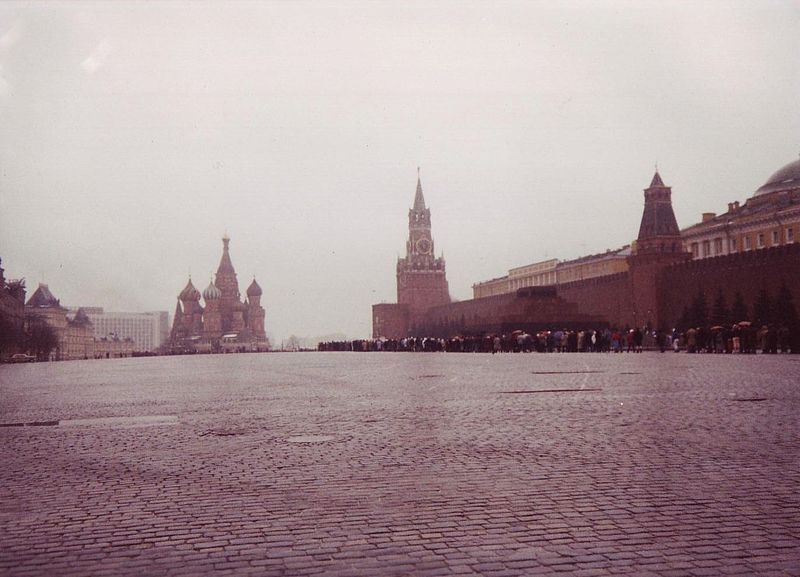
Red Square is the third book in Martin Cruz Smith’s Arkady Renko series, following Renko’s introduction in Gorky Park and Siberian exile in Polar Star.  In Red Square, Renko is back in Moscow, reinstated as an investigator with the militia. His efforts to discover the killer of a black market financier lead him to the world of high-stakes art smuggling, the Munich studios of Radio Liberty, and the arms of his lost love Irina.

Set at the brink of the 1991 “August Coup” that precipitated the final breakup of the Soviet Union, Red Square is as moody and grim as all the Renko novels. Mafioso capitalists – still more robber than baron – vie for control of the fledgling new economy while people stand in line for beets and Party apparatchiks cling to the shreds of power. Smith captures the inherent dichotomies with snapshots such as this scene at the end of Renko’s interview of a suspect at the man’s Western-style sports bar:
Borya . . . dropped his voice. . . . “[D]o you think I’d endanger all this, everything I’ve achieved, to take some sort of primitive revenge? That’s the old mentality. We have to catch up with the rest of the world or we’re going to be left behind. We’ll all be in empty buildings and starving to death. We have to change. Do you have a card?” he asked suddenly.
“Party card?”
“We collect business cards and have a drawing once a month for a bottle of Chivas Regal.” Borya controlled a smile, barely.
It is detailed touches like this – as well as emotionally evocative lines such as “despair saturated the air” and “the threadbare overcoats of Soviet crime” – that create the authentic atmosphere in Smith’s novels and raise them above the typical thriller.

OTHER REVIEWS

If you would like your review of this or any other Martin Cruz Smith book listed here, please leave a comment with a link and I will add it.

Sunday, May 3, 2009

Opening Sentence of the Day: The Floating Opera

"To someone like myself, whose literary activities have been confined since 1920 mainly to such pedestrian genres as legal briefs (in connection with my position as partner in the firm of Andrews, Bishop, & Andrews) and Inquiry-writing (which I'll explain presently), the hardest thing about the task at hand -- vis., the explanation of a day in 1937 when I changed my mind -- is getting into it." -- The Floating Opera by John Barth. My goodness, what an overpacked suitcase of an opener! This looks like it is going to be quite a romp. Published in 1956, The Floating Opera was Barth's first novel and a finalist for the National Book Award. Barth is best known for The Sot Weed Factor and Giles Goat-Boy, both on my TBR shelf. But I am happy to start with this one as it is far shorter than either of the others and looks like it may be an accessible introduction to what is, for me, a new author. According to the back cover, The Floating Opera is "among many curious things":

the story of the day when Todd Andrews, hero and narrator, confirmed bachelor, convinced nihilist, practicing lawyer, rake, saint, cynic and potential suicide, decides not to commit suicide.

One reason I picked this up at Powell's the other day is because the shape of the book is super cool. It looks like the cover pictured above, but the corners on the right side are rounded. I've never seen a paperback like it.

Saturday, May 2, 2009

Blog Pays Off!

Well, I am pleased as punch today because I have $50 in book store gift certificates coming my way from Reading Local. In addition to keeping the Rose City informed of book-related events, up on local authors, and generally entertained, Reading Local hosts a monthly contest aimed at keeping the blog lively. Points are based on the number of comments or links to community events posted. The person with the most points each month wins a $25 gift certificate to Broadway Books, a $25 gift certificate to the local book store of the winner's choice, and, starting in May, a $25 gift certificate to Title Wave, the used bookstore run by the Friends of the Multnomah County Library. The contest is open to those within 75 miles of Portland -- so local readers, get over to Reading Local and leave your comments! I chose Ampersand for my second award. I can't wait to go book shopping!

Friday, May 1, 2009

Hooray! Hooray! The Challenge Starts Today!

It is May Day! And even the usually gray skies here in the City of Roses have cleared because it is time to start the Sunshine Smackdown - Battle of the Prizes challenge. Read three books between now and Labor Day, September 7. One book that won the Pulitzer Prize, one book that won the National Book Award, and one book that won both. Details and links to the lists are here. To sign up, please leave a comment on the details page with a link to your blog post or a list of your books. Thanks to everyone who has signed up so far! Please leave a comment here on on the main page with progress reports and reviews. I will add links and post updates as the challenge progresses. Read on!

Thursday, April 30, 2009

Book Review: The Broker

After a nearly ten-year long break from Grisham, I decided to try one. But The Broker was not nearly as exciting as The Firm or Pelican Brief -- my two favorites and still my yardsticks for measuring legal thrillers. This one just strolls along, more travelogue of Bologna than thriller. It reads like Grisham wanted to spend a year in Italy; not that he had a particularly clever idea for a novel. Nothing very exciting happens. The hero half hides, half explores Bologna; spending more time learning Italian than dodging the various international assassins hired to kill him. Then the hero solves his problems. Well, he solves all but one very major problem. And then the book, inexplicably, just ends. Highly unsatisfying.

Wednesday, April 29, 2009

Favorite Author: Martin Cruz Smith


Martin Cruz Smith has written 30 novels, most of them mysteries, many written under pen names.

He is best known for his series featuring Muscovite detective, Arkady Renko. The series began with the blockbuster Gorky Park, made into an excellent movie staring William Hurt and Lee Marvin. The second book takes place on board an enormous floating factory of a Soviet fishing vessel in the Bering Sea. In the third, Renko is back in Russia as the Soviet Union crumbles. Then he is off to Cuba, followed by post-disaster Chernobyl, before returning to Putin's Russia. They are all exciting!

The series, in publication order:

Gorky Park (1981)

Polar Star (1989)

Red Square (1992) (reviewed here)

Havana Bay (1999)

Wolves Eat Dogs (2004)

Stalin's Ghost (2007)

Three Stations (2011)

Tatiana (2013)

The books are moody, grim, and action-packed. Smith absolutely nails the gritty disappointments of Soviet life. I have read six and have the last two to go. 

NOTES

This list was last updated on March 2, 2019.

Red Square was the "red" book for the 2009 Colorful Reading Challenge.

Tuesday, April 28, 2009

Opening Sentence of the Day: The Stettheimer Dollhouse

"Among the many wonderful objects in the collection of the Museum of the City of New York, one of the most fascinating is the Stettheimer Dollhouse, made between 1916 and 1935 by Carrie Walter Stettheimer." -- The Stettheimer Dollhouse, Sheila W. Clark, Ed. I love it.

Monday, April 27, 2009

Review of the Day: Basil's Dream


Basil’s Dream by Christine Hale has all the makings of a National Book Award winner. That is not to say that it is the most lively or approachable book around, but it has the necessary ingredients: an interesting hook, a complex plot, multi-dimensional characters in complicated relationships, big ideas with some moral ambiguity, and literary merit.

The hook is setting the story in Bermuda in the months shortly after 9/11, when the lack of American tourists and global insecurity wreaked havoc on the island’s economy. Racial tensions run high after the unsolved murders of two black men and an attack on a prominent member of the island’s British community. Labor strikes, arson, graft, and corruption are all painted into the backdrop of Hale’s story.

The complex plot centers on the Langston family – American ex-patriots taking advantage of the island’s lenient corporate policies. As cranky Darrell Langston struggles to get a new insurance company up and running, Lucy struggles to create a home for the family and salvage their marriage, and their 12-year-old son Peyton just struggles. Meanwhile, Marcus Passjohn, the liberal Opposition Leader and favorite son of the island’s black population, has lost his grip on the political situation, as well on his half-white son. Close to being framed for the unsolved murders, miserable over his inability to accomplish anything politically, and fed up with his trouble-making child, Marcus finds solace in his rapidly accelerating relationship with Lucy.

While not as thorny as the affair between Marcus and Lucy, none of the relationships among the characters are simple, as Hale weaves in island history, cultural variances, and racial identity. The characters are fully developed, and no one is all good or all bad. Even the hard-charging, self-centered Darrell is more than the stereotypical corporate husband who is such an ass that he deserves to be cheated on. Hale shows Darrell some sympathy, just as she does not shy away from the damage caused by Marcus and Lucy’s affair.

Hale tackles big topics like lingering racism, post-colonial politics, corporate globetrotting, child rearing, and adultery. Sometimes her ideas get a little muddled in nuance, the specifics lost in the overall atmosphere, but give her credit for aiming beyond simply an exciting plot. Lucy sums up the sort of ideas that both give the story depth and leave final conclusions vague:
We all tell ourselves stories about our lives . . . and the telling, so we think, makes them true. Our dreams are another story, and we call them lies. But dreams happen and life happens, both true stories while we’re inside them. More than one truth at the same time is paradox, and paradox, inhabited, transforms us. Always at all times there are as many truths as there are people living lives, as many dreams as dreamers.
Hale knows how to turn a phrase. But her book demonstrates more literary merit than merely elegant phrasing. She competently uses all the tools of a good writer – her characters speak with individualized voices, the dialog is realistic, not wooden, transitions are smooth, the overall pacing is appropriate, and the loose ends get tied. These details can be hurdles in a first novel, but Hale takes them effortlessly. It is the quality of workmanship as well as the complexity of the story that set Basil’s Dream apart. This is a first novel that deserves recognition.  

OTHER REVIEWS

Internet Review of Books

(If you would like your review to be linked here, please leave a comment with your link and I will add it.)

Sunday, April 26, 2009

Powell's Indiespensable Program

Thanks go to Reading Local for introducing me to Powell's "Indiespensable" program. Every six weeks, participants receive a package from Powell's containing a signed first edition of what Powell's considers to be a "best new book" -- usually from an independent publisher. Also included are "exciting surprises: bonus DVDs or CDs, prepublication copies of books we're looking forward to, mugs, posters, chocolate . . ." How wonderful! All for $39.95, which includes shipping in the US. I signed up for the next three shipments, but I hope to continue. I have been hoping Powell's would start some kind of program like this ever since I moved back to Portland from San Francisco two years ago and gave up my membership in Book Passage's First Editions Club. I'm already behind, since it looks like Powell's started this more than a year ago -- I wasn't paying enough attention. Thank goodness Reading Local is here to fill me in!

Quote Quiz

"I would hate to see legalized gambling in [our state], nor do I favor a lottery. We ought to finance the state by the strength of our people and not by their weaknesses." Who said this? This quote really struck me because my state, Oregon, depends so much on the lottery and video poker for revenue, at the same time we have double-digit unemployment and a struggling economy. Free choice and all that, I know. No one forces anyone to buy a lottery ticket or play video poker. But in hard times, it seems particularly insidious for the state to sponsor the tantalizing idea of easy riches in order to fill the public coffers. Maybe I should have called this post Soapbox Sunday.

Friday, April 24, 2009

Opening Sentence of the Day: Red Square

"In Moscow, the summer night looks like fire and smoke." -- Red Square by Martin Cruz Smith This is the "red" book on my Colorful Reading Challenge list. Before May 1, when I dive into the three books I'm reading for my own Battle of the Prizes challenge, I want to make a little headway on my Colorful list. Also, I am looking forward to an entertaining mystery after finishing the excellent but dense Basil's Dream. Hey . . . if Rebecca at Lost in Books counted wall paint colors, that one would count as a Colorful book too!

Thursday, April 23, 2009

Blog Interview: Bookphilia

In addition to skillful, substantive reviews of mostly "classic" books, updates on her French Literature Project, and ruminations on running her own book store, Colleen at Bookphilia hosts a sporadic feature called "The Reading Lamp" profiling fellow book lovers and bloggers. In Q &A format, these "interviews" are entertaining and completely suck me in every time one pops up. I am excited to be the subject of Colleen's current Reading Lamp interview. She posted it today. What fun to be a part of such a creative endeavor! Please visit Bookphilia and browse through earlier Reading Lamp interviews and Colleen's wonderful posts. She welcomes requests to participate -- just leave her a comment. Thanks Colleen!

Wednesday, April 22, 2009

Challenge: Sunshine Smackdown -- Battle of the Prizes


May 1, 2009 to September 7, 2009
No time like Spring and Summer
to catch up on prize-winners!

This challenge pits winners of the Pulitzer Prize for fiction against the winners of the National Book Award. Does one prize have higher standards than the other? Pick better winners? Provide more reading entertainment or educational value? Maybe challenge participants will be able to answer these and more questions – maybe they will simply read three great books!

DETAILS

Chose three books that you have not read before:

1) One that won both the Pulitzer and the National (here is a list of double dippers);
2) One that won the Pulitzer but not the National (Pulitzer winners are here); and
3) One that won the National but not the Pulitzer (National winners are here).

OPTION: For those who have already read all six of the double-dippers, or otherwise do not want to read one of those six, pick two Pulitzer winners and two National winners for a total of four books.

Read all books between May Day and Labor Day. Overlap with other challenges is allowed -- and encouraged! The Pulitzer Project and The National Book Award Project are logical crossovers. The great thing is, for those working on both these lists, completing the challenge means reading three books, but crossing four items off the lists.

Please sign up here by leaving a link to your post in a comment, or the list of your three choices in the comment. I will add the links to the participant list in this post. As you progress, please let us know with progress reports and reviews.

My three choices are:

1) The Fixer by Bernard Malamud as my choice for double dipper;
2) Advise and Consent by Allen Drury as my Pulitzer winner; and
3) Goodbye, Columbus by Philip Roth as my National.

I chose these three because they have all been on my TBR shelf for quite a while and they all have that Mid-Century feel to them. I plan to "compare and contrast" the three.

PARTICIPANTS

Tip of the Iceberg
half of Hotch Pot Cafe (J.G.'s wrap up post is here)
Book Psmith
Obsessed Reader
Cerebral Girl in a Redneck World
Jenny
Regular Rumination
It's all about me (time)
Cynthia
Joy's Blog
Remember to Breathe
chaotic compendiums
Living Life and Reading Books

REVIEWS
Sophie's Choice on Chaotic Compendiums
The Optimist's Daughter on Joy's Blog
Middle Passage on Living Life and Reading Books
Advise and Consent on Rose City Reader
Empire Falls on Chaotic Compendiums
Gilead on Tip of the Iceberg
Olive Kitteridge by J.G. on Hotch Pot Cafe
The Fixer on Rose City Reader
The Fixer on Hotch Pot Cafe
The Great Fire also on Hotch Pot Cafe
The Magic Barrel on Book Psmith
The Collected Stories of Katherine Anne Porter on Chaotic Compendiums
The Fixer on Book Psmith


.


Update: Pulitzer Prize

The 2009 Pulitzer Prize for fiction went to Olive Kitteridge, a collection of short stories by Elizabeth Strout. The up-to-date list of winners is here. As always, others working on this list are welcome to send me a link to their progress reports and I will add the link to my list post.

List: Pulitzer Prize/National Book Award Crossovers

A handful of books have won both the Pulitzer Prize and the National Book Award -- the two heavyweights of American literature.

These double-dippers are:

The Shipping News by E. Annie Proulx;

The Color Purple by Alice Walker;

Rabbit is Rich by John Updike;

The Fixer by Bernard Malamud;

The Collected Stories of Katherine Anne Porter; and

A Fable by William Faulkner.

Tuesday, April 21, 2009

The Challenge of a Challenge

I have a couple of idea for reading challenges that I want to host. I'm still pondering the details, but my ideas involve using my Must Read lists, maybe in some comparative manner. I wouldn't duplicate existing challenges. But there are so many questions I have! I am challenge challenged. Please help! I would greatly appreciate any information you can share or resources you can direct me to regarding at least the following: 1) Is it acceptable or advisable to start a challenge mid-year? Most challenges start in January -- will it work to launch a new challenge in May? Would it be better to limit the number of books? Like maybe five or even three? Or do I have to wait until next year? 2) How do I make a button for my challenge? Everyone has such cute buttons and I am stumped. I'm talking basics -- like how to add text to a picture. I could do it as a Word document (Word is my only computer "tool" so I can do just about anything with it), but I don't think that will work as a blog button. Are there any on-line instructions available? 3) Assuming I can figure out how to make the button, how do I make the button into a link? I don't want someone to click on the button and have it simply open as a picture. I like the kind of buttons that people participating in the challenge can add to their own blogs. 4) The big question: What if I host a challenge and nobody comes? To avoid ignominy, could I then sign up imaginary participants? What about my cat and immediate family members? 5) With that in mind, what are the best ways to let people know about my challenge? Like I said, I'd appreciate any guidance. I don't want to be a challenge dunce!

Monday, April 20, 2009

Review of the Day: Crusader's Cross


James Lee Burke is one of the best, but I think his more recent books sometimes rehash the plots of some of the other ones. Crusader's Cross felt like I had read it all before: Dave Robicheaux acts holier than thou, Clete Purcell beats someone up, a shoot out in a hunting cabin on stilts, colorful mob characters, a drunk/insane lady hits on Dave, a serial killer, Dave's wife is kidnapped, the three-legged raccoon . . . .

It is like all the components are on the computer and a program rearranges them, picks new names, and prints it out. Maybe Roald Dahl was right -- these books are all written by the Great Automatic Grammatizator!

Sunday, April 19, 2009

Update of the Day: Followers

I finally figured out how to add the little gadget to show who follows my blog. Since I really do appreciate the people who now only read this blog but took the time to become an official "follower," I added the gadget over on the right-hand side. Thanks followers!

List of the Day: Portland Bookstores

Gabe at Reading Local has compiled a list of Portland area bookstores, complete with links to their websites. This is a terrific resource for local Portland readers as well as visiting bibliophiles. It is also expandable, as Gabe will add a missing bookstore if you leave a comment for him. Thanks Gabe!

What a Lovely Award!

I am tickled that Rebecca at Lost in Books gave me this One Lovely Blog Award. Pretty exciting for someone whose visual art talent doesn't get much past color coordination. Thanks Rebecca!

Friday, April 17, 2009

List: The Baileys Women's Prize for Fiction - OLD VERSION


The Baileys Women's Prize for Fiction is the now the name for the award formerly known as the Orange Prize for Fiction. The prize is awarded to the woman who, in the opinion of the judges, has written the best, eligible full-length novel in English.

I am particularly interested in reading reviews of these books, so if anyone is working on this list, please leave a comment with the link to your reviews or progress posts and I will include your link in this post.

Those I have read are in red; those on my TBR shelf are in blue.

2018 Kamila Shamsie, Home Fire

2017 Naomi Alderman, The Power

2016 Lisa McInerne, The Glorious Heresies

2015 Ali Smith, How to be Both

2014 Eimear McBride, A Girl Is a Half-Formed Thing

2013 A.M. Homes, May We Be Forgiven

2012 Madeline Miller, The Song of Achilles

2011 Téa Obreht, The Tiger's Wife

2010 Barbara Kingsolver, The Lacuna

2009 Marilynne Robinson, Home

2008 Rose Tremain, The Road Home

2007 Chimamanda Ngozi Adichie, Half of a Yellow Sun

2006 Zadie Smith, On Beauty (reviewed here)

2005 Lionel Shriver, We Need to Talk About Kevin

2004 Andrea Levy, Small Island (reviewed here)

2003 Valerie Martin, Property

2002 Ann Patchett, Bel Canto (reviewed here)

2001 Kate Grenville, The Idea of Perfection (reviewed here)

2000 Linda Grant, When I Lived in Modern Times

1999 Suzanne Berne, A Crime in the Neighborhood

1998 Carol Shields, Larry's Party

1997 Anne Michaels, Fugitive Pieces

1996 Helen Dunmore, A Spell of Winter


NOTE

Last updated on December 31, 2018. I'm no longer updating this version and have re-posted a brand new version of this list. Please go to the new post, here

OTHERS READING THE WINNERS

If you are reading these books, please leave comments with links to related posts and I will list them here.

Internet Review of Books

The April edition of The Internet Review of Books is out -- it has taken me almost a year to figure out that they publish on the 15th of each month, not the first. The IRB keeps getting better and better, qualitatively and quantitatively. There are 14 non-fiction reviews and seven fiction reviews this month, plus an interview with Mark Bauerlein, author of The Dumbest Generation: How the Digital Age Stupefies Young Americans and Jeopardizes Our Future, and a selection of Brief Reviews. I am pleased as punch that my review of Towers of Gold is included in such a fine selection.

Thursday, April 16, 2009

Author of the Day: Anne Tyler


Anne Tyler is the author of 18 novels, most of which are set in Baltimore. Tyler was born in Minneapolis in 1941 and still lives in Baltimore. She won a Pulitzer Prize for Breathing Lessons, but is probably best known for The Accidental Tourist because it was made into a major film with William Hurt, Kathleen Turner, and Geena Davis.

I came late to Tyler’s novels, after randomly grabbing the audio version of Digging to America off the library shelf. I was hooked immediately. Her stories are about real people and, while not rip-roaring exciting, are completely engaging – like finding out that your neighbors’ ordinary lives are really very interesting.

Those I have read are in red. Those on my TBR shelf are in blue. I plan to read all of her books eventually.

If Morning Ever Comes

The Tin Can Tree

A Slipping-Down Life

The Clock Winder

Celestial Navigation

Searching for Caleb

Earthly Possessions

Morgan's Passing

Dinner at the Homesick Restaurant

The Accidental Tourist

Breathing Lessons (reviewed here; Pulitzer Prize)

Saint Maybe

Ladder of Years

A Patchwork Planet

The Amateur Marriage

Back When We Were Grownups

Digging to America

Noah’s Compass

The Beginner's Goodbye


ANNE TYLER REVIEWS

(If you have reviewed any of Anne Tyler's books and would like your review listed here, please leave a comment with a link and I will add it.)

NOTES

Last updated October 4, 2012.

Book Blogger Retreat

Trish at Hey Lady! Whatcha Readin'? is organizing a "Book Blogger Retreat" for July 18 - 19. This sounded like a lot of fun to me, and when she proposed meeting here in the Rose City, I jumped right on her bandwagon. Details are available here. It sounds like it is going to be a low-key but enjoyable weekend spent visiting Powell's (the City of Books), poking around Portland, and getting to know fellow book bloggers. If you are interested, please visit H.L.W.R. and leave a comment for Trish.

Wednesday, April 15, 2009

Review: The Letter from Death


In The Letter from Death, Lillian Moats personifies Death as the author of a letter explaining how a historical misperception of death has created all kinds of problems for mankind. This literary device allows Moats to deliver her secular, pacifist harangue while hiding behind a façade of Art - maybe no one would be interested in listening to Moats's opinions on war and psychology, but they will listen to the Grim Reaper.

Laced with macabre drawings by her son and pages devoted to pithy pull-out quotes, The Letter from Death fills only 128 well-spaced pages. Nonetheless, Moats manages to pack in a lot, presenting the following case:
  • Humans have always feared death, so they invented the concept of Hell to explain the afterlife. But Hell does not exist, as proven by the silly attempts people make to describe it. Nonetheless, because people are afraid of going to Hell when they die, they try to protect themselves from death with bigger and more complicated weapons, which has only lead to continuous warfare - a state of Hell on Earth.
  • But people do not really like killing each other, even soldiers fighting in wars. They are manipulated into fighting wars by human concepts of good and evil - "good" being the label humans misleadingly apply to "purity," the conceptual opposite of evil. By learning to value purity, people come to hate "The Other," which is then considered "evil" and made the object of destruction through war.
  • Individuals are willing to fight in wars because, as children, they are not properly nurtured - they are weaned too early and taught to suppress negative emotions, such as anger, frustration, and humility. These pent up emotions lead to hostility and violence. If we were to nurture children better, we would end hostility and could turn our attention to saving the planet. Why can't we all just get along?
  • Oh, and by the way, there is no Heaven either. You are here, you die, you melt back into the cosmos. You are like a wave on the shore. Get over it.
Wow. Those are some pretty big ideas for a little book. While one might consider tempering criticism with a qualifying, "I'm no theologian, but . . . ", why bother? Moats is no theologian either, and that did not slow her down.

Judging from the hefty bibliography at the back of the book, Moats read a lot in preparation for writing her own book. But conspicuously absent from her list of source material are any holy texts - it seems no Bible, Torah, or Koran informed her decision to reject all religious tradition concerning death and the afterlife. Nor did she read theology, philosophy, political science, or history books. What she read were a lot of sociology and anthropology materials, mostly of the traditionally leftist variety.

It is not just that there are holes in Moats's arguments; there is no argument in her arguments. She just presents these enormous conclusions - in overwrought language - that she admits in her later notes depend on selectivity, sarcasm, "purposeful reductionism," and a "biting tone." It would be one thing if Moats presented a fully developed case; it is another to have conclusions presented as facts from a snarky Death persona claiming to have acquired its wisdom by sucking in the last breath from every dying person throughout time.

For instance, her whole premise is that humans created war out of fear of Hell, but this premise completely ignores the concept of Heaven as a motivating force, or at least a consolation. What about wars fought for the purpose of obtaining divine glory? Whether jihad or crusade, the promise of eternal life, not eternal damnation, can be a powerful motivator. Moats dismisses the idea of a holy afterlife early on, arguing that humans never believed that more that one in 100,000 or maybe one in 15,000 would go to Heaven. That is her only discussion of Heaven until abruptly declaring at the end of the book that it does not exist.

Likewise, to avoid any analysis of how moral and ethical values determine what is "good" or "evil," Moats simply declares that by "good," humans really mean "pure." Under her construct, anything that contaminates a defined set by crossing its boundaries -- whether those boundaries are "tribal, national, [or] personal" -- is defined as evil. Thus, she argues, humans do not really fight for good and against evil, they fight against what is different to them -- if they could just learn to accept differences, there would be no more fighting. She bolsters her argument that there is no qualitative difference between what we call "evil" and what we consider to be "good" with this:
It strikes me as bizarre that you see evidence for the existence of evil only in the behavior of your own kind. You do not call violent weather "evil," though whole cities can be ripped apart by storms. You are more likely to call them "acts of God." You do not label predatory animals "evil," though they may eat alive their screaming prey. Only in deceitful or vicious acts committed by fellow humans do you find confirmation that evil is alive and active in the world.
"Bizarre"? How is the traditional understanding of the nature of evil bizarre? Moats's position -- presented by her Death narrator -- completely begs the question of free will. Acts of God, forces of nature, and animal instinct are not "evil" because they do not turn on the choice of the agent to commit or not commit the act.

These criticisms only scratch the surface of what is wrong with The Letter from Death. According to her publisher, the book is intended to be a "politically charged" polemic on "unnecessary war, injustice and self-destruction," so Moats must anticipate disagreement. But to argue the points she makes is to argue everything -- religion, philosophy, human nature, the causes of war, and the future of the planet. A book that only takes an hour to read does not warrant that level of attention.

Tuesday, April 14, 2009

Opening Sentence of the Day: Basil's Dream

"From the air, through the plastic porthole of a descending plane, Bermuda appears improbable." -- Basil's Dream by Christine Hale. Lucy Langston moves to Bermuda with her husband and 12-year-old son in 2001, when economic troubles and racial tension are threatening the idyllic serenity of the island paradise. I'm 50 pages into it and completely absorbed.

Monday, April 13, 2009

Review of the Day: The Last Prince of the Mexican Empire


C. M. Mayo’s The Last Prince of the Mexican Empire is the historically accurate, fictionalized account of Emperor Maximilian’s short reign over Mexico in the 1860s.

Mayo’s hook is Maximilian’s “adoption” of the half-American grandson of the first Emperor of Mexico, General Agustín de Iturbide. The childless Maximilian makes the toddler his “heir apparent” to help shore up Mexican support for his French-backed regime, bribing the parents with pensions and promises of aristocratic lives in Paris – a bargain the Inturbides soon regret.

But the book is more than simply the story of the Iturbide family. It encompasses Maximilian’s entire, brief reign, from his forced relinquishment of family rights as a Hapsburg and Archduke of Austria when he accepted the Mexican crown from Louis Napoleon, to his wife Charlotte’s crack up, and his ultimate defeat at the hands of Mexican nationalists.

Mayo spent years researching the story of Maximilian and the Inturbides, focusing on obscure primary source materials stashed away in historical archives. The underlying story is fascinating. It is one thing to have a general understanding that the French were meddling around in Mexico the same time America was fighting its Civil War and the Prussians were vying with France for power in Europe. It is another thing to have all those moving parts come together in a coherent, entertaining novel that weaves the personal in with the political.

As Mayo explains in the Epilogue, she chose to write the story as fiction because:
I wanted to tell it true, which means, of course, getting the facts as straight as possible but also, and this was the most interesting to me, telling an emotional truth. Why did Alice, Angel, Pepa, Maximilian, and Charlotte do what they did? Who encouraged and supported them, and who criticized, intimidated, and frustrated them – and for what motives? The answer is not only in historical and political analysis, but in their hearts, and the hearts of others can only be experienced with the imagination, that is, through fiction.
Mayo tells the story from the perspective of several characters, from Maximilian and Charlotte down to illiterate servants and even the toddler Agustín himself. This is an effective technique for layering details and pulling the most out of every aspect of the tale. But the continuous switching around made it difficult to become completely absorbed in the story.

Despite this and a few other minor flaws – the diplomatic maneuvering got a little repetitive and the ending was rushed – The Last Prince deserves attention. It is an ambitious book for tackling such a complicated little sliver of history, and Mayo brings her historic characters to life with a compelling story for a modern audience.

OTHER REVIEWS

Savvy Verse & Wit
Medieval Bookworm

(Please leave a comment with a link if you would like your review posted here.)

Saturday, April 11, 2009

Review: The Innocent


Ian McEwan may now be the hottest thing going, but his earlier books are hit or miss. The Company of Strangers? Creepy. The Cement Garden? Disturbing. The dexterous elegance of books like Amsterdam and On Chesil Beach were still a long ways off.

His 1990 novel, The Innocent, is a flawed but absorbing transition between McEwan’s earlier works and the later novels.

The book is set in post-war, pre-wall Berlin, where 25-year-old Leonard Marnham is a British post office technician assigned to a secret spy mission (based on an actual Anglo-American joint spy effort). He falls in love with Maria Eckdorf, a German divorcee, five years older than him.

When things go wrong, they go horribly, sickeningly wrong. Yet McEwan deftly shows how each step down the slippery slope was justifiable and even necessary for the two lovers. Despite the violence, this is a love story. McEwen uses violent tragedy to speed up the natural termination of the romantic, passionate phase of the couple’s relationship. Unfortunately, his gruesomely accurate descriptions distract the reader from McEwan’s astute examination of the male/female dynamic.

Still, although moved along by espionage and homicide, it is the bigger themes of romantic love and the nature of intimacy – not the events of the plot – that are the core of the book.

OTHER REVIEWS

(Please leave a comment with a link if you would like your review posted here.)

Related Posts Plugin for WordPress, Blogger...