A box of books from Powell's Books was the highlight of my week last week! What new books came to your house?
Do any of these catch your fancy? There was a reason I picked each one:
A Crime in the Neighborhood by Suzanne Berne. Berne won the 1999 Women's Prize for Fiction (then called the Orange Prize) for this debut novel. I'm working my way through the winners of the Women's Prize.
Theory of War by Joan Brady. Brady won the Costa Book of the Year Award (then called the Whitbread BOTY Award) in 1993 for this novel about the American Civil War. I'm also reading the winners of this prize.
The Cat Who Went to Paris and The Cat Who'll Live Forever by Peter Gethers. These are for my mom and sister, who just finished Gethers's other book about Norton the Cat, A Cat Abroad.
Bamboo by William Boyd. I'm working my way through all of Boyd's books, including this collection of essays and criticism.
Powell's Books is Portland's – and the world's – largest independent bookstore. It is a book-lovers' Mecca, general tourist attraction, and the cultural heart of downtown Portland. Known as Powell's City of Books, Powell's downtown store is a labyrinth of new and used books.
Like most retail stores, Powell's has been closed for almost two months now because of coronavirus. Portlanders have rallied around our favorite shops and restaurants, including Powell's. I've been trying to buy as many books from as many local bookstores as I can, including Powell's. I ordered Easter books for my grandkids and ordered a batch of used books for myself. Powell's offers free shipping on orders over $25.
Lots of local bookstores are offering curbside pickup or even local delivery these days. If there is no local bookshop where you live, you can also order from Bookshop.org and it will find the nearest independent bookstore or your favorite book shop and that store will get a percentage of the proceeds from every order.
Mailbox Monday is a weekly "show & tell" event to share the books you acquired the week before. Visit the Mailbox Monday website to find links to all the participants' posts and read more about Books that Caught Our Eye the prior week.
Leslie of Under My Apple Tree, Serena of Savvy Verse & Wit, and Martha of Reviews by Martha's Bookshelf host Mailbox Monday.
Showing posts with label Orange Prize. Show all posts
Monday, May 4, 2020
Tuesday, July 9, 2019
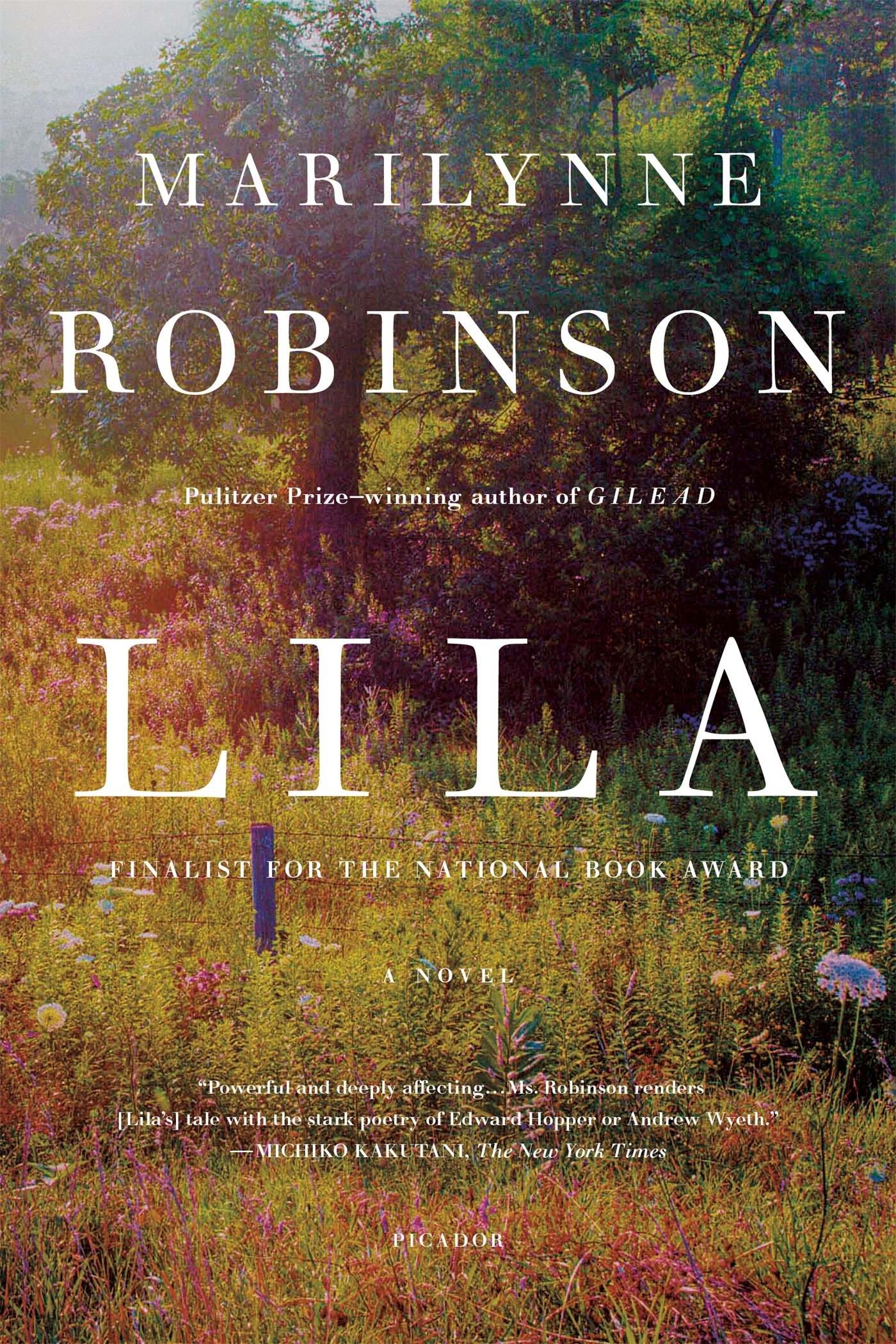
Teaser Tuesday: Lila by Marilynne Robinson

He said, "so, then, you've decided to stay."-- Lila by Marilynne Robinson. Lila is one of the three books in Robinson's Gilead trilogy, along with Home (winner of the Orange Prize, now Baileys Prize) and Gilead (winner of the Pulitzer Prize).
"I never did plan on leaving."
Teaser Tuesdays is hosted by The Purple Booker, where you can find the official rules for this weekly event.
Labels:
Orange Prize
,
Pulitzer Prize
,
Teaser Tuesday
Monday, July 14, 2014
Mailbox Monday: Garage Sale Finds
Thanks for joining me for Mailbox Monday! MM was created by Marcia, who graciously hosted it for a long, long time, before turning it into a touring event. Mailbox Monday has now returned to its permanent home where you can link to your MM post.
I can't resist poking around garage sales and often find some great books. My haul this weekend included:
Canada by Richard Ford (one of my favorite authors)
The Tiger's Wife by Tea Obreht (I'm always slow with bestsellers like this Orange Prize winner)
Telex from Cuba by Rachel Kushner (this was a National Book Award finalist, but it never hit my radar)
A Heaven in the Eye by Clyde Rice (this falls in the category of "random memoirs" – this one about the authors Oregon and San Francisco adventures between WWI and WWII)
The Ransom of Russian Art by John McPhee (another favorite of mine)
Labels:
Mailbox Monday
,
Orange Prize
,
Oregon author
,
Richard Ford
Sunday, May 26, 2013
Kitchen Remodel, Week Thirteen: A Place to Sit
Another week has gone by with no visible progress on the kitchen. Apparently the hold up is the tile. Even though it is plain white subway tile, because we ordered a slightly less-ordinary dimension (2x6 instead of 3x6), it has to be custom made. But because we need very little of it, our order has been sitting there waiting to tag onto a larger order when it comes in.
So we wait. In the meantime, the two kitchen stools we ordered for the island came in. So we can sit in the kitchen and imagine it being finished and usable.
We saw these stools made out of old wine barrels at Syncline Winery in Lyle, WA (about an hour northeast of Portland). I like them because they are unusual and made here in America.
By happenstance, because I had no idea what it was about until I read it, I read a book this week about cooking and the comfort of good food. Rose Tremain won the Orange Prize for The Road Home, the story of an Eastern European immigrant to England who teaches himself to be a chef while working as the plongeur at a toney London restaurant.
So we wait. In the meantime, the two kitchen stools we ordered for the island came in. So we can sit in the kitchen and imagine it being finished and usable.
We saw these stools made out of old wine barrels at Syncline Winery in Lyle, WA (about an hour northeast of Portland). I like them because they are unusual and made here in America.
By happenstance, because I had no idea what it was about until I read it, I read a book this week about cooking and the comfort of good food. Rose Tremain won the Orange Prize for The Road Home, the story of an Eastern European immigrant to England who teaches himself to be a chef while working as the plongeur at a toney London restaurant.
WEEKEND COOKING
Labels:
kitchen remodel
,
Orange Prize
,
Weekend Cooking
Monday, June 25, 2012
Mailbox Monday
Thanks for joining me for Mailbox Monday! MM was created by Marcia, who graciously hosted it for a long, long time, before turning it into a touring meme (details here).
Marie at Burton Book Review is hosting in June. Please stop by her beautiful blog where she is "Leafing through history one page at a time."
Thanks to Rachelle at my favorite Second Glance Books, I got a stack of books last week, several that I have been looking for for a long time.
Death at the Chateau Bremont by M. L. Longworth (this was an impulse -- I couldn't resist the cover)
Excellent Women by Barbara Pym (on the Erica Jong list)
Fugitive Pieces by Anne Michaels (Orange Prize winner)
Innocence by Penelope Fitzgerald (one of my favorite authors)
English Passengers by Matthew Kneale (Costa Book of the Year winner)
Saint Joan of Arc by V. Sackville-West (on my French Connections list)
Hole in the Sky: A Memoir by William Kittredge (on the list of 20 Greatest Oregon Books)
Labels:
Costa
,
French Connections
,
Jong list
,
Mailbox Monday
,
Orange Prize
,
Oregon Books
,
Penelope Fitzgerald
Wednesday, February 15, 2012
Opening Sentence: Half of a Yellow Sun
Master was a little crazy; he had spent too many years reading books overseas, talked to himself in his office, did not always return greetings, and had too much hair.-- Half of a Yellow Sun by Chimamanda Ngozi Adichie.
What a terrific first sentence!
This won the 2007 Orange Prize for Fiction. It is set in the 1960s in Nigeria, leading up to and during the civil war and brief existence of the independent country of Biafra. I am about half of the way through it and it is very good.
Labels:
Opening Sentence
,
Orange Prize
Thursday, September 8, 2011
Review: On Beauty
Zadie Smith won the 2006 Orange Prize for On Beauty, a lengthy novel about art history professor Howard Belsey, his African-American wife Kiki, and their family in the university town of Wellington, Massachusetts. When Howard's arch-nemesis, Monty Kipps, shows up with his family for a year as a guest lecturer at Howard's college, at the same time Howard and Kiki are dealing with his confessed infidelity, all the pieces are in place for a rich campus novel with Aga-saga elements.
But the book doesn't quite deliver, although it is hard to point out exactly why. There are the requisite colorful characters, including the aging, Jong-like poet laureate; the college administer with a salty tongue and fantasies about running the Pentagon; and the younger son's Haitian hip hop band buddies. It isn't rip-roaring funny, but it has some funny lines and amusing set pieces, usually involving the colorful characters. There is plenty of plot, even a little intrigue. And Smith introduces all kinds of conflict – between liberalism and conservativism, religious belief and atheism, town and gown, high art and pop culture, and the intellectual and the emotional.
Still, there is something missing. It could just be that the main characters are not particularly likable. Howard is a total wet blanket – he dislikes everything, including classical music, representational art, religion, his father, and Christmas. Kiki is pretty flat for a heroine. Monty Kipps is arrogant and maybe a little mean.
Or it could be something bigger and more intentional on Smith's part. She seems to have taken to heart the lesson that writers should show and not tell. She shows the story through action and dialog, which is generally a good thing. But she eliminates "telling" so ruthlessly that the reader is left not having any idea what the characters are feeling or what they want. We can see what they do and hear what they say, but without knowing their motives or their goals, we are not fully engaged – we can watch, but we don't know whether to root for them or boo them. We have no emotional attachment to them.
The reason this approach seems intentional is that it so parallels Howard's opinions that it can't be a coincidence. Howard is a Rembrandt scholar who doesn't like Rembrandt. His reasoning is difficult to discern – his students don't understand his convoluted lectures and, at his career-making public speech, Howard is immobilized, without any ability to communicate. What we can gather is that Howard does not like art to tell a story. For example, when lecturing on Rembrandt's famous painting, The Syndics of the Clothmakers' Guild, Howard rejects the common view that Rembrandt depicted a scene where the men in the painting were answering questions from an unseen audience.
As Smith explains:
Iconoclastic Howard rejects all these fatuous assumptions. How can we know what goes in beyond the frame of the painting? . . . Nonsense and sentimental tradition!
Smith seems to follow the same approach in her narrative – omitting any hint of what goes on outside the frame of each scene. Given that Howard's nihilistic attitude has crippled his academic career, stunted his relationships with his family members, and ruined his marriage, it is difficult to understand why Smith adapted his views as a storytelling technique.
The book is crammed with bits and pieces that are entertaining, clever, and even tantalizing. But it is missing the emotional substance necessary to rise to the level of great literature.
Labels:
2011
,
fiction
,
Orange Prize
,
review
Tuesday, August 23, 2011
Teaser Tuesday: On Beauty
Here Howard made the mistake of looking up and around him as public speakers are advised to do. He caught sight of Monty, who was smiling and nodding, like a king at a fool who has come to entertain him.-- On Beauty by Zadie Smith. From a scene where antagonist professors Howard and Monte are debating a point at the big faculty meeting.
This book won the Orange Prize in 2006. I just finished it and am mulling what I will write in my review. I have mixed reactions.
Teaser Tuesdays is hosted by Should Be Reading, where you can find the official rules for this weekly event.
Labels:
Orange Prize
,
Teaser Tuesday
Wednesday, August 17, 2011
Opening Sentence of the Day: On Beauty
One may as well begin with Jerome's emails to his father.
-- On Beauty by Zadie Smith.
This book won the Orange Prize in 2006 and has been waiting for me on my iPod since about then.
I knew absolutely nothing about the book before I started it -- I hadn't read the cover or anything about it, except that it had one the prize. Sometimes I like jumping into a book like that with absolutely no expectations.
I am halfway through the audio version and enjoying it very much. Whatever I may have guessed the book to be about, I did not expect it to be an Ivory Tower novel and family drama. Pleasant surprise, since a novel of academia crossed with an Aga Saga is a genre made for me.
Labels:
Opening Sentence
,
Orange Prize
Sunday, August 15, 2010
Review of the Day: The Idea of Perfection
There is a small irony in the fact that Kate Grenville won the Orange Prize – awarded to the “best” novel in English -- for a book that celebrates the imperfection in all things. The Idea of Perfection examines how people cope with their own imperfections and handle the imperfections in others.
The story focuses on Harley Savage, a part-time curator and textile artist who comes to Karakarook, New South Wales, to help the town starts a Pioneer and Heritage Museum. The seams in her art quilts are intentionally askew, reflecting, perhaps, her views of how people relate and life works.
Harley fancies she has a “dangerous streak,” so has walled herself off from relationships with other people, including her own children and even the stray dog that follows her home. Readers learn early on that her husband’s suicide turned her reclusive. But when the grisly details emerge, social seclusion seems like a mild reaction – it’s a wonder she wasn’t institutionalized. Grenville did not have to go quite so far to make the story work.
With other points, Grenville has a lighter touch. Douglas Cheeseman is the sympathetic anti-hero of the piece. An engineer sent to Karakarook to replace the old, Bent Bridge (there’s the imperfection idea again), Douglas bumbles through every social encounter, barely able to talk, consumed by his self doubt. He is drawn to Harley but, in the awkwardness of their meetings, is all but incapable of moving the affair forward.
Side stories amplify the theme of imperfection. Primary among these is the mesmerizing story of Felicity Porcelline and her relationship with the town’s butcher. Felicity is obsessed with perfection – keeping her house spotless, her face unmarred by wrinkle or freckle, and her interactions with the townsfolk above reproach. Things are definitely not what they seem, however, and it turns out that this seemingly perfect woman is the least perfect of all.
Felicity’s story and some of the other digressions do not mesh with the overall plot. They seemed tacked on or laid over the top. Rather than lessening the quality of the book, these misalignments underscore Grenville’s theme that perfection is impossible and imperfection should be embraced.
OTHER REVIEWS
(If you woud like your review of this book or any other of Kate Grenville's books listed here, please leave a comment with a link to your post and I will add it.)
Labels:
2010
,
fiction
,
Orange Prize
,
review
Saturday, August 7, 2010
Review of the Day: Small Island
In Small Island, Andrea Levy examines what happened when volunteers from Jamaica came to England to fight for the British military during World War II and then stayed. She tells the story from the points of view of Queenie, the English wife of Bernard, her Jamaican tenant Gilbert, his new wife Hortense, and Bernard. The narrative moves back and forth in time from before the war to after, and from Jamaica to England to India, where Bernard was stationed.
The varying voices allowed Levy to pull in several different threads, but the central theme of the book is race relations in the 1940s in England. Until WWII, many English people in England had never seen or interacted with black people. Levy is a bit ham-fisted in her portrayal of American soldiers and their segregated ranks, but the contrast with the English is interesting. While the Americans were blatant with their discriminatory Jim Crow rules, the English prided themselves on how the British Empire supposedly led to racial tolerance.
Levy shows that this tolerance was more theory than fact. As black soldiers returned to England as black immigrants, they were treated as unwelcomed foreigners, despite being British citizens. Neighbors resent Queenie renting rooms to Gilbert and Hortense. Although Gilbert planned to go to law school, he is relegated to driving a truck. And college-educated Hortense is told that she will never be qualified to teach in London. Levy makes her point with subtly and humor as Gilbert and Hortense learn to find their way in England and in their marriage.
Levy skillfully weaves the small island theme throughout the novel. Geographically, Jamaica is a small island, but Levy makes it clear that limited ideas about culture, race, marriage, and opportunities made England just as small.
OTHER REVIEWS
(If you would liek your review of this book listed here, please leave a comment with a link to your post and I will add it.)NOTES
Small Island won both the Orange Prize and the Costa (Whitbread) Book of the Year Award. My book club read it and it was a enjoyed by all. It counts as my Orange Prize choice for the Book Award Challenge. It would also count for the Typically British Challenge if I had not already read more than my quota for that one.
Thursday, April 2, 2009
Review: Bel Canto
The set up for Ann Patchett's Orange Prize winner, Bel Canto, is attention-grabbing -- an international group of businessmen and diplomats, one female opera singer, and a polyglot translator are held captive by a gang of revolutionaries in an unnamed banana republic for several months.
But despite the premise, the story has no zing. It plods along, focusing on the personal relationships among the people involved, particularly the relationships between some of the captives and captors.
The story is written well enough, but the issues it raises about the nature of talent, love, and communication are pretty banal. Not that it had to be an adventure or a thriller -- but it was surprisingly ho-hum given the potential.
OTHER REVIEWS
If you would like your review of this book listed here, please leave a comment with a link and I will add it.
Labels:
fiction
,
Orange Prize
,
review
Subscribe to:
Comments
(
Atom
)