Showing posts with label John Updike. Show all posts

Sunday, July 5, 2026

5 Great American Novels -- FAVE FIVE BOOK THOUGHTS


5 Great American Novels

FAVE FIVE BOOK THOUGHTS

The word of the month is semiquincentennial! On this Independence Day weekend, in honor of America's 250th anniversary, I picked five of my favorite American novels. I think these are all "great American novels" even if I don't know I would pick one of them for the Great American Novel, which is an elusive critter. 

Instead of trying to pick the most American novel I could think of (Huckleberry Finn? To Kill a Mocking Bird?), I picked these because I love them and I think they all have a particularly American spirit to them. 

  • Postcards by E. Annie Proulx. Her debut novel, this overlooked gem follows the tragic hero from a hardscrabble farm in upstate New York across America and across the decades from 1940 to 1980. An unforgettable story of rural American life in the mid 20th century.
  • My รntonia by Willa Cather. My favorite Cather book and the best novel about immigrant pioneer life on the Great Plains.
  • Rabbit Angstrom: The Four Novels by John Updike (Rabbit, Run, Rabbit Redoux, Rabbit is Rich, and Rabbit at Rest). No matter your feelings about Rabbit, no fiction better captures the zeitgeist of the Silent Generation’s era. From basketball stardom in 1950s high school, to a rocky marriage in the turbulent '60s, commercial success in the '70s, and retirement in Florida in the '80s, Rabbit lived through it all. Updike won the Pulitzer Prize in 1982 for Rabbit is Rich and 1991 for Rabbit at Rest.
  • The Road Home by Jim Harrison. Like My รntonia, this intergenerational family saga is set in Nebraska, but deals more directly with the tragic conflict between pioneers and Native Americans. At the same time, it is a great yarn with Harrison's typical wry humor, big characters, astute sense of place, and forgiving heart.
  • All the King’s Men by Robert Penn Warren. Louisiana is like nowhere else in the United States, but could only happen in the United States, making this fictional story of Huey Long a quintessential American political novel. It won the 1947 Pulitzer Prize.


Have you rea any of these? What do you think? What book would you nominate for the Great American Novel? 


FIVE FAVES


There are times when a full-sized book list is just too much; when the Top 100, a Big Read, or all the Prize winners seem like too daunting an effort. That's when a short little list of books (or authors) grouped by theme may be just the ticket.

Inspired by Nancy Pearl's "Companion Reads" chapter in Book Lust – themed clusters of books on subjects as diverse as Bigfoot and Vietnam – I decided to start occasionally posting lists of five books grouped by topic or theme. I call these posts my Five Faves.

Feel free to grab the button and play along. Use today's theme or come up with your own. If you post about it, please link back to here and leave the link to your post in a comment. If you want to participate but don't have a blog or don't feel like posting, please share your list in a comment.

Saturday, January 24, 2026

Books Read in 2025 -- BOOK LIST


BOOKS I READ IN 2025

Every January, when I remember, I post a list here on Rose City Reader of the books I read the prior year. I keep track of the books I read on LibraryThing.

Here's the list of the 201 books I read in 2025, in the order I read them. I've never read so many books in a year before this. I credit the jump to my work finally slowing down a bit. Maybe when I really retire, I'll read even more, which I would love. I added notes, which I haven't done in the past but might continue. It helps me remember the book.

Notes about my rating system are below the list.

How many of these have you read?

  • Absolute Truths by Susan Howatch, the final book in her “Starbridge” series of Church of England novels that take place in the mid-20th Century. I loved the series, even when the melodrama was over-the-top. ๐ŸŒน๐ŸŒน๐ŸŒน๐ŸŒน
  • The Siege of Krishnapur by J. G. Farrell. This retelling of events during the 1857 Indian Rebellion won the 1973 Booker Prize. The events and the writing are serious, but the absurdities of the colonial class system also gave Farrell opportunity to poke fun. ๐ŸŒน๐ŸŒน๐ŸŒน๐ŸŒน
  • Scoop by Evelyn Waugh was a reread for me and I appreciated the satire much more this second time around than when I first read it about 20 years ago. ๐ŸŒน๐ŸŒน๐ŸŒน๐ŸŒน๐ŸŒน
  • The Venetian Affair by Helen MacInnes. Less Venice than I expected, more Paris, but a lot of mid-century excitement. ๐ŸŒน๐ŸŒน๐ŸŒน1/2
  • Strange Flowers by Donal Ryan. This was my first go at one of his books. I thought it was interesting, but it didn’t wow me. It felt like he packed things into this family story (a black husband, a lesbian affair, and more) to be intentionally provocative. And the pacing was so uneven, I was distracted by trying to sort the timeline. ๐ŸŒน๐ŸŒน๐ŸŒน
  • We Solve Murders by Richard Osman, the first in a new series. It was hard for me to switch from Thursday Murder Club to this new group of characters, but I'm sure it will grow on me. ๐ŸŒน๐ŸŒน๐ŸŒน๐ŸŒน
  • The Lost Bookshop by Evie Woods engendered lively discussion in my book club. Overall, the group enjoyed the historical fiction side of it, with its braided narrative switching between the 1920s and present day. But the magical realism caught most of us by surprised and didn't go over well. ๐ŸŒน๐ŸŒน๐ŸŒน
  • Zabar's: A Family Story, with Recipes by Lori Zabar. Zabar's is a Manhattan institution and spot I always try to visit when I'm in New York, so ir was wonderful to read the history of this family treasure. ๐ŸŒน๐ŸŒน๐ŸŒน1/2
  • The Little Red Chairs by Edna O'Brien knocked my socks off. It will definitely linger with me for a long time. Read my review here. ๐ŸŒน๐ŸŒน๐ŸŒน๐ŸŒน๐ŸŒน
  • The Patriarch by Martin Walker, the eighth novel in his Bruno, Chief of Police, series set in a French village. This is another series I love and am trying to complete, but it will take me longer because there are 18 novels and several novellas and short stories. ๐ŸŒน๐ŸŒน๐ŸŒน๐ŸŒน
  • Sense and Sensibility by Jane Austen. To commemorate the 250th anniversary of Austen's birth, I reread her six major novels in 2026, in publication order, starting with this one. ๐ŸŒน๐ŸŒน๐ŸŒน๐ŸŒน๐ŸŒน
  • Daphne du Maurier: The Secret Life of the Renowned Storyteller by Margaret Forster. This wrapped up a Du Maurier Deep Dive project I participated in in Instagram. Over roughly three years, we read all du Maurier's fiction and then finished with reading a biography of our choice. I thought Forster's was excellent. ๐ŸŒน๐ŸŒน๐ŸŒน๐ŸŒน
  • Slough House by Mick Herron. This is the seventh book in his Slow Horses series. I raced through all of them so I could watch the tv show. ๐ŸŒน๐ŸŒน๐ŸŒน๐ŸŒน๐ŸŒน
  • Sleeping Giants by Rene Denfeld is a thriller set in Oregon and one of my book club's picks. The story, inspired by true events, really grabbed me. ๐ŸŒน๐ŸŒน๐ŸŒน๐ŸŒน
  • Bad Actors by Mick Herron, the eighth Slow Horses book. A ninth came out in late 2025, but my library hold on the audiobook didn't come in until January 2026. ๐ŸŒน๐ŸŒน๐ŸŒน๐ŸŒน๐ŸŒน
  • Lost & Found: Public Theology in the Secular Age by Michael A. Milton is a nonfiction book aimed theologians — pastors, professors, seminary students, etc. Still, even though the target audience may be professionals, or professionals in training, it is interesting for any Christian looking for a biblical response to social issues. ๐ŸŒน๐ŸŒน๐ŸŒน๐ŸŒน
  • Q.’s Legacy by Helene Hanff. This follow up to her big hit, 84 Charing Cross Road, is must reading for diehard fans but probably meaningless without reading 84 first. ๐ŸŒน๐ŸŒน๐ŸŒน๐ŸŒน
  • Skunk and Badger by Amy Timberlake is an adorable children’s story. I wanted to read it first before sharing it with my grandkids. ๐ŸŒน๐ŸŒน๐ŸŒน๐ŸŒน๐ŸŒน
  • Anna Karenina by Leo Tolstoy. Finally! I added this to my Classics Club list to give me the push I needed to read this Russian masterpiece. ๐ŸŒน๐ŸŒน๐ŸŒน๐ŸŒน๐ŸŒน
  • Fatal Pursuit by Martin Walker, book 9 in his Bruno series and a particularly good one featuring a very rare, expensive vintage car. ๐ŸŒน๐ŸŒน๐ŸŒน๐ŸŒน
  • The Lady of the Mine by Sergei Lebedev is a beautiful, tragic novel about Russia in Ukraine. It will stick with me. ๐ŸŒน๐ŸŒน๐ŸŒน๐ŸŒน
  • The List by Mick Herron, one of four Slow Horses novels I read after I caught up with the novels. All were very good, although I am drawn to novels before shorter fiction. ๐ŸŒน๐ŸŒน๐ŸŒน๐ŸŒน
  • The Catch by Mick Herron, another novella. ๐ŸŒน๐ŸŒน๐ŸŒน๐ŸŒน
  • Standing by the Wall by Mick Herron. This one included a short story with the title novella. ๐ŸŒน๐ŸŒน๐ŸŒน๐ŸŒน
  • Careless in Red by Elizabeth George. I struggled with the two Inspector Lynley books before this one, With No One as Witness (๐ŸŒน๐ŸŒน๐ŸŒน) and What Came Before He Shot Her (๐ŸŒน๐ŸŒน). With No One involved gruesome serial killings, not in keeping with the rest of the series, not to mention a gratuitously sad ending. What Came was a sociological study more than a mystery and felt like homework. So I was extremely pleased that Careless got the series back on track. ๐ŸŒน๐ŸŒน๐ŸŒน๐ŸŒน
  • Bitter Orange by Clair was my first Fuller book but not my last. Terrific! Shades of A. S. Byatt and Iris Murdoch. ๐ŸŒน๐ŸŒน๐ŸŒน๐ŸŒน1/2
  • Elon Musk by Walter Isaacson. Love him or hate him, Elon Musk is bigger than life. I figured it was a good time to read Isaacson’s fascinating biography. ๐ŸŒน๐ŸŒน๐ŸŒน๐ŸŒน๐ŸŒน
  • The Templars' Last Secret by Martin Walker. Book 10 in the Bruno series. The story had history and adventure, and all the French cooking and charming village life the books are known for, but the character list is getting crowded. ๐ŸŒน๐ŸŒน๐ŸŒน1/2
  • Beat Not the Bones by Charlotte Jay, winner of the very first Edgar Award in 1954 for best crime novel and an unexpected jungle adventure. ๐ŸŒน๐ŸŒน๐ŸŒน๐ŸŒน
  • A Handful of Dust by Evelyn Waugh. This was a reread for me and I liked it better than the first time, because I've read a lot more Waugh between then and now. ๐ŸŒน๐ŸŒน๐ŸŒน๐ŸŒน๐ŸŒน
  • This Body of Death by Elizabeth George. Another winner, featuring more of Lynley's teammates -- Barbara Havers and Winston Nkata. ๐ŸŒน๐ŸŒน๐ŸŒน๐ŸŒน
  • The Grey Wolf by Louise Penny. I had caught up with her Three Pines series, a favorite, so was happy to jump on this new one. ๐ŸŒน๐ŸŒน๐ŸŒน๐ŸŒน
  • Pride and Prejudice by Jane Austen, another reread for her 250th birthday. Always fantastic. ๐ŸŒน๐ŸŒน๐ŸŒน๐ŸŒน๐ŸŒน
  • A Taste for Vengeance by Martin Walker. It says something that now, nine months after I read it, I don't recall anything about the mystery, even after reading the publisher's description. ๐ŸŒน๐ŸŒน๐ŸŒน
  • Sun Bird by Lindsay Moore. This is another children's book I read before passing it on to my grandkids. ๐ŸŒน๐ŸŒน๐ŸŒน๐ŸŒน
  • The Secret Place by Tana French, book 5 of 6 in her Dublin Murder Squad series. Although it is incredibly popular, this is not a series I'm fond of. There is always something completely unbelievable about each of the stories -- like outlandishly unbelievable. This one is the best so far and I'm a completist so went on to read the sixth. ๐ŸŒน๐ŸŒน๐ŸŒน1/2
  • The Maine Woods by Henry David Thoreau, proof that camping has never been fun. ๐ŸŒน๐ŸŒน๐ŸŒน
  • From Doon with Death by Ruth Rendell. I reread this one because I want to tackle her Inspector Wexford series once and for all. ๐ŸŒน๐ŸŒน๐ŸŒน๐ŸŒน
  • The Imitation of Christ by Thomas a Kempis. I read this classic devotional with a group on Instagram and appreciated it all the more for the group discussion. ๐ŸŒน๐ŸŒน๐ŸŒน๐ŸŒน๐ŸŒน
  • The Salzburg Connection by Helen MacInnes. This one was particularly exciting -- a romp through the Austrian Alps in search of hidden Nazi secrets. ๐ŸŒน๐ŸŒน๐ŸŒน๐ŸŒน๐ŸŒน
  • Believing the Lie by Elizabeth George. I was still trepidatious after the two George wobbles, but this one was a good, solid mystery. ๐ŸŒน๐ŸŒน๐ŸŒน๐ŸŒน
  • Slightly Foxed, Vol. 84, Winter 2024. I keep track of these as books to remember which ones I've read. Shile technically a "journal," it's bound like a book -- a book of essays -- and I keep them after I read them, so I feel justified counting them as books not magazines. ๐ŸŒน๐ŸŒน๐ŸŒน๐ŸŒน๐ŸŒน
  • The Kitchen Diaries: A Year in the Kitchen by Nigel Slater. This is the first of several Kitchen Diaries by Slater. I loved the peek into his life as a cook and food lover. Mostly I noted his lifestyle and how I could copy it, but I also marked recipes I'd like to try. ๐ŸŒน๐ŸŒน๐ŸŒน๐ŸŒน
  • Kingmaker: Pamela Harriman's Astonishing Life of Power, Seduction, and Intrigue by Sonia Purnell. This was one of my favorites of the year. She was Winston Churchill's daughter-in-law and a source of information to him from her lovers during WWII; led a jet set lifestyle in Europe after the war; settled in America and married Leland Hayward, a Broadway producer; later married her old flame Avril Harriman and became a Georgetown mover and shaker; and ended her career as Bill Clinton's Ambassador to France. Those are just the bare bones of a fascinating life. ๐ŸŒน๐ŸŒน๐ŸŒน๐ŸŒน๐ŸŒน
  • The Enchanted April by Elizabeth von Arnim, a charming story of four friends spending a month in Italy, published in 1922. ๐ŸŒน๐ŸŒน๐ŸŒน๐ŸŒน๐ŸŒน
  • Unsettled Ground by Claire Fuller. Even darker than Bitter Orange, equal parts frustrating and entrancing. ๐ŸŒน๐ŸŒน๐ŸŒน๐ŸŒน
  • Ripley Under Ground by Patricia Highsmith. I have the first, and main, three Ripley novels in an omnibus edition so wanted to read the two sequels to The Talented Mr. Ripley, which I read a few years ago. I appreciate the talent behind these books but they aren’t for me because I like my killers to get their comeuppance, not get away with their crimes. ๐ŸŒน๐ŸŒน๐ŸŒน
  • Just One Evil Act by Elizabeth George. This 18th book in the series focused on Barbara Havers and, unique for the series, takes the story on the road when Havers goes to Italy to help a friend find his missing daughter. ๐ŸŒน๐ŸŒน๐ŸŒน๐ŸŒน
  • The Body in the Castle Well by Martin Walker. This is where I started to turn on the series. The plots are starting to look alike and the characters are now overflowing the stories. ๐ŸŒน๐ŸŒน๐ŸŒน1/2
  • Literary Feasts: Inspired Eating from Classic Fiction by Sean Brand. I expected more from this short book. There was less discussion of the food eaten and the role of food in various books than I had hoped. It's really a collection imaginary menus inspired by different books. I found it formulaic and gimmicky. ๐ŸŒน๐ŸŒน
  • The People We Keep by Allison Larkin. This story of found families was a book club pick I enjoyed more than I thought I would. ๐ŸŒน๐ŸŒน๐ŸŒน๐ŸŒน
  • Penmarric by Susan Howatch. I loved this shaggy family saga loosely mirroring the history of the Plantagenet royal family in England. ๐ŸŒน๐ŸŒน๐ŸŒน๐ŸŒน1/2
  • Ripley’s Game by Patricia Highsmith. The third Ripley book and my last. ๐ŸŒน๐ŸŒน๐ŸŒน
  • One Man’s San Francisco by Herb Cain. This is a collection of newspaper columns by the extremely popular San Francisco journalist. The columns are definitely of their time so offer a glimpse of mid-century San Francisco history seldom considered these days. ๐ŸŒน๐ŸŒน๐ŸŒน
  • The Trespasser by Tana French. I'm not a fan of stories about teenagers, so this wasn't my cup of tea, but I did like the relationship between the two detectives. Mostly, I was just happy to finish the Dublin Murder Squad series once and for all. ๐ŸŒน๐ŸŒน๐ŸŒน
  • The Shooting at Chateau Rock by Martin Walker. I love the series but the stories are starting to blur in my mind. Martin has created a huge cast of supporting characters and getting them all crammed into every story means the stories are going to be similar. It's not like Bruno goes off by himself and solves a mystery in Thailand or something. He's there in his French village, with his two ex-lovers, assorted friends, the same co-workers, and a gaggle of neighbors. ๐ŸŒน๐ŸŒน๐ŸŒน
  • The Snare of the Hunter by Helen MacInnes. This is another worthwhile adventure, but not as much of a nail biter as The Salzburg Connection. There was a lot of driving around and route planning. And it annoyed me that none of the good guys could figure out who the glaringly obvious bad guy was. ๐ŸŒน๐ŸŒน๐ŸŒน1/2
  • Lies and Weddings by Kevin Kwan. This fun romp was not as good as the Crazy Rich Asians books but still entertaining. ๐ŸŒน๐ŸŒน๐ŸŒน1/2
  • A Banquet of Consequences by Elizabeth George. The books keep getting better and better as I get closer to the end of the series. ๐ŸŒน๐ŸŒน๐ŸŒน๐ŸŒน
  • The St. Trinian's Story *and the Pick of the Searle Cartoons, edited by Kaye Webb. This sia random book of boarding school cartoons that would be more relevant to someone who grew up seeing Ronald Searle cartoons. Not being British or old enough, I wasn't the target audience. ๐ŸŒน๐ŸŒน๐ŸŒน
  • Brilliant, Beautiful, Bipolar by Liz Casper. This is a fascinating memoir about a successful, professional woman who lost almost everything when she became bipolar in middle age. I read it in one sitting because I couldn't stop. ๐ŸŒน๐ŸŒน๐ŸŒน๐ŸŒน๐ŸŒน
  • The Ordeal of Gilbert Pinfold by Evelyn Waugh. This later Waugh novel was odd and my least favorite of his books. It is the semi-autobiographical story of a man suffering from hallucinations while on a sea voyage. ๐ŸŒน๐ŸŒน๐ŸŒน
  • Mansfield Park by Jane Austen. It's hard to rank Austen novels because they are all wonderful, but this is the least wonderful for me. ๐ŸŒน๐ŸŒน๐ŸŒน๐ŸŒน๐ŸŒน
  • Pink Palazzo: A Palm Beach Romance by Kiki Astor. I don't read many romance novels, but came across this one on Instagram and found it quite entertaining. ๐ŸŒน๐ŸŒน๐ŸŒน๐ŸŒน
  • Towards Zero by Agatha Christie, a country house mystery featuring Inspector Battle. ๐ŸŒน๐ŸŒน๐ŸŒน๐ŸŒน
  • Cimarron Rose by James Lee Burke. I used to gobble up his Dave Robecheaux book until they just got to be too much for me. This one is the first book in his Billy Bob Holland series set in Texas, but it all the same. It won the 1998 Edgar Award so I read it. Because it's been a long time since I've read a JLB book, I enjoyed it well enough, but t will be a while before I read another. ๐ŸŒน๐ŸŒน๐ŸŒน1/2
  • The Coldest Case by Martin Walker. Same women, dog, horse, and dinner parties. They are starting to blend. ๐ŸŒน๐ŸŒน๐ŸŒน
  • Be Ready When the Luck Happens: A Memoir by Ina Garten was a highlight of my reading year. I've never been an Ina Garten fan. Not that I disliked her, I just knew nothing about her except that she is known as the Barefoot Contessa. I never watched her show and don't own any of her cookbooks. But my sister gave me her memoir for Christmas and I loved it. What an entrepreneur! She is an inspiration. Read my review here. ๐ŸŒน๐ŸŒน๐ŸŒน๐ŸŒน๐ŸŒน
  • Maigret and the Spinster by Simenon. I have a lot of Simenon books on my shelves so wanted to try one before I acquire any more. I liked it a lot, even if I didn't love it. I liked it enough to look forward to reading more. ๐ŸŒน๐ŸŒน๐ŸŒน1/2
  • A New Lease of Death by Ruth Rendell, the second in her Inspector Wexford series, my new favorite. ๐ŸŒน๐ŸŒน๐ŸŒน๐ŸŒน
  • The Punishment She Deserves by Elizabeth George. Barbara Havers again features in this, the 20th novel in the series. It's another long but entertaining mystery. ๐ŸŒน๐ŸŒน๐ŸŒน๐ŸŒน
  • Table for Two: Fictions by Amor Towles. I loved Rules of Civility and this collection of short stories and a novella is in the same spirit. The novella is a sort-of sequel to Rules of Civility. ๐ŸŒน๐ŸŒน๐ŸŒน๐ŸŒน
  • A Burnt-Out Case by Graham Greene was excellent. It's the story of an architect who lost his passion for his work and his religious faith and goes to a leper colony in Africa to lose himself. ๐ŸŒน๐ŸŒน๐ŸŒน๐ŸŒน๐ŸŒน
  • A Coffin for Dimitrios by Eric Ambler is an early international thriller, published in 1930. The plot was a little messy, but it was a lot of fun. ๐ŸŒน๐ŸŒน๐ŸŒน
  • The Pilgrim's Regress by C.S. Lewis. I wanted to like this Christian classic, but I struggle with allegory. ๐ŸŒน๐ŸŒน๐ŸŒน
  • Pale Horse, Pale Rider by Katherine Anne Porter. This short collection of three southern gothic novellas knocked my socks off. Porter is in the same school as Flannery O'Connor, with maybe a tough of Eudora Welty. ๐ŸŒน๐ŸŒน๐ŸŒน๐ŸŒน๐ŸŒน
  • Close to Death by Anthony Horowitz, book five in his Hawthorne & Horowitz series. This is one of my very favorite series, but the fourth book, The Twist of the Knife, disappointed me. It was not as clever, more traditionally formulaic, than the first three. So I put off reading this fifth one when it first came out. I'm glad I finally read it because it is as snappy and fun as the first three. ๐ŸŒน๐ŸŒน๐ŸŒน๐ŸŒน๐ŸŒน
  • Meditations by Marcus Aurelius. Let’s just say, I’m not a stoic. This was a slog. ๐ŸŒน๐ŸŒน๐ŸŒน
  • Transcription by Kate Atkinson. This story of WWII and Cold War espionage in London was a delight. I wish I read it earlier. ๐ŸŒน๐ŸŒน๐ŸŒน๐ŸŒน๐ŸŒน
  • Three Summers by Margarita Liberaki. This coming of age story about three sisters in Greece was fabulous, a highlight of my reading summer. This was my Greece pick for the European Reading Challenge and I was proud of myself for reading a translated book. ๐ŸŒน๐ŸŒน๐ŸŒน๐ŸŒน๐ŸŒน
  • Double Blind by Edward St. Aubyn. I greatly admire his Patrick Melrose books and Lost for Words is an all-time favorite, so I was excited to read this. It had way more brain science than I expected and not enough story about the human relationships, but it was good and I'm glad I read it. ๐ŸŒน๐ŸŒน๐ŸŒน1/2
  • The Daydreamer by Ian McEwan is his only kids book. It was a short, enjoyable read. ๐ŸŒน๐ŸŒน๐ŸŒน
  • The Ice Saints by Frank Tuohy, a forgotten classic that won the 1964 James Tait Black prize. It is the story of a woman from London in the late 1950s who goes to Poland to visit her sister who had married a Polish soldier after WWII. The story is sweet, a little funny, and sad, providing a clear-eyed look at life behind the Iron Curtain. This was my Poland pick for the ERC, even though it is not in translation. ๐ŸŒน๐ŸŒน๐ŸŒน๐ŸŒน๐ŸŒน
  • Something to Hide by Elizabeth George. This final (so far) Inspector Lynley mytery was a complex, fascinating story. ๐ŸŒน๐ŸŒน๐ŸŒน๐ŸŒน1/2
  • The Cockroach by Ian McEwan. Satire is difficult. ๐ŸŒน๐ŸŒน
  • Emma by Jane Austen. This is my favorite Austen! ๐ŸŒน๐ŸŒน๐ŸŒน๐ŸŒน๐ŸŒน
  • Agent in Place by Helen MacInnes, another terrific Cold War adventure. ๐ŸŒน๐ŸŒน๐ŸŒน๐ŸŒน
  • Beauty: A Very Short Introduction by Roger Scruton, an excellent discussion of the meaning of beauty, why beauty matters, and why art is not beautiful when it becomes propaganda, pornography, or kitsch. ๐ŸŒน๐ŸŒน๐ŸŒน๐ŸŒน๐ŸŒน
  • Life Together by Dietrich Bonhoeffer. I read this classic with a church book group and benefitted from the discussion. ๐ŸŒน๐ŸŒน๐ŸŒน๐ŸŒน
  • Jane and Prudence by Barbara Pym was a delight story of single life and the search for connection. ๐ŸŒน๐ŸŒน๐ŸŒน๐ŸŒน๐ŸŒน
  • Above Suspicion by Helen MacInnes, an excellent thriller set on the eve of WWII. ๐ŸŒน๐ŸŒน๐ŸŒน๐ŸŒน
  • Helena by Evelyn Waugh. I loved this one! It is a comic, imaginative interpretation of the life of Helena, the mother of Emperor Constantine and early Christian saint. ๐ŸŒน๐ŸŒน๐ŸŒน๐ŸŒน๐ŸŒน
  • The Templar Legacy by Steve Berry was a fun but uneven Da Vinci Code knockoff. ๐ŸŒน๐ŸŒน๐ŸŒน1/2
  • Wolf to the Slaughter by Ruth Rendell. I like the Inspector Wexford books more and more as the characters develop. ๐ŸŒน๐ŸŒน๐ŸŒน๐ŸŒน
  • This is Happiness by Niall Williams. This absolutely charming novel is set during the electrification of Ireland in the late 1950s. It was one of my absolute favorites of the year. ๐ŸŒน๐ŸŒน๐ŸŒน๐ŸŒน๐ŸŒน
  • The Best Man to Die by Ruth Rendell, the fourth Inspector Wexford book. ๐ŸŒน๐ŸŒน๐ŸŒน๐ŸŒน
  • I Like it Here by Kingsley Amis is about a curmudgeon who travels “abroad” to Portugal with his family. LOL funny. ๐ŸŒน๐ŸŒน๐ŸŒน๐ŸŒน๐ŸŒน
  • The Austen Sisters by Dee Blankenship. I don't read fan fiction as a rule, but this Austen-inspired romance about five sisters, each embodying the spirit of Austen's heroines, was a delight. ๐ŸŒน๐ŸŒน๐ŸŒน๐ŸŒน
  • Old Bones by Aaron Elkins. This was a terrific cozy but exciting mystery set in France. I want to read more from the Gideon Oliver series. ๐ŸŒน๐ŸŒน๐ŸŒน๐ŸŒน๐ŸŒน
  • Thus was Adonis Murdered by Sarah Caudwell is the first in her hilarious but short series of mysteries featuring young lawyers and their professor/mentor Hilary Tamar. ๐ŸŒน๐ŸŒน๐ŸŒน๐ŸŒน๐ŸŒน
  • The Bookman's Wake by John Dunning is a book-themed thriller that kept me turning pages. ๐ŸŒน๐ŸŒน๐ŸŒน๐ŸŒน
  • A Month in the Country by J. L. Carr was as wonderful as everyone says. I can see myself rereading this engaging story. ๐ŸŒน๐ŸŒน๐ŸŒน๐ŸŒน๐ŸŒน
  • Jazz Funeral by Julie Smith is a fun New Orleans mystery set in August, which did nothing to bring down my core temperature when I read it in August in Greece. ๐ŸŒน๐ŸŒน๐ŸŒน๐ŸŒน
  • August Folly by Angela Thirkell. I am so glad I finally dipped my toe into this cosy pond. It was like a Golden Age mystery without a crime. I'll read more! ๐ŸŒน๐ŸŒน๐ŸŒน๐ŸŒน
  • The Summer Book by Tove Jansson. I loved this quiet novel about a young girl summering on aa island off Finland with her grandmother. Jansson wrote the Moomin books and, while this is not a children's book, it captured the POV of a child. ๐ŸŒน๐ŸŒน๐ŸŒน๐ŸŒน๐ŸŒน
  • To Kill a Troubadour by Martin Walker. By this one, book 16, I was really making an effort. ๐ŸŒน๐ŸŒน๐ŸŒน
  • No Fond Return of Love by Barbara Pym. Every time I read a Pym book, I remember why I love Pym books. I want to read them all. ๐ŸŒน๐ŸŒน๐ŸŒน๐ŸŒน๐ŸŒน
  • Water by John Boyne. This was the first of four interconnected novellas that were published separately and then combined into an omnibus edition called Elements. Water is the story of a wife starting a new life after her husband is convicted of awful crimes. Unfortunately, the wife is one of the few likable characters in the four books and she gets short shrift. ๐ŸŒน๐ŸŒน๐ŸŒน1/2
  • Earth by John Boyne. Earth tells about of a professional athlete on trial for sexual assault. Like the first one, this was a quick read and kept my attention, but such unlikeable characters! The bad guys -- and there are many -- are one-dimensionally heartless. ๐ŸŒน๐ŸŒน๐ŸŒน1/2
  • Fire by John Boyne. The third one. Fire examines the unsettling way a doctor has developed for dealing with her childhood trauma. She seemed almost sociopathic, not like a fully-developed human. ๐ŸŒน๐ŸŒน๐ŸŒน
  • Air by John Boyne. Air brings the earlier three somewhat together in a story about a dad trying to forge a bond with his teenage son. ๐ŸŒน๐ŸŒน๐ŸŒน1/2
  • A Guilty Thing Surprised by Ruth Rendell, Wexford book five. I started tearing through them with this one. ๐ŸŒน๐ŸŒน๐ŸŒน๐ŸŒน
  • Northanger Abbey by Jane Austen. More fun than I remembered from earlier reads. I enjoyed it even more this time. ๐ŸŒน๐ŸŒน๐ŸŒน๐ŸŒน๐ŸŒน
  • A Fortnight in September by R.C. Sherriff. I read this because of the title and am glad I did. It was a wonderful, bittersweet family story about so much more than their annual vacation at the beach. ๐ŸŒน๐ŸŒน๐ŸŒน๐ŸŒน๐ŸŒน
  • The Country Girls by Edna O'Brien is the first novel in the trilogy of the same name. O'Brien perfectly describes the prickly, sometimes even mean, friendships between girls when they are children and teenagers. ๐ŸŒน๐ŸŒน๐ŸŒน๐ŸŒน
  • A Horse Walks into a Bar by David Grossman won the International Booker Prize in 2017. An Israeli friend recommended it and it is very good. Sad, but good. ๐ŸŒน๐ŸŒน๐ŸŒน๐ŸŒน
  • Drive Your Plow Over the Bones of the Dead by Olga Tokarczuk. This one is really popular and the author won the Nobel Prize for literature, but it was not for me. I didn't like the idea of a crime spree with no consequences. I read it the week after Charlie Kirk was killed so a story about killing people you don’t agree with didn’t feel good. Even if you throw in the John Wick-like motive. Still, it counted as a Poland book for the ERC. ๐ŸŒน๐ŸŒน1/2
  • Murder Being Once Done by Ruth Rendell. Book six in the Wexford series, He's really growing on me. ๐ŸŒน๐ŸŒน๐ŸŒน๐ŸŒน
  • Chateau Under Siege by Martin Walker. This is where I almost gave up. Walker add characters in every book and then tries to incorporate them into every plot. There are only so many stories that can involve local police, national security, military intelligence, former spies from allied nations, local restaurateurs, former lovers, the hunting club, the local school teacher, and a dozen others. As an acclaimed amateur chef, Bruno should know that you can't use every ingredient in the pantry every time and expect the meal to taste different. ๐ŸŒน๐ŸŒน๐ŸŒน
  • Crossing to Safety by Wallace Stegner. I loved this book when I read it in 1992, right after I finished law school. The story of two couples who become best friends shortly after grad school hit me hard as I was starting down that same path. I reread it last month, this time as an audiobook. This time around, the story hit me from the other side, now that I am about the same age as the two couples at the end of their time as friends. It's such a wonderful novel. ๐ŸŒน๐ŸŒน๐ŸŒน๐ŸŒน๐ŸŒน
  • Zorba the Greek by Kazantzakis. I remember the movie playing on tv when I was a kid so I've had it in my head to read for decades and the book has been on my shelf for years. It was an exuberant, bittersweet story and I'm glad I read it, but it isn't a favorite. ๐ŸŒน๐ŸŒน๐ŸŒน
  • No More Dying Then by Ruth Rendell. Inspector Wexford, book seven. Just as good as the others. ๐ŸŒน๐ŸŒน๐ŸŒน๐ŸŒน
  • French Provincial Cooking by Elizabeth David. David is like an English Julia Child and this book is probably her most famous. It's a classic but took me forever to read because it is so dense. 500 pages with only a handful of pen and ink illustrations, mostly for chapter headings, and the ingredients incorporated into the text instead of listed at the beginning. I'm glad I read it but don't think I'll cook much from it. This was the last book in my TBR 25 in '25 stack. Woo hoo! ๐ŸŒน๐ŸŒน๐ŸŒน
  • The Shortest Way to Hades by Sarah Caudwell. The second book in her Hilary Tamar series featuring frisky lawyers who love wine and travel. ๐ŸŒน๐ŸŒน๐ŸŒน๐ŸŒน๐ŸŒน
  • Marble Hall Murders by Anthony Horowitz. Book three in his Susan Ryeland series featuring a book editor turned amateur sleuth. This series is fresh and lively and features a woman of a certain age. I love it. ๐ŸŒน๐ŸŒน๐ŸŒน๐ŸŒน๐ŸŒน
  • Sir Harry Hotspur of Humblethwaite by Anthony Trollope. I admit I was disappointed. I loved the both the Barchester and Palliser series. This is the first stand alone Trollope book I've read. The story was soppy and a real downer. Unlike most of Trollope's female characters, the heroine was a nitwit. ๐ŸŒน๐ŸŒน๐ŸŒน
  • Indian Summer by William Dean Howells. I loved this American classic about 19th Century expats living in Florence. I reviewed this one here. ๐ŸŒน๐ŸŒน๐ŸŒน๐ŸŒน๐ŸŒน
  • The Luck of the Bodkins by P. G. Wodehouse. Madcap fun on an ocean liner. ๐ŸŒน๐ŸŒน๐ŸŒน๐ŸŒน๐ŸŒน
  • Aiding and Abetting by Muriel Spark, a brilliant, imaginative tale inspired by the Lord Lucan disappearance. I thought it was excellent. Definitely in my top three of the year. ๐ŸŒน๐ŸŒน๐ŸŒน๐ŸŒน๐ŸŒน
  • A Grave in the Woods by Martin Walker. This is the 17th book and I have to take a break before I read the last one (at least until he writes a new one). I loved this series at first, really loved it. But this one put me over the edge -- Walker forgot to include a murder mystery! The bodies in the grave in the woods were from WWII and there was no perpetrator to apprehend. ๐ŸŒน๐ŸŒน1/2
  • The Sirens Sang of Murder by Sarah Caudwell. Lawyers who drink wine, travel around Europe, and solve mysteries -- and the books are very funny. I love this series and wish there were more than four of them. This is book three. ๐ŸŒน๐ŸŒน๐ŸŒน๐ŸŒน๐ŸŒน
  • The Fisher King by Anthony Powell, a shipboard story with plenty of quirky characters. I’m glad I read it, but probably one for Powell completists like me. ๐ŸŒน๐ŸŒน๐ŸŒน๐ŸŒน
  • The Light of Day by Graham Swift starts as hardboiled detective fiction and ends as a melancholy love story. It kept me entertained throughout and thinking about it after. ๐ŸŒน๐ŸŒน๐ŸŒน๐ŸŒน
  • The God of the Woods by Liz Moore was another book club pick. Not my favorite, despite it's popularity, but I don’t like stories about teenagers. And I thought the ending was absurd. ๐ŸŒน๐ŸŒน
  • Slightly Foxed, No. 87, Autumn 2025. I read this one as soon as it came to not feel like I was falling even further behind. ๐ŸŒน๐ŸŒน๐ŸŒน๐ŸŒน๐ŸŒน
  • Autumn by Ali Smith annoyed me until I loved it. It took me a while to get into the writing style and the story. ๐ŸŒน๐ŸŒน๐ŸŒน๐ŸŒน
  • The Anti-minimalist House by Massimo Listri. I’m on a quest to read all my coffee table books and I liked the title of this one. It is different than most of my home decor books because the author/photographer is Italian and most of the houses featured were Italian or French. Interesting, but a different look than the English and American house books I am used to. Lots of dark colors, especially dark red, and what I think of as baroque furnishings. Not literally from the Baroque period, but heavy and ornate. ๐ŸŒน๐ŸŒน๐ŸŒน
  • Some Lie and Some Die by Ruth Rendell, book 8 in her Inspector Wexford series I continue to plow through. ๐ŸŒน๐ŸŒน๐ŸŒน๐ŸŒน
  • The Lonely Girl by Edna O'Brien. This is the second book in O'Brien's Country Girls Trilogy. I liked this one a lot because the two main characters are adults in this one, not children and teen agers like in the first one, although it was difficult to watch them make bad choices. ๐ŸŒน๐ŸŒน๐ŸŒน๐ŸŒน๐ŸŒน
  • The Thirteenth Tale by Diane Setterfield. Definitely a big favorite of the year. I got this book years ago, when it first came out, but never read it. I am so glad I finally did! I don't like scary books, but I enjoy a story like this that is brimming with eerie atmosphere and suspense. ๐ŸŒน๐ŸŒน๐ŸŒน๐ŸŒน๐ŸŒน
  • Shake Hands Forever by Ruth Rendell. Inspector Wexford, book 9. ๐ŸŒน๐ŸŒน๐ŸŒน๐ŸŒน
  • The Complete Stories by Evelyn Waugh. I was in a readalong group on Instagram that read all Waugh's fiction over the last two or so years, one every other month. We finished with these short stories. I loved the entire experience. ๐ŸŒน๐ŸŒน๐ŸŒน๐ŸŒน
  • Ivanov by Anton Chekhov. I’m trying to read more classic drama and I'm glad I read this, but I can't say it was a favorite. ๐ŸŒน๐ŸŒน๐ŸŒน
  • A Sleeping Life by Ruth Rendell. Another solid Wexford mystery. ๐ŸŒน๐ŸŒน๐ŸŒน๐ŸŒน
  • Brazil by John Updike. This was an odd one about star crossed lovers in Brazil. There's a back roads adventure, gold mining, cannibals, and a fantastical twist that turns the story on its head. Add a lot, lot, lot of graphic sex to confirm that this one was not for me even though Updike is one of my favorite authors. Apparently, when you are as successful as him, you get to experiment. ๐ŸŒน๐ŸŒน๐ŸŒน
  • Falstaff by Rober Nye. This 1975 book of historical fiction has been on my TBR shelf for years. It is the fictional autobiography of Shakespeare’s beloved comedic character. His picaresque adventures were highly entertaining. Not only did he participate in the historical highlights of the 1400s, he met other Shakespeare characters along the way. But the sex talk was over the top. It went from bawdy to downright raunchy to sometimes pornographic. A little went a long way and a lot went too far. I’m glad I read it but it’s not for the faint of heart. The book is on Anthony Burgess's list of 99 Novels: The Best in English Since 1939, a Personal Choice. ๐ŸŒน๐ŸŒน๐ŸŒน
  • Persuasion by Jane Austen, my final reread in celebration of her semiquincentennial. ๐ŸŒน๐ŸŒน๐ŸŒน๐ŸŒน๐ŸŒน
  • The Green Knight by Iris Murdoch, a typically delightful, shaggy tale by one of my favorite authors. ๐ŸŒน๐ŸŒน๐ŸŒน๐ŸŒน๐ŸŒน
  • The Seagull by Anton Chekhov. This one was even more depressing than Ivanov. I'll continue working my way through Chekhov's major plays, but it's a slog. ๐ŸŒน๐ŸŒน๐ŸŒน
  • The Devil's Advocate by Morris West was an undercover gem. I loved it! It is the story of a terminally ill priest assigned to investigate the possible sainthood (ie: play the Devil's advocate) of a man who died in the war in an Italian village. It won the James Tait Black Memorial Prize in 1959. ๐ŸŒน๐ŸŒน๐ŸŒน๐ŸŒน๐ŸŒน
  • Rabbit Remembered by John Updike. This novella is a coda to his quartet of novels about Harry "Rabbit" Angstrom. Set during the fall and winter holidays of 1999, on the eve of the new Millennium, his extended family reminisce about Rabbit and their own lives. ๐ŸŒน๐ŸŒน๐ŸŒน๐ŸŒน๐ŸŒน
  • The Christmas Appeal by Janice Hallett. I have not read her best seller, The Appeal, but I loved this holiday-themed sequel and now plan to go back to the original. ๐ŸŒน๐ŸŒน๐ŸŒน๐ŸŒน๐ŸŒน
  • My Life as a Man by Philip Roth. This was a mobius strip of a book. It starts with two short stories featuring a Nate Zuckerman prototype. The second part is a novel about Peter Tarnopol, the author of the two stories, which turn out to be based on his (also fictional) life. Both the Tarnopol and Zuckerman are alter egos of Roth, so it really spirals around itself. Only Roth could pull of a stunt like this. ๐ŸŒน๐ŸŒน๐ŸŒน๐ŸŒน๐ŸŒน
  • The Painted Word by Tom Wolfe was a brilliant, witty critique of modern art. ๐ŸŒน๐ŸŒน๐ŸŒน๐ŸŒน๐ŸŒน
  • A Thousand Feasts by Nigel Slater disappointed me. Too many sensitive, wispy descriptions for my taste. It read like journal prompts or a high school literary magazine. ๐ŸŒน๐ŸŒน1/2
  • South and West by Joan Didion. I'm slowly working my way through all her books. This was interesting but unpolished -- literally. It is her notebooks from a month spent visiting the American South in the 1970s and a shorter section of notes she made while visiting California for the Patty Hearst trial. ๐ŸŒน๐ŸŒน๐ŸŒน
  • Cat Stories by James Herriot. I can't believe it took me this long to read this beloved classic. ๐ŸŒน๐ŸŒน๐ŸŒน๐ŸŒน๐ŸŒน
  • If We Still Lived Where I was Born by Maria Giura is a collection of poems that can be appreciated and enjoyed by poetry connoisseurs and readers like me who shy away from poetry. Read my review here. ๐ŸŒน๐ŸŒน๐ŸŒน๐ŸŒน๐ŸŒน
  • Under the Greenwood Tree by Thomas Hardy. This is the happiest and most accessible Hardy novel I've read. ๐ŸŒน๐ŸŒน๐ŸŒน๐ŸŒน
  • The Crossing Places by Elly Griffiths. I've heard nothing but praise for her Ruth Galloway mystery series so was pleased my library finally got audiobooks. This one was very good, just this side of too scary for me. I plan to continue the series. ๐ŸŒน๐ŸŒน๐ŸŒน๐ŸŒน
  • A Week in Winter by Maeve Binchy. I love Maeve Binchy novels for the way they take a complicated jumble of difficulties and sort them all out in the end. ๐ŸŒน๐ŸŒน๐ŸŒน๐ŸŒน
  • The Sherlockian by Graham Moore. This was a great yarn of a novel, braiding a contemporary mystery with a historical story featuring Sherlock Holmes. I loved it. ๐ŸŒน๐ŸŒน๐ŸŒน๐ŸŒน๐ŸŒน
  • Tempest Tost by Robertson Davies is the first book in his Salterton Trilogy. I love his novels and was reluctant to read these because I would no longer have the experience of reading them for the first time. Crazy, right? This one centered around a community theater troupe putting on an outdoor production of The Tempest. ๐ŸŒน๐ŸŒน๐ŸŒน๐ŸŒน๐ŸŒน
  • A Christmas Treasury of Yuletide Stories and Poems, edited by James Charlton and Barbara Gilson, was an absolutely charming collection of vintage stories, carols, poems, and snippets. I was pleased it included the full length version of Charles Dickens’s A Christmas Carol, which I was happy to reread. ๐ŸŒน๐ŸŒน๐ŸŒน๐ŸŒน๐ŸŒน
  • Leaven of Malice by Robertson Davies. This second book in his Salterton Trilogy involves the local newspaper and a threatened slander lawsuit. ๐ŸŒน๐ŸŒน๐ŸŒน๐ŸŒน๐ŸŒน
  • The Holiday Cottage by Sarah Morgan. I love reading at least one Christmas-themed romance and this hit all the high notes. ๐ŸŒน๐ŸŒน๐ŸŒน๐ŸŒน
  • A Mixture of Frailties by Robertson Davies. I ended the year with the last Salterton book. This one explored music and the lives of musicians, as well as the samizdat press. The common thread -- in addition to many of the characters -- was the role of traditional institutions in community life. ๐ŸŒน๐ŸŒน๐ŸŒน๐ŸŒน๐ŸŒน


MY RATING SYSTEM

I now use roses for my rating system, since this is Rose City Reader. My rating system is my own and evolving. Whatever five stars might mean on amazon, goodreads, or Netflix, a five-rose rating probably doesn't mean that here. My system is a mix of how a book subjectively appeals to me, its technical merits, and whether I would recommend it to other people.

๐ŸŒน๐ŸŒน๐ŸŒน๐ŸŒน๐ŸŒน Five roses for books I loved, or would recommend to anyone, or I think are worthy of classic "must read" status." Examples would be Lucky Jim (personal favorite), A Gentleman in Moscow (universal recommendation), and Great Expectations (must read).

๐ŸŒน๐ŸŒน๐ŸŒน๐ŸŒน Four roses for books I really enjoyed and/or would recommend to people who enjoy that type of book. So I give a lot of four roses because I might really like a book, but it didn't knock my socks off. And while I'd recommend it to someone who likes that genre -- mystery, historical fiction, food writing, whatever -- I wouldn't recommend it to anyone who asked me for a "good book.".

๐ŸŒน๐ŸŒน๐ŸŒน Three roses for books I was lukewarm on or maybe was glad I read but wouldn't recommend.

๐ŸŒน๐ŸŒน Two roses if I didn't like it. Lessons in Chemistry is an example, which proves how subjective my system is because lots of people loved that book. I found it cartoonish and intolerant.

๐ŸŒน One rose if I really didn't like it. I don't know if I've ever rated a book this low. The Magus might be my only example and I read it before I started keeping my lists.

I use half roses if a book falls between categories. I can't explain what that half rose might mean, it's just a feeling.

Here is a link to the star rating system I used for years. I include it because the stars I used in years past meant something different than these roses, so if you look at my lists from past years, the ratings won't mean quite the same thing.


Saturday, December 6, 2025

November 2025 Monthly Wrap Up -- BOOK THOUGHTS


BOOK THOUGHTS

November 2025 Monthly Wrap Up

Thank goodness we have books to get us through the rough patches! November had its highs and lows, but I managed to read 16 books last month. See any here you’ve read or want to? 

My Life as a Man (1974) by Philip Roth. This was a mobius strip of a book. It starts with two short stories featuring a Nate Zuckerman prototype. The second part is a novel about Peter Tarnopol, the author of the two stories, which turn out to be based on his (also fictional) life. Both the Tarnopol and Zuckerman are alter egos of Roth, so it really spirals around itself. Only Roth could pull of a stunt like this. 

Highland Fling (1931) by Nancy Mitford, her first novel. Although not as polished as her later novels, The Pursuit of Love and Love in a Cold Climate, this was a fun country house romp reminiscent of Evelyn Waugh or Anthony Powell.   

The Devil’s Advocate (1959) by Morris West was an undercover gem. I loved it! It is the story of a terminally ill priest assigned to investigate the possible sainthood (ie: play the Devil's advocate) of a man who died in the war in an Italian village. It won the James Tait Black Memorial Prize in 1959.

Persuasion (1817) by Jane Austen, my final reread in celebration of her semiquincentennial.

Brazil (1994) by John Updike. This was an odd one about star crossed lovers in Brazil. There's a cross country adventure, gold mining, cannibals, and a fantastical twist that turns the story on its head. Add a lot, lot, lot of graphic sex to confirm that this one was not for me even though Updike is one of my favorite authors. Apparently, when you are as successful as him, you get to experiment.  

Shake Hands Forever and A Sleeping Life, both in The Third Wexford Omnibus by Ruth Rendell. These are books nine and ten in her Inspector Wexford series, which I like more and more as I work my way through it.

Civil Disobedience by Henry David Thoreau. This short book was the last in a boxed set of Thoreau’s major works. I finally finished the others, A Week on the Concord and Merrimack Rivers, Walden, and The Maine Woods, so, being a completist, I reread this one.

L’Appart: The Delights and Disasters of Making My Paris Home by David Lebovitz. I always enjoy a good expat memoir and this one adds cooking (with recipes) and a disastrous home remodel, so it was extra fun.

Girls in Their Wedded Bliss (1964) with Epilogue (1986) by Edna O’Brien. This is the sad, final book in her Country Girls Trilogy

Falstaff (1976) by Robert Nye. This 1975 book of historical fiction has been on my TBR shelf for years. It is the fictional autobiography of Shakespeare’s beloved comedic character. His picaresque adventures were highly entertaining. Not only did he participate in the historical highlights of the 1400s, he met other Shakespeare characters along the way. But the sex talk was over the top. It went from bawdy to downright raunchy to sometimes pornographic. A little went a long way and a lot went too far. I’m glad I read it but it’s not for the faint of heart. The book is on Anthony Burgess's list of 99 Novels: The Best in English Since 1939, a Personal Choice.

The Complete Stories (1999) by Evelyn Waugh. I was in a readalong group on Instagram that read all Waugh's fiction over the last two or so years, one every other month. We finished with the short stories. I loved the entire experience.

The Green Knight (1993) by Iris Murdoch, a typically delightful shaggy tale by one of my favorite authors.

The British Baking Book: The History of British Baking, Savory and Sweet (2020, US Ed.) by Regula Ysewijn. This was interesting and there are several recipes I'd like to try, but is Britain really so obsessed with dried fruit and candied peel?

Ivanov (1887) and The Seagull (1896) by Anton Chekhov are not in the picture above because I forgot. I’m trying to read more classic drama and I'm glad I read these, but I can't say they are favorites. 


Tuesday, March 5, 2024

Towering Tsundoku -- BOOK THOUGHTS


BOOK THOUGHTS
Towering Tsundoku

"To acquire the habit of reading is to construct for yourself a refuge from almost all the miseries of life."
– W. Somerset Maugham in Books and You.

After a sort through the other day, my unread nonfiction books are newly organized. Of course, my shelf space did not grow, so they are still stacked on the floor of my home library. But at least they are stacked in a more orderly way, not teetering and toppling when anyone goes near and not blocking the overflowing shelves.

I love nonfiction, including travel writing, books about food, books about books, general memoir, expatriate memoir, biography, house and home books, popular history, and general nonfiction. Some of my favorite nonfiction authors are Simon Winchester, Susan Orlean, Nora Ephron, Peter Mayle, and M.F.K. Fisher. The nonfiction authors most represented in my TBR stacks and on my TBR shelves are William F. Buckey (from my dad), Elizabeth David, Nancy Mitford, Mark Twain, and John Updike. I do not have as many matching sets as I do with fiction books, but I am a sucker for NYRB Classics, especially the nonfiction ones. 

But two things keep my TBR nonfiction stacked on the floor instead of arranged in alphabetical order (by author) on my shelves, like I do with my TBR fiction. First, when we build our home library, I had way more fiction than nonfiction. So I dedicated one whole wall to my unread fiction books and only one bank of shelves along the opposite wall for unread nonfiction. I had no room for any more nonfiction books, but of course acquired more faster than I could read them and make space. Second, as much as I enjoy nonfiction, I always end up reading more fiction than nonfiction, resulting in tsundoku towers wherever I find space.

I daydream about a time in my life when I can start reading at the top of one of these stacks and read straight down the stack, right to the bottom. 

My current nonfiction read is An Omelette and a Glass of Wine by Elizabeth David. I had hoped to finish it last weekend, but am savoring it slowly. Next up is Menagerie Manor by Gerald Durrell. 


Wednesday, August 2, 2023

Books I read in July -- MONTHLY WRAP UP


MONTHLY WRAP UP
July 2023

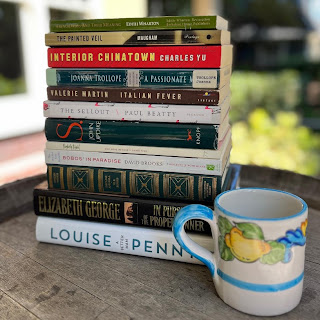
I finished 13 books in July, including three from my TBR 23 in '23 stack. There wasn’t a clunker in the bunch.
 
See any of your own favorites here? 

PICTURED

French Ways and Their Meaning by Edith Wharton, a collection of WWI-era essays aimed at teaching American soldiers about France. One of my TBR 23 in '23 books. ๐ŸŒน๐ŸŒน๐ŸŒน๐ŸŒน

The Painted Veil by Somerset Maugham. This is an August buddy read, but I jumped the gun. As usual, I enjoyed the book much more than the movie, which I watched when it came out in 2006. ๐ŸŒน๐ŸŒน๐ŸŒน๐ŸŒน๐ŸŒน

Interior Chinatown by Charles Yu, which I loved. Yu won the 2020 National Book Award for this funny, insightful satire of Hollywood. ๐ŸŒน๐ŸŒน๐ŸŒน๐ŸŒน๐ŸŒน

A Passionate Man by Joanne Trollope. I love a good Aga Saga and Trollope always delivers. ๐ŸŒน๐ŸŒน๐ŸŒน๐ŸŒน๐ŸŒน

Italian Fever by Valerie Martin is the story of a woman who goes to Italy when the novelist she works for dies there and she needs to wrap up his affairs. The details were more than a bit odd, but it kept me interested. ๐ŸŒน๐ŸŒน๐ŸŒน1/2

The Sellout by Paul Beatty won the 2020 Booker Prize. It was a little scattered and magical for me, but I appreciate the talent it took to create it. ๐ŸŒน๐ŸŒน๐ŸŒน๐ŸŒน

S. by John Updike is a 1988 novel inspired by the Rajneeshees here in Oregon. It sagged for me some in the middle, but had a couple of twists that perked up the ending. All in all, a highlight of the month. It will stick with me. ๐ŸŒน๐ŸŒน๐ŸŒน๐ŸŒน

Foxed Quarterly Vol. 77, the Spring 2023 issue. I keep track of when I finish these so I know which ones I’ve read. ๐ŸŒน๐ŸŒน๐ŸŒน๐ŸŒน๐ŸŒน

Bobos in Paradise by David Brooks, because I always seem to be about 20 years behind with popular sociology books. ๐ŸŒน๐ŸŒน๐ŸŒน๐ŸŒน

Vile Bodies by Evelyn Waugh, a buddy read over on Instagram. So good! ๐ŸŒน๐ŸŒน๐ŸŒน๐ŸŒน๐ŸŒน

In Pursuit of the Proper Sinner by Elizabeth George, another in her Inspector Lynley series I’m marching through. ๐ŸŒน๐ŸŒน๐ŸŒน๐ŸŒน

A Better Man by Louise Penny. I enjoyed this one as much as always and now only have three left! ๐ŸŒน๐ŸŒน๐ŸŒน๐ŸŒน๐ŸŒน๐ŸŒน

NOT PICTURED

Shrines of Gaiety by Kate Atkinson, which I read with my ears. What a fantastic book! This shaggy novel set in 1920s London was the perfect companion to Vile Bodies, almost an homage. Another favorite. ๐ŸŒน๐ŸŒน๐ŸŒน๐ŸŒน๐ŸŒน

What were your standout reads in July?


Related Posts Plugin for WordPress, Blogger...