Showing posts with label What Are They Reading?. Show all posts

Thursday, May 25, 2023

Brideshead Revisited by Evelyn Waugh -- WHAT ARE THEY READING?

WHAT ARE THEY READING?

Authors tend to be readers, so they often create characters who like to read or stick real books into their stories. I always like it when a real book gets a shout out in the book I'm reading. 

How do you think an author picks the books the characters read? I usually assume the characters' choice of books reflects the author's tastes or, maybe, what the author was reading at the time. But sometimes a character's reading material is a clue to the character's personality or is even a part of the story.

This is an occasional blog event. If you want to play along, please do! Grab the button, put up a post, and leave leave a comment with a link to your post.

BRIDESHEAD REVISITED
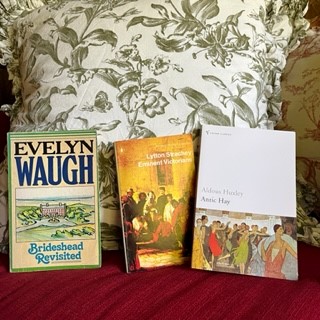

I first read Brideshead Revisited in high school, after watching the tv miniseries with Jeremy Irons and Anthony Edwards on Masterpiece Theater. I read it again in 2004 when I was working my way through the Modern Library's list of Top 100 Novels of the 20th Century. I got a lot more out of it reading it in my 30s than I had as a teenager!

Recently, I read it again and loved it even more. Part of my enjoyment came from reading it with my ears this time. Jeremy Irons narrated the audiobook and did a terrific job. I think I also enjoyed it more now because I've read many other Evelyn Waugh books and had a better sense for his humor and the cultural references.

Which is probably why I noticed more which books the characters mentioned. There were several, but the two that I remember are Eminent Victorians by Lytton Strachey and Antic Hay by Aldous Huxley. 

Eminent Victorians was published in 1918 and is one of the few books the protagonist Charles Ryder took with him when he started college at Oxford. It contains biographies of four leading figures of the Victorian Era, Cardinal Manning, Florence Nightingale, Thomas Arnold and General Charles Gordon.  Because it was irreverent, witty, and debunked the pretensions about Victorians, the book was highly popular and made Strachey famous. 

Antic Hay is a comic novel by Aldous Huxley, published in 1923, which made it a new-release when Anthony Blanche was reading it in Brideshead Revisited. Blanche described his reading experience to Ryder over drinks:
"Picture me, my dear, alone and studious. I had just bought a rather forbidding book called Antic Hay, which I knew I must read before going to Garsington on Sunday, because everyone was bound to talk about it, and it's so banal saying you have not read the book of the moment, if you haven't."

I haven't read Eminent Victorians, but now I want to. I read and enjoyed Antic Hay, but all I remember now are a lot of beautiful young things running around post-WWI London, day drinking and talking about sex. 


Wednesday, September 12, 2018

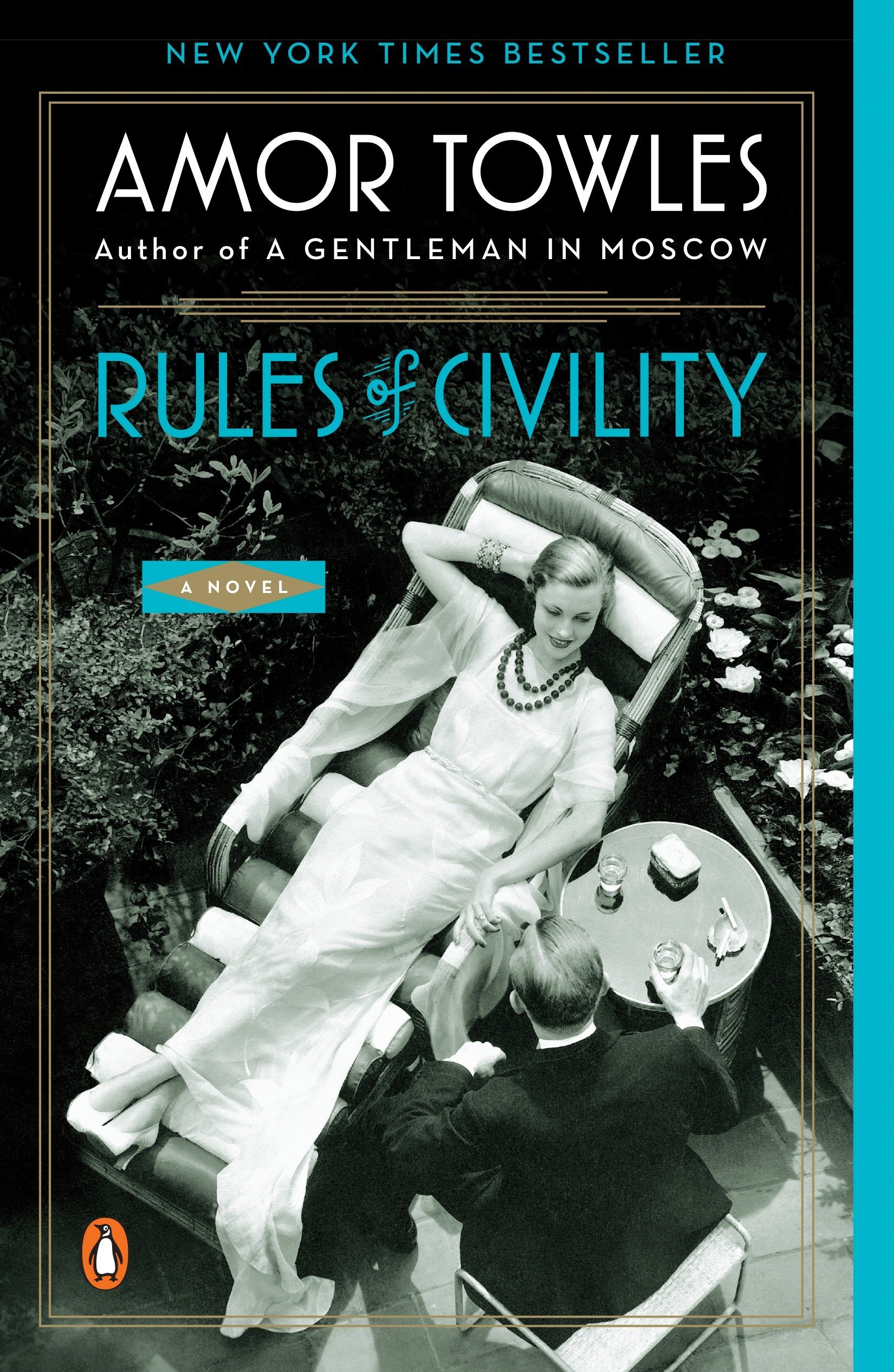
What Are They Reading? Rules of Civility by Amor Towles


Authors tend to be readers, so it is natural for them to create characters who like to read. It is always interesting to me to read what books the characters are reading in the books I read. Even if I can't say that ten times fast.

Usually, the characters' choice of books reflects the author's tastes or, I sometimes think, what the author was reading at the time. But sometimes the character's reading material is a clue to the character's personality, or is even a part of the story.

This is an occasional blog event. If anyone wants to join in, grab the button, put up a post, and leave leave a comment with a link to your post.


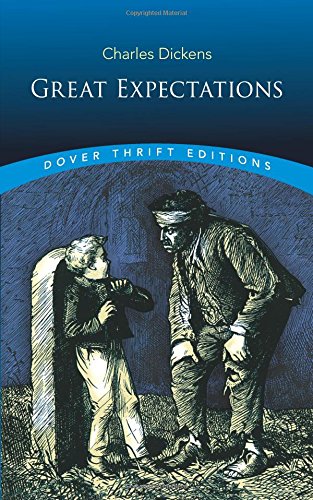
Katey Kontent, the narrator and heroine of Towles's debut novel, spends a lot of her free time reading and discussing books. Her favorite is Great Expectations by Charles Dickens, which she reads over and over. Katie is the daughter of Russian immigrants, grew up in New York City, and uses her smarts and wit to build a career and find her own place in high society. It is understandable that she would be drawn to Pip's complicated story of personal growth.


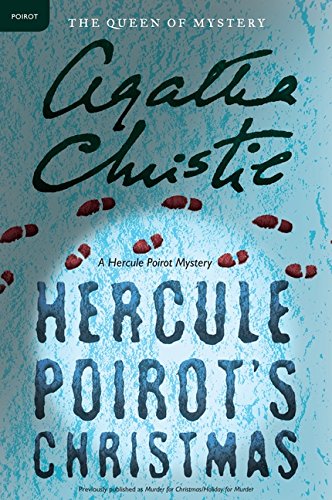
When Katey's personal life becomes most confusing, she develops a taste for Agatha Christie. By 1938, when most of the novel takes place, Christie had published 30 books, and two came out in 1938. In one of the best scenes in Towles's book, Katey settles in for Christmas Eve 1938 alone, with a 10-pound ham from her boss, a bottle of bourbon, and the newly-released Hercule Poirot’s Christmas.


The title, Rules of Civility, comes from another book, George Washington's Rules of Civility (& Decent Behavior in Company and Conversation), a list of 110 maxims that Washington had written in his own handwriting as a school boy. Katey finds a well-thumbed copy of the George Washington book in protagonist Tinker Grey's apartment and later buy's a secondhand copy for herself. There is an appendix in the Towles book listing the 110 rules.


I loved Rules of Civility as much as I did Towles's second book, A Gentleman in Moscow. I can't wait to see what he writes next.


Wednesday, June 14, 2017

What Are They Reading? Slay Ride by Dick Francis


Authors tend to be readers, so it is natural for them to create characters who like to read. It is always interesting to me to read what books the characters are reading in the books I read. Even if I can't say that ten times fast.

Usually, the characters' choice of books reflects the author's tastes or, I sometimes think, what the author was reading at the time. But sometimes the character's reading material is a clue to the character's personality, or is even a part of the story.

This is an occasional blog event. If anyone wants to join in, grab the button, put up a post, and leave leave a comment with a link to your post.

SLAY RIDE BY DICK FRANCIS


I'm a big Dick Francis fan and am working my way through his 47 mystery novels. His mysteries are known for their horse racing themes, a subject he came to naturally after his own career as a prize-winning jockey. He is the only author to win the Edgar Award three times.

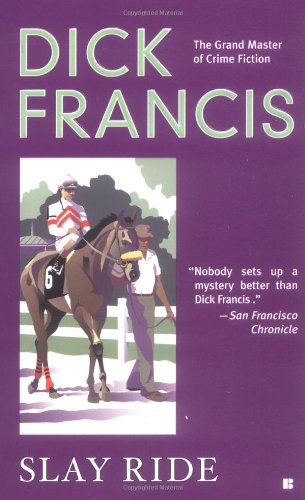
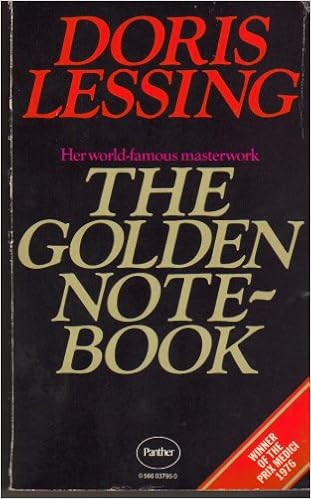
Slay Ride is one of his earlier books, published in 1973. David Cleveland, chief investigator for the British Jockey Club, goes to Norway to investigate the disappearance of an English jockey. While there, the local police detective sets him up with a driver, the officer's brother, described as an author who doesn't make much money so would like the work. The author-turned-driver is quite literary, and while he sits in his car waiting for Cleveland, he reads The Golden Notebook by Doris Lessing.


The choice struck me because, unlike some authors, Dick Francis doesn't do a lot of book name dropping. His characters are usually racing horses, making movies, climbing mountains, or doing other hands-on activities that make for action-filled plots. So having a middle-aged Norwegian man reading Lessing's 1962 feminist classic jumped out at me.

Saturday, August 15, 2015

What Are They Reading? The View from Castle Rock


Authors tend to be readers, so it is natural for them to create characters who like to read. It is always interesting to me to read what books the characters are reading in the books I read. Even if I can't say that ten times fast.

Usually, the characters' choice of books reflects the author's tastes or, I sometimes think, what the author was reading at the time. But sometimes the character's reading material is a clue to the character's personality, or is even a part of the story.

This is an occasional blog event. If anyone wants to join in, feel free to leave a comment with a link to your related post. And feel free to use the button. If this catches on, I can pick a day and make it a weekly event.


Munro may convert me to a short story fan, I enjoyed this collection so much. The View from Castle Rock is a later collection of her stories, more autobiographical than most, even drawing on primary source material from some of Munro's immigrant forebearers.

One of my favorite stories is "The Hired Girl" about a teen-age girl from a small rural Canadian town who gets a job working for a family at their summer house on an island in Georgian Bay because "Mrs. Montjoy needed a country girl for the summer who was trained to do housework."

I love the story for nailing the excruciating awkwardness of first teenage jobs, especially for a bookish, unsocial girl too trapped in her own head to read the people around her. Elsa feels intellectually superior to her boss because she recognizes that the island is named for Nausicaa, a princess in Ulysses, not a character from Shakespeare as Mrs. Montjoy tells her. Elsa tries to establish their social equality from the get go by immediately announcing that, back home, they refer to the maids as hired girls, which Mrs. Montjoy simply ignores. There is a steady conflict between Elsa never admitting she is a servant and Mrs. Montjoy so absorbed with her own concerns to think of Elsa as anything but, and a temporary one at that.

Cutting across the tension in the story is Mr. Montjoy, who only shows up on weekends and spends most of them drinking and reading in the library. He is the only adult who treats Elsa more as an equal. When they first meet, he is reading Seven Gothic Tales by Isak Dineson. He later gives her the book as a going away present. I hope Elsa accepted it as a sign that she would be one of the grown ups eventually.


Wednesday, August 21, 2013

What Are They Reading? Letting Go by Philip Roth


Authors tend to be readers, so it is natural for them to create characters who like to read.  It is always interesting to me to read what books the characters are reading in the books I read. Even if I can't say that ten times fast.

Usually, the characters' choice of books reflects the author's tastes or, I sometimes think, what the author was reading at the time.  But sometimes the character's reading material is a clue to the character's personality, or is even a part of the story. 

This is an occasional blog event. If anyone wants to join in, feel free to leave a comment with a link to your related post. And feel free to use the button.  If this catches on, I can pick a day and make it a weekly event.

LETTING GO BY PHILIP ROTH


Letting Go was Roth's first novel, published when he was only 29, but after he won the National Book Award (for the first time) for Goodbye, Columbus (reviewed here).

Letting Go catches flak for being long and more traditional than Roth's later books.  I am only about halfway through it and I don't care how long it is. I want it to go on and on.

Letting Go is the story of Gabe Wallach, a college professor, and his relationship with Paul and Libby Herz, from when they meet at graduate school in Iowa and then work together in Chicago.  The main plot is broken into side stories and set pieces, including those about Gabe's father, Paul's parents, and Gabe's girlfriend Martha.

Since Gabe and Paul are both English professors, it is no surprise that the characters in Letting Go read and talk about books.  Henry James's The Portrait of a Lady plays a big role in the first section of the book, as Gabe and Libby build an awkward, sexually charged friendship out of their discussions of James's masterpiece. 


Thursday, February 28, 2013

What Are They Reading? Angry Housewives Eating Bon Bons


Authors tend to be readers, so it is natural for them to create characters who like to read.  It is always interesting to me to read what books the characters are reading in the books I read. Even if I can't say that ten times fast.

Usually, the characters' choice of books reflects the author's tastes or, I sometimes think, what the author was reading at the time.  But sometimes the character's reading material is a clue to the character's personality, or is even a part of the story. 

This is an occasional blog event. If anyone wants to join in, feel free to leave a comment with a link to your related post. And feel free to use the button.  If this catches on, I can pick a day and make it a weekly event.

ANGRY HOUSEWIVES EATING BON BONS BY LORNA LANDVIK


I thought that Angry Housewives Eating Bon Bons by Lorna Landvik (which I reviewed here) was as enjoyable as a yummy pot luck casserole, even if it was about as predictable.

The best part was the way it was structured around the monthly meetings of a neighborhood book club over a period of 30 years.  Each chapter started by listing the title of the book under discussion and the reason the hostess chose that book. 

Unfortunately, there was never much discussion of any of the books, but the ladies did come up with some good, or at least attention-grabbing, choices. Sometimes they were classics, sometimes they were popular titles for the time in which the club read them. They clearly did not follow my Book Club's rule against choosing super-long books!

The books highlighted in Angry Housewives are listed below, with my notes in parentheses. 

Hotel by Arthur Haley

Soul on Ice by Eldridge Cleaver

Middlemarch by George Eliot (read it)

On the Road by Jack Kerouac (read it; on the Modern Library's Top 100 list)

Main Street by Sinclair Lewis (read it; on the Modern Library's Top 100 list)

The Prime of Miss Jean Brodie by Muriel Spark (read it; on the Modern Library's Top 100 list)

Slouching Towards Bethlehem by Joan Didion

The Song of the Lark by Willa Cather (on my TBR shelf)

Dr. Faustus by Thomas Mann (read it)

The Electric Kool-Aid Acid Test by Tom Wolfe

Everything You Wanted to Know About Sex but were Afraid to Ask by Dr. David Reuben

Fear of Flying by Erica Jong (read it)

The Heart is a Lonely Hunter by Carson McCullers (read it; on the Modern Library's Top 100 list)

The Total Woman by Marabel Morgan

Roots by Alex Haley

The Grass is Always Greener Over the Septic Tank by Erma Bombeck

Tobacco Road by Erskine Caldwell (read it; on the Modern Library's Top 100 list)

Terms of Endearment by Larry McMurtry

A Tree Grows in Brooklyn by Betty Smith

My Home is Far Away by Dawn Powell

In the Spirit of Crazy Horse by Peter Matthiessen

A Confederacy of Dunces by John Kennedy Toole (read it)

Out on a Limb by Shirley McClain

The Accidental Tourist by Anne Tyler (read it)

West with the Night by Beryl Markham (read it)

The Fountain Overflows by Rebecca West

The Awakening by Kate Chopin (read it)

Handling Sin by Michael Malone

The Stand by Stephen King

My Antonia by Willa Cather (read it)

A Farewell to Arms by Ernest Hemingway (read it; on the Modern Library's Top 100 list)

The Beginning and the End by Naguib Mahfouz

Kristin Lavensdatter by Sigrid Undset (on my TBR shelf)

Ladder of Years by Anne Tyler (on my TBR shelf)

Eastward Ha! by J. S. Perleman

Love in the Ruins by Walker Percy (on my TBR shelf)


Wednesday, January 2, 2013

What Are They Reading? Cutting for Stone


Authors tend to be readers, so it is natural for them to create characters who like to read.  It is always interesting to me to read what books the characters are reading in the books I read. Even if I can't say that ten times fast.

Usually, the characters' choice of books reflects the author's tastes or, I sometimes think, what the author was reading at the time.  But sometimes the character's reading material is a clue to the character's personality, or is even a part of the story. 

This is an occasional blog event. If anyone wants to join in, feel free to leave a comment with a link to your related post. And feel free to use the button.  If this catches on, I can pick a day and make it a weekly event.

CUTTING FOR STONE BY ABRAHAM VERGHESE

My book club read Cutting for Stone a while back but I didn't get to it because I knew I was going to miss that meeting. Everyone loved it and now that I am reading it, I can understand why -- it is such an engrossing story about medicine and doctors and Africa and twins and religion and so much more.

There is a part where the narrator and his twin brother are still tiny, preemie babies and the brother suffers from "apnea of prematurity" that causes him to stop breathing when he sleeps.  The two doctors take turns watching him in the night so they can jiggle him when he stops breathing so that he starts again.

To stay  awake, the doctors read through a set of classic novels, starting with Middlemarch by George Eliot.  Reading the same book gives them something to talk about besides their work and the fate of the baby twins.  They always had a bantering, flirtatious relationship, so it is easy to guess where all that book talk led to . . .  

Wednesday, November 28, 2012

What Are They Reading? The Book and the Brotherhood


Authors tend to be readers, so it is natural for them to create characters who like to read.  It is always interesting to me to read what books the characters are reading in the books I read. Even if I can't say that ten times fast.

Usually, the characters' choice of books reflects the author's tastes or, I sometimes think, what the author was reading at the time.  But sometimes the character's reading material is a clue to the character's personality, or is even a part of the story. 

This is an occasional blog event. If anyone wants to join in, feel free to leave a comment with a link to your related post. And feel free to use the button.  If this catches on, I can pick a day and make it a weekly event.


The Book and the Brotherhood is one of Murdoch's later novels and I've read mixed things about it, so I was slow to pick it up. But I am now completely absorbed by the story and would like to curl up with it just like the characters who go off to a country house for a "Reading Party" weekend.  They all bring books and spend a few snowy days reading, eating, drinking, and talking.  Heaven.

The hostess for the Reading Party chooses Daniel Deronda by George Eliot as her weekend book.  It is Eliot's last novel and, according to wikipedia, is a "mixture of social satire and moral searching, along with a sympathetic rendering of Jewish proto-Zionist and Kabbalistic ideas."

Leave it to Iris Murdoch to chose such a well-packed novel for one of her characters!  I'm not sure how closely Eliot's novel ties in with The Book and the Brotherhood, although Murdoch's novel involves quite a bit of social satire and a lot of moral searching.  There are no "proto-Zionist" or "Kabbalistic" ideas, but there are pages of philosophizing (it is Murdoch, after all) about marriage, friendship, university education, wealth, and Marxism.

Wednesday, June 27, 2012

What Are They Reading? Tresspass


Authors tend to be readers, so it is natural for them to create characters who like to read.  It is always interesting to me to read what books the characters are reading in the books I read. Even if I can't say that ten times fast.

Usually, the characters' choice of books reflects the author's tastes or, I sometimes think, what the author was reading at the time.  But sometimes the character's reading material is a clue to the character's personality, or is even a part of the story. 

This is an occasional blog event. If anyone wants to join in, feel free to leave a comment with a link to your related post. And feel free to use the button.  If this catches on, I can pick a day and make it a weekly event.

TRESPASS BY ROSE TREMAINE


This is a great, tangled story of grown up, messed up families living in southern France.  None of them are readers.  The French brother and sister barely function, let alone read. The English brother collects antiques,  his sister designs gardens, and her girlfriend paints watercolors, but none of the three read.

So the one book scene really stands out.  Anthony, the Englishman, describes his mother's death of cancer, including the detail of her re-reading favorite book while in the hospital.  The book was Staying On by Paul Scott.

Staying On is the sequel to Scott's Raj Quartet and won the Booker Prize in 1977.  It is the story of a British colonial couple who stays on in the hills of India after India's independence. 

It could be that Anthony's mother read Staying On because she was from South Africa and enjoyed the post-colonial theme of the novel.  But the plot of Staying On also ties in with the "trespass" themes of Tremain's book.  There is a potential, legal trespass involving the boundary lines of the French siblings' property, but there are also trespasses against family ties, emotional bonds, decency, and personal security.

Now I want to read Staying On to see how the book connects with Trespass.  But I am such a completist that I first want to read The Raj Quartet, which is on my TBR shelf.

Thursday, May 3, 2012

What Are They Reading? Dressed for Death


Authors tend to be readers, so it is natural for them to create characters who like to read.  It is always interesting to me to read what books the characters are reading in the books I read. Even if I can't say that ten times fast.

Usually, the characters' choice of books reflects the author's tastes or, I sometimes think, what the author was reading at the time.  But sometimes the character's reading material is a clue to the character's personality, or is even a part of the story. 

This is an occasional blog event. If anyone wants to join in, feel free to leave a comment with a link to your related post. And feel free to use the button.  If this catches on, I can pick a day and make it a weekly event.

Dressed for Death by Donna Leon


In this third installment in Leon's Venice-based series featuring Commissario Guido Brunetti, both Guido and his wife Paola are reading some pretty heavy tomes.

Paola is on vacation with the kids in the mountains, escaping the August heat of Venice.  Apparently she is a big Henry James fan and is reading his novel, The Sacred Fount.  Paola and I are going to have to agree to disagree about James.  He will never be one of my favorites, as I discussed here and here.

Stuck in the city to solve a mystery, Guido draws inspiration from Tacitus, reading the classic author's History of Rome.

Whew!  Maybe Paola and Guido need to take a break and read a good mystery!

Sunday, March 18, 2012

What Are They Reading?


Authors tend to be readers, so it is natural for them to create characters who like to read.  It is always interesting to me to read what books the characters are reading in the books I read.

I can't say that ten times fast.  But I can start a new, occasional post about what these characters are reading.

Usually, the characters' choice of books reflects the author's tastes or, I like to think, what the author was reading at the time.  But sometimes the character's reading material is a clue to the character's personality, or is even a part of the story. 

If anyone wants to join in, feel free to leave a comment with a link to your related post. And feel free to use the button.  If this catches on, I can pick a day and make it a weekly event.


This inaugural post looks at what the character's in P. D. James's The Black Tower are reading.  This is the fifth book in her Adam Dalgliesh series, was published in 1975, and takes place at a private nursing home on the coast of Dorset.

Dalgliesh himself, when he is not solving mysteries as a Commander at New Scotland Yard, is a poet, with several published volumes of his own verse. He is recuperating from a serious illness and heads to the coast determined to retire from the police force.  He packs with him several volumes of poetry and a Thomas Hardy novel.

One of the residents at the Toynton Grange home finds a poison pen letter in the book she is reading -- "the latest" by Iris Murdoch.   The story takes place in the fall of 1974, so depending on when Dame Iris's books were published, this character was reading either The Black Prince (which won the James Tait Black Memorial Prize) or The Sacred and Profane Love Machine (which won the Whitbread, now Costa, Award). Good choices, both.


Related Posts Plugin for WordPress, Blogger...