Saturday, May 9, 2020

Author Interview: Paul Kent on P. G. Wodehouse


Author Paul Kent is a long-serving member of the P. G. Wodehouse Society and lifelong Wodehouse fan. Based on unprecedented access to Wodehouse's papers and library, Kent is working on a three-volume study of Wodehouse's writing career. Pelham Grenville Wodehouse, Volume 1, This is jolly old Fame, is out now. It is a must read for all Wodehouse enthusiasts.


Paul Kent talked with Rose City Reader about his new P. G. Wodehouse trilogy and what Wodehouse book to read first:


There are plenty of P. G. Wodehouse fans, but please give us a thumbnail introduction for new readers.

Wodehouse is simply the funniest English comic writer of the 20th century. In a long and productive life, he wrote over 100 books, of which the best known are the Jeeves & Wooster series, which has been adapted for TV on numerous occasions, concerning a well-meaning but not particularly intelligent young chap and his omniscient valet, who extracts him from all kinds of ridiculous scrapes. There’s also the Blandings series, which focuses on a dotty English early and his love for his prize-winning, gigantic pig. As well as these headliners, there are several sub-series and dozens of one-off novels and stories. Without exception, they’ll bring a smile to your face. If they don’t, you’re probably dead already.

What is your background and how did it lead you to write your three-volumes on the life and works of Wodehouse?

I was a BBC radio producer, specializing in music and drama performances. I had first encountered Wodehouse at the age of 12, but carried this love over into my professional life, during which I commissioned and produced numerous BBC readings and dramatizations. Now semi-retired, I have the time to write the book(s) I’ve always wanted to write about him.

How are the three volumes organized?

Volume 1: This is jolly old Fame focuses on the development of Wodehouse’s unique writing style. He has been praised by everyone from Stephen Fry to Queen Elizabeth for his immaculate use of English, which is erudite, funny, and a joy to read. Volume 2 is a tour of "Wodehouse World" – the micro-universe he created with his many characters; and Volume 3 looks at how his work has survived through time. Wodehouse is still as popular as he ever was, even though some of his books are over a century old – and I investigate why that is.

There are other biographies of Wodehouse. What distinguishes yours from the others?

For a start, it’s not a biography! It’s the first full-length study of how Plum’s writing developed over his long writing life, and how the ideas in his head made it onto the page. Oddly, this has never been attempted before in any great depth, and the reviewers of Volume 1 – many of them seasoned Wodehouseans – seem to have found it a rewarding approach.

What is the origin of the subtitle, This is jolly old Fame?

Good question! It’s from a letter Wodehouse wrote to his stepdaughter Leonora just as he was breaking big in 1922: "In a review of a book in the Times, they say 'The author at times reverts to the P.G. Wodehouse manner.' This, I need scarcely point out to you, is jolly old Fame. Once they begin to refer to you in that casual way as if everybody must know who you are all is well."

What did you learn from writing your biography that most surprised you, either about Wodehouse or his work?

Just how industrious he was. He spent most of his waking hours writing from 1900 to his death in 1975. He even died in hospital with his pen in his hand and notes for his new novel and some song lyrics at his bedside.

What is you favorite Wodehouse book?

You’re not making this easy! I guess it’s the one that turned me on to Wodehouse at the age of 12 which was loaned to me by a school friend – Psmith in the City. Almost 50 years later, I still love it.

For readers new to Wodehouse, which books do you suggest they read first?

Without doubt, The Code of the Woosters, featuring Jeeves and Bertie. It seems to top most of the polls, and is so beautifully orchestrated it resembles a stage farce on acid. Nobody but Wodehouse could have written it – you can only read a few pages at a time, it’s so relentlessly funny. An ideal antidote to modern life.

When will Volumes 2 and 3 of your Wodehouse trilogy be available?

Volume 1 has already been published, Volume 2 will emerge in Fall 2020 (coronavirus permitting), and Volume 3 is being prepared.

What's next for you? What are you working on now?

Volume 3! But there’s still so much material, that might not be the end . . .

THANK YOU, PAUL!

PELHAM GRENVILLE WODEHOUSE, VOLUME 1, THIS IS JOLLY OLD FAME IS AVAILABLE ONLINE IN E-BOOK AND HARDBACK.


Thursday, May 7, 2020

Book Beginnings: Hidden Falls by Kevin Myers


Welcome to Book Beginnings on Fridays!

Every week here on Book Beginnings on Fridays, we get together to share the first sentence or so of our current read. Please share yours on your blog or other platform and leave a link below. If you participate on social media or just want to join in here, leave a comment letting us know where to find you or the opening lines you want to share.

Please use the hashtag #BookBeginnings so we can find each other.

You can find more details here.

MY BOOK BEGINNING


Even after his death, my father found ways to show his disapproval. He never told me the truth about his life, but he'd saved his biggest lie until he was dead.
-- Hidden Falls by Keven Myers.

This new novel follows protagonist Michael Quinn back to Boston following the unexpected death of his father. Middle-aged, single, in a strained relationship with his own kid, and at the peak of a dead-end job in print journalism, Michael is on the brink of a classic mid-life crisis. What he gets instead is a real-life crisis when he discovers his father was involved with organized crime and Michael lands in the middle of a criminal conspiracy.

Kevin Myers is a former stand up comic and comedy writer. Hidden Falls is his first novel and looks like a lot of fun – a crime story with laughs and romance.

YOUR BOOK BEGINNING

I'm going to try a thumbnail linky this week - something new! If it doesn't work, we can switch back to regular. If you have problems, please leave your link in a comment and I will add it.

Mister Linky's Magical Widgets -- Thumb-Linky widget will appear right here!
This preview will disappear when the widget is displayed on your site.
If this widget does not appear, click here to display it.


THE FRIDAY 56

There are other weekly blog events on Fridays. One I have been doing for quite a while is the Friday 56, hosted by Freda's Voice. It's a natural tie in with Book Beginnings. The idea is to post a two-sentence teaser from page 56 of your current read, or 56% of the way through the ebook or audiobook.

Find details and the Linky for your Friday 56 post on Freda’s Voice.

My Friday 56 teaser:

Tattooed flesh, unusual piercings, and hair dye once shocking to many was now just a standard uniform among Portland's youth – the look inspired no more attention that the tourists with their golf polos tucked into their khakis of the city workers wearing their keycard lanyards and defeated expressions.


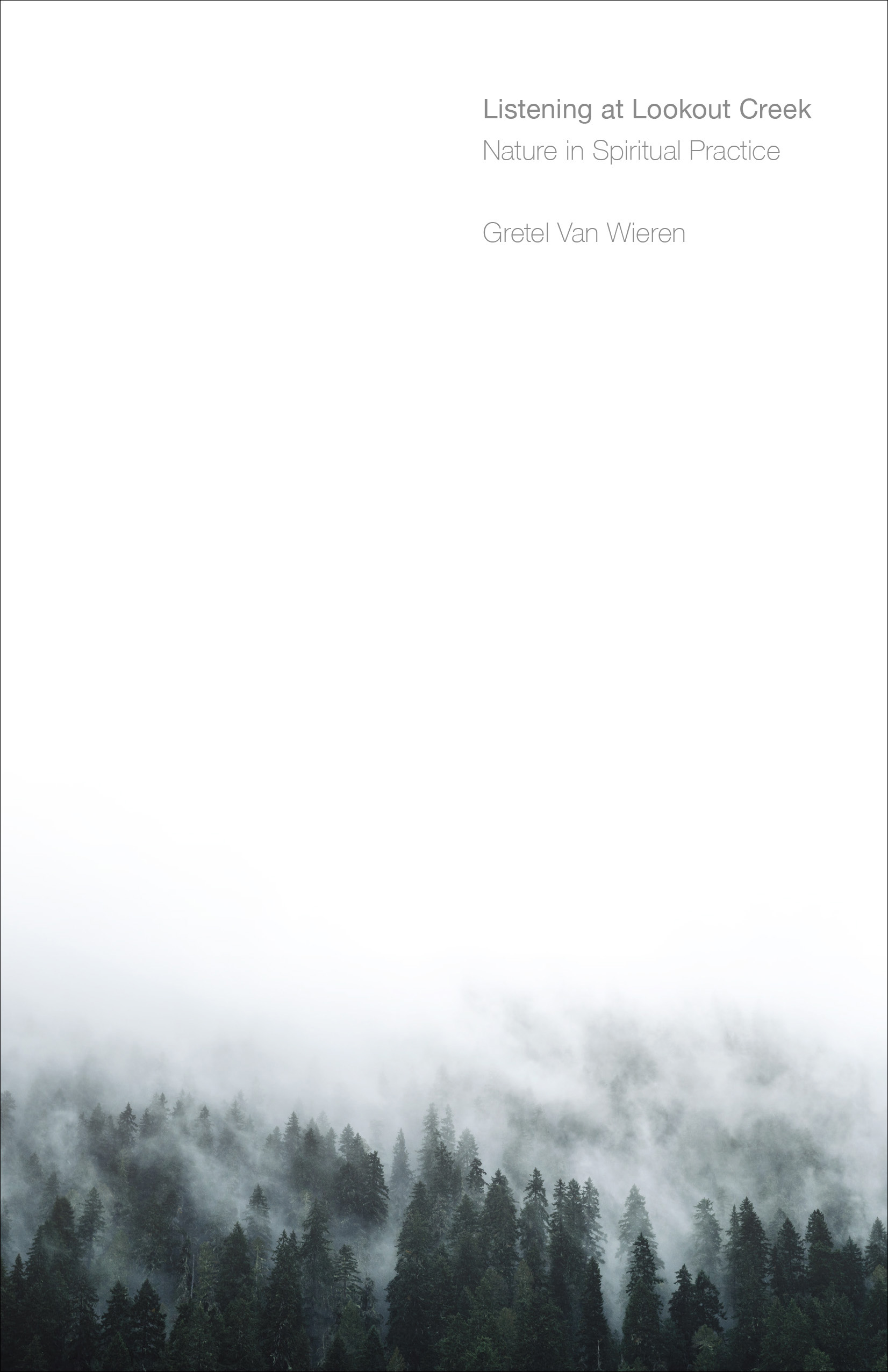
Author Interview: Gretel Van Wieren, Listening at Lookout Creek


Gretel Van Wieren went on retreat to the Andrews Experimental Forest in Oregon’s western Cascade Mountains to reconnect with the natural world. She wanted to conduct a "spiritual experiment" to try to recapture the sense of deep connection with nature she had when growing up, but felt she had lost while living a super busy, high-tech life with kids.

She wrote about her experience and what she learned in Listening at Lookout Creek: Nature in Spiritual Practice by Gretel Van Wieren, from OSU Press.


Gretel Van Wieren talked with Rose City Reader about getting kids outdoors, a spiritual connection with the natural world, and her new book, Listening at Lookout Creek:

What is your family and work background and how did it lead to writing Listening at Lookout Creek?

I grew up on west Michigan’s lakeshore where I and my three sisters spent a huge amount of time outdoors. My father is a real outdoorsman and took us along on all his activities – fishing with down riggers on Lake Michigan, wading for trout at our family cabin, hunting for morels, digging in the garden, boiling maple sap, identifying birds, collecting night crawlers, picking up roadside trash, you name it, we were out there.

It wasn’t until I was a student at Yale Divinity School that I realized just how much these experiences of nature had influenced my spiritual outlook. After I graduated, I worked as a rural parish pastor in upstate New York where many of my parishioners were dairy farmers. They often talked about the deep connections they had with the land, and even though conversations were not always the most direct, it was clear that their relationship with nature was foundational to their sense of spirituality. It was during that time that I really began to explore the world of nature mysticism, which serves as the basis for the writing of Listening at Lookout Creek.

You describe a "spiritual experiment" that inspired this book. Can you explain more about that?

I generally think of the spiritual life as a kind of ongoing investigation, an experiment, if you will, about what gives life meaning and significance. The “spiritual experiment” that served as the impetus for this book was a condensed version of that. I went into my writing residency at the H.J. Andrews Forest with a specific research question – was it possible, I wanted to know, to rekindle the sense of deep connection I had once had with the natural world, and could it be done in just ten days? The experiment also held a sense of urgency, as it was a particularly restless spiritual time in my life. To be honest, I was so over-taxed at the time with all my obligations, I developed the idea of a spiritual experiment on the plane ride from Detroit to Eugene. I actually think it was my husband, Jeff’s idea.

At the end of the ten day experiment I did feel a sense of reconnection with nature and my own self, though I also wound up discovering what most scientific experiments do – questions lead to further questions. I wondered how long my sense of spiritual connection with nature would last, and whether it was actually possible to live a life of such connection in the midst of my insanely busy, suburban, hi-tech life? I’m still not sure.

Who is the audience for your book?

I would say parents and people in general who are concerned about getting kids outdoors more and on screens less, the fishing and hunting community, and spiritual seekers. In the past month, I have been contacted about the book by the Children & Nature Network, Friends of Michigan Rivers, and The Society of Friends/Quakers in Michigan. I think that well sums up the book’s audience.

During this time of corona virus stay home orders and quarantines, are there particular lessons families can gain from your book?

Get outside as much as you can! I realize that access to the outdoors varies depending on where we live. Still, many of us are spending more time than ever outside, which is a real up-side to the pandemic, in my mind. When Listening at Lookout Creek first came out, my publisher asked me to write a listicle based on the book’s theme of connecting children with nature. It’s called “Ten Tips for Getting your Kids Outdoors.” A few tips that I have found to be especially helpful during this time are: ask your kids what they want to do outdoors; do it with them; work it into their daily study schedules; and make outside somewhere they want to be.

In general, what do you hope readers will take away from your book?

Don’t give up working to connect with the natural world, no matter how small the activities. There are a lot of articles out there right now talking about all the amazing things people are doing in and for nature. It is truly inspiring. At the same time, I find it a bit overwhelming at times. As if now that we have all this time on our hands we should be putting in giant gardens, going on marathon-long walks, learning to identify hundreds of bird species, joining environmental activist campaigns, and the list goes on. Many, if not most of us, are just trying to get by, juggling work and kids at home, paying bills, doing chores. So be generous with yourself and with your loved ones when it comes to getting outdoors during these times. And that goes for all the time. Get outside daily, for sure; but appreciate and be satisfied with the tiny moments you spend in nature and with each other.

What did you learn from writing your book – either about the subject of the book or the writing process – that most surprised you?

I think I realized just how demanding I am, too demanding I’m afraid, when it comes to spending time outdoors. I don’t think parents should necessarily shy away from forcing their children to spend time outside. But I do think, at least in my case, such a single-minded attitude can create a wedge between parents and children, particularly since most of their peers spend so much time online, and those social relationships are extremely important. I guess I would say that I learned even more what a difficult balance it is to both resist and embrace technology, especially when parenting.

In terms of the writing process, it was much more gratifying than I would have expected to work through my recollections of my own childhood experiences of nature and my experiences of nature with my own children – and then to work through them again and again when writing and rewriting about them. It really provided a source of inner renewal and strength that I had not anticipated.

Who are your favorite authors? Is your own writing influenced by the authors you read?

I have a lot of favorite authors, given how interdisciplinary my work is. In terms of those who especially influenced the writing of this book, I’d have to say Rick Bass, Todd Fleming Davis, Alison Hawthorne Deming, Jerry Dennis, Annie Dillard, Tom Montgomery Fate, Robin Kimmerer, Kathleen Dean Moore, and Scott Russell Sanders. Since I have no formal training in creative writing, their books were some of my best teachers and guides along the way.

What kind of books do you like to read? What are you reading now?

The pandemic has opened more time for reading, as we all know. For me this has meant reading fiction, which I rarely have time for during the academic year. I just finished, and loved, Delia Owens’ Where the Crawdads Sing, based on the recommendation of my two daughters, Inga and Clara. At the beginning of the quarantine, we stayed for several weeks at my childhood home, where I just chose books that looked interesting from my parents’ book shelves; I read Ann Packer’s The Dive from Clausen’s Pier and Heather Morris’ The Tattooist of Auschwitz.

I also recently finished some books of creative nonfiction that have been on my desk for a while – Jill Sisson Quinn’s Deranged: Finding a Sense of Place in the Landscape and in the Lifespan and Don Mitchell’s Flying Blind: One Man’s Battle with Buckthorn, Coming to Peace with Authority, and Creating a Home for Endangered Bats, a book I picked-up at (shout out to!) Otter Creek Used Books in Middlebury, Vermont. Currently on my shelf are Pam Houston’s Deep Creek: Finding Hope in High Country and Ann Irvine’s Trespass: Living at the Edge of the Promised Land.

And I am always reading spiritual writing, and scholarly articles and books in my field of religion and the environment. Carolyn Finney’s Black Faces, White Spaces: Reimagining the Relationship of African Americans to the Great Outdoors is one of my latest favorites.

What's next for you? What are you working on now?

I am writing a lot of poetry these days, because that feels doable with the scattered snippets of time I have. I am also working on a book on place, tentatively titled Staying Put: The Ambiguity of Place in an Age of Uncertainty. It’s a kind of follow-up to Listening at Lookout Creek, focusing on my suburban home place, rather than the wild places of the Andrews Forest and my family’s hunting cabin. I had titled the book before the pandemic, though now it feels like it rings eerily true. It’s certainly given me more to think about in terms of the meaning of place, and how that changes when we’re forced to stay somewhere.

THANKS GRETEL!

LISTENING AT LOOKOUT CREEK IS AVAILABLE ONLINE, LIKE ALL BOOKS THESE DAYS.


Monday, May 4, 2020

Mailbox Monday: Box of Books from Powell's

A box of books from Powell's Books was the highlight of my week last week! What new books came to your house?


Do any of these catch your fancy? There was a reason I picked each one:

A Crime in the Neighborhood by Suzanne Berne. Berne won the 1999 Women's Prize for Fiction (then called the Orange Prize) for this debut novel. I'm working my way through the winners of the Women's Prize.

Theory of War by Joan Brady. Brady won the Costa Book of the Year Award (then called the Whitbread BOTY Award) in 1993 for this novel about the American Civil War. I'm also reading the winners of this prize.

The Cat Who Went to Paris and The Cat Who'll Live Forever by Peter Gethers. These are for my mom and sister, who just finished Gethers's other book about Norton the Cat, A Cat Abroad.

Bamboo by William Boyd. I'm working my way through all of Boyd's books, including this collection of essays and criticism.

Powell's Books is Portland's – and the world's – largest independent bookstore. It is a book-lovers' Mecca, general tourist attraction, and the cultural heart of downtown Portland. Known as Powell's City of Books, Powell's downtown store is a labyrinth of new and used books.

Like most retail stores, Powell's has been closed for almost two months now because of coronavirus. Portlanders have rallied around our favorite shops and restaurants, including Powell's. I've been trying to buy as many books from as many local bookstores as I can, including Powell's. I ordered Easter books for my grandkids and ordered a batch of used books for myself. Powell's offers free shipping on orders over $25.

Lots of local bookstores are offering curbside pickup or even local delivery these days. If there is no local bookshop where you live, you can also order from Bookshop.org and it will find the nearest independent bookstore or your favorite book shop and that store will get a percentage of the proceeds from every order.


Mailbox Monday is  a weekly "show & tell" event to share the books you acquired the week before. Visit the Mailbox Monday website to find links to all the participants' posts and read more about Books that Caught Our Eye the prior week.

Leslie of Under My Apple Tree, Serena of Savvy Verse & Wit, and Martha of Reviews by Martha's Bookshelf host Mailbox Monday.


Saturday, May 2, 2020

List: Edgar Award Winners for Best Novel


Every year, the Mystery Writers of America award the "Edgar" Award in nine categories of mystery and crime writing, plus a handful of special awards. I'm reading through the list of winners of Edgar Award for Best Novel.

The award is named in honor of Edgar Allen Poe, born in 1809. The first Edgar Award went to Watchful at Night by Julius Fast in 1947 for Best First Novel by an American Author. The "Best Novel" Award has been around since 1954.

Although I enjoy a good mystery, there are few on this list that I have read. Why is this? There may be many clues, but I suspect foul play.

I you are also reading Edgar winners and have a related post, leave a link in a comment and I will add your link in a list at the bottom of this post.

Those I have read are in red. Those on my TBR shelf are in blue.

2020 The Stranger Diaries by Elly Griffiths

2019 House Witness by Mike Lawson

2018 Bluebird, Bluebird by Attica Locke

2017 Before the Fall by Noah Hawley

2016 Let Me Die in His Footsteps by Lori Roy

2015 Mr. Mercedes by Stephen King

2014 Ordinary Grace by William Kent Krueger

2013 Live by Night by Dennis Lehane

2012 Gone by Mo Hayder

2011 The Lock Artist by Steve Hamilton

2010 The Last Child by John Hart

2009 Blue Heaven by C. J. Box

2008 Down River by John Hart

2007 The Janissary Tree by Jason Goodwin

2006 Citizen Vince by Jess Walter (reviewed here)

2005 California Girl by T. Jefferson Parker

2004 Resurrection Men by Ian Rankin

2003 Winter and Night by S.J. Rozan

2002 Silent Joe by T. Jefferson Parker

2001 The Bottoms by Joe R. Lansdale

2000 Bones by Jan Burke

1999 Mr. White's Confession by Robert Clark

1998 Cimarron Rose by James Lee Burke

1997 The Chatham School Affair by Thomas H. Cook (reviewed here)

1996 Come to Grief by Dick Francis

1995 The Red Scream by Mary Willis Walker

1994 The Sculptress by Minette Walters

1993 Bootlegger's Daughter by Margaret Maron

1992 A Dance at the Slaughterhouse by Lawrence Block

1991 New Orleans Mourning by Julie Smith

1990 Black Cherry Blues by James Lee Burke

1989 A Cold Red Sunrise by Stuart M. Kaminsky

1988 Old Bones by Aaron Elkins

1987 A Dark-Adapted Eye by Barbara Vine

1986 The Suspect by L.R. Wright

1985 Briar Patch by Ross Thomas

1984 La Brava by Elmore Leonard

1983 Billingsgate Shoal by Rick Boyer

1982 Peregrine by William Bayer

1981 Whip Hand by Dick Francis

1980 The Rheingold Route by Arthur Maling

1979 The Eye of the Needle by Ken Follett

1978 Catch Me: Kill Me by William H. Hallahan

1977 Promised Land by Robert B. Parker

1976 Hopscotch by Brian Garfield

1975 Peter's Pence by Jon Cleary

1974 Dance Hall of the Dead by Tony Hillerman

1973 The Lingala Code by Warren Kiefer

1972 The Day of the Jackal by Frederick Forsyth

1971 The Laughing Policeman by Maj Sjowall, Per Wahloo

1970 Forfeit by Dick Francis

1969 A Case of Need by Micheal Crichton (as Jeffery Hudson)

1968 God Save the Mark by Donald E. Westlake

1967 The King of the Rainy Country by Nicolas Freeling

1966 The Quiller Memorandum by Adam Hall

1965 The Spy Who Came in from the Cold by John le Carre

1964 The Light of Day by Eric Ambler

1963 Death and the Joyful Woman by Ellis Peters

1962 Gideon's Fire by J.J. Marric

1961 The Progress of a Crime by Julian Symons

1960 The Hours Before Dawn by Celia Fremlin

1959 The Eighth Circle by Stanley Ellin

1958 Room to Swing by Ed Lacy

1957 A Dram of Poison by Charlotte Armstrong

1956 Beast in View by Margaret Millar

1955 The Long Goodbye by Raymond Chandler

1954 Beat Not the Bones by Charlotte Jay


OTHERS READING THESE BOOKS

If you would like to be listed here, please leave a comment with your links to any progress reports or reviews and I will add them.

Friday, May 1, 2020

Book Beginnings: The Tiger's Wife by Téa Obreht


It's a new month and a new start for Book Beginnings. I've also remodeled Rose City Reader, as you can see!  

The blog needed freshening up, after 12 years. So the green is gone, along with the pink trim. I wanted a nice modern, fresh look. So I painted the walls white. What do you think?

Book Beginnings is also looking different today. The "official rules" section is gone. The idea of this weekly event is easy. Post the first sentence (or so) of the book you are reading on whatever platform you like and link it below or leave a comment. Read the details here

My Book Beginning posts haven't been showing up in my google analytics and I can only think it's because the content looks too similar week to week. So no more posting the same instructions section every week. 

With explanations over, here is . . .

MY BOOK BEGINNING


The forty days of the soul begin on the morning after death.

-- The Tiger's Wife by Téa Obreht. I didn't read this when it came out about ten years ago, even though it was hugely popular. Now I love it. I'm reading it with my ears because I'm finding audiobooks easier to concentrate on these days. How about you?

One reason I didn't read this earlier is because I get The Tiger's Wife confused with Battle Hymn of the Tiger Mother by Amy Chua. That memoir about "raising children the Chinese way" sounds interesting but not something that resonates with this childless 50-something. The Tiger's Wife is a novel about a young doctor, Natalie, in an unnamed Balkan country recovering from a civil war. She is recovering from the death of her grandfather and and unraveling the mystery of his death.


YOUR BOOK BEGINNING


THE FRIDAY 56

Freda's Voice hosts The Friday 56, is a natural tie in with Book Beginnings. Find details and the Linky for your Friday 56 post on Freda’s Voice.


MY FRIDAY 56

"The story of this war – dates, names, who started it, why – that belongs to everyone. Not just the people involved in it, but the people who write newspapers, politicians thousands of miles away, people who've never even been here or heard of it before."


Wednesday, April 29, 2020

Author Interview: Billy Lombardo, Morning Will Come


Billy Lombardo is an author, editor, and writing coach. After teaching literature and creative writing for 25 years, Billy now runs a writing and editing business called Writing Pros/e. He is also the founder and managing editor of Polyphony Lit, a global literary magazine for high school writers and editors. His latest book, Morning Will Come, is the story of a marriage and family struggling with the disappearance of the oldest daughter.


Billy Lombardo talked with Rose City Reader about how a collection of stories became his novel, Morning Will Come, and some of his favorite books and authors:

How did you come to write Morning Will Come?

It began with four stories told to me by two people. I thought they were just too beautiful not to write about. By the time I had five somewhat disconnected stories written, Other Voices Books announced that they were looking to publish a collection of short stories or a novel-in-stories as their next book, and so I wrote three more stories and sent them off.

Why did you decide to tackle the almost unbearable subject of a missing child and how that tragedy affects a marriage and a family?

It wasn't a decision. As it turned out, Isabel, a character in the first story I had written, "At Khyber Pass," wasn’t present in any of the other stories in the collection.

I was in my first residency at Warren Wilson, a low-residency MFA program, and my workshop class had read an early draft of one the stories, "The White Rose of Chicago." A couple of students in the workshop didn’t know what to make of the story taking place beneath the story. The teacher, Wilton Barnhardt, stood up, gestured fluently, and said, “But what if Audrey is grieving over the death of child?”

I had written that draft without knowing what Audrey was grieving over. So when Gina Frangello, the editor at Other Voices, encouraged me to connect the stories, I realized that Isabel had to make the sacrifice for the novel. To break my heart further, I revised that first story in a way that made me fall for Isabel even more.

I didn’t realize until much later, that I wasn’t attempting to tackle the unbearable subject of the disappearance and death of a child, as much as I was trying to language my own grief by trying to understand Audrey’s.

What is your "day job"? How did it lead you to writing fiction?

I’ve recently taken an early retirement from a teaching career, so right now my day job is building a writing and editing business called Writing Pros/e. My teaching did not lead me to writing, though. I came to writing by way of doing performance poetry at The Green Mill, the birthplace of slam poetry. My work was very narrative, though, and after reading and meeting Stuart Dybek, I gave short fiction a shot, and never looked back.

Did you know right away, or have an idea, how you were going to end the story? Or did it come to you as you were in the process of writing?

I didn’t have any idea where the story would end. What I wanted was some small hope. And sharing my son’s baseball life with him had always been a great source of joy for me as a young father. Neither Audrey nor Alan knew how to language their grief and sadness in Morning Will Come, and I wasn’t sure if they’d ever get to that point. So I gave the final story to Dex, the son.

Morning Will Come is a "re-issued, re-titled, re-edited, re-beautifully jacketed version" of your 2009 novel, How to Hold a Woman. Tell us about your decision and the process of reworking your debut novel.

I had recently gotten released from the contract with the publisher of How to Hold a Woman, and was encourage to reach out to Jerry Brennan of Tortoise Books to see if he might be interested in re-issuing the book, and to my delight, he agreed to acquire it.

What did you learn from writing your book – either about the subject of the book or the writing process – that most surprised you?

I think that every time a writer sits down to the table and strives to string words together to get at the thing within, they can’t help but learn—so, in that way, I came away a better writer. More importantly, though, I think I learned something about how to use my own interior world to gain access to the interiority of my characters.

What did you enjoy most about writing this book?

Oh, there’s just such great joy in writing stories that do something, that language some universal thing in some completely singular way, that move people. The joy in this one was that I noticed my own growth as a writer.

You dedicate your book "For Mickie Flanigan, that I may live long and well enough to pay some bit of it forward." What's the story there?

She’d kill me if I said anything more.

Who are your three (or four or five) favorite authors? Is your own writing influenced by the authors you read?

I don’t think so much of authors as I think of individual works. I’d say that William Maxwell’s So Long, See You Tomorrow, was one of the most important books to me as a writer. I love Steinbeck’s Cannery Row and Salinger’s Franny & Zooey. I love Gatsby. I continue to learn from short stories by ZZ Packer and Amy Bloom, Tobias Wolff and Charles Baxter, Flannery O’Connor.

What kind of books do you like to read? What are you reading now?

Right now I’m reading a collection of stories by Lucia Berlin called A Manual for Cleaning Women. I’m also re-reading To Kill a Mockingbird for an online enrichment course I’m teaching. I grew up in a house with no books, and a consequence of that, for me, is that I really have to be deliberate about putting my butt in a chair to read. And every time I do it, it ends up to be productive.

You have a terrific website and are active on twitter, Facebook, and Instagram. From an author's perspective, how important are social networking sites and other internet resources to promote your book?

Thank you. I guess my understanding of the value of those things comes from my work as the founder and managing editor of Polyphony Lit, a student-run literary magazine and global online literary platform for young writers and editors. We’ve received submissions from high school writers in more than 70 countries, and our staff has editors from dozens of countries. That’s so wild to me. The digital world makes that all possible.

Amy Danzer, my partner and housemate, deserves all the credit for urging me to build and tend to my personal and business websites. There are certainly great authors who seem to do all right without websites and twitter handles, but it’s been good for me. I actually don’t know if it’s helped me sell any books, but it has helped me immensely with my writing and editing business, Writing Pros/e.

What’s next? What are you working on now?

I’ve got a YA novel that I’m just in love with, and I’m working on a book on the craft of fiction for apprentice writers.

Thank you, Billy!

Morning Will Come is available online, like all books these days.


Monday, April 27, 2020

Mailbox Monday: Four New Books for Corona Stay-at-Home

Four new books showed up at my house last week. I don't know about you, but looking forward to book mail is a big part of my corona stay-at-home lifestyle. What new books came into your house last week?

The book I am most excited about is an advance copy of Hidden Falls by Kevin Myers.


Hidden Falls is part mystery, part romcom, part mid-life crisis story of Michael Quinn. When his father dies unexpectedly, Michael returns to Boston to wrap up family affairs and run away from personal problems, only to learn his dad had ties with organized crime.

Judd Apato who directed and co-wrote The 40-Year Old Virgin with Steve Carell described Kevin Myers' new book:
"Hidden Falls is like Dennis Lehane and David Sedaris got together to write a romantic comedy. It's intelligent, charming, and the perfect combination of funny and thrilling."
Hidden Falls is available for pre-order now. The Kindle edition drops June 2, 2020. The hardback ships July 15, 2020.

These other three books also look terrific:


Creole Son: An Adoptive Mother Untangles Nature and Nurture by E. Kay Trimberger. This new memoir is the story of how Kay Trimberger became the single white mother of an adopted biracial son and watched him grow into a troubled your who struggled with addiction. Trimberger draws on her training as a sociologist to explore how biological heritage and the environment adopted children are raised in interact to shape adult outcomes.

Trimberger writes for a general audience and hopes her book will provide support to all parents with troubled off spring. Creole Son is out now from LSU Press.


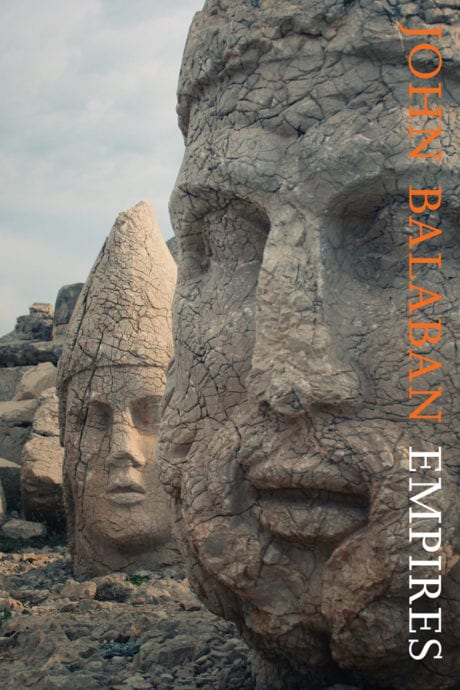
Empires by John Balaban. Poet John Balaban's eighth collection of poetry focuses on key moments in history when culture shifts and imperial eras come to an end. There are poems about Viking traders, Washington crossing the Delaware, a Romanian Jew waiting for the Nazis, and a train ride through the American South after Obama's election.

Empires is available now, published by Copper Canyon Press.


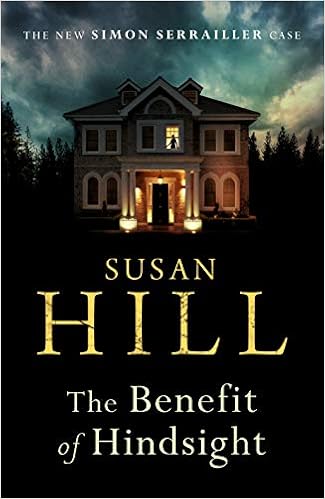
The Benefit of Hindsight by Susan Hill. This is the 10th book in Hill's Simon Serrailler series. I haven't read any of this series before, so I am going to dive in with this one and, if I like it, start over from the beginning.

I found this one in one of the many Little Free Libraries that dot our neighborhood. Apparently our LFLs are more cutting edge than amazon because the copy I found is a UK paperback edition. The paperback is not out in the US yet. Yet another blessing of the neighborhood walks that have kept me sane during coronavirus!


Thanks for joining me for Mailbox Monday, a weekly "show & tell" blog event where participants share the books they acquired the week before. Visit the Mailbox Monday website to find links to all the participants' posts and read more about Books that Caught our Eye.

Mailbox Monday is graciously hosted by Leslie of Under My Apple Tree, Serena of Savvy Verse & Wit, and Martha of Reviews by Martha's Bookshelf.

Saturday, April 25, 2020

The Sweeney Sisters by Lian Dolan -- Book Review


Lian Dolan's new novel, The Sweeney Sisters, met me right where I want to be. It was exactly the book I wanted to read to take my mind off current events. Some people are reading thrillers or romance books for distraction these days, others like dense classics or self-improvement. This family drama with a literary theme and a comic touch was just what I needed.

The story starts with the death of Bill Sweeny, author, literary icon, and father of three grown daughters, Liza, Maggie, and Tricia. Only, it turns out he has a fourth daughter, Serena Tucker, who only learned of her connection to the Sweeney family when she did a DNA test. Apparently Bill Sweeny and his Southport, Connecticut neighbor Birdie Tucker were closer than anyone knew.

The plot unfolds from there. In the tradition of all good Aga Sagas, there's lots of domestic conflict, with ex-boyfriends, bad husbands, skeletons in closets, secret relationships, misunderstandings galore, hurt feelings, blow ups, make ups, and lots and lots of shared meals. Eventually, every problem gets sorted and couple gets paired, and everyone sits down to a big Thanksgiving dinner. There's nothing wrong with following a tried and true recipe to make something good. The key is in the details, and Lian Dolan gets all the details right with The Sweeney Sisters; the setting, characters, and tone are spot on.

Much of the story takes place at the family home, called Willow Lane, a well-worn, five-bedroom house from the 1930s on three acres of Southport waterfront, with a dock and a boathouse Bill Sweeney used for his writer's retreat. The sisters' mother Maeve, who died of cancer 15 years before the story starts, described the house as "Shabby and chic before Shabby Chic was chic." The house is itself a character in the story, and Willow Lane's relationship with toney, buttoned-down Southport is a metaphor for the Sweeney family.

Bill Sweeney appears in the book only in retrospect but is the catalyst for all of it. He was a writer of the old school, the last of his generation. I imagined him as a cross between John Updike and Norman Mailer. Nolan describes him like this:
He was a throwback, to the time when being a vaunted American writer meant being male, white, and heterosexual, with a drinking problem, a healthy ego, and a dark childhood. That model of the testosterone-driven man of letters was dying off, fading away like the curriculum it spawned with reading lists of Hemingway, Fitzgerald, Faulkner, Styron, Roth, Vonnegut, Cheever, Irving. The academic world was opening up to a diversity of voices and life experiences. William Sweeney, the tail end of the manliest (so they thought) generation, managed to hold on longer than most.
His death, at age 76, and the surprise revelation that he had an unacknowledged daughter, forces the three Sweeney sisters to evaluate their relationships with their father and each other, and his relationship with their mother. They also have to decide how the fourth Sweeney sister fits into the mix, something Serena has a say in as well.

The four sisters have their own stories that Nolan blends together well. Liza is the eldest of the three, most rocked by learning she has an older sister. She runs and art gallery in Southport, is married, has twins, and manages everything perfectly, until she doesn't. Maggie is the middle of the three, an artist with a family reputation for not living up to her potential. Tricia is the youngest by six years, perhaps the most affected by their mother's death when she was still a teen. She is a hard-driven attorney, "always thinking strategically before emotionally," which causes much of the conflict in the story. Serena is a journalist, curious about, and envious of, the connection between the three sisters she grew up next door to without knowing. Dolan, who hosts the popular and long-running Satellite Sisters talk show with her own sisters, knows how to write authentic sister relationships.

The Sweeney Sisters is my favorite book of 2020. If you like Elinor Lipman, Anne Tyler, Joanne Trollope, or any good story about adult families, The Sweeney Sisters is the book for you.


NOTES

The Sweeney Sisters comes out April 28, 2020.

If you wrote a review of this book and want to me to list it here with a link, please leave a comment below.


Thursday, April 23, 2020

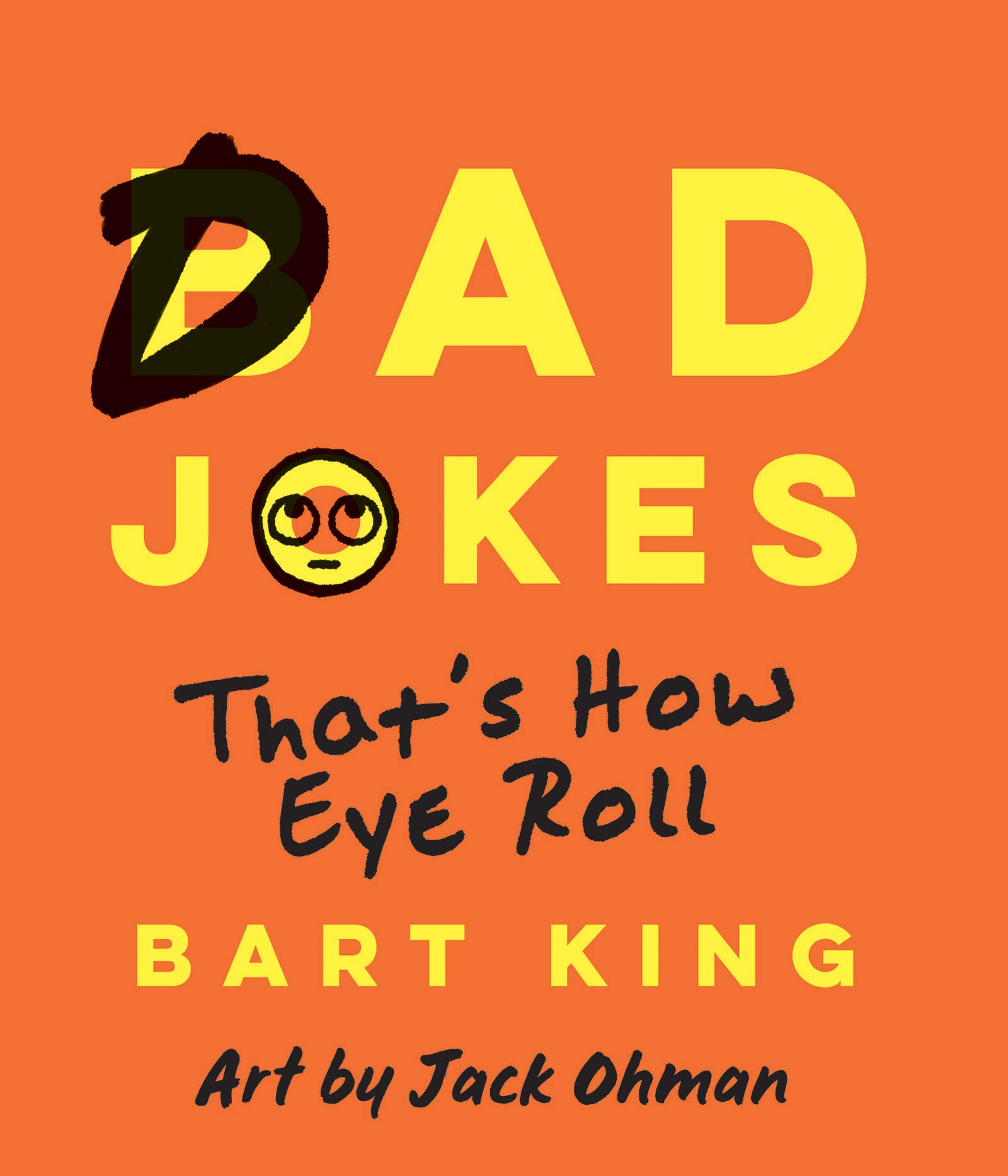
Book Beginning: Bad Dad Jokes: That's How Eye Roll by Bart King and Jack Ohman.

BOOK BEGINNINGS ON FRIDAYS
THANKS FOR JOINING ME ON FRIDAYS FOR BOOK BEGINNING FUN!

MY BOOK BEGINNING


What's a Dad Joke?

A lot of people brag that their parking skills are unparalleled, but I can back it up.

-- Bad Dad Jokes: That's How Eye Roll by Bart King, art by Jack Ohman. This goofy book of eye-rolling, corny "dad jokes" came out this week, in plenty of time to get a copy for Father's Day. It is packed with every g-rated pun ever told! Along with some great illustrations by Pulitzer-winning cartoonist Jack Ohman.

If you are trapped at home with kids, get a copy. This will inspire plenty of giggles and family fun along with the eye rolling.


Please join me every Friday to share the first sentence (or so) of the book you are reading, along with your initial thoughts about the sentence, impressions of the book, or anything else the opener inspires. Please remember to include the title of the book and the author’s name.

EARLY BIRDS & SLOWPOKES: This weekly post goes up Thursday evening for those who like to get their posts up and linked early on. But feel free to add a link all week.

SOCIAL MEDIA: If you are on Twitter, Instagram, or other social media, please post using the hash tag #BookBeginnings. I try to follow all Book Beginnings participants on whatever interweb sites you are on, so please let me know if I have missed any and I will catch up. Please find me on InstagramFacebook, and Twitter.

YOUR BOOK BEGINNING


TIE IN: The Friday 56 hosted by Freda's Voice is a natural tie in with this event and there is a lot of cross over, so many people combine the two. The idea is to post a teaser from page 56 of the book you are reading and share a link to your post. Find details and the Linky for your Friday 56 post on Freda’s Voice.


MY FRIDAY 56

I've learned about dogs named Beowoof, Drools Verne, Harry Paw-ter, Prince of Barkness, Pup the Magic Dragon, Doggie Houndser, Puppy Longstocking, MacArther Bark, Mary Puppins, Raise the Woof, The Puppymaster, Collieflower, Barkimaeus, Dunepuppy, Arfie Bunker, and Peter Barker.

Not to mention Droolius Caesar.
The longer you stay at home, the funnier this gets.


Author Interview: Erica Heller, Author of One Last Lunch


Writer Erica Heller is the editor of a new collection of essays she gathered from dozens of contributors, asking them to imagine a final meal with someone they cherished. The collection, One Last Lunch, gathers 48 of these essays, bookended by two essays by Heller about her own imagined meals with her father, novelist Joseph Heller.


One Last Lunch: A Final Meal with Those Who Meant So Much To Us, Editor Erica Heller, launches May 12, 2020 from Abrams Books. There are many options for pre-order. I already know One Last Lunch will be a gobsmacker for me because my dad passed away last month. I plan to enjoy every essay while thinking of my own imaginary meal with my dad.

Erica talked with Rose City Reader about missing our loved ones, collecting essays, and the finished product, One Last Lunch:

Can you describe the theme of the essays in your new book, One Last Lunch?

The theme is universal longing. The fervent wish that we could have just a bit more time with someone meaningful to us whom we’ve lost. In a sense, the lunches are imagined codas to all of these relationships.

How did you get the idea for this collection?

I was extremely close to my mother. She is gone 25 years now and I still hear her voice sometimes. (please don’t put me in a straitjacket!) I still wish we could talk, argue, make up. I just realized how much I yearned for this and started wondering whether everyone else had similar fantasies.

How did you pick the 49 people who wrote essays for One Last Lunch?

Well, in a sense they picked me. It took a lot of thinking and literally thousands of emails trying to track people down who would commit to such a project. Not an easy one, to be sure. I can laugh at it now but for 2 years, all I did was beg and plead, negotiate, convince. Each one was like capturing a star in the sky, these lunches are so precious.

What is your background and how did it lead to this book?

I come from a literary family, with both a father and brother who wrote/write pretty memorable novels. I myself was an ad copywriter for 30 years. Then I wrote and published a humor book with Seymour Chwast, then a novel. This time, I wanted something completely different and boy, did I get it!

One Last Lunch feels especially poignant right now, during this pandemic, when so many people are wrestling with ideas of mortality. What do you think it offers to readers during these upsetting times?

I think it offers solace, comfort. To read these lunches, all so different, some tender, some hilarious, some scalding, really does transport you to a place of quiet fulfillment, knowing the writers actually did, in a way, get to have their One Last Lunch. Reading this is satisfying, filling, and of course, distracting.

What did you learn from editing this book – either about the subject of the book or the editing process – that most surprised you?

What most surprised me but also saddened me, was to see how many children still longed for a parent’s acceptance. The late Kirk Douglas needed to know what his father thought of him becoming an actor. The editing of this was truly a joyful experience for me, seeing how differently each contributor approached the project. Lee Clow’s lunch with Steve Jobs is a masterpiece of brilliant drawings. And in truth, helping to get some of them just over the finish line. It was exciting, but sometimes adding just one detail, like someone spilling their water or asking a waiter for more pickle, would transform a fantasy into something almost real. It was amazing.

What did you enjoy most about creating this book?

I most enjoyed seeing how much the contributors stretched their imagination, and seeing the essays for the very first time. Each one was like opening a magical present. Remember, many contributors are not professional writers, but they came through this shining. Sometimes it’s the rough spots, the raw emotion in a lunch that makes it unforgettable.

You are a writer and the daughter of a writer. Are you also a big reader? What are you reading now?

To be honest, I am regularly a voracious reader but during this pandemic, have not been able to focus on a book. I read the same page 112 times. I do have an indecently high, dusty stack of books waiting for me when this is all over. Biographies, fiction, and always, always Edna O’Brien, who for me, has always been the Goddess of Words.

It's tough to launch a book during this coronavirus crisis. Do you have any online events coming up to promote your book?

Nothing is planned yet but I do have 5,000 Facebook friends whom I intend to badger mercilessly about this book.

What's next for you?

I wish I knew. The pandemic has given me plenty (too much) time to wonder about this, but as yet I’ve not stumbled upon what will be next.

THANK YOU, ERICA!

ONE LAST LUNCH IS AVAILABLE FOR PRE-ORDER NOW AND COMES OUT MAY 12, 2020.


Monday, April 20, 2020

Mailbox Monday: Black Box by Gary D. Cole to Benefit CoHo Productions

Black Box by Gary D. Cole came through my front door mail slot the other day and I was pleased to see it. Book mail is particularly fun when we are staying home during this coronavirus pandemic!


Gary Cole was the co-founder of CoHo Productions, a theater company in Portland, Oregon known for 25 years co-producing exceptional theater.

Black Box is a novel set in the theater world, the story of an actress and the two men mesmerized by her charms.

Because CoHo Productions has to close during the COVID 19 crisis, Gary is donating the 100% of the proceeds of the sale of Black Box to CoHo Productions. For $25, the price of a CoHo Productions ticket, you get a paperback edition of Black Box shipped to your door. Go to the CoHo website here to buy the Black Box book or learn more.

PUBLISHER'S DESCRIPTION
Black Box is Gary’s first novel. The lead character, Ned Prince, leads an enviable life. An acclaimed young writer and heir to an ample fortune, he spends a handsome allowance playing at working. But when tragedy strikes Ned’s father, leaving a depleted estate, Ned is forced to take a real job as a theater critic in Portland. He is mesmerized by an actress who has sold herself to a financier for a stage of her own – a black box. After all off-stage attempts fail, Ned resorts to theater to avenge his father and liberate the actress. Sparks fly when an actress, a critic, and a patron form a dramatic triangle whose ambitions collide, all within the confines of the “black box” theater – an unadorned performance space enclosed by black walls. Black Box contains mature content.


Thanks for joining me for Mailbox Monday, a weekly "show & tell" blog event where participants share the books they acquired the week before. Visit the Mailbox Monday website to find links to all the participants' posts and read more about Books that Caught our Eye.

Mailbox Monday is graciously hosted by Leslie of Under My Apple Tree, Serena of Savvy Verse & Wit, and Martha of Reviews by Martha's Bookshelf.

Saturday, April 18, 2020

List: James Tait Black Prize for Fiction


The James Tait Black Prizes, established in 1919, are Britain's longest running literary awards. The Prizes for fiction and biography have been awarded since 1919; the Prize for drama was added in 2013. The James Tait Black Prizes for Fiction, Biography, and Drama are awarded by the University of Edinburgh’s School of Literatures, Languages and Cultures, established in 1762.

The two book prizes are judged by senior staff from the English Literature department at the University, assisted by a group of postgraduate students. Each prize is £10,000.

I'm working my way through the winners of the James Tait Black Prize for Fiction. Those I have read are in red. Those on my TBR shelf are in blue. If you are also working on this list, and would like your related posts linked here, please leave a comment with links and I will list them below.

2018 Crudo by Olivia Lang

2017 Attrib. and Other Stories by Eley Williams

2016 The Lesser Bohemians by Eimear McBride

2015 You Don’t Have to Live Like This by Benjamin Markovits

2014 In the Light of What We Know by Zia Haider Rahman

2013 Harvest by Jim Crace

2012 The Deadman's Pedal by Alan Warner

2011 You and Me by Padgett Powell

2010 The Lotus Eaters by Tatjana Soli

2009 The Children's Book by A. S. Byatt

2008 The Secret Scripture by Sebastian Barry (reviewed here)

2007 Our Horses in Egypt by Rosalind Belben

2006 The Road by Cormac McCarthy

2005 Saturday by Ian McEwan

2004 GB84 by David Peace

2003 Personality by Andrew O'Hagan

2002 The Corrections by Jonathon Franzen

2001 Something Like a House by Sid Smith

2000 White Teeth by Zadie Smith

1999 Renegade or Halo2 by Timothy Mo

1998 Master Georgie by Beryl Bainbridge

1997 Ingenious Pain by Andrew Miller

1996 Last Orders by Graham Swift and Justine by Alice Thompson

1995 The Prestige by Christopher Priest (reviewed here)

1994 The Folding Star by Alan Hollinghurst

1993 Crossing the River by Caryl Phillips

1992 Sacred Country by Rose Tremain

1991 Downriver by Iain Sinclair

1990 Brazzeville Beach by William Boyd (reviewed here)

1989 A Disaffection by James Kelman

1988 A Season in the West by Piers Paul Read

1987 The Golden Bird: Two Orkney Stories by George Mackay Brown

1986 Persephone by Jenny Joseph

1985 Winter Garden by Robert Edric

1984 Empire of the Sun by J. G. Ballard and Nights at the Circus by Angela Carter

1983 Allegro Postillions by Jonathan Keates

1982 On the Black Hill by Bruce Chatwin

1981 Midnight's Children (reviewed here) and The Mosquito Coast by Paul Theroux

1980 Waiting for the Barbarians by J. M. Coetzee

1979 Darkness Visible by William Golding

1978 Plumb by Maurice Gee

1977 The Honorable Schoolboy by John le Carre

1976 Doctor Copernicus by John Banville

1975 The Great Victorian Collection by Brian Moore

1974 Monsieur, or The Prince Of Darkness by Lawrence Durrell

1973 The Black Prince by Iris Murdoch

1972 G by John Berger (reviewed here)

1971 A Guest of Honour by Nadine Gordimer

1970 The Bird of Paradise by Lily Powell

1969 Eva Trout by Elizabeth Bowen

1968 The Gasteropod by Maggie Ross

1967 Jerusalem the Golden by Margaret Drabble

1966 Such by Christine Brooke-Rose and Langrishe, Go Down by Aidan Higgins

1965 The Mandelbaum Gate by Muriel Spark (reviewed here)

1964 The Ice Saints by Frank Tuohy

1963 A Slanting Light by Gerda Charles

1962 Act of Destruction by Ronald Hardy

1961 The Ha-Ha by Jennifer Dawson

1960 Imperial Caesar by Rex Warner

1959 The Devil's Advocate by Morris West

1958 The Middle Age of Mrs Eliot by Angus Wilson

1957 At Lady Molly's by Anthony Powell

1956 The Towers of Trebizond by Rose Macauley

1955 Mother and Son by Ivy Compton-Burnett

1954 The New Men and The Masters (in sequence) by C. P. Snow

1953 Troy Chimneys by Margaret Kennedy

1952 Men at Arms by Evelyn Waugh

1951 Father Goose by W. C. Chapman-Mortimer

1950 Along the Valley by Robert Henriquez (out of print)

1949 The Far Cry by Emma Smith

1948 The Heart of the Matter by Graham Greene

1947 Eustace and Hilda by L. P. Hartley

1946 Poor Man's Tapestry by G. Oliver Onions

1945 Travellers by L. A. G. Strong

1944 Young Tom by Forrest Reid

1943 Tales From Bective Bridge by Mary Lavin

1942 Monkey by Wu Ch'eng-en (translation by Arthur Whaley)

1941 A House of Children by Joyce Cary

1940 The Voyage by Charles Morgan

1939 After Many a Summer Dies the Swan by Aldous Huxley

1938 A Ship of the Line and Flying Colours by C. S. Forester

1937 Highland River by Neil M. Gunn

1936 South Riding by Winifred Holtby

1935 The Root and the Flower by L. H. Myers

1934 I, Claudius and Claudius the God by Robert Graves

1933 England, Their England by A. G. Macdonell

1932 Boomerang by Helen Simpson

1931 Without My Cloak by Kate O'Brien

1930 Miss Mole by E. H. Young

1929 The Good Companions by J. B. Priestley

1928 Memoirs of a Fox-Hunting Man by Siegfried Sassoon

1927 Portrait of Clare by Francis Brett Young

1926 Adam's Breed by Radclyffe Hall

1925 The Informer by Liam O'Flaherty

1924 A Passage to India by E. M. Forster

1923 Riceyman Steps by Arnold Bennett

1922 Lady Into Fox by David Garnett

1921 Memoirs of a Midget by Walter de la Mare

1920 The Lost Girl by D. H. Lawrence

1919 The Secret City by Hugh Walpole

NOTE

List updated on April 18, 2020.

RELATED POSTS

Please leave comments with links to related posts -- progress reports, reviews, etc. -- and I will list them here.

Related Posts Plugin for WordPress, Blogger...