Wednesday, October 24, 2018
Book Notes: The Spirit Level by Seamus Heaney
Today, I finished The Spirit Level by Seamus Heaney. The final poem in the collection is my favorite Heaney poem, “Postscript” – the one that ends with the line “catch the heart off guard and blow it open.”
Heaney won the Costa Book of the Year award for The Spirit Level in 1996 (when the award was called the Whitbread). I’m working my way through the winners of the Costa BOTY, but have only read 12 of the 33 so far, in part because there are several books of poetry on the list.
I’ve been making an effort to read more poetry by keeping a book of poems on my nightstand and reading one poem every morning when I wake up.
Postscript
And some time make the time to drive out west
Into County Clare, along the Flaggy Shore,
In September or October, when the wind
And the light are working off each other
So that the ocean on one side is wild
With foam and glitter, and inland among stones
The surface of a slate-grey lake is lit
By the earthed lightning of a flock of swans,
Their feathers roughed and ruffling, white on white,
Their fully grown headstrong-looking heads
Tucked or cresting or busy underwater.
Useless to think you’ll park and capture it
More thoroughly. You are neither here nor there,
A hurry through which known and strange things pass
As big soft buffetings come at the car sideways
And catch the heart off guard and blow it open.
Here is a video of Seamus Heaney reading "Postscript" in 2013.
Labels:
poetry
,
Seamus Heaney
Monday, October 22, 2018
Mailbox Monday: Books on Books
What books came into your house last week? I got two new books about books:
On Reading Well: Finding the Good Life through Great Books by Karen Swallow Prior. An examination of traditional virtues shown through literature. I'm in!
I'd Rather Be Reading: The Delights and Dilemmas of the Reading Life by Anne Bogel, creator of the popular blog Modern Mrs. Darcy.
Thanks for joining me for Mailbox Monday, a weekly "show & tell" blog event where participants share the books they acquired the week before. Visit the Mailbox Monday website to find links to all the participants' posts and read more about Books that Caught our Eye.
Mailbox Monday is graciously hosted by Leslie of Under My Apple Tree, Serena of Savvy Verse & Wit, and Martha of Reviews by Martha's Bookshelf.
On Reading Well: Finding the Good Life through Great Books by Karen Swallow Prior. An examination of traditional virtues shown through literature. I'm in!
I'd Rather Be Reading: The Delights and Dilemmas of the Reading Life by Anne Bogel, creator of the popular blog Modern Mrs. Darcy.
Thanks for joining me for Mailbox Monday, a weekly "show & tell" blog event where participants share the books they acquired the week before. Visit the Mailbox Monday website to find links to all the participants' posts and read more about Books that Caught our Eye.
Mailbox Monday is graciously hosted by Leslie of Under My Apple Tree, Serena of Savvy Verse & Wit, and Martha of Reviews by Martha's Bookshelf.
Labels:
Mailbox Monday
Saturday, October 20, 2018
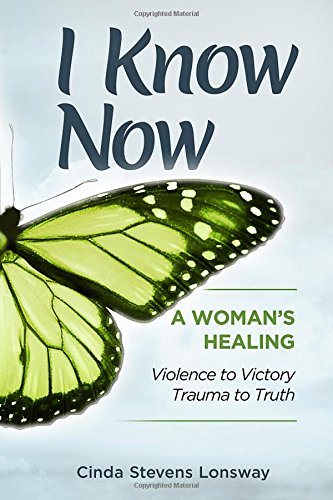
Author interview: Cinda Stevens Lonsway
Cinda Stevens Lonsway is a spiritual counselor, facilitator, and public speaker who wrote a memoir about her own experience surviving and recovering from trauma.
Cinda recently answered questions for Rose City Reader about her book, her work with trauma survivors, and what comes next.
How did you come to write I Know Now?
I Know Now is really a book about spiritual awakening brought on by trauma and PTSD. I began writing about my experience when in September of 2014, I heard a voice; clear and loud that called my name. It woke me up from a deep sleep. The voice said, “Cinda. It is time.” I knew exactly what it meant. I needed to tell my story of the attack that happened to me when I was 19 and the profound healing that I experienced years later.
You tell your story in three parts. Can you explain a bit about your path to healing?
Part One of the story is titled THE ATTACK. I go into vivid detail about the series of events that led up to and during the night of the attack and how I prevented this violent man from raping and killing me. It continues with two months of the man stalking my roommate and me.
Part Two is titled THE HEALING. After the attack, I go into a world class case of denial. Once I became a mother, I felt more vulnerable than ever and this triggered what I know now to be PTSD. Back then, I thought I was losing my mind. After an awful night of reliving my memories, I went to bed defeated. I gave up on life, assuming that the darkness, the demons of my past, would come and consume me. But instead of the devil arriving to take me away, God did, and he showed himself in the body of my perpetrator. I was then guided through a profound, mystical ritual of healing.
Part Three is titled THE AWAKENING. This brings the story into current day. I write about my writing experience and how awful and difficult reliving these horrific events are. That voice that woke me up to tell me to write also told me to look for the signs. Part three is all about the signs, synchronicity, messages that I missed along the way. I see them now for the first time and they are mind blowing.
Your memoir is intensely personal – did you have any qualms about sharing so much?
Yes, I did, and I had a lot of resistance to writing about it. But, I could not deny that voice that woke me up and told me it was time. I trusted whatever energy this voice came from, it helped me heal before, so I trusted it would keep me safe this time.
Who is your intended audience and what do you hope your readers will gain from your book?
Each part could technically have a different target market. Part One, gives young people tools in how to keep themselves safe in a dangerous situation. Part Two, gives anyone who has been affected by trauma a way to heal. Part Three, gives more healing power for trauma victims and it offers a beautiful story of how to open one’s awareness to their own spiritual awakening.
What did you learn from writing your book – either about the subject of the book or the writing process – that most surprised you?
At my first book signing, a woman asked me, “So, what do you know now?” I had to think on that for a moment. There is a final chapter that answers that question, but I did not want to read that chapter. So . . . as I thought on this question, something really profound came to me:
When I used to share my story, I would tell it in a way that would make it scary enough to elicit a response. Yet, I was always careful not to reveal too much of the truth, in fear that I would trigger my own dark emotions. I knew just when to stop with the story telling when I would internally hit a barrier that ran across the center of my gut. When my story would reach this point, I would feel my gut clench and I would quickly end my story by adding the part where the victim out smarts the villain and wins the day.
Now that my story is written, in detail, when I go to tell it, I can’t find that barrier anywhere inside of me. It is gone. I can travel all the way down to my big toe and back up and find nothing. I had no idea that by writing my story out of me and then sharing it with others, I would have healed myself in ways completely unexpected. And it is awesome! I know now!
Did you consider turning your own experience into fiction and writing the book as a novel?
Yes, as a matter of fact, I have many rough drafts and attempts at doing just that. But none of it rang true enough. I wonder . . . if maybe, I just needed to heal more and the only way to do that was to write my story.
What can friends and family of trauma victims do to support them?
Number One: believe them.
Number Two: believe them.
Number Three: if the time comes that they are ready to share. Sit there and let them tell you everything. Sit there and no matter how awful it is for you, remember that it didn't happen to you, it isn't about you. Don’t try to fix it, it already happened, nothing can change it. Just listen, don’t judge, don’t correct, just sit, shut up, and listen. The goal is to help them get it out of their memory cells that are carrying the trauma. The reason why writing my story helped to heal me even after I thought I was completely and fully healed, is because I knew that my family and friends would read it and finally my truth would be known. It matters, it really really matters, that someone else on this planet knows my truth.
What resources would you recommend for survivors of sexual violence? How about for their loved ones and supporters?
I believe in healing the whole body. So, in order to heal completely, you need to heal the body, the mind/emotions and the spirit/soul. If one doesn’t heal the trinity together, one won’t heal. I had to heal my body from the stress that caused IBS, adult acne, weight loss I couldn’t afford to lose, back issues. I had to heal my mind/emotions from PTSD, nightmares, triggers. I had to heal my spirit from hate, anger, fear, betrayal. For my body, I sought out acupuncturists, massage, nutritionists. I never sought out professional help as in a therapist, and if I had known that that was an option, I could have saved myself a lot of heartache and years of personal torture. Instead, years later, I trusted my spiritual guidance and found a spiritual counselor, who acted as a therapist.
What’s next? What are you working on now?
I had a few Beta readers tell me after they read the book, that they were hoping for more “Cinda teachings.” They wanted to learn more about my spiritual healings, the healings I now guide others through and help them with. So, I’m working on a book of ritual to help people heal from a variety of issues. I have one children’s book published: Tommy T and the Pea that Got Away. Another book coming out in a few months titled: ROAR! which is based on an article I wrote that went viral in 2010. And I am working on three novels. Yay!!!!
THANKS, CINDA!
I KNOW NOW IS AVAILABLE ONLINE OR ASK YOU LOCAL BOOK SELLER TO ORDER IT!
Labels:
author interview
,
Oregon author
Friday, October 19, 2018
Book Beginning: The Towers of Trebizond
BOOK BEGINNINGS ON FRIDAYS
THANKS FOR JOINING ME ON FRIDAYS FOR BOOK BEGINNING FUN!
Thanks for your patience! I thought I had a post scheduled and apparently I didn't. Operator error!
MY BOOK BEGINNING

"Take my camel, dear," said my aunt Dot, as she climbed down from this animal on her return from High Mass.
The Towers of Trebizond by Rose McCaulay. I've been looking forward to this comedy classic for a long time!
Please join me every Friday to share the first sentence (or so) of the book you are reading, along with your initial thoughts about the sentence, impressions of the book, or anything else the opener inspires. Please remember to include the title of the book and the author’s name.
EARLY BIRDS & SLOWPOKES: This weekly post goes up Thursday evening for those who like to get their posts up and linked early on. But feel free to add a link all week.
FACEBOOK: Rose City Reader has a Facebook page where I post about new and favorite books, book events, and other bookish tidbits, as well as link to blog posts. I'd love a "Like" on the page! You can go to the page here to Like it. I am happy to Like you back if you have a blog or professional Facebook page, so please leave a comment with a link and I will find you.
TWITTER, ETC: If you are on Twitter, Instagram, Google+, or other social media, please post using the hash tag #BookBeginnings. I try to follow all Book Beginnings participants on whatever interweb sites you are on, so please let me know if I have missed any and I will catch up.
TIE IN: The Friday 56 hosted by Freda's Voice is a natural tie in with this event and there is a lot of cross over, so many people combine the two. The idea is to post a teaser from page 56 of the book you are reading and share a link to your post. Find details and the Linky for your Friday 56 post on Freda’s Voice.
YOUR BOOK BEGINNING
Labels:
Book Beginnings
,
Opening Sentence
Tuesday, October 16, 2018
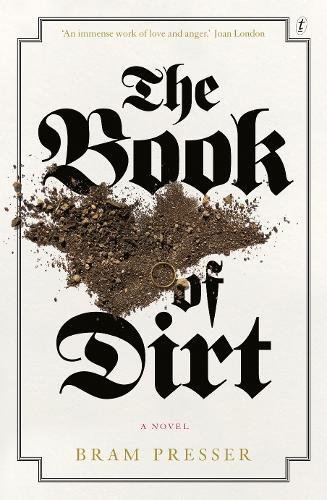
Teaser Tuesday: The Book of Dirt by Bram Presser

With the occupation had come a shift in the atmosphere of Biskupcova Street. Eyes no longer met, trust was undermined.
-- The Book of Dirt by Bram Presser. Australian author Bram Presser creates his grandparents' Holocaust story out of family history, imagination, old photographs, and ephemera in this heart-warming first novel.
Teaser Tuesdays is hosted by The Purple Booker, where you can find the official rules for this weekly event.
Labels:
Teaser Tuesday
Monday, October 15, 2018
Mailbox Monday: Art & Thrillers
Two completely different books came into my house last week: a new art book and a new thriller.
-- Mary Chomenko Hinckley: Material Evolution. Mary’s blue coyote looks pretty awesome prowling the urban forest of my front yard!
PORTLAND EVENT TONIGHT: Mary will be “in conversation” with Paul J. Karlstrom, discussing Art in the Era of Artificial Intelligence: “An exploration of the imposition of technology on nature and the artist’s response.”
⭐️ PNCA - Pacific Northwest College of Art: TONIGHT, October 15, 2018 at 6:00 PM

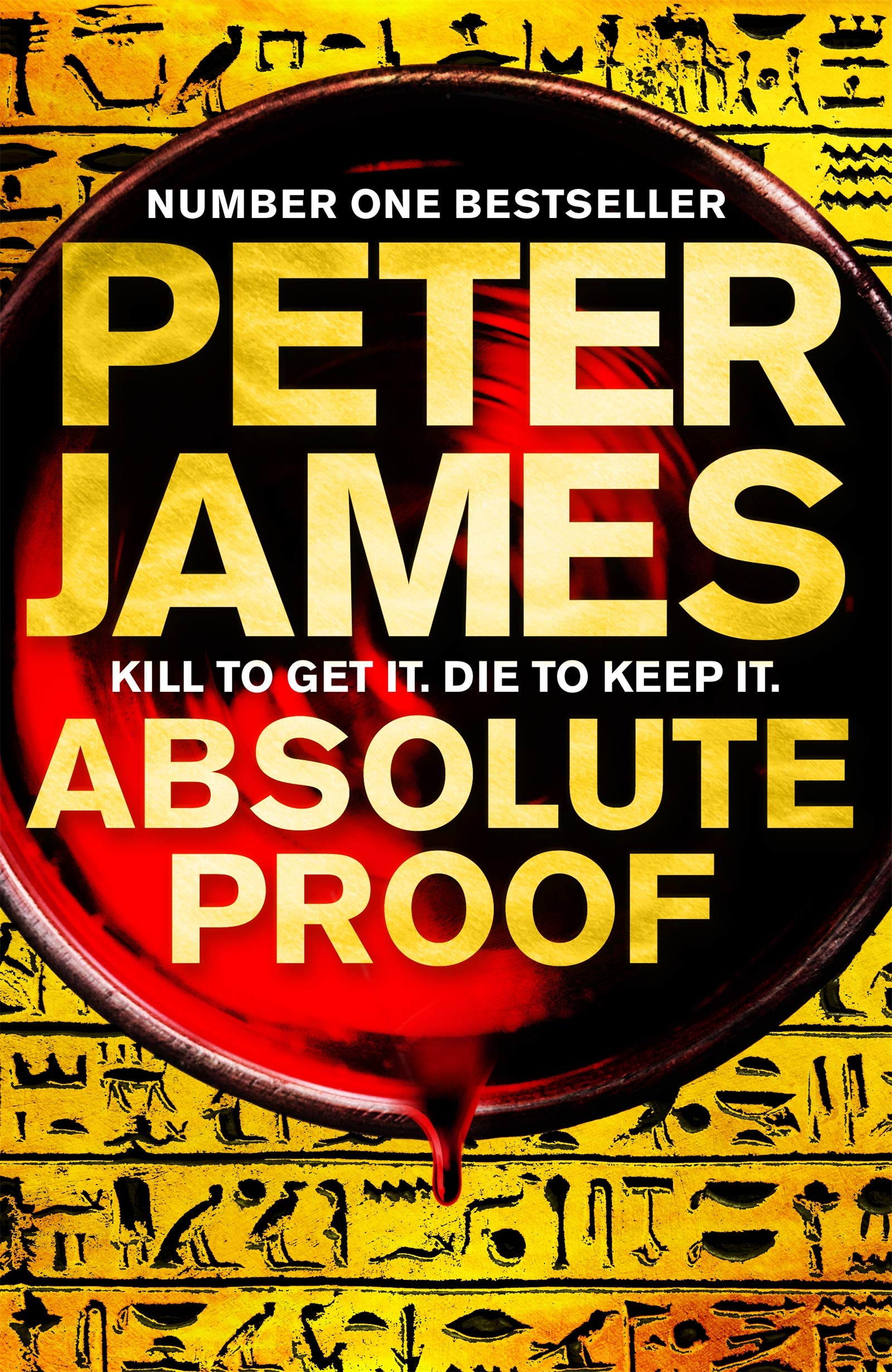
-- Absolute Proof by Peter James. In a break from his Roy Grace police series, this Dan Brown-like "code" thriller has the hero chasing clues to find absolute proof of the existence of God.
I'm listening to the audiobook read by Hugh Bonneville and he makes the story come alive.
Thanks for joining me for Mailbox Monday, a weekly "show & tell" blog event where participants share the books they acquired the week before. Visit the Mailbox Monday website to find links to all the participants' posts and read more about Books that Caught our Eye.
Mailbox Monday is graciously hosted by Leslie of Under My Apple Tree, Serena of Savvy Verse & Wit, and Martha of Reviews by Martha's Bookshelf.
-- Mary Chomenko Hinckley: Material Evolution. Mary’s blue coyote looks pretty awesome prowling the urban forest of my front yard!
PORTLAND EVENT TONIGHT: Mary will be “in conversation” with Paul J. Karlstrom, discussing Art in the Era of Artificial Intelligence: “An exploration of the imposition of technology on nature and the artist’s response.”
⭐️ PNCA - Pacific Northwest College of Art: TONIGHT, October 15, 2018 at 6:00 PM

-- Absolute Proof by Peter James. In a break from his Roy Grace police series, this Dan Brown-like "code" thriller has the hero chasing clues to find absolute proof of the existence of God.
I'm listening to the audiobook read by Hugh Bonneville and he makes the story come alive.
Thanks for joining me for Mailbox Monday, a weekly "show & tell" blog event where participants share the books they acquired the week before. Visit the Mailbox Monday website to find links to all the participants' posts and read more about Books that Caught our Eye.
Mailbox Monday is graciously hosted by Leslie of Under My Apple Tree, Serena of Savvy Verse & Wit, and Martha of Reviews by Martha's Bookshelf.
Labels:
Mailbox Monday
,
Oregon author
Saturday, October 13, 2018
Author Interview: Bram Presser
Australian author Bram Presser's new novel creates his grandparents' Holocaust story out of family history, imagination, old photographs, and ephemera.
Bram recently answered questions for Rose City Reader about his new book, Holocaust memory, and writing in general.
How did you come to write The Book of Dirt?
My grandparents never spoke about their Holocaust experiences so, growing up, we constructed comfortable narratives around their survival. A few years after they died, a newspaper article was published claiming that my grandfather had been selected by the Nazis to be the literary curator of Hitler’s Museum of the Extinct Race. I became obsessed by this story, and by the realization of how little I actually knew about a man who I had loved so deeply, so I set off to find out what had actually happened. From there it spiraled out of control in the most intriguing possible way.
Your book is called a novel, but reads in part like memoir and uses historical documents. How much is your family’s actual history and how much is fiction?
That’s a difficult question to answer. The book is essentially the story of my search to find their stories set against a reimagining of what happened. I’d say the search narrative is almost exactly as I experienced it, except for some minor changes for timescale and the like, plus one major invention to set up the whole dirt part of the book. The reimagining is probably more historically accurate than I had first thought, given that it is built on documents, photos, records and stories I was told. So, it is a dramatization of either what happened, or my best guess based on the evidence. But there is also a strong magical realist thread that weaves its way through the story and that is pure creative license. I am really enamored of Czech and Jewish myth and legend, as well as the fable as a storytelling device, so it was inevitable that they would make a strong showing in whatever I write. Also, I found that writing my family as fictional characters gave me a stronger sense of who they were and how their experiences might have actually felt. There is an essential truth in fiction that I wanted to find that a simple historical excavation could not possibly provide.
How did you choose the title?
I came up with it very early on in the process. After reading the newspaper article, I was struck by the idea of my grandfather finding a hollowed-out book with a pile of dirt inside that might have been the golem’s heart. So initially the title was literal. As I dug deeper, travelling the world, collecting whispers, anecdotes, documents, even gossip – a lot of it what we would colloquially call “dirt” – it seemed even more appropriate. Moreover, the golem seemed the perfect metaphor for writing about my grandparents (or anyone you’ve known and loved) – the idea that I was creating them from the clay of evidence and breathing life back into them with words.
Who is your intended audience and what do you hope your readers will take away from your book?
I hope anyone interested in memory, identity and the way we tell stories will find something in it to engage and challenge them. Although it is set in the context of the Holocaust, I don’t think of it as a Holocaust book. It’s more about how we much we can really know the people we love, and the way in which we recreate their lives every time we think about them.
Your use of black and white photographs and ephemera throughout the book remind me of Austerlitz by W. G. Sebald, another novel about the search for family taken to the Theresienstadt concentration camp. Were you inspired by Sebald?
Yes and no. My greatest inspiration, stylistically, was the Croatian novelist Daša Drndić who came to be a mentor of sorts through the writing of The Book of Dirt. Sebald is the gold standard for documentary fiction and helped me to understand the use of image and object as a narrative device but Drndić takes it to an almost hyper level in her novel Trieste. Reading that was my lightbulb moment when I realized how this story ought to be told. It’s interesting that you mention Austerlitz, though, because recognizing the similarities in style and the Theresienstadt angle, I actually had to consciously ensure that they weren’t too alike, especially given that we were working from a lot of the same source material.
What did you learn from writing your book – either about the subject of the book or the writing process – that most surprised you?
Working on this book, I found myself regularly surprised by what I found. Understanding the camps as more than just death factories, but places where people made lives in horrific circumstances, and built tight, often transient communities was quite inspirational. On a personal level, learning that my great grandmother, Františka (my grandmother’s mother), who I knew when I was a kid – she was a tiny, crumpled old Czech woman – was an incredible hero who risked everything to keep her family alive just blew me away. She was a convert, so she wasn’t taken to the camps, and she did so many incredible things from back in Prague to make sure her daughters survived. I set out to write about my grandfather, but it was Františka that stole my heart and really became the focus of the book.
What do you think people today can learn from the stories of Holocaust survivors?
Decency, humanity, resilience, courage, the importance of fighting for what is right and nipping intolerance in the bud. The understanding that perfectly functional societies can devolve into murderous dysfunction (or hyper-function), that perfectly ordinary people can do terrible things, that hatred and division can lead to catastrophe.
Do you think it is important to keep Holocaust memory alive and why?
Absolutely. Ever more so at the moment, where violent division seems to be the political norm across the globe. We’re only seventy-five years on, and so many of what I’d have hoped were the lessons of the Holocaust seem to have been thrown by the wayside. Hatred and scapegoating is being normalized. It feels as if we’re already on the path of the famous “First they came for the socialists…” poem. Now is the time to stand up and fight against the tide of fascist populism.
Who are your three (or four or five) favorite authors? Is your own writing influenced by the authors you read?
Wow, where to begin? I’d probably give you a different answer every time you asked me, but today I’ll say Franz Kafka, Jesse Ball, JM Coetzee, Magda Szabo and Daša Drndić. I’m not sure how overtly they influence me, but it’s hard not to at least want to write the kind of book you like reading, which will be informed by those authors you love most. Oh, except Drndić. She absolutely influenced me.
What kind of books do you like to read? What are you reading now?
I tend to mostly read difficult, surreal literary fiction. I like to be challenged, both intellectually and morally, by what I read. I also love books that dare to experiment with form, that try something new, even if it doesn’t necessarily work. Then there’s my predilection for what I call “literary sorbet,” books that I can just devour without thinking too much, just for the fun of it.
At the moment I’m reading Rachel Kadish’s The Weight of Ink and Olga Tokarczuk’s Drive Your Plows Over the Bones of the Dead.
What is the most valuable advice you’ve been given as an author?
No book is ever finished, just published. Be prepared to let it go.
What’s next? What project are you working on now?
I have a few books on the go, though haven’t committed to any of them yet as the project. Two are stylistically similar to The Book of Dirt in that they are based around true events and blur the fact/fiction divide. Then I have a linked series of speculative fiction novellas. And a kids’ book. But after spending eight years working on The Book of Dirt I’m mostly enjoying just taking a bit of a break and being a stay-at-home dad to my eighteen-month-old daughter. Just quietly, it’s way better than writing.
THANKS BRAM!
THE BOOK OF DIRT IS AVAILABLE ONLINE, OR ASK YOUR LOCAL BOOK SELLER TO ORDER IT!
Labels:
author interview
Thursday, October 11, 2018
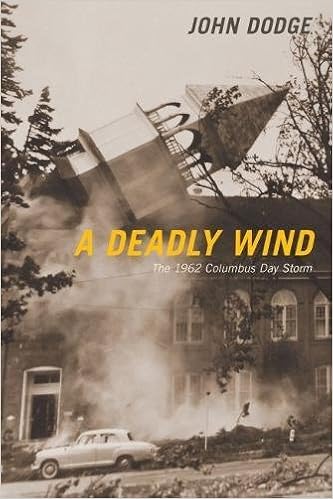
Book Beginning: A Deadly Wind: The 1962 Columbus Day Storm by John Dodge
BOOK BEGINNINGS ON FRIDAYS
THANKS FOR JOINING ME ON FRIDAYS FOR BOOK BEGINNING FUN!
MY BOOK BEGINNING

An unexpected phone call and a blog post ten days later from a well-known Pacific Northwest weather scientist became the two key ingredients that motivated me to write this book on the deadly 1962 Columbus Day storm.
-- from the author's Preface to A Deadly Wind: The 1962 Columbus Day Storm by John Dodge.
On October 12, 1962, a windstorm slammed the Pacific Northwest coast, with wind gusts reaching 127 mph in Portland. Dozens of people died and hundreds were injured. Over 50,000 homes were damaged. And the storm leveled enough timber to build 1,000,000 homes, which spurred the Asian log export market and the Oregon wine industry. Journalist John Dodge tells a lively and detailed story of this catastrophic storm and its lasting effect on the region.
Please join me every Friday to share the first sentence (or so) of the book you are reading, along with your initial thoughts about the sentence, impressions of the book, or anything else the opener inspires. Please remember to include the title of the book and the author’s name.
EARLY BIRDS & SLOWPOKES: This weekly post goes up Thursday evening for those who like to get their posts up and linked early on. But feel free to add a link all week.
FACEBOOK: Rose City Reader has a Facebook page where I post about new and favorite books, book events, and other bookish tidbits, as well as link to blog posts. I'd love a "Like" on the page! You can go to the page here to Like it. I am happy to Like you back if you have a blog or professional Facebook page, so please leave a comment with a link and I will find you.
TWITTER, ETC: If you are on Twitter, Instagram, Google+, or other social media, please post using the hash tag #BookBeginnings. I try to follow all Book Beginnings participants on whatever interweb sites you are on, so please let me know if I have missed any and I will catch up.
TIE IN: The Friday 56 hosted by Freda's Voice is a natural tie in with this event and there is a lot of cross over, so many people combine the two. The idea is to post a teaser from page 56 of the book you are reading and share a link to your post. Find details and the Linky for your Friday 56 post on Freda’s Voice.
YOUR BOOK BEGINNING
Monday, October 8, 2018
Mailbox Monday: Son of Amity by Peter Nathaniel Malae
I got one new book last week. What books came into your house?

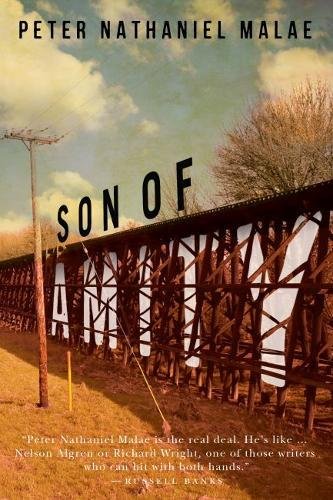
Son of Amity by Peter Nathaniel Malae. This novel of gritty, small town life-on-the-edge just came out this week. It looks grim but good.
Thanks for joining me for Mailbox Monday, a weekly "show & tell" blog event where participants share the books they acquired the week before. Visit the Mailbox Monday website to find links to all the participants' posts and read more about Books that Caught our Eye.
Mailbox Monday is graciously hosted by Leslie of Under My Apple Tree, Serena of Savvy Verse & Wit, and Martha of Reviews by Martha's Bookshelf.

Son of Amity by Peter Nathaniel Malae. This novel of gritty, small town life-on-the-edge just came out this week. It looks grim but good.
Thanks for joining me for Mailbox Monday, a weekly "show & tell" blog event where participants share the books they acquired the week before. Visit the Mailbox Monday website to find links to all the participants' posts and read more about Books that Caught our Eye.
Mailbox Monday is graciously hosted by Leslie of Under My Apple Tree, Serena of Savvy Verse & Wit, and Martha of Reviews by Martha's Bookshelf.
Labels:
Mailbox Monday
,
Oregon author
,
OSU Press
Thursday, October 4, 2018
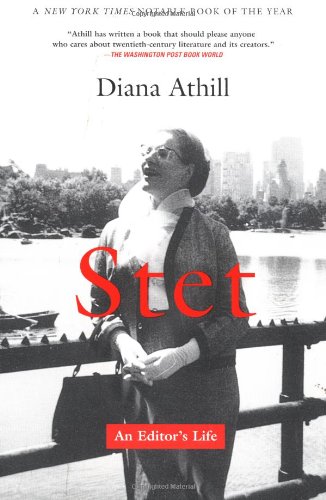
Book Beginning: Stet: An Editor's Life by Diana Athill
BOOK BEGINNINGS ON FRIDAYS
THANKS FOR JOINING ME ON FRIDAYS FOR BOOK BEGINNING FUN!
MY BOOK BEGINNING

Some years ago Tom Powers, an American publisher who is also a writer and historian, kindly told me I ought to write a book about my fifty years in publishing.
Stet: An Editor's Life by Diana Athill. This is my book club's pick for November. Acclaimed editor Diana Athill, who turned 100 last December, offers a behind the scenes look at literary life.
Please join me every Friday to share the first sentence (or so) of the book you are reading, along with your initial thoughts about the sentence, impressions of the book, or anything else the opener inspires. Please remember to include the title of the book and the author’s name.
EARLY BIRDS & SLOWPOKES: This weekly post goes up Thursday evening for those who like to get their posts up and linked early on. But feel free to add a link all week.
FACEBOOK: Rose City Reader has a Facebook page where I post about new and favorite books, book events, and other bookish tidbits, as well as link to blog posts. I'd love a "Like" on the page! You can go to the page here to Like it. I am happy to Like you back if you have a blog or professional Facebook page, so please leave a comment with a link and I will find you.
TWITTER, ETC: If you are on Twitter, Instagram, Google+, or other social media, please post using the hash tag #BookBeginnings. I try to follow all Book Beginnings participants on whatever interweb sites you are on, so please let me know if I have missed any and I will catch up.
TIE IN: The Friday 56 hosted by Freda's Voice is a natural tie in with this event and there is a lot of cross over, so many people combine the two. The idea is to post a teaser from page 56 of the book you are reading and share a link to your post. Find details and the Linky for your Friday 56 post on Freda’s Voice.
YOUR BOOK BEGINNING
Labels:
Book Beginnings
,
Opening Sentence
Wednesday, October 3, 2018
Author Interview: Theresa Griffin Kennedy
Author Theresa Griffin Kennedy is a native Portlander who has written an earlier nonfiction book about Portland's history of corruption and a book of poetry. Burnside Field Lizard, a short story collection, is her first book of fiction.
Theresa recently answered questions for Rose City reader about her new book, writing, and "domestic noir":
How did you come to write the stories in Burnside Field Lizard?
The stories detail the struggles of women that society has cast aside. This is something I feel strongly about. There are five stories and that tends to be the focus; women who are tossed away, not valued and fight to survive doing that they have to, even if it is deviant. As a low income mother and college student in my middle 30’s living in NE Portland, I saw a lot of struggling women. Many of them were prostitutes, drug addicted and homeless.
What is the significance of the title? Does it have a personal meaning for you besides its connection to the title story?
The title is simple and something I came up with kind of out of the blue. I feel there is a kind of unforgettable quality to it, a kind of musicality to the words. I’d always known what a “field lizard” was, since I was a child as one of my older brothers told me.
What is the significance of the cover image?
The cover image was originally created from a cell phone photo my daughter took in 2016. It was then recreated by my graphic designer Gigi Little, by taking her own photo and working with that. The image was something I felt would resonate with readers and viewers as something that was both random and beautiful and might represent the randomness of urban life.
You are a native Portlander. How much of your stories are drawn from their location and
your knowledge of it?
I’d say all my stories are dealing in some way with Portland. I’ve lived here my whole life and know nearly every inch of the city. I am not one of those writers who can write about cities that I’m not familiar with. I value writing about things I’m familiar with because in knowing the geography of a city in all its facets you write with more authority when you have that perspective.
You describe your stories as “domestic noir.” What do you mean by that?
My stories are domestic noir, which is a new term and an important term. The term was coined by the author Julia Crouch who defined it on her blog. Her definition is brilliant: “In a nutshell, Domestic Noir takes place primarily in homes and workplaces, concerns itself largely (but not exclusively) with the female experience, is based around relationships and takes as its base a broadly feminist view that the domestic sphere is a challenging and sometimes dangerous prospect for its inhabitants.” This definition falls under my writing and other writers such as Gillian Murphy, Darcey Steinke and many other women writers.
What is your professional background? How did it lead you to writing fiction?
I have limited work experience. I was an older returning college student when I went back to school. When I started college in 2001, I was going to become a parole officer but I found that my writing skills were becoming evident. It helped that my father, Dorsey Griffin was also a writer and author. He encouraged my writing more than anyone else and the fact is I wouldn’t be a writer or author today if not for my father’s unwavering support.
What did you learn from writing your book – either about the subject of the stories or the
writing process – that most surprised you?
I think what I learned most is how angry I am about the plight of women in our society. There’s always been a war against women. But I think realizing how this impacts me emotionally is one of the most important things I learned from writing this book. And also that I can write a killer sex scene, that graphic sex writing in literature does not scare me and that it does not have to be tame. It can be ugly; it can be explicit and still moving emotionally.
What is the most valuable advice you’ve been given as an author?
If I had to pin it down to one thing it would be to not be afraid. And the best advice I’ve gotten about writing has been from men and not women, strange as that may sound. JD Chandler and Tom Hansen are both authors who have been really supportive of me and they’ve both always told me, to just tackle what I want, to not worry about the approval of the establishment or the powers that be. To just take on what you want and not look back, that and reading every available chance you have to expand your awareness of plot mechanisms, expand your vocabulary, grammar and strengthen your overall understanding of the bigger picture of a story or a novel.
Who are your three (or four or five) favorite authors? Is your own writing influenced by the
authors you read?
Number one: Darcey Steinke. There is just something about her writing that is so unique and so utterly unforgettable because of how she plays with language. Specifically I’m speaking of her second novel Suicide Blonde and its impact on me. It’s a book I read every year and I think her greatest work. No one can make the ugly beautiful like Darcey Steinke, the English novelist Daphne Du Maurier, F. Scott Fitzgerald, Toni Morrison, and most currently, Portland author Lidia Yuknavitch. They are all great writers but I love so many others, too. Cormac McCarthy is a favorite, along with Ian McEwan, Alice Walker, and of course Jane Alexander and Gillian Murphy. But I would not say my writing is influenced by anyone I have read or will read. My voice is uniquely my own.
What kind of books do you like to read? What are you reading now?
I read constantly although I’ve been narrowing it down to only two at a time. Right now I’m reading FEAR by Bob Woodward and Dora: A Headcase by Lidia Yuknavitch. The contrast is wonderful and they’re both absolutely amazing books.
You are active on Twitter, Facebook, and Instagram. From an author's perspective, how
important are social networking sites and other internet resources to promote your book?
Instagram is much more fun than Facebook, so now I’m hooked! It can be a burden sometimes to feel obligated to check in and create a post or update. But it’s also a source of enjoyment. I've weathered a lot of drama through social media but the positive has outweighed the negative and it's simply the best way to promote yourself as a writer.
Do you have any events coming up to promote your book?
There will be a launch party at CRUSH in the month of October, date TBA! Follow me on Twitter for details.
What’s next? Are you working on your next book?
About ten months ago, I began writing my first novel, Talionic Night in Portland. A TV assignment editor becomes involved with a grade school custodian and they fall in love. They traverse a very class conscious town in a morbid comic love story with Portland as the backdrop, during 2005. It's been a lot of fun to write. Talionic Night in Portland will be available in early 2019.
I’m finishing a book of intimate personal narrative essays from my life called We Learned to Live in that Castle: Stories. These stories document my teen years in foster care and the sexual awakening that occurred while I was constantly moving from one foster home to another, my years as an isolated single mother in the early 2000’s, a rape I experienced as a child in 1979 when I was thirteen, and the suicide of my first love, a boy I desperately loved. We Learned to Live in that Castle: Stories will also be available in 2019.
THANKS THERESA!
BURNSIDE FIELD LIZARD IS OUT THIS WEEK! ASK YOUR LOCAL BOOK SELLER TO ORDER IT.
Labels:
author interview
,
Oregon author
Monday, October 1, 2018
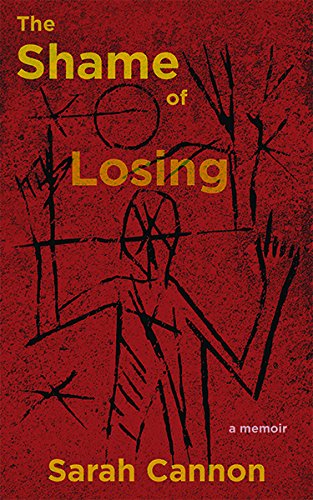
Mailbox Monday: The Shame of Losing by Sarah Cannon
What books came into your house last week? I got a brand new memoir from a PNW writer.

The Shame of Losing by Sarah Cannon. Days before she turned 33, Sarah's husband suffered a traumatic brain injury at work that changed everything about her marriage and the life they had planned.
Thanks for joining me for Mailbox Monday, a weekly "show & tell" blog event where participants share the books they acquired the week before. Visit the Mailbox Monday website to find links to all the participants' posts and read more about Books that Caught our Eye.
Mailbox Monday is graciously hosted by Leslie of Under My Apple Tree, Serena of Savvy Verse & Wit, and Martha of Reviews by Martha's Bookshelf.

The Shame of Losing by Sarah Cannon. Days before she turned 33, Sarah's husband suffered a traumatic brain injury at work that changed everything about her marriage and the life they had planned.
Thanks for joining me for Mailbox Monday, a weekly "show & tell" blog event where participants share the books they acquired the week before. Visit the Mailbox Monday website to find links to all the participants' posts and read more about Books that Caught our Eye.
Mailbox Monday is graciously hosted by Leslie of Under My Apple Tree, Serena of Savvy Verse & Wit, and Martha of Reviews by Martha's Bookshelf.
Labels:
Mailbox Monday
Thursday, September 27, 2018
Book Beginning: The Book of Dirt by Bram Presser
BOOK BEGINNINGS ON FRIDAYS
THANKS FOR JOINING ME ON FRIDAYS FOR BOOK BEGINNING FUN!
MY BOOK BEGINNING

In the region of T, not far from the city of U, there once stood a village that had been in Poland, then Hungary, then Subcarpathian Ruthenia, then Czechoslovakia, then Slovakia, then Hungary again, then Union of Soviet Socialist Republics, then the Ukraine and now cannot be found on any map.
-- The Book of Dirt by Bram Presser. Presser weaves family history with fiction, historic photos and documents to recreate his grandparents' Holocaust story.
Please join me every Friday to share the first sentence (or so) of the book you are reading, along with your initial thoughts about the sentence, impressions of the book, or anything else the opener inspires. Please remember to include the title of the book and the author’s name.
EARLY BIRDS & SLOWPOKES: This weekly post goes up Thursday evening for those who like to get their posts up and linked early on. But feel free to add a link all week.
FACEBOOK: Rose City Reader has a Facebook page where I post about new and favorite books, book events, and other bookish tidbits, as well as link to blog posts. I'd love a "Like" on the page! You can go to the page here to Like it. I am happy to Like you back if you have a blog or professional Facebook page, so please leave a comment with a link and I will find you.
TWITTER, ETC: If you are on Twitter, Instagram, Google+, or other social media, please post using the hash tag #BookBeginnings. I try to follow all Book Beginnings participants on whatever interweb sites you are on, so please let me know if I have missed any and I will catch up.
TIE IN: The Friday 56 hosted by Freda's Voice is a natural tie in with this event and there is a lot of cross over, so many people combine the two. The idea is to post a teaser from page 56 of the book you are reading and share a link to your post. Find details and the Linky for your Friday 56 post on Freda’s Voice.
YOUR BOOK BEGINNING
Labels:
Book Beginnings
,
Opening Sentence
Wednesday, September 26, 2018
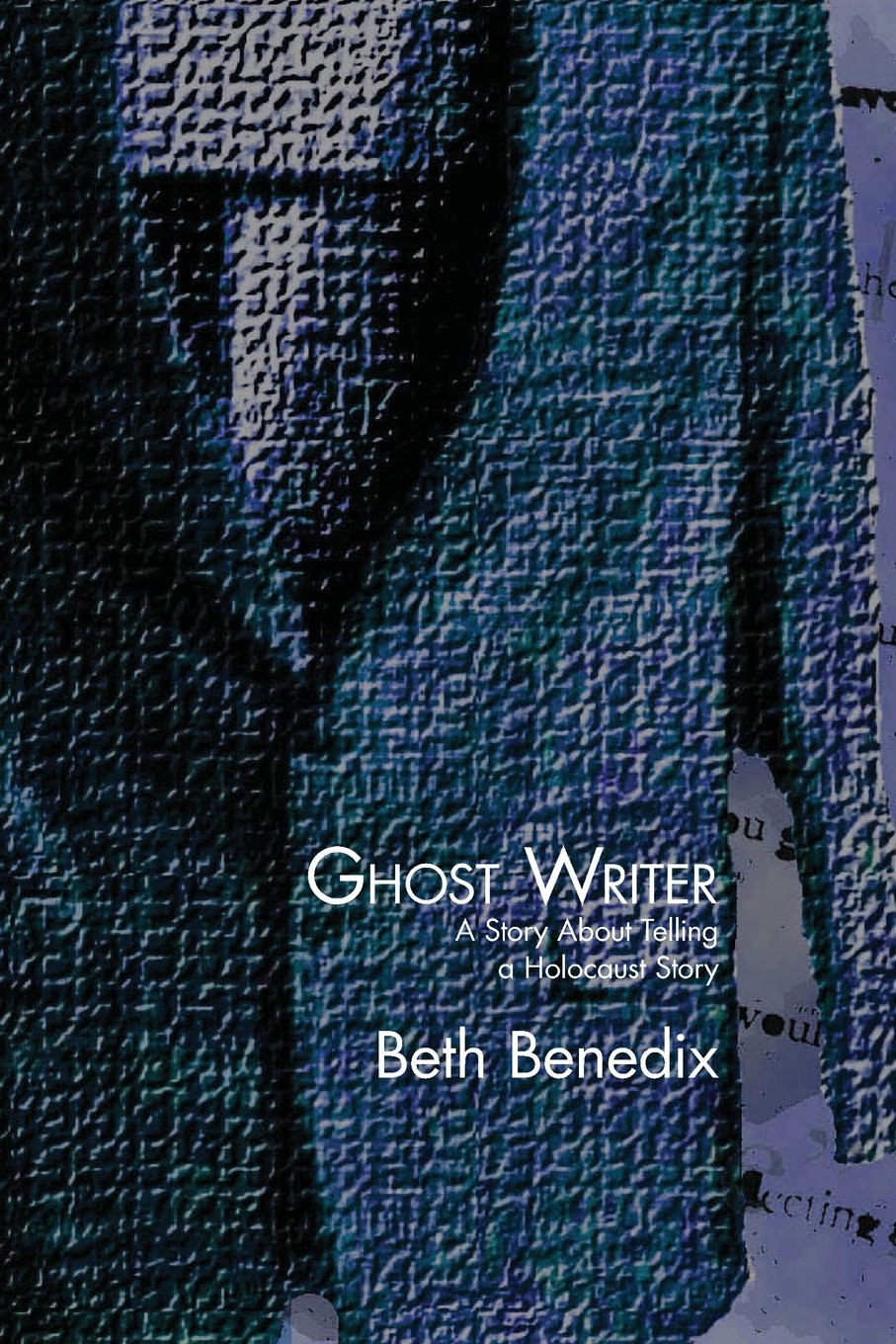
Author Interview: Beth Benedix
Beth Benedix is the author of Ghost Writer: A Story About Telling a Holocaust Story. While she was ghostwriting a memoir for a holocaust survivor, he urged Beth to write her own story about what it was like to confront the challenge of telling someone else's history when it "swelled beyond its own boundaries."
Beth recently answered questions for Rose City Reader. Find out more about the author of Ghost Writer and get to know the woman behind the book.
Before we get to your book, Ghost Writer, can you introduce us briefly to Joe Koenig?
Yes, of course. Joe is such a remarkable man, and I just hope I’ve been able to do him justice in the book. His story of survival during the Holocaust is itself extraordinary—by the time he was seventeen, he had lost his entire family, been imprisoned in four camps (including a work camp that he snuck into, intuiting that he would be safer inside than alone in the rural outskirts of Czestochowa, Poland), and survived two death marches. To me, it’s the way he lives in the midst of this story, the way he lives without dwelling, that I find so breathtaking. In the book, I describe him as the epitome of swagger—which, to me, is the quality of creating your own boundaries, setting your own course, defining the world in your own terms. Joe’s intuition is everything—he moves in the space of his own boundaries—somehow always knowing what next step to take. I find the way he approaches his life to be so… healthy, so affirmative. For him, it’s all about family and love. Throughout the writing of the book, I couldn’t shake the feeling that the best way to describe him was as a philosopher, in that he seemed to be describing a way of being and moving through the world. But his philosophy is the most embodied, authentic and down-to-earth I’ve ever seen, and I came away holding him up as a model of yes-saying. It’s a way of being in the world that I would very much like to emulate.
How did ghostwriting Koenig’s memoir lead to writing your book, Ghost Writer: A Story About Telling a Holocaust Story?
Well, technically, I never really did ghostwrite Joe’s memoir. I tried to do this—in the form of a third person narrative of his story of survival (included in the book), which I provided to Joe’s family. But even the original third person narrative had elements of my first-person attempts to nail down the story, to frame and contextualize the narrative I was hearing. I don’t actually consider myself a ghostwriter, in that I knew from the beginning that whatever form the book would eventually take needed to be a departure from standard ghostwritten accounts. The title is a nod to that departure... in separating the two terms (ghost and writer), the emphasis is on all of the “ghosts” that loom over the telling of the story, that intrude into this narrative that resists closure.
Who is your intended audience and what do you hope your readers will gain from your book?
I’m very much hoping to start a conversation with as diverse an audience as possible about what it means to tell another person’s story—about the obligations and limitations of memory and the ways in which telling our stories, and listening to the stories of others, brings us together. I wrote this book, specifically, because I feel there is an urgency to collect Holocaust survivors’ stories before there are no longer survivors left to tell them. But I also feel, generally, that there is an urgency to change the way we tell these stories—and all stories of survival and memory. I very much wanted to disrupt the monological strain, the one-directional mode, that so often dominates survivor testimony. It’s the dialogue, the back-and-forth, the moments of encounter and recognition that most authentically preserve and pass on memory, I’ve come to find.
I see my audience as people who are interested in Holocaust narratives and history, and, more broadly, as people who are interested in process-driven narrative non-fiction. I hope readers will come away feeling like they have met a remarkable man, and considering the possibility that memory-collecting is a raw, unscripted and sometimes messy affair.
Do you have recommendations for other books about the Holocaust or Holocaust survivors?
Elie Wiesel’s Night and Primo Levi’s Survival in Auschwitz are two memoirs that I find extremely powerful. In both cases, there is a stark beauty in the prose that conveys the immediacy of the horror they’ve experienced. I go back to Night again and again.
Nicole Krauss’s novel, The History of Love, is one of the most beautiful books I have ever read. The relationship at the center of the book between a Holocaust survivor and a young girl in many, many ways influenced my sense that these stories told now must be about convergence, about paths crossing. This is how we remember, how we preserve memory.
Other books that deeply influenced my thinking are Henry Greenspan’s On Listening to Holocaust Survivors and Peter Haas’ Morality After Auschwitz: The Radical Challenge of the Nazi Ethic. John K. Roth’s vast body of work has shaped my studies and approach, and is a must for anyone who is thinking about the philosophical and theological implications of the Holocaust.
Do you have recommendations for other books about writing and storytelling?
Oh, my goodness, there are so many! The ones that most heavily influenced my writing are self-conscious memoirs with narrators who are talking deliberately about process and second-guessing themselves along the way. My two biggest influences are Dave Eggers’ A Heartbreaking Work of Staggering Genius and David Harris-Gershon’s What do you Buy the Children of the Terrorist who Tried to Kill your Wife? Susanna Kaysen’s Girl, Interrupted is also a favorite—I love the fragmented quality of her writing and the way she uses original documents to frame her story.
Mary Karr’s The Art of Memoir and Stephen King’s On Writing are two books on the craft of storytelling that speak the most to me.
What did you learn from writing your book – either about the subject of the book or the writing process – that most surprised you?
I don’t think it’s an exaggeration to say that writing this book was a life-changing experience for me. Everything feels different now, more applied, more high stake. I’ve learned from Joe (am trying to learn) the art of perspective, of recognizing what matters and what doesn’t. About the writing process—I’ve learned that it really is a process. The book was nine years in the making, and in many ways I feel I’m still circling around the subject. It will never feel done to me, and I’m surprised to learn that I am completely okay with that lack of closure.
What is your work background? How did it lead you to writing this book?
I am a professor at DePauw University. My background is in comparative literature, with an emphasis on Modern Jewish writers, religious studies, and philosophy. Comp Lit is by nature an interdisciplinary field, one that doesn’t fit neatly into any particular category, and it allows a great deal of freedom to explore connections and intersections among ideas and genres. It’s kind of a marginal, liminal space, a space I feel really comfortable in. Looking back, I think this background—maybe my being drawn to Comp Lit in the first place—was key to my being able to conceive of Ghost Writer in the way that I did. It’s an assumption of the field (and one that I very much share) that no single lens will ever capture the thing in front of you—it’s about the constant shifting of lenses, the collecting of multiple perspectives, the perpetual circling around the subject. This is how I always imagined the book needed to take shape, with the process itself at the center of the story.
I also teach a good deal of writing in my classes, and work closely with all of my students to help them to find the arc of the stories they want to tell. I love these conversations, because they always begin with the questions that each student has about the material we’re reading, the things each student finds most compelling and worth puzzling through, and each conversation always starts with my just sitting and listening closely to their narratives, collecting their thoughts, and helping them to identify patterns in their thinking. I think perhaps I really honed this approach through my relationship with Joe, through our interactions that involved listening more than anything. And in the process of these conversations with students, so, so many shapes and story arcs and approaches emerged. It has begun to make an embodied sense to me that writing is always an act of listening, shaping, and re-shaping. It has been a tremendous gift to learn from my students and to be able to share what I’ve learned from the process of writing this book with them.
What do you like to read? What books are on your nightstand right now?
I am a huge fan of Kafka, Nietzsche, Murakami, and all things dark and existential. Right now, I’m reading two wonderful collections of short stories, one by Lesley Nneka Arimah, What it Means When a Man Falls From the Sky, the other by Helen Oyeyemi, What is Not Yours is Not Yours.
My favorite books of all time are Lolita, The Stranger, Madame Bovary, and Dara Horn’s The World to Come. The book on my nightstand (which has been there for a while) is my friend’s copy of roscitrea-20Beezlebub’s Tales to his Grandson (it’s slow going but I very much want to get through it!).
What is the most valuable advice you’ve been given as an author?
My friend, Tom Chiarella, novelist, longtime writer for Esquire and freelance journalist once told me: “You can start any piece of writing with the word ‘so’”—as in, “so, I’m sitting here with these interview questions trying to come up with perfectly-crafted answers…” It throws your audience immediately into the world you’re trying to throw them into, establishes a kind of intimacy, and lets people know exactly where you’re coming from. It’s all about transparency, revealing your thought process. I don’t know how many times this little gem saved me from the paralysis of the blank page, or how many times I shared it with my students to help them get started on their own projects.
What’s next? What are you working on now?
Right now, I’m working on marketing this book and gaining an audience. It’s a welcome transition, this crossing-over from academic writing to a general audience, and I’m very much hoping to have the opportunity to meet and talk with people and to hear what they think about Ghost Writer. I’m waiting for the next writing project to announce itself to me.
In the meantime, I’m busy being a mom, teaching, directing a nonprofit organization I founded called The Castle that brings integrated arts and project-based learning experiences into public schools in Putnam County, IN, and gigging as much as possible with my band, Black Market Vinyl. Joe taught me, among many other things, to grab every moment, which I’m trying to do.
THANKS, BETH!
GHOST WRITER IS AVAILABLE ON LINE, OR ASK YOUR LOCAL BOOK SELLER TO ORDER IT!
Labels:
author interview
Tuesday, September 25, 2018
Teaser Tuesday: Valley of Genius by Adam Fisher

Steve Wozniak: The story of Apple is a little misunderstood. It's not like Steve and I did it ourselves.
-- Valley of Genius: The Uncensored History of Silicon Valley (As Told by the Hackers, Founders, and Freaks Who Made It Boom) by Adam Fisher.
Fisher compiled thousands of hours of his own interviews with everyone from Steve Jobs and Steve Wozniak to the founders of Facebook, then trimmed them down into a compelling oral-history of Silicon Valley.
Teaser Tuesdays is hosted by The Purple Booker, where you can find the official rules for this weekly event.
Labels:
Teaser Tuesday
Monday, September 24, 2018
Mailbox Monday: Memoir, History, and Historical Fiction
What books came into your house last week? Three interesting volumes came my way:

Stet: An Editor's Life by Diana Athill. This memoir of her life in publishing by legendary editor Diana Athill (alive at 100) is my book club book for November.

A Deadly Wind: The 1962 Columbus Day Storm by John Dodge. This is a new, comprehensive history of Oregon's most famous storm. OSU Press launched a Facebook group, here, for people to share stories and photos from the storm.

The Book of Dirt by Bram Presser. This is Presser’s first novel, inspired by his own family’s history of surviving the Holocaust.
Thanks for joining me for Mailbox Monday, a weekly "show & tell" blog event where participants share the books they acquired the week before. Visit the Mailbox Monday website to find links to all the participants' posts and read more about Books that Caught our Eye.
Mailbox Monday is graciously hosted by Leslie of Under My Apple Tree, Serena of Savvy Verse & Wit, and Martha of Reviews by Martha's Bookshelf.

Stet: An Editor's Life by Diana Athill. This memoir of her life in publishing by legendary editor Diana Athill (alive at 100) is my book club book for November.

A Deadly Wind: The 1962 Columbus Day Storm by John Dodge. This is a new, comprehensive history of Oregon's most famous storm. OSU Press launched a Facebook group, here, for people to share stories and photos from the storm.

The Book of Dirt by Bram Presser. This is Presser’s first novel, inspired by his own family’s history of surviving the Holocaust.
Thanks for joining me for Mailbox Monday, a weekly "show & tell" blog event where participants share the books they acquired the week before. Visit the Mailbox Monday website to find links to all the participants' posts and read more about Books that Caught our Eye.
Mailbox Monday is graciously hosted by Leslie of Under My Apple Tree, Serena of Savvy Verse & Wit, and Martha of Reviews by Martha's Bookshelf.
Labels:
Mailbox Monday
,
memoir
,
OSU Press
Thursday, September 20, 2018
Book Beginning: Without Reservations: The Travels of an Independent Woman by Alice Steinbach
BOOK BEGINNINGS ON FRIDAYS
THANKS FOR JOINING ME ON FRIDAYS FOR BOOK BEGINNING FUN!
MY BOOK BEGINNING
Dear Alice, Each morning I am awakened by the sound of a tinkling bell.
-- Without Reservations: The Travels of an Independent Woman by Alice Steinbach. Each chapter of this memoir starts with the text of a postcard the author sent home to herself while she spent a year in Europe, away from her job as a popular Baltimore journalist.
Please join me every Friday to share the first sentence (or so) of the book you are reading, along with your initial thoughts about the sentence, impressions of the book, or anything else the opener inspires. Please remember to include the title of the book and the author’s name.
EARLY BIRDS & SLOWPOKES: This weekly post goes up Thursday evening for those who like to get their posts up and linked early on. But feel free to add a link all week.
FACEBOOK: Rose City Reader has a Facebook page where I post about new and favorite books, book events, and other bookish tidbits, as well as link to blog posts. I'd love a "Like" on the page! You can go to the page here to Like it. I am happy to Like you back if you have a blog or professional Facebook page, so please leave a comment with a link and I will find you.
TWITTER, ETC: If you are on Twitter, Instagram, Google+, or other social media, please post using the hash tag #BookBeginnings. I try to follow all Book Beginnings participants on whatever interweb sites you are on, so please let me know if I have missed any and I will catch up.
TIE IN: The Friday 56 hosted by Freda's Voice is a natural tie in with this event and there is a lot of cross over, so many people combine the two. The idea is to post a teaser from page 56 of the book you are reading and share a link to your post. Find details and the Linky for your Friday 56 post on Freda’s Voice.
YOUR BOOK BEGINNING
Labels:
Book Beginnings
,
memoir
,
Opening Sentence
Tuesday, September 18, 2018
Teaser Tuesday: The Girl Inside Me: Poems by Javelin Hardy
There is a little girl inside of meTrapped, afraid and wanting to be set free.But I'm 33 now --What is this little girl doing inside of me?
-- From the title poem in The Girl Inside Me: Poems by Javelin Hardy. Hardy draws on her training and background as a counselor to tell her own story of recovery from abuse in this beautiful book of poetry and historic photographs.
Teaser Tuesdays is hosted by The Purple Booker, where you can find the official rules for this weekly event.
Labels:
Oregon author
,
Teaser Tuesday
Monday, September 17, 2018
Mailbox Monday: Philip Roth
What books came into your house last week? I filled in my Philip Roth TBR shelf with two of his books I haven't read yet.
Roth is one of my favorites and I plan to read all of his books, hits and misses. I’ve read 12 of 31 so far, according to the list I keep here on the blog (see Favorite Authors tab above or list in right column).
Reading Myself and Others, a collection of essays about reading and writing.
The Dying Animal, the last book in his David Kepesh trilogy. The trilogy starts with The Breast, which I haven't read and is generally panned. I read the second one a few months ago, The Professor of Desire, and thought it was great.
I know a lot of women don't like to read Philip Roth, or the other male writers of his generation. I do. I tend to prefer "mid-century" (20th) authors both sexes because I'm drawn to books with hefty plots, omniscient third-person narrators, and a minimum of experimentation. And I like to read books by male authors because I like men and want to understand them. They don't think the same way my women friends and I do!
Which authors do you love so much you want to read all their books? How do you keep track?
Thanks for joining me for Mailbox Monday, a weekly "show & tell" blog event where participants share the books they acquired the week before. Visit the Mailbox Monday website to find links to all the participants' posts and read more about Books that Caught our Eye.
Mailbox Monday is graciously hosted by Leslie of Under My Apple Tree, Serena of Savvy Verse & Wit, and Martha of Reviews by Martha's Bookshelf.
Roth is one of my favorites and I plan to read all of his books, hits and misses. I’ve read 12 of 31 so far, according to the list I keep here on the blog (see Favorite Authors tab above or list in right column).
Reading Myself and Others, a collection of essays about reading and writing.
The Dying Animal, the last book in his David Kepesh trilogy. The trilogy starts with The Breast, which I haven't read and is generally panned. I read the second one a few months ago, The Professor of Desire, and thought it was great.
I know a lot of women don't like to read Philip Roth, or the other male writers of his generation. I do. I tend to prefer "mid-century" (20th) authors both sexes because I'm drawn to books with hefty plots, omniscient third-person narrators, and a minimum of experimentation. And I like to read books by male authors because I like men and want to understand them. They don't think the same way my women friends and I do!
Which authors do you love so much you want to read all their books? How do you keep track?
Thanks for joining me for Mailbox Monday, a weekly "show & tell" blog event where participants share the books they acquired the week before. Visit the Mailbox Monday website to find links to all the participants' posts and read more about Books that Caught our Eye.
Mailbox Monday is graciously hosted by Leslie of Under My Apple Tree, Serena of Savvy Verse & Wit, and Martha of Reviews by Martha's Bookshelf.
Saturday, September 15, 2018
Favorite Author: Benjamin Black
Benjamin Black is the pen name of Irish author John Banville. Writing in his own name, Banville won the Booker Prize in 2005 for The Sea, which I loved, but I've only read one of his other novels and don't plan to undertake reading all of them any time soon.
The mysteries he writes as Benjamin Black, on the other hand, enchant me. In particular, his Quirke series puts me under a spell so I feel like I'm right there in 1950s Dublin. That may partly be due to the audiobook reading by actor Timothy Dalton who does such a superb job on the first three.
Banville's Benjamin Black books are below. In addition to the Quirke series, he has written two stand-alone mysteries and a Philip Marlowe novel. Those I have read are in red. Those on my TBR shelf are in blue.
Quirke series
- Christine Falls (2007) FINISHED
- The Silver Swan (2008) FINISHED
- Elegy for April (2010) FINISHED
- A Death in Summer (2011) FINISHED
- Vengeance (2012) FINISHED
- Holy Orders (2013)
- Even the Dead (2016)
- April in Spain (2021)
The Lemur (2008)
The Black-Eyed Blonde, a Philip Marlowe novel (2014)
Wolf on a String (2017) (published in the UK as Prague Nights)
The Secret Guests (2020)
NOTE: Updated June 24, 2022
Labels:
Benjamin Black
,
Favorite Author
,
list
Thursday, September 13, 2018
Book Beginning: Valley of Genius by Adam Fisher
BOOK BEGINNINGS ON FRIDAYS
THANKS FOR JOINING ME ON FRIDAYS FOR BOOK BEGINNING FUN!
MY BOOK BEGINNING

I grew up in what is now known as Silicon Valley. Only in retrospect does it seem like an unusual place.
-- Valley of Genius: The Uncensored History of Silicon Valley (As Told by the Hackers, Founders, and Freaks Who Made It Boom) by Adam Fisher.
This is a fascinating book, even for someone like me who has no connection to the high tech world of Silicon Valley, other than my iPhone.
Please join me every Friday to share the first sentence (or so) of the book you are reading, along with your initial thoughts about the sentence, impressions of the book, or anything else the opener inspires. Please remember to include the title of the book and the author’s name.
EARLY BIRDS & SLOWPOKES: This weekly post goes up Thursday evening for those who like to get their posts up and linked early on. But feel free to add a link all week.
FACEBOOK: Rose City Reader has a Facebook page where I post about new and favorite books, book events, and other bookish tidbits, as well as link to blog posts. I'd love a "Like" on the page! You can go to the page here to Like it. I am happy to Like you back if you have a blog or professional Facebook page, so please leave a comment with a link and I will find you.
TWITTER, ETC: If you are on Twitter, Instagram, Google+, or other social media, please post using the hash tag #BookBeginnings. I try to follow all Book Beginnings participants on whatever interweb sites you are on, so please let me know if I have missed any and I will catch up.
TIE IN: The Friday 56 hosted by Freda's Voice is a natural tie in with this event and there is a lot of cross over, so many people combine the two. The idea is to post a teaser from page 56 of the book you are reading and share a link to your post. Find details and the Linky for your Friday 56 post on Freda’s Voice.
YOUR BOOK BEGINNING
Labels:
Book Beginnings
,
Opening Sentence
Wednesday, September 12, 2018
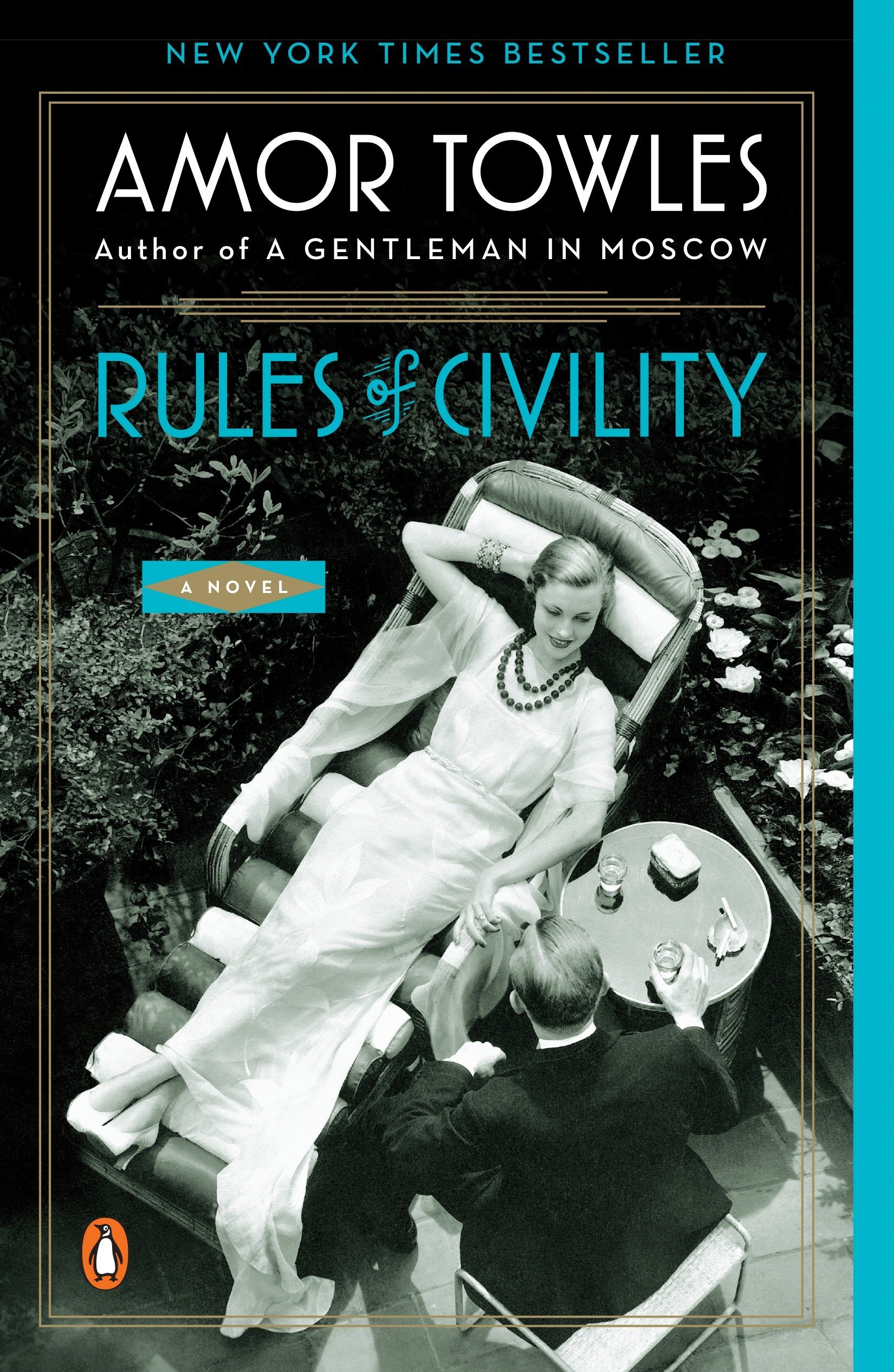
What Are They Reading? Rules of Civility by Amor Towles
Authors tend to be readers, so it is natural for them to create characters who like to read. It is always interesting to me to read what books the characters are reading in the books I read. Even if I can't say that ten times fast.
Usually, the characters' choice of books reflects the author's tastes or, I sometimes think, what the author was reading at the time. But sometimes the character's reading material is a clue to the character's personality, or is even a part of the story.
This is an occasional blog event. If anyone wants to join in, grab the button, put up a post, and leave leave a comment with a link to your post.
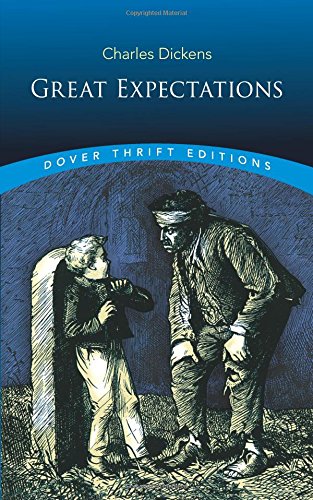
Katey Kontent, the narrator and heroine of Towles's debut novel, spends a lot of her free time reading and discussing books. Her favorite is Great Expectations by Charles Dickens, which she reads over and over. Katie is the daughter of Russian immigrants, grew up in New York City, and uses her smarts and wit to build a career and find her own place in high society. It is understandable that she would be drawn to Pip's complicated story of personal growth.

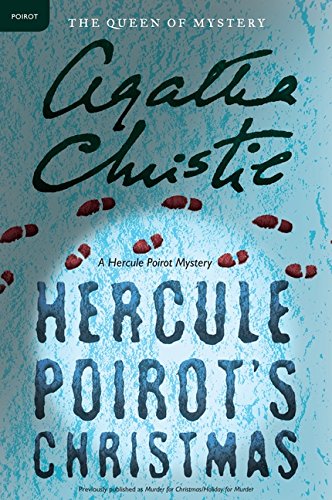
When Katey's personal life becomes most confusing, she develops a taste for Agatha Christie. By 1938, when most of the novel takes place, Christie had published 30 books, and two came out in 1938. In one of the best scenes in Towles's book, Katey settles in for Christmas Eve 1938 alone, with a 10-pound ham from her boss, a bottle of bourbon, and the newly-released Hercule Poirot’s Christmas.

The title, Rules of Civility, comes from another book, George Washington's Rules of Civility (& Decent Behavior in Company and Conversation), a list of 110 maxims that Washington had written in his own handwriting as a school boy. Katey finds a well-thumbed copy of the George Washington book in protagonist Tinker Grey's apartment and later buy's a secondhand copy for herself. There is an appendix in the Towles book listing the 110 rules.

I loved Rules of Civility as much as I did Towles's second book, A Gentleman in Moscow. I can't wait to see what he writes next.
Labels:
Agatha Christie
,
Amory Towles
,
Charles Dickens
,
What Are They Reading?
Subscribe to:
Posts
(
Atom
)