Friday, September 17, 2010

Opening Sentence of the Day: Another Way the River Has


Nobody ever called the Clackamas "old man river."

Another Way the River Has: Taut True Tales from the Northwest by Robin Cody (published by OSU Press).

Cody is best-known for his novel Ricochet River, a coming-of-age story set in a small Oregon lumber town in the 1960s. This is a collection of his nonfiction, including several pieces not published before.

Thursday, September 16, 2010

Review of the Day: Burmese Lessons


Burmese Lessons: A True Love Story  is Karen Connelly's very personal story of traveling to Burma and working with Burmese refugees in Thailand. She starts out with the idea of writing some articles about artists and political prisoners in Burma, then broadens her scope to write a book.

While in Thailand, Connelly fell in love with a Burmese dissident leader. She uses their personal relationship as the framework for her larger story about the struggle for democracy in Burma and the hardships faced by the refugees. But her book is still personal.  It is the story of a Western woman's adventure in Burma and what she learned -- as much about herself as the Burmese people.

The only weakness to this fascinating story is that it lacks defining context early on. What I knew about Burma is written on the menu at Burma Super Star, but I don't think I am alone in my ignorance.  Burma, its history, and even its geography are not commonly known to most Western readers.  The book would benefit from a map and a brief explanation early on of Burma's political history. Connelly includes just such a paragraph eventually -- but not until about two-thirds of the way through the book.

Likewise, the book lacks temporal context. Connelly never explains that the story takes place in 1996 and she further obscures that fact by writing about most of the action in the present tense. This makes the book more immediately engaging, but is less historically honest.

This lack of context does not detract from Connelly's writing or her story, but it is distracting. 

Connelly is a poet and novelist, which shows in her eye for beauty and drama.  While not a thorough analysis of Burma's history and politics, Burmese Lessons is an absorbing memoir.


OTHER REVIEWS

(If you would like your review listed here, please leave a comment with a link to your review and I will add it.)

NOTES

I got this book through the LibraryThing Early Reviewers' program.  One more I can cross off that list.

Wednesday, September 15, 2010

Opening Sentence of the Day: The Truth About Obamacare


On Tuesday, March 23, 2010, surrounded by flashing cameras and cheering fans, Barack Obama signed into law a bill that will lead to the largest expansion of government in the history of the United States.

-- The Truth About Obamacare by Sally C. Pipes.

Good, bad, or otherwise, that's probably an accurate statement. Let's see what Ms. Pipes has to say . . .

Tuesday, September 14, 2010

Teaser Tuesday: The Razor's Edge


"She was outrageously made up, her cheeks rouged to the eyes and her eyelids, upper and lower, heavily blued; her eyebrows and eyelashes were thick with mascara and her mouth scarlet with lipstick. . . .  She looked more of a slut than any woman there and I had a suspicion that she was not only drunk but doped."

The Razor's Edge by Somerset Maugham.

That's the mascaraed eyebrows scene that so stuck with me. Even though I didn't remember reading the book, when I got to that scene, I knew I had.

Poor Sophie MacDonald!

Teaser Tuesdays is hosted by Should Be Reading, where you can find the official rules for this weekly event.


Monday, September 13, 2010

Mailbox Monday


Bermudaonion is hosting Mailbox Monday this month. Thanks Kathy! I also remembered this week to post to In My Mailbox, hosted by The Story Siren.

One book came into my house last week:

42 States of Grace: A Woman's Journey by Maureen Hovenkotter.


A mutual friend suggested that the author send me a copy of this book.  I'm afraid it is going to make me cry, but it looks very good. She was a free-lance writer and an aide to a U.S. Senator.  When her husband died unexpectedly, she set off traveling around America in an RV with her dog Charlie.

This is the sort of random, real-person memoirs that I really like.  

Sunday, September 12, 2010

Review of the Day: Peaceful Places, New York City


In Peaceful Places, New York City Evelyn Kanter explores “129 Tranquil Sites in Manhattan, Brooklyn, Queens, the Bronx, and Staten Island” and throws in a bonus section of four peaceful day trips outside of the city. The sites are listed alphabetically, but cross-indexed by neighborhood and category.

There are many categories include Enchanting Walks, Museums & Galleries, Parks & Gardens, Quiet Tables, and Spiritual Enclaves. Decent maps help pinpoint locations and Kanter gives directions to get to every place on public transportation.

Kanter is a travel writer and photographer with an active lifestyle, which shows in her choices of peaceful sites. She tends to favor hiking trails and open spaces to reading rooms or quiet chapels. For this reason, the book is as of much use to residents looking to discover the hidden corners as to visitors looking for a respite from the hustle and bustle of the Big Apple. Her descriptions of “2,800 acres of forests, meadows, ponds, hills, and valleys” or “dunes and beach grass creat[ing] the only canvas” are enough to entice explorers to Staten Island or Queens, but probably not a visitor looking to cram the most into a weekend.

Out-of-towners may prefer her tips on finding garden atriums and “vest pocket” parks hidden between the skyscrapers of Midtown. Or her short but convincing list of places for quiet cocktails. If even these oases fail to sooth city-jangled nerves, there’s always the option of becoming “temporarily vegetative in total relaxed bliss” with a YeloNap at the Yelo Spa.

Peaceful Places is an inspiration anyone planning a visit to New York, and a must-have book for any New Yorkers looking for adventure in the farther reaches of their grand city.


OTHER REVIEWS

(If you would like your review of this book listed here, please leave a comment with a link to your review and I will add it.)

NOTES

If Peaceful Places, New York City appeals to you, you may also like Secret New York: The Unique Guidebook to New York's Hidden Sites, Sounds, & Tastes, which was published in 1999 but is still my favorite NYC guidebook; Romantic New York City: A Guide to the Most Romantic Clubs, Restaurants, Bars and Hotels in New York City, which is even more out of date but still inspires; and Up in the Old Hotel by Joseph Mitchell (reviewed here), which will never be out of date and may be the best book about New York ever.

Saturday, September 11, 2010


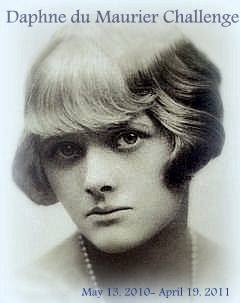
Challenge: Daphne du Maurier


WRAP-UP: I only read two of the three books I signed up to read: Rebecca (reviewed here) and My Cousin Rachel, which I didn't review.  I enjoyed my introduction to du Maurier and plan to read several more of her books.  I added several to my TBR shelves during this challenge. Added January 9, 2012.


ORIGINAL SIGN-UP: Not that I need another book challenge, but the Daphne du Maurier Challenge hosted by Chris at book-a-rama looks like fun.  And it runs through April 19, 2011, so I have plenty of time.

But the real reason I am signing up now is because I can count Rebecca as my first book. I just read it and posted my review.  It was my first du Maurier book ever, even though several (at least nine, according to LibraryThing) have been sitting on my TBR shelf for decades.

I am signing up for the "Dreaming of Manderley" category: "Participants in this category, will read 3 of Daphne du Maurier's larger works, her novels or non-fiction. You can also count a collection of her short stories as one book."

MY CHOICES

Since I am still new to du Maurier, I'll start with the greatest hits:
  1. Rebecca (reviewed here); 
  2. The Flight of the Falcon; and
  3. My Cousin Rachel.


Friday, September 10, 2010

Opening Sentence of the Day: The Razor's Edge


"I have never begun a novel with more misgiving."

The Razor's Edge by Somerset Maugham.

I am on a bit of a Maugham jag because I am working my way through the short stories.  I always thought that I had read this book before, but I got over half-way through it this time before anything was familiar.  It all seemed new to me until I remembered the scene with Sophie in the Parisian nightclub -- I always remember that scene because her eyebrows were mascaraed. Her eyebrows.

Thursday, September 9, 2010

Review of the Day: The Fortress of Solitude


The Fortress of Solitude is the story of two friends, Dylan Ebdus and Mingus Rude, growing up in Brooklyn in the 1970s. Dylan is white, Mingus is black; both are growing up without mothers. Dylan’s father is an abstract artist who views himself as a sellout for painting cover art for sci-fi novels. Mingus’s father was the front-man for a Motown harmony group, but spends his days getting high and dreaming of a comeback.

Jonathan Lethem packs so much into the story that there are times reading it is like trying to drink from a firehose of 1970s culture. Dylan spends his days collecting comic books, perfecting street games, being “yoked” by older kids for his lunch money, and trying to hold his own with graffiti taggers, including Mingus. Drugs, sex, race, music, gentrification, crime, art – its all there, but all through the eyes of a kid.

The book has the multiple storylines and hard edge of a Don DiLillo novel, but without the unrelenting grimness because it is told from the point of view of a child who still has some optimism. The best thing about the book is how Lethem perfectly captures the half-perceptions and half-understandings that make a child’s memory.

In the second half of the book, the story flags. It is 1999 and Dylan is living in Berkeley. Mingus is in prison, where he has been off and on since turning to crack. Dylan fills in the details of the years gone by, but this part of the book all builds to a harebrained scheme to get Dylan out of prison.

Unfortunately, where the first part of the book is incredible in the sense of being amazing, the second part is incredible in the sense of not being believable. Dylan uses a “magic” ring he had since childhood to sneak into the prison, with tragic consequences. The ring made sense in the first part, where its magical powers could be explained as the alcoholic delusions of the derelict who passed it on to Dylan, or the fantasies of Dylan and Mingus who wanted to be superheroes. But when Dylan actually uses the ring to become invisible, the story takes a jarring turn to magical realism.

For readers willing to take whatever a story dishes out, the second half could be as entertaining as the first. But for those not willing to suspend disbelief to the point of accepting magic rings and invisibility, the ending will be a letdown.


OTHER REVIEWS
(If you would like your review of this book listed here, leave a comment with a link to your review and I will add it.)

NOTES
I listened to the unabridged audio version of this book, which I suspect made me like it more than I would have had I read all 500+ pages. The narrator did a terrific job with all the voices and brought the kaleidoscope images into focus.

Wednesday, September 8, 2010

Review: Rebecca


Rebecca is a book that I had to give myself over to completely in order enjoy it. The whole experience depends on buying into the moldering, gothic suspense of it all.

Unfortunately, this requires putting up with the unnamed heroine being a hopeless ninny for the first two-thirds of the story. But once I set aside her fear of every person she encounters and her inability to talk to her own husband and went with the flow of the story, I was eventually swept away.

At the center of the story is Manderley, the seaside mansion of Max de Winter. The house is as much a character in the book as the people, providing atmosphere and an elaborate setting with closed-off wings, back passages, dark woods, and hidden coves. The house and all it stands for also motivates the characters and leads, eventually, to their undoing.

When brooding Max brings his new young bride to Manderley, both are haunted by his beautiful, vivacious first wife Rebecca – he in memory, the bride in imagination. By the time both shake loose from Rebecca’s beyond-the-grave grip, it is too late.

Even when the book is frustrating, it is admirable in its relentless adherence to the genre. Every detail layers on the suffocating suspense, from the spooky skull-headed housekeeper, to the relentless summer heat, to the rat-gnawn day bed in the boathouse. Daphne du Maurier created a perfect neo-gothic thriller in Rebecca.


OTHER REVIEWS

Hannah Soneham's Book Blog

(If you would like your review of Rebecca listed here, please leave a comment with a link and I will add it.)

NOTES

Rebecca is on the Radcliffe Top 100 list. This was the first of three book I read for theDaphne du Maurier Challenge hosted by Chris at book-a-rama.


Tuesday, September 7, 2010

Teaser Tuesday Two-fer


The kid read books like he was engaged in some kind of scavenger procedure, scowling in concentration, turning pages at improbable speed while he flayed away inessential flesh of prose and inspected the skeleton of story, the bare facts or crucial nonsense.  Dylan Ebdus didn't read, he filleted.

-- The Fortress of Solitude by Jonathan Lethem. What a terrific description of how a kid reads a book!

My other books for the week is the polar opposite of Lethem's funkadelic anthem to 1970's Brooklyn:

As I sipped my cold tea I thought with a tired bitter feeling of dispair that I would be content to live in one corner of Manderley and Maxim in the other as long as the outside world should never know.  If he had no more tenderness for me, never kissed me again, did not speak to me except on matters of necessity, I believed I could bear it if I were certain that nobody knew of this but our two selves.
-- Rebecca by Daphne du Maurier.Oh, the melodrama! It is still painful for me to watch this ninny feel sorry for herself and be afraid of her own shadow, but I am sucked hard into the story.


Teaser Tuesdays is hosted by Should Be Reading, where you can find the official rules for this weekly event.


Monday, September 6, 2010

Mailbox Labor Day


I went on a little holiday weekend excursion to Second Glance Books, where I can always find books on my list and have a nice chat with Rachelle, my favorite book seller. As always, she sent me a way with a nice stack of books for Mailbox Monday, hosted this month by the prolific Bermuda Onion:


The Unpleasantness at the Bellona Club by Dorothy L. Sayers (because I started the Lord Peter Wimsey series and now want to read them all).


Spies by Michael Frayn (because I read about it in Nick Hornby's Housekeeping vs. The Dirt and it sounds great).


Human Voices by Penelope Fitzgerald (because I am working on her bibliography).


Felicia's Journey by William Trevor (because it won the Costa Book of the Year award in 1994).


Seek My Face by John Updike (because he's a favorite).


Bech at Bay by John Updike (because Updike is a favorite and I have the other two in this trilogy already, Bech and Bech is Back).


Then and Now by Somerset Maugham (because I'm on a Mauagham jag, having just finished The Razor's Edge and working my way through the short stories).


The Girl at the Lion d'Or by Sebastian Faulks (which I got at my neighbors' garage sale because I really enjoyed his newest book, A Week in December).

Happy Labor Day!


Sunday, September 5, 2010

Cookbook Library: James Beard's American Cookery


James Beard's American Cookery is my go to cookbook for just about everything.  Well, that's probably a toss up with The Joy of Cooking.  But I usually go to JBAC first and turn to TJOC if Beard doesn't have the recipe or I want a simplified version.

My husband brought this cookbook into our home (ours has a different cover). I don't know how I got along without it. It is now an essential part of my cookbook library.

Today, I used his recipe for roasting a pork shoulder roast. I usually just stick one in a very low oven (225) in a covered casserole and cook it for hours, until the meat falls apart. That's a great way to go to get a huge pile of shredded pork for soup, chile, tacos, b-b-c pork sandwiches, whatever.

But I wanted to try something new. Beard says to cook the shoulder (or "picnic" roast) the same way he suggests for a leg of pork roast, which is to rub it with salt, pepper, sage, and garlic; put it in an uncovered roasting pan, fat side up; cook it at 300 for 25 minutes per pound, or until 160 degrees inside, without basting; turn up the temperature to 400 for the last 20 or 30 minutes, basting often, to crisp up the fat; then let it set a while. It is messy to carve because of the bone, but tasty.

We'll see. It's in the oven now. It smells very good. It will make a nice dinner tonight and maybe we will make sandwiches tomorrow for a Labor Day picnic.


Saturday, September 4, 2010

Opening Sentence of the Day: Food Lover's Guide to Portland


"I moved to Portland in 2002 with a small amount of money and a big appetite."

-- Food Lover's Guide to Portland by Liz Crain.

I interviewed Liz, here, before I got my copy of the book. I am very excited to read it and discovery some foodie secrets about my city.

Friday, September 3, 2010

Opening Sentence of the Day: The Fortress of Solitude


Like a match struck in a darkened room:

Two white girls in flannel nightgowns and red vinyl skates with white laces, tracing tentative circles on a cracked blue slate sidewalk at seven o'clock on an evening in July.
-- The Fortress of Solitude by Jonathan Lethem.

I like that opening sentence, even though it isn't a complete sentence so, technically, should fall into the pet peeve category. It has enough words to count as an exception to my usual rule against opening a book with a phrase.

I loved Lethem's National Book Critics Circle award winner, Motherless Brooklyn.

This one is much different. It's a coming-of-age novel set in Brooklyn in the 1970s. It's a real trip.

Maybe I'll tweet about it later. Ha! What am I going to do with this Twitter account, anyway? Who else uses Twitter? What do you use it for?

HOPPING

Book Blogger Hop

I am hoping to get some hopping in today, although I expect it will be this weekend before I get to it. For one thing, I am still trying to find a blogger blog with a Twitter retween button so I can figure out how to add it to mine.

The question this week is: Do you judge a book by its cover?

I can't say that I do, unless it's a fancy coffee table book or something. I like a nifty, eye-catching cover, like the Lethem book above, but I usually buy a book because it is on one of my many lists, not because I notice the cover. Since most of the books I buy are older, and often out-of-print, I take what I can find.

Although, I admit that I have a weakness for book with the Golden Gate Bridge on the cover, like this one that I bought and have no idea what it is about:


Thursday, September 2, 2010

Blog Improvement Question

OK, I've given in and am going to try to use Twitter. My Twitter account is here.

But I cannot figure out how to add a "retweet" button to my blog posts. I found several instructions about how to add the code, but all I get it a button that will send out a tweet with only the name of my blog -- not the title of the blog post.

Any suggestions?

Wednesday, September 1, 2010

Review of the Day: The Farmer's Daughter


In The Farmer's Daughter, Jim Harrison returns to his signature three-novella format. In addition to the title story, this volume includes Brown Dog Redux, the fourth Harrison novella featuring his iconoclastic hero, and The Games of the Night, a gothic werewolf tale.

The Farmer’s Daughter is the weakest of the three, which is too bad because, creatively, it is the most courageous. Harrison takes his usual themes of rugged, outdoorsy, animal-loving individualism coupled with an auto-didactic appreciation for literature and applies them to the story of a 15-year old girl in Montana. Harrison pulls it off better than most would, but a little too much of the septuagenarian curmudgeon shows through to make Sarah’s character completely believable.

Brown Dog Redux picks up the story of B.D. in Canada, where he has fled with his stepdaughter to keep the girl from the soul-killing state school in which she was enrolled because of her fetal alcohol syndrome. B.D. is always half in trouble and completely charming.

The Games of the Night is an old-fashioned sort of horror story about a man who, as a young boy, had been infected with “zoonotic” diseases when bit by a wolf pup. Trying to live with his monthly “spells” involving ferocious appetites, strength, and sleeplessness, he wanders through Europe before seeking solace in the arms of his first love. It is quite a yarn and one that Harrison handles with dramatic elegance.


NOTES

Jim Harrison is one of my favorite authors. I have read all his prose books, fiction and nonfiction. He is one of the few authors whose books I reread.  His novel, The Road Home, is on my Top 10 list.

This review was first published in the Internet Review of Books

OTHER REVIEWS

(If you would ike your review of tis book, or any other book by Jim Harrison, listed here, please leave a ocmment with a link to your review and I will add it.)

Tuesday, August 31, 2010

Teaser Tuesday: Housekeeping vs. the Dirt


After explaining that, while in Portland, he bought a book called A Complicated Kindness on the recommendation of several Powell’s Books employees:

Did you know that you have the best bookshops in the world? . . . . Over here in England, the home of literature ha-ha, we have only chain bookstores, staffed by people who for the most part come across as though they’d rather be selling anything else anywhere else; meanwhile you have access to booksellers who would regard their failure to sell you novels about Mennonites as a cause of deep personal shame.

--  Housekeeping vs. the Dirt by Nick Hornby.

A Portland shout out from Nick Hornby! Well, maybe by "you" he meant all of America and not just the book-loving Rose City, but it was Powell's that inspired the anecdote, so I choose to interpret this as a compliment to my fair city.

This is the second compilation of Nick Hornby's columns for the Believer magazine, following The Polysyllabic Spree (reviewed here).

This is one of my choices for the Bibliophilic Books Challenge.


Teaser Tuesdays is hosted by Should Be Reading, where you can find the official rules for this weekly event.


Monday, August 30, 2010

Mailbox Monday


My mom was here for a visit and passed on a couple of books she thought I would like, giving me a short Mailbox Monday list.

These are two books that I gave to my sister when she was in culinary school last year. I loaded her up with food and cooking books. She passed them on to our mom when she moved to Bavaria in May. Now Mom is finished with them and they've come full circle.

La Cucina: A Novel of Rapture by Lily Prior


The Food of Love by Anthony Capella


Sunday, August 29, 2010

Review of the Day: Venusberg


Anthony Powell is best known for his 12-volume novel, A Dance to the Music of Time, which follows a loose group of acquaintances from school days on the eve of WWI, through service in WWII and subsequent careers. The plots of the individual novels are less important than the entwining of these characters as they move in and out of each other’s lives over the years.

The shape and ideas of Dance, and Powell’s dry humor, are visible in his earlier novel Venusberg. Although the plot is different – a young journalist is sent to cover the political unrest in a newly-minted Balkan state – the book similarly depends more on characters than action. Lushington’s circle includes an old school chum who stole his lover, a penniless Russian count, the seductive wife of an eminent professor, a fake count selling beauty products, a grandiose and loquacious valet, and a dozen others swirling around the diplomatic and political scene in the new capital.

Powell is content in Venusberg to observe the antics and misfortunes of this crowd of characters, while in Dance he shows more sympathy in fully developing each storyline. Still, his descriptions can by pithy masterpieces, summing up whole lifetimes in a few, deft sentences, such as his description of Lucy, Lushington’s former love:

Not long after the [divorce] decree was made absolute it became apparent that she was more than remarkably good-looking. She showed signs of becoming a film star. But she was a girl who felt that life should be full of meaning and she broke with her second husband, a film producer, because he adapted one of the minor classics too freely.

The story arc in Venusberg is none too steep – the plot is bracketed by Lushington’s arrival in and departure from the Baltic capital and pretty much confined to a series of comic scenes and character sketches. It is a book probably most appreciated by Powell fans, but could serve as a quick introduction to this great author.


OTHER REVIEWS
(If you would like your review of this or any other Anthony Powell book listed here, please leave a comment with a link to your review post and I will add it.)

Saturday, August 28, 2010

Opening Sentence of the Day: Rebecca


"Last night I dreamt I went to Manderley again."

-- Rebecca by Daphne du Maurier.

Although I've watched the movie several times and own two or three copies of the book, I have never read this.  One of my New Year's book resolutions was to finally get to it. For one thing, it will bring me that much closer to finishing the books on the Radcliffe Top 100 list.

I am about a third of the way through it and admit that, so far, my only reaction is to want to slap some sense into this little unnamed ninny of a heroine. She goes around afraid of her own shadow -- not to mention waiters, the housekeeper, her sister-in-law, and pretty much any one she encounters. It's a good thing she hasn't come across a goose, because she wouldn't be able to say "boo."

I must have had more sympathy for her when I watched the movie as a teenager. 


Friday, August 27, 2010

Opening Sentence of the Day: Burmese Lessons


"In a quiet street near Sule Pagoda, a woman smiles at me for no reason."

-- Burmese Lessons: A True Love Story by Karen Connelly (from the LibraryThing Early Reviewers program -- I'm almost caught up on that list).

Connelly is a writer (travel, memoir, poetry, and fiction) who, while living in Thailand, went to Burma to gather information for articles she planned to write about dissident authors and artists living in that military dictatorship.

That's as far as I have read so far, but the jacket says that she is going to fall in love with a rebel leader. This could get very interesting.

This one has Book Club written all over it. I only wish it was my turn to pick the book.


NOTE

Book Beginnings on Fridays is a Friday fun "opening sentence" event hosted by Becky at Page Turners. Post the opening sentence of the book(s) you started this week and see what other books people have going.

Thursday, August 26, 2010

Review of the Day: Every Bitter Thing


Every Bitter Thing is the fourth book in Leighton Gage’s captivating mystery series featuring Chief Inspector Mario Silva of the Brazilian Federal Police. In this book, Silva and his team are faced with a series of brutal murders with the same m.o. – the victims were all shot once, then beaten to death. Despite the creepy cover, it is a fast-paced who-done-it, not a scary thriller.

Solving the mystery requires Silva to first find the connection between the victims – not so easy, since they range from a respected professor who writes popular “scientific” books about sexuality, to a violent thug recently released from prison, to a flight attendant laying over at an airport hotel. The search takes the team to several Brazilian locales, including Rio de Janeiro and Holambra, a city of Dutch immigrants famous for its lavish cut flower exposition.

Leighton does an excellent job of blending factual information about Brazil into the story. His touch is light, so the reader gets a good idea of the cultural and geographic setting without being distracted by travelogue.

He has also built a great cast of characters who all add to the narrative. There’s a hard-boiled sidekick, a good looking younger cop they all call Babyface, a medical examiner who is the girlfriend of one of the detectives, an unlikeable climber of a supervisor, and even a Miami policeman buddy willing to do stateside legwork. Gage alludes to the backstory about these people just enough to pique interest in reading the earlier books in the series, but without confusing the present story.

Gage's writing is lean and crisp.  He describes enough to set the scenes, but depends mostly on dialog to move the story ahead at a good, steady clip.  He has a good ear -- the characters speak realistically, but with individual voices.

One letdown is the plotting, which is pretty straightforward. Silva and his cohorts go from one murder scene to the next and carefully piece the clues together until they solve the mystery. There is a bit of a twist, but overall the story would be more exciting with a few more blind alleys, false leads, and conflicting theories. For example, no one ever wonders why the victims were shot first and then beaten. Were they tortured for information? Was this method the signature of a psychotic serial killer? No one on Silva’s team asks these kinds of questions. They just march forward, connecting the dots.

Also, no one on Silva’s team is ever really in any danger. They are police facing bad guys, but there are no immediate threats or near misses. The book would benefit from a couple of nail biting scenes.

At fewer than 300 pages, the story has room for fluffing to address these minor weaknesses.  Still, Every Bitter Thing packs quite a bit of entertainment between its covers.


OTHER REVIEWS
(If you would like your review of this book or any of Leighton Gage's other Mario Silva mysteries listed here, please leave a comment with a link and I will add it.)

Wednesday, August 25, 2010

Author of the Day: P. G. Wodehouse


Pelham Grenville ("P. G.") Wodehouse wrote some -- most? -- of the funniest books in the English language. Over his long career, he wrote close to a hundred novels and books of short stories, essays, letters, and other works. He was born in England in 1881, lived in France and America, became an American citizen in 1955, and died in New York in 1975.

He is best known for his Jeeves/Bertie Wooster and Blandings Castle series of novels and stories. But he has many stand alone books and several other minor series.

He is a big favorite of mine, so I would like to read all of his books if I can find them. I am gathering the new "Collector's Wodehouse" editions because the covers are pretty cool.

Those I have read are in red; those on my TBR shelf are in blue.

The Pothunters (1902) (reviewed here)

A Prefect's Uncle (1903)

Tales of St. Austin's (1903) (short stories)

The Gold Bat (1904)

William Tell Told Again (1904)

The Head of Kays (1905)

Love Among the Chickens (1906)

The White Feather (1907)

Not George Washington (1907)

The Globe 'By the Way' Book (1908) (essays, out of print)

The Swoop (1909)

Mike (1909)

Gentleman of Leisure (1910) (US: The Intrusion of Jimmy 1909 serialized edition, The Gem Collector)

Psmith in the City (1910)

The Prince and Betty (1912)

The Little Nugget (1913)

The Man Upstairs (1914) (short stories)

Psmith Journalist (2015)

Something Fresh (1915) (US: Something New)

Uneasy Money (1916)

The Man With Two Left Feet (1917) (short stories)

Piccadilly Jim (1918)

My Man Jeeves (1919) (short stories)

A Damsel in Distress (1919)

The Coming of Bill (or The White Hope, 1920) (US: Their Mutual Child, 1919)

Jill the Reckless (1921) (US: The Little Warrior, 1920)

Indiscretions of Archie (1921)

The Clicking of Cuthbert (1922) (US: Golf Without Tears, 1924) (short stories)

The Girl on the Boat (1922) (US: Three Men and a Maid)

The Adventures of Sally (1922) (US: Mostly Sally, 1923)

The Inimitable Jeeves (1923) (US: Jeeves)

Leave It to Psmith (1923)

Ukridge (1924) (US: He Rather Enjoyed It, 1925) (short stories)

Bill the Conqueror (1924)

Carry On, Jeeves (1925) (short stories)

Sam the Sudden (1925) (US: Sam in the Suburbs)

The Heart of a Goof (1926) (US: Divots, 1927) (short stories)

The Small Bachelor (1927)

Meet Mr. Mulliner (1927) (short stories)

Money for Nothing (1928)

Mr. Mulliner Speaking (1929) (short stories)

Summer Lightning (1929) (US: Fish Preferred)

Very Good, Jeeves (1930) (short stories)

Big Money (1931)

If I Were You (1931)

Louder and Funnier (1932) (essays)

Doctor Sally (1932)

Hot Water (1932)

Mulliner Nights (1933) (short stories)

Heavy Weather (1933)

Thank You, Jeeves (1934)

Right Ho, Jeeves (1934) (US: Brinkley Manor)

Enter Psmith (1935)

Blandings Castle and Elsewhere (1935) (US: Blandings Castle) (short stories)

The Luck of the Bodkins (1935)

Young Men in Spats (1936) (short stories)

Laughing Gas (1936)

Lord Emsworth and Others (1937) (US: The Crime Wave at Blandings) (short stories)

Summer Moonshine (1937)

The Code of the Woosters (1938)

Uncle Fred in Springtime (1939)

Eggs, Beans and Crumpets (1940) (short stories)

Quick Service (1940)

Money in the Bank (1942)

Joy in the Morning (1946) (US: Jeeves in the Morning)

Full Moon (1947)

Spring Fever (1948)

Uncle Dynamite (1948)

The Mating Season (1949)

Nothing Serious (1949) (short stories)

The Old Reliable (1951)

Barmy in Wonderland (1952) (US: Angel Cake)

Pigs Have Wings (1952)

Ring for Jeeves (1953) (US: The Return of Jeeves)

Performing Flea (1953) (US: Author Author, 1962) (letters)

Bring on the Girls (1954) (autobiography, with Guy Bolton)

Jeeves and the Feudal Spirit (1954) (US: Bertie Wooster Sees It Through, 1955)

French Leave (1956)

Over Seventy (1957) (US: America I Like You, 1956) (essays)

Something Fishy (1957) (US: The Butler Did It)

Cocktail Time (1958)

A Few Quick Ones (1959) (short stories)

Jeeves in the Offing(1960) (US: How Right You Are Jeeves)

Ice in the Bedroom (1961)

Service With a Smile (1961)

Stiff Upper Lip, Jeeves (1963)

Frozen Assets (1964) (US: Biffen's Millions)

Galahad at Blandings (1964) (US: The Brinkmanship of Galahad Threepwood)

Plum Pie (1966) (short stories, poems, essays)

Company for Henry (1967) (US: The Purloined Paperweight)

Do Butlers Burgle Banks? (1968)

A Pelican at Blandings (1969) (US: No Nudes Is Good Nudes, 1970)

The Girl in Blue (1970)

Much Obliged, Jeeves (1971) (US: Jeeves and the Tie that Binds)

Pearls, Girls and Monty Bodkin (1972) (US: The Plot that Thickened, 1973)

Bachelors Anonymous (1973)

Aunts Aren't Gentlemen (1974) (US: The Cat-Nappers, 1975)

The Uncollected Wodehouse (1976) (short stories, essays)

Sunset at Blandings (1977) (unfinished)

OTHER WODEHOUSE FANS

If you are reading Wodehouse's books, please leave comments with Wodehouse-related links and I will add them here.

NOTES

Updated August 11, 2019.

Tuesday, August 24, 2010

Teaser Tuesday: Every Bitter Thing


"'The method of killing was the same, a single shot to the abdomen followed by a beating with a blunt object. And the bullets were all fired from the same gun.'"

-- Every Bitter Thing by Leighton Gage.


This is the fourth book in a mystery series featuring Chief Inspector Mario Silva of the Brazilian Federal Police.


Teaser Tuesdays is hosted by Should Be Reading, where you can find the official rules for this weekly event.


Monday, August 23, 2010

Mailbox Monday


My mailbox overfloweth last week. Many books really did come in the mail, plus I stopped at one of my favorite library bookstores, the Booktique, when I was in Lake Oswego for a Ladies' Lunch, and I went to Powell's to get my Book Club book. So I have a very long Mailbox Monday list.

BOOKS THAT CAME IN THE MAIL

Nine Simple Patterns for Complicated Women by Mary Rechner. This adorable book came from a Portland publisher called Propeller Books. I didn't ask for it. I don't like short stories. But it has moved from my mailbox to the top of my nightstand TBR-immediately stack because it is irresistible. Not only is the cover so vintage sassy, it is also a beautifully-made book, with thick, rough-cut pages and French flaps. French flaps. That is a trend in book binding that I support wholeheartedly.


The I Hate to Cook Cookbook by Peg Bracken. Despite my ever-growing Guilt list, I asked for this because it is a super-cute 50th Anniversary edition of a 1960s classic. And Peg Bracken was an Oregon author, to boot.


The Truth About Obamacare by Sally Pipes. This is an issue on which I need some guidance!


Maps and Shadows by Krysia Jopek. Following my review of The Mermaid and the Messerschmitt, Aquila Polonica sent me two more books and a DVD about the Siege of Warsaw. This novel looks very good -- I'll read this one.


The Ice Road by Stefan Waydenfeld. This is the second book from Aquila Polonica. It is non-fiction and involves an escape from Soviet labor camps. This one definitely has Mr. Rose City Reader's name on it. I wonder if they have to eat the sled dogs?


BOOKS FROM BOOKTIQUE

Sorry, no pictures of these. I'm in a hotel room in Eugene with horrible internet and I'd rather spend the rest of the evening getting a good start on Rebecca than waiting for every picture to load. 

Brazzaville Beach by William Boyd

Parachutes & Kisses by Erica Jong (the third in the Isadora Wing series)

Perfect Happiness by Penelope Lively

The Journals of Lewis and Clark ("Edited and interpreted by Bernard DeVoto")

Rubyfruit Jungle by Rita Mae Brown (on the Erica Jong list)

The Unbearable Lightness of Being by Milan Kundera (on several lists, but I can't recall which ones)

The Redhunter by William F. Buckley, Jr.

BOOKS FROM POWELL'S

Lavinia by Ursula Le Guin (for Book Club)

The Choir by Joanna Trollope

Related Posts Plugin for WordPress, Blogger...