Monday, September 26, 2016

Mailbox Monday


The Question of Max by Amanda Cross (1976), a Kate Fansler mystery.

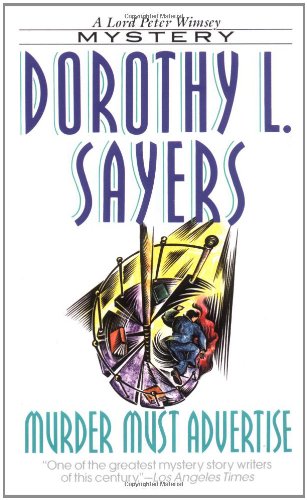
Murder Must Advertise by Dorothy L. Sayers (1933), a Lord Peter Wimsey mystery.

I found both at The Book Corner, the Friends of the Free Library of Philadelphia book store, when I was in Philadelphia for a conference last week. I also visited with these two cats who live in the store.


Thanks for joining me for Mailbox Monday, a weekly "show & tell" blog event where participants share the books they acquired the week before. Visit the Mailbox Monday website to find links to all the participants' posts and read more about Books that Caught our Eye.

Mailbox Monday is graciously hosted by Leslie of Under My Apple Tree, Serena of Savvy Verse & Wit, and Vicki of I'd Rather Be at the Beach.

Thursday, September 22, 2016

Book Beginning: A Flag for Sunrise


THANKS FOR JOINING ME ON FRIDAYS FOR BOOK BEGINNING FUN!

Please join me every Friday to share the first sentence (or so) of the book you are reading, along with your initial thoughts about the sentence, impressions of the book, or anything else the opener inspires. Please remember to include the title of the book and the author’s name.

EARLY BIRDS & SLOWPOKES: This weekly post goes up Thursday evening for those who like to get their posts up and linked early on. But feel free to add a link all week.

FACEBOOK: Rose City Reader has a Facebook page where I post about new and favorite books, book events, and other bookish tidbits, as well as link to blog posts. I'd love a "Like" on the page! You can go to the page here to Like it. I am happy to Like you back if you have a blog or professional Facebook page, so please leave a comment with a link and I will find you.

TWITTER, ETC: If you are on Twitter, Google+, or other social media, please post using the hash tag #BookBeginnings. I try to follow all Book  Beginnings participants on whatever interweb sites you are on, so please let me know if I have missed any and I will catch up.

TIE IN: The Friday 56 hosted by Freda's Voice is a natural tie in with this event and there is a lot of cross over, so many people combine the two. The idea is to post a teaser from page 56 of the book you are reading and share a link to your post. Find details and the Linky for your Friday 56 post on Freda’s Voice.

YOUR BOOK BEGINNING


MY BOOK BEGINNING


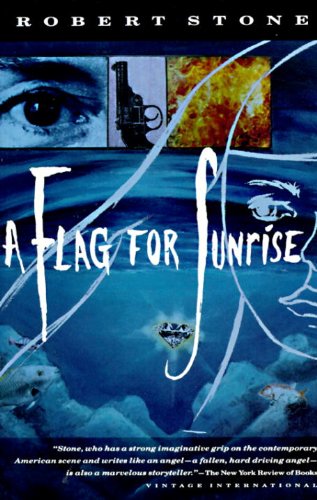
Father Egan left off writing, rose from his chair and made his way -- a little unsteadily -- to the bottle of Flor de Cana which he had placed across the room from his desk.

-- A Flag for Sunrise by Robert Stone. A mishmash of Americans including a whiskey priest, a lapsed nun, a Coast Guard deserter on speed, a dipso college lecturer, gun runners, and assorted CIA operatives and snitches, all still hungover from Vietnam, get caught up in a Central American revolution.

Wednesday, September 21, 2016

Author Interview: Mark Jacobson


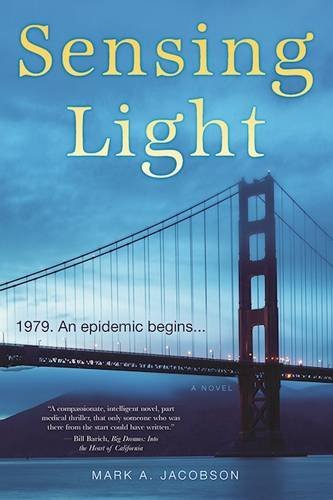
Sensing Light is the debut novel by Dr. Mark Jacobson who worked on the front lines of the HIV/AIDS epidemic as in intern in 1981 at San Francisco General Hospital. His novel effectively mixes medical history with the personal and professional stories of the people working through the confusing early days of a new era.


Mark recently answered questions for Rose City Reader. His interview is one of the stops on a blog tour for Sensing Light sponsored by Poetic Book Tours.

How did you come to write Sensing Light?

I’ve always loved reading fiction and, as a young man, dreamed of writing a novel that could move people in the way my favorite authors moved me. However, I never put in the time and effort necessary for such an undertaking until 2008 after a bicycling accident left me unconscious for several hours. That experience caused a tectonic shift in my attitude toward my own mortality. Instead of simply comprehending the abstract fact that I wasn’t going to live forever, I began to fully believe that fact and accordingly reconsidered my life goals. I certainly didn’t want to stop seeing patients or teaching medical students and residents in our HIV clinic (and I still don’t!), but I also realized that writing any more grants or papers wasn’t going to add substantively to the modest impact I’ve been fortunate to have on the practice of medicine. Suddenly, that youthful dream of writing a novel didn’t seem so impossible. I could imagine a story that I was actually well-equipped to tell. I began gradually winding down my research studies and commitments and started to develop that story.

You have such a personal connection to the story, having started your medical practice at San Francisco General Hospital in the early days of the HIV/AIDS epidemic. Did you think of writing the story as a memoir instead of fiction?

The thought of writing a memoir or a history of the early days of the epidemic has never appealed to me. While I very much enjoy reading good non-fiction, I can’t arouse any passion for writing it. Creating a story, on the other hand, easily captures and holds my imagination.

How much of your novel is based on true, historical events?

Sensing Light is completely based on historical events but is populated by totally imaginary characters. For example, cases of AIDS (like the first case in Sensing Light) were seen in San Francisco, New York, and Los Angeles before 1981, but not recognized as a new disease entity linked to certain behaviors until the CDC reported a cluster of such cases in gay men residing in Los Angeles in 1981. Likewise, the timeline of the development and availability of new antiretroviral drugs to treat HIV, which underlies the structure of the last third of the novel, is historically accurate.

How did you research the historical information and detail found in your book?

Since I was a medical student in 1979 when the novel opens, was an intern in 1981 and took care of the first patient diagnosed with AIDS in my hospital soon after the disease was described by the CDC, did an infectious diseases fellowship at UCLA from 1984 to 1986, and have been an HIV specialist at San Francisco General Hospital since then, most of the historical detail found in Sensing Light has been indelibly seared into my memory. However, I did fact check from a number of newspaper and medical journal articles published between 1981 and 1991.

What did you learn from writing your book – either about the subject of the book or the writing process – that most surprised you?

I learned a lot about creative writing from this experience. Before attempting Sensing Light, my last effort at fiction had been a short story I submitted to high school literary contest, so I truly had to start at ground zero. There were two things I learned that really surprised me. The first was how clueless I was at plotting and creating narrative momentum. Early on, I worked briefly with an excellent editor, Tom Jenks, who patiently showed me everything I did that was wrong, which was essentially everything, and then gave me a reading list of novels to deconstruct the plot elements. That was a very steep learning curve.

 The second surprise was discovering how writing, for me, involved developing two polar opposite skills. One is a non-rational, receptive capacity to listen in my mind to characters speak and to an omniscient narrator describe people, places, and events. I simply transcribe what they say. The other skill is a hypercritical form of self-editing that demands justification for every phrase and word in that transcription. I’m not sure this will make sense to others, but it’s the best I can do at this stage of my development as a writer in articulating my process.

What do you think today’s medical profession could learn from the doctors like you who faced HIV/AIDS before the disease was understood or even named?

I think Sensing Light can provide some worthwhile historical perspective for today’s physicians. By the end of the 1960s, there was a wide-spread belief among physician-scientists in the US that we were nearing the end of the era in which infectious diseases were a major cause of morbidity and mortality. A decade later, the AIDS epidemic began; and to date, HIV has directly caused more deaths globally than all military deaths in World Wars I and II combined! If there hadn’t been a handful of scientists in the 1970s already developing knowledge about an obscure class of viruses associated with a rare form of cancer, we would have felt like we were back in the Middle Ages facing the Black Death with no idea what was causing this plague. The AIDS epidemic was a lesson in humility for those of us who were on the front lines in the 1980s. Today’s young physicians should continue to be prepared for the unexpected.

Who are your three (or four or five) favorite authors? Is your own writing influenced by the authors you read?

I’ve been a voracious reader of fiction since childhood and have so many favorites it’s hard to know where to begin. As a teenager, I read every work published by John Steinbeck, Ray Bradbury, and James Baldwin. In college, all of Dostoevsky, Flaubert, Mann, Hesse, Hemingway, Kerouac, and Sinclair Lewis. I’ve recently been re-reading Sinclair Lewis and Dostoevsky and still love them. One of my favorite living American authors is T.C. Boyle. There are also several genre fiction writers I really enjoy. I’ve read pretty much everything published by John le Carré, Tony Hillerman, Scott Turow, and Patrick O’Brian.

What are you reading now?

I just finished The Sympathizer by Viet Thanh Nguyen—the 2016 Pulitzer Prize winner for fiction. The novel is set in the 1970s in Vietnam and Los Angeles, and the protagonist is a half-Vietnamese, half-French, South Vietnam army officer and mole for the North Vietnam government. An epic masterpiece and profound meditation on identity!

What is the most valuable advice you’ve been given as an author?

A friend who published a successful memoir told me I would have to re-write my novel 100 times before I would be satisfied with it. I didn’t keep count but am sure she had the order of magnitude right.

What do you do to promote your books? Do you use social networking sites or other internet resources?

I have been very fortunate to have the help of an outstanding publicist, Mary Bisbee-Beek, who has been able to arrange bookstore readings and radio, television, and blog interviews such as this one. I also have an author website and post all published book reviews and readings and links to interviews on Facebook. Despite all this, it’s still very difficult for an author like me, published by a small press and lacking connections to major newspaper book reviewers or NPR personalities, to get mass market attention in the book world. So publicity has to be primarily by word of mouth.

Do you have any events coming up to promote Sensing Light?

The San Francisco Public Library’s James C. Hormel LGBTQIA Center is hosting me for a reading at the Main Library building (100 Larkin St, San Francisco, CA) on Tuesday, October 4th, at 6 PM. We are planning other events for the fall and winter.

What’s next? Are you working on your next book?

I am. It’s a more ambitious effort from a literary perspective than Sensing Light was in that I’m aiming for more narrative suspense over a longer time period and more complex character development than in Sensing Light, as well as attempting to create empathy for a protagonist who wants to be altruistic but is morally compromised.


THANKS MARK!

SENSING LIGHT IS AVAILABLE ON-LINE OR ASK YOUR LOCAL BOOKSELLER TO ORDER IT! 


Tuesday, September 20, 2016

Teaser Tuesday: All Set for Black, Thanks: A New Look at Mourning by Miriam Weinstein


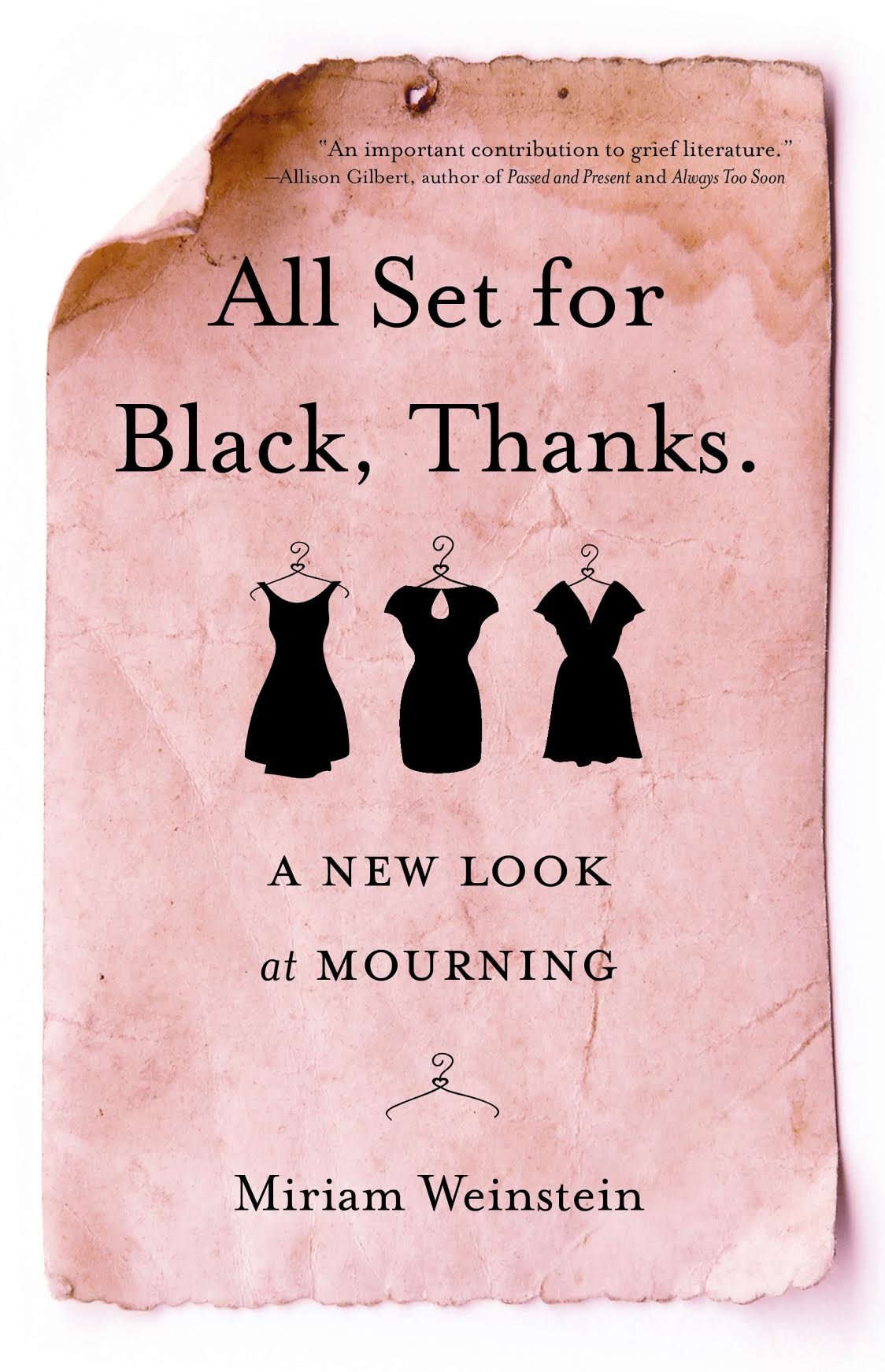
Jews typically name babies for family members, almost always of the same gender, who have recently died. It's a way to keep the memory of the person a little more "alive," as well as to give the newborn a model to live up to, a link to another soul.

-- from "Naming the Living after the Dead: Oh Baby!" in All Set for Black, Thanks: A New Look at Mourning by Miriam Weinstein.

Weinstein's collection of essays offers touching but wry advice, based on her own experiences, on facing loss and mourning.

All Set for Black, Thanks came out last week. Check the author's website for readings and book events coming up in the next months.


Teaser Tuesdays is hosted by MizB at Books and a Beat, where you can find the official rules for this weekly event.

Thursday, September 15, 2016

Book Beginning: All Set for Black, Thanks: A New Look at Mourning by Miriam Weinstein


THANKS FOR JOINING ME ON FRIDAYS FOR BOOK BEGINNING FUN!

Please join me every Friday to share the first sentence (or so) of the book you are reading, along with your initial thoughts about the sentence, impressions of the book, or anything else the opener inspires. Please remember to include the title of the book and the author’s name.

EARLY BIRDS & SLOWPOKES: This weekly post goes up Thursday evening for those who like to get their posts up and linked early on. But feel free to add a link all week.

FACEBOOK: Rose City Reader has a Facebook page where I post about new and favorite books, book events, and other bookish tidbits, as well as link to blog posts. I'd love a "Like" on the page! You can go to the page here to Like it. I am happy to Like you back if you have a blog or professional Facebook page, so please leave a comment with a link and I will find you.

TWITTER, ETC: If you are on Twitter, Google+, or other social media, please post using the hash tag #BookBeginnings. I try to follow all Book  Beginnings participants on whatever interweb sites you are on, so please let me know if I have missed any and I will catch up.

TIE IN: The Friday 56 hosted by Freda's Voice is a natural tie in with this event and there is a lot of cross over, so many people combine the two. The idea is to post a teaser from page 56 of the book you are reading and share a link to your post. Find details and the Linky for your Friday 56 post on Freda’s Voice.

YOUR BOOK BEGINNING


MY BOOK BEGINNING


"Shouldn't it be heating up by now?" I stood in my friend Mitch's kitchen one brisk autumn evening denying, against all evidence, that my coffee pit was dying.

-- from the Prologue: "It's Us Now: Snatched from Life" to All Set for Black, Thanks: A New Look at Mourning by Miriam Weinstein.

Weinstein's collection of essays may be about death, but they are warm, accessible, and touchingly funny. She offers her own reflections and guidance to help with loss and mourning.

All Set for Black, Thanks came out this week. Miriam Weinstein has a series of east coast readings and book events coming up in the next months.

Tuesday, September 13, 2016

Teaser Tuesday: Chasing Portraits by Elizabeth Rynecki


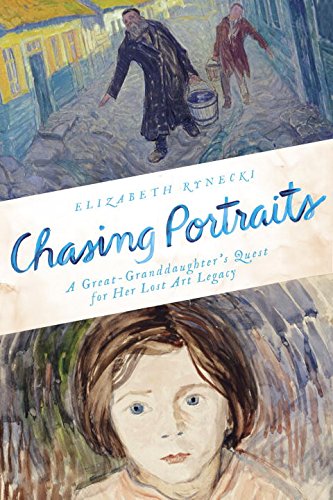
My search for the lost and missing pieces was based on Grandpa George's memoir, and specifically a single line which mentioned Moshe's prolific production of more than eight hundred works. But it was one thing to see that in writing, and another to see numerous photographs of pieces for the war.

Chasing Portraits: A Great-Granddaughter's Quest for Her Lost Art Legacy by Elizabeth Rynecki. This memoir documents the author's search for paintings and sculpture her Polish great-grandfather created before he was killed by Nazis during the Holocaust.

Visit the Chasing Portraits website to learn more about the the book and upcoming documentary of this fascinating family story.


Teaser Tuesdays is hosted by MizB at Books and a Beat, where you can find the official rules for this weekly event.

Monday, September 12, 2016

Mailbox Monday


Thanks for joining me for Mailbox Monday! MM was created by Marcia, who graciously hosted it for a long, long time, before turning it into a touring event. Mailbox Monday has now returned to its permanent home where you can link to your MM post.

Three books came into my house last week:


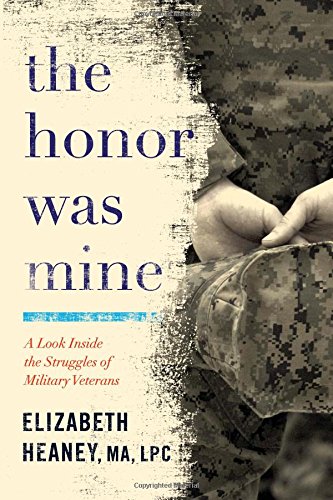
The Honor Was Mine: A Look Inside the Struggle of Military Veterans by Elizabeth Heaney. Heaney is a therapist who works with returning vets and their families. Her new book gives voice to their stories.


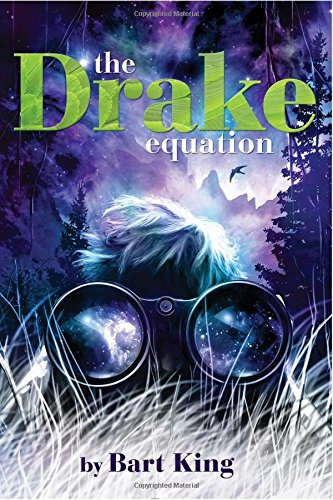
The Drake Equation by Bart King. This is an adventure novel for middle school kids. King wrote the nonfiction bestseller, The Big Book of Boy Stuff.


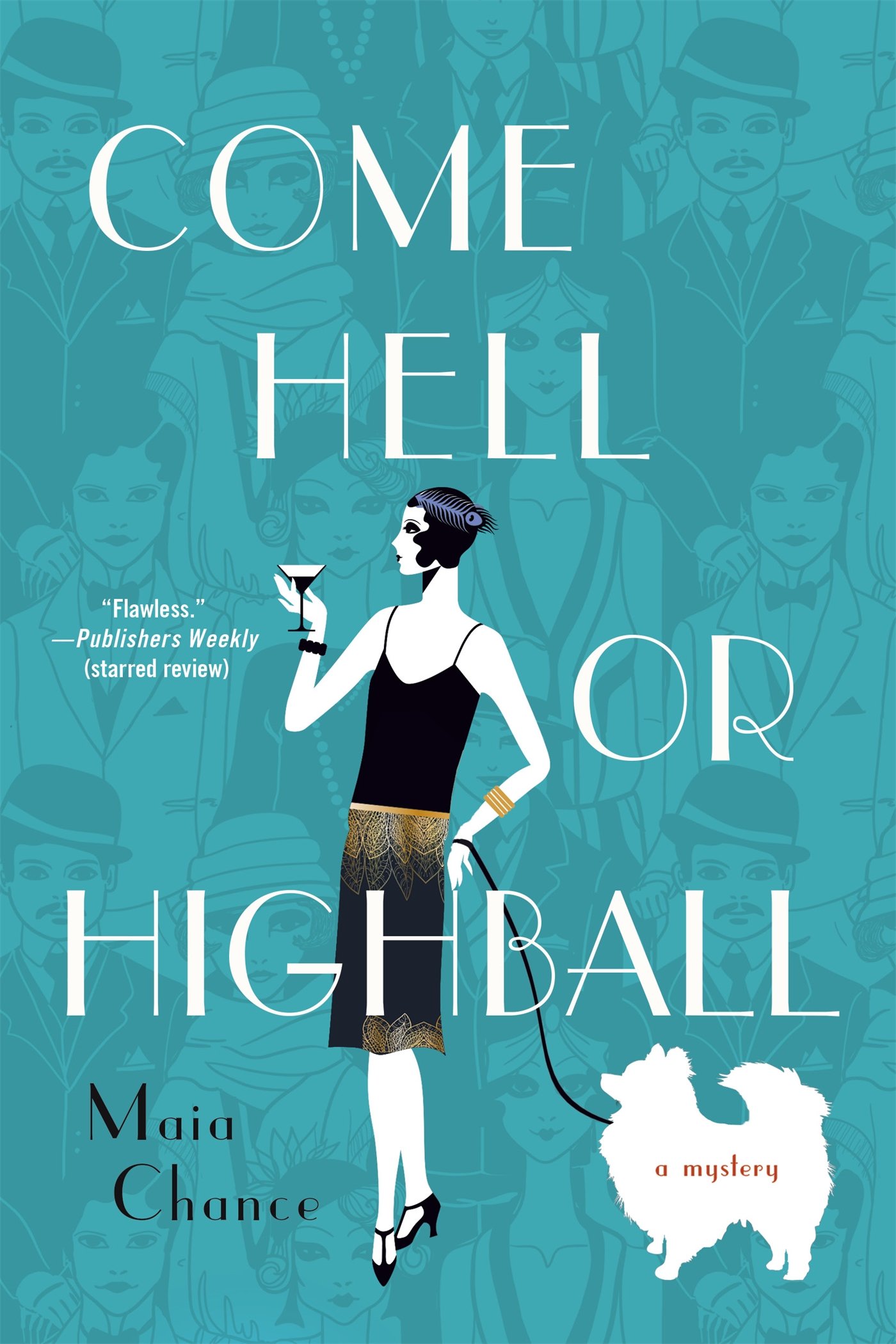
Come Hell or Highball by Maia Chance. I bought this on a whim because I liked the idea of a Prohibition Era cozy mystery series and this is the debut.

Thursday, September 8, 2016

Book Beginning: Chasing Portraits


THANKS FOR JOINING ME ON FRIDAYS FOR BOOK BEGINNING FUN!

Please join me every Friday to share the first sentence (or so) of the book you are reading, along with your initial thoughts about the sentence, impressions of the book, or anything else the opener inspires. Please remember to include the title of the book and the author’s name.

EARLY BIRDS & SLOWPOKES: This weekly post goes up Thursday evening for those who like to get their posts up and linked early on. But feel free to add a link all week.

FACEBOOK: Rose City Reader has a Facebook page where I post about new and favorite books, book events, and other bookish tidbits, as well as link to blog posts. I'd love a "Like" on the page! You can go to the page here to Like it. I am happy to Like you back if you have a blog or professional Facebook page, so please leave a comment with a link and I will find you.

TWITTER, ETC: If you are on Twitter, Google+, or other social media, please post using the hash tag #BookBeginnings. I try to follow all Book  Beginnings participants on whatever interweb sites you are on, so please let me know if I have missed any and I will catch up.

TIE IN: The Friday 56 hosted by Freda's Voice is a natural tie in with this event and there is a lot of cross over, so many people combine the two. The idea is to post a teaser from page 56 of the book you are reading and share a link to your post. Find details and the Linky for your Friday 56 post on Freda’s Voice.

YOUR BOOK BEGINNING


MY BOOK BEGINNING


I was born in San Francisco on a summer day in 1969, just over twenty-five years after my great-grandfather perished in the Holocaust.

Chasing Portraits: A Great-Granddaughter's Quest for Her Lost Art Legacy by Elizabeth Rynecki. We get the general idea of this memoir from that opening sentence.

Moshe Rynecki was a painter and sculptor in pre-war Warsaw. When the Nazis came, he entrusted his art to friends who hid it for him, but when he was killed in the Majdanek concentration camp, his works scattered.

Inspired by Moshe's son's journal describing the art, Elizabeth Rynecki, Moshe's great-granddaughter, worked with art curators, historians, and other supporters to find and catalog Moshe's body of work.

Visit the Chasing Portraits website for a list of upcoming events and to learn more about the story behind the book.

Wednesday, September 7, 2016

Author Interview: Latasha Fleming


Latasha Fleming believes that if children "Know" the secrets of abuse, there will be "No" secrets. She wrote kNOw Tiny Secrets: How To Keep Your Body Private and Safe to share that idea with parents and adults working with children.

With help from bright and friendly illustrations by Colleen Madden, Latasha's book provides a safe, age-appropriate way to teach children awareness of sexual abuse at a young age. It is designed for parents to read with their 4 - 9 year-olds.


Latasha recently joined us to talk about her book and protecting children from sexual abuse:

How did you come to write kNOw Tiny Secrets?

kNOw Tiny Secrets was born once I chose to start healing and to no longer be a victim of sexual abuse. My daughter was just starting preschool and at the time I was already teaching her about body safety. It hit me like a ton of bricks that my baby was getting older and that my abuser was free and possibly abusing other children. As a child, I never felt empowered to speak up for myself and I was easily convinced that my abuser and his manipulative tactics reigned supreme over everything. I realized that I had to forgive my abuser, bring him to justice, and create a way to bring awareness and protection for all children.

Over the course of about 7 months the book began to materialize but still had no title. I decided to incorporate a key to represent having the key to one’s life; as well as all children kNOwing the secrets of abuse so there will be NO secrets to ever keep.

What is your work or professional background and how did it lead to writing this book?

I’m currently pursuing a degree in Business Administration. I advocate and help others who have been abused and need support. I’ve always been a writer of poems and stories as a child; which was a way to vent during my troubled years and I knew that one day I’d write but I had no idea it would be a healing piece for myself that would help others. I kept many of my creative writing pieces from my teens in hopes of publishing other books in the near future.

Your book is a guide to talking to children about sexual abuse. All parents want to protect their children, but is sex abuse something they should be discussing with young kids?

As a parent, I understand first-hand how discussing sexual abuse with your children can be touchy. However, I’m always encouraged to remind parents that “if we don’t teach our children about sexual abuse, the abuser will.” I’ve heard some parents mention that they would rather wait or not expose their children to the idea of sexual abuse. Again, just because one refuses to acknowledge sexual abuse, does not mean it doesn’t exist. Of children who are sexually abused, 20% are abused before the age of 8 years old; 90% of those abused know their abuser (D2L.org).

We live in a society where our children are being taught about D.A.R.E. (Drug Abuse Resistance Education) but we have not made it mandatory to teach body safety as part of Elementary education. I commend the D.A.R.E. program and its importance, but I would love to see program of equal importance for sexual abuse prevention/awareness. Having sufficient preventative resources at school and at home could save a child’s life.

Who is your intended audience and how do you hope your readers will use your book?

My intended audience is parents, caretakers, teachers, familial groups, youth-serving organizations, and ALL children. I believe that kNOw Tiny Secrets is a great conversation starter and should be used in conjunction with talking to your children about sexual abuse on a regular basis.

You must first let your child know that they can talk with you about any concerns, no matter how hard it is for us to accept as parents. You are essentially creating a line of communication with your child; therefore you could be the one they confide in. It is helpful to role play and quiz your children to make sure they are confident about what to say in the event of abuse. Empowering our children is not a one-time conversation and you’re done; you must visit the topic regularly as your child grows and develops. I sometimes use sleepovers, family gatherings, or visits as an opportunity to remind my daughter about child sexual abuse prevention and safety protocol.

What did you learn from creating your book – either about the subject of the book or the creative process – that most surprised you?

I learned to have more patience in the creative process of kNOw Tiny Secrets. I felt compelled to have it all done just because it seemed overdue but life had other plans. The first illustrator that I chose for the book was one who was just right for my vision and what I wanted to bring to life. We shared ideas, family stories, and experiences. However, after about 4 months she decided to take on another project and I was devastated. I can remember driving in my car crying and feeling rejected because I was not equipped to pick another illustrator. I just knew she was the one and that was all I could wrap my mind around. A voice quickly reminded me that everything was okay and I could move on and find the right fit for the project despite how I felt.

I immediately drove home and got online to find the “one” once again. After sifting through about 3-4 artist profiles, I found a few that I liked but the last profile I came across was the “one.” I was blown away by Colleen Madden's sample features and I fell in love with the idea that she might consider working on my project, if I could get up enough nerve to send her a proposal. By the end of the day my close friend reminded me that I had to ask her to do my book no matter how awesome her work or how high her estimates were. She reminded me that if it was meant for me to have her, then a way would be made. Well that night I sent my proposal and we negotiated everything within a few days. I was thankful for her acceptance because the subject matter is one that some think twice about representing. Colleen had a lot of experience in areas that gave me an advantage when preparing my book. Had I not had her expertise, I probably would not have a book worth presenting to readers. Towards the end of my project's completion, I was notified that Colleen had completed a book for one of my favorite childhood singers -- that was my sign that it was meant for me from the beginning. While this book was stressful bringing it all together, it is a true reward.

You are a survivor of child sexual abuse yourself and an advocate for survivors. What resources would you recommend for survivors of child sexual abuse? Especially for survivors raising children of their own?

There are a some resources out there that I recommend personally for survivors of sexual abuse and one of my favorites is The Courage to Heal by Ellen Bass & Laura Davis, which is a for both men and women. The book is literally like a healing class that you can take and revisit as often as you like. This particular book also has a healing workbook that you may find helpful when dealing with the effects of abuse. You cannot rush healing, I believe it is something that has no deadline because you don’t heal to forget, but you find positive ways to cope. Another great book that I love for survivors who are parents is Trigger Points, edited by Joyelle Brandt and Dawn Daum; such an awesome compilation of raw poetic stories by survivors who are now parenting.

I believe in counseling/therapy as part of a healing plan; one in which you are comfortable with. There are local agencies, non-profits, advocacy centers, that offer victims assistance with costs of counseling. The side effects of sexual abuse are life-long; every person is affected differently. Before you can heal, you must face the truth. You must first rescue the child inside of you, so that you can have the will to save your own child. Darkness to Light is a nationally recognized organization that helps spread awareness, has updated statistics, and teaches organizations prevention courses. Tapping into the resources that suit your growth is what is most important. The ones that make you feel welcomed are the ones you should entertain.

What is the most valuable advice you’ve been given as a parent about protecting your children from sexual abuse?

Remembering that child sexual abuse has no face, age, gender, type, or limits. The ones that you trust are the ones you must pay close attention to. Typically, you don’t get something from nothing; therefore knowing the signs of sexual abuse, allows you to seek immediate help while giving unconditional support. We all have a duty when it comes to reporting abuse. As an adult, you are the responsible party when abuse is suspected, as well as upon disclosure. Helping to protect innocent children from abuse is a life-saving experience.

What other resources and information do you have about your book and teaching children about sexual abuse? 

Find out more about the book and how to protect kids from sexual abuse:

The book website: www.knowtinysecrets.com
Instagram: @knowtinysecrets
Facebook: Know Tiny Secrets LLC
email: knowtinysecrets@gmail.com
704-565-9692
PO Box 480536
Charlotte NC 28269

THANKS LATASHA!

KNOW TINY SECRETS IS AVAILABLE ON LATASHA'S WEBSITE AND AMAZON, OR ASK YOUR LOCAL BOOKSELLER TO ORDER IT!


Tuesday, September 6, 2016

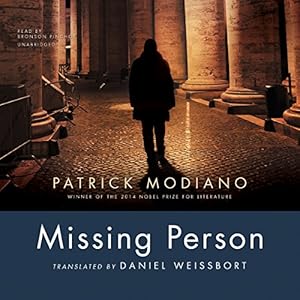
Teaser Tuesday: Missing Person by Patrick Modiano


With a single stride he was out of the café, not turning around, and I felt an emptiness all of a sudden. . . . Without him, without his help, I wonder what would have become of me, ten years back, when I was struck by amnesia and was groping about in a fog.

-- Missing Person by Patrick Modiano, who won the Nobel Prize for literature in 2014. Missing Person was published in 1978 and is, on the surface at least, a post-war noir mystery of the narrator's search to discover his own lost identity.


Teaser Tuesdays is hosted by MizB at Books and a Beat, where you can find the official rules for this weekly event.

Monday, September 5, 2016

Mailbox Labor Day Monday


Thanks for joining me for Mailbox Monday! MM was created by Marcia, who graciously hosted it for a long, long time, before turning it into a touring event. Mailbox Monday has now returned to its permanent home where you can link to your MM post.

Thanks to a sale at Crooked House Book & Paper, I have a nice stack of new-to-me cookbooks to add to my Cookbook Library:


Classic Home Desserts: A Treasury of Heirloom and Contemporary Recipes from Around the World by Richard Sax


America's Best Lost Recipes: 121 Kitchen-Tested Heirloom Recipes Too Good to Forget, from the Editors of Cook's Country Magazine


English Bread & Yeast Cookery by Elizabeth David


Papas' Art of Traditional Greek Cooking by George and Chrisoula Papas


Happy Labor Day!


Thursday, September 1, 2016

Book Begininng: We are All Completely Beside Ourselves


THANKS FOR JOINING ME ON FRIDAYS FOR BOOK BEGINNING FUN!

Please join me every Friday to share the first sentence (or so) of the book you are reading, along with your initial thoughts about the sentence, impressions of the book, or anything else the opener inspires. Please remember to include the title of the book and the author’s name.

EARLY BIRDS & SLOWPOKES: This weekly post goes up Thursday evening for those who like to get their posts up and linked early on. But feel free to add a link all week.

FACEBOOK: Rose City Reader has a Facebook page where I post about new and favorite books, book events, and other bookish tidbits, as well as link to blog posts. I'd love a "Like" on the page! You can go to the page here to Like it. I am happy to Like you back if you have a blog or professional Facebook page, so please leave a comment with a link and I will find you.

TWITTER, ETC: If you are on Twitter, Google+, or other social media, please post using the hash tag #BookBeginnings. I try to follow all Book  Beginnings participants on whatever interweb sites you are on, so please let me know if I have missed any and I will catch up.

TIE IN: The Friday 56 hosted by Freda's Voice is a natural tie in with this event and there is a lot of cross over, so many people combine the two. The idea is to post a teaser from page 56 of the book you are reading and share a link to your post. Find details and the Linky for your Friday 56 post on Freda’s Voice.

YOUR BOOK BEGINNING


MY BOOK BEGINNING


So the middle of my story comes in the winter of 1996.

-- We are All Completely Beside Ourselves by Karen Joy Fowler. This provocative novel about a family that tried to twin a chimp with a child won the PEN/Faulkner Award in 2014.

I like the sidelong reference to the classic rule of starting a story in medias res.

Monday, August 29, 2016

Mailbox Monday


Thanks for joining me for Mailbox Monday! MM was created by Marcia, who graciously hosted it for a long, long time, before turning it into a touring event. Mailbox Monday has now returned to its permanent home where you can link to your MM post.

I got two non-fiction books last week that are coming out in September and they both look fantastic:


Chasing Portraits: A Great-Granddaughter's Quest for Her Lost Art Legacy by Elizabeth Rynecki. The author's great-grandfather was an artist in Poland who created over 800 paintings and sculptures before he died in a WWII concentration camp. This memoir tells the story of how the author spent decades rebuilding his collected work after it was lost during the war and dispersed all over the world.

Elizabeth Rynecki is launching Chasing Portraits at Powell's City of Books in downtown Portland on Tuesday, September 6, 2016 at 7:30.


All Set for Black, Thanks: A New Look at Mourning by Miriam Weinstein. This is a touching and funny collection of essays -- part memoir, part advice -- about dealing with loss and mourning.

All Set for Black, Thanks is available for pre-order now and launches September 13. Miriam Weinstein has a series of readings and book events coming up this fall on the east coast.

Thursday, August 25, 2016

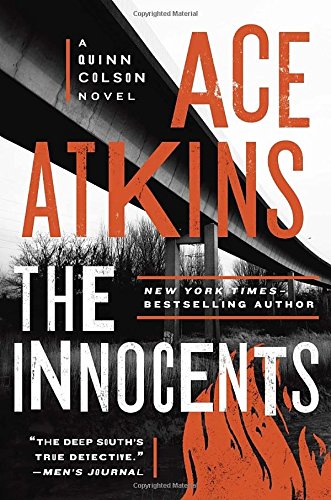
Book Beginning: The Innocents by Ace Atkins


THANKS FOR JOINING ME ON FRIDAYS FOR BOOK BEGINNING FUN!

Please join me every Friday to share the first sentence (or so) of the book you are reading, along with your initial thoughts about the sentence, impressions of the book, or anything else the opener inspires. Please remember to include the title of the book and the author’s name.

EARLY BIRDS & SLOWPOKES: This weekly post goes up Thursday evening for those who like to get their posts up and linked early on. But feel free to add a link all week.

FACEBOOK: Rose City Reader has a Facebook page where I post about new and favorite books, book events, and other bookish tidbits, as well as link to blog posts. I'd love a "Like" on the page! You can go to the page here to Like it. I am happy to Like you back if you have a blog or professional Facebook page, so please leave a comment with a link and I will find you.

TWITTER, ETC: If you are on Twitter, Google+, or other social media, please post using the hash tag #BookBeginnings. I try to follow all Book  Beginnings participants on whatever interweb sites you are on, so please let me know if I have missed any and I will catch up.

TIE IN: The Friday 56 hosted by Freda's Voice is a natural tie in with this event and there is a lot of cross over, so many people combine the two. The idea is to post a teaser from page 56 of the book you are reading and share a link to your post. Find details and the Linky for your Friday 56 post on Freda’s Voice.

YOUR BOOK BEGINNING


MY BOOK BEGINNING


Lillie Virgil stood high on a north Mississippi hill at daybreak listening to old Ruthie Holder talk about the man who'd run off with her grandson's Kawasaki four-wheeler and her brand-new twelve-gauge Browning.

-- The Innocents by Ace Atkins. This is the latest in Atkins's new-to-me Quinn Colson series, set in the fictional Tibbehah County, Mississippi. Lillie Virgil is the acting sheriff and Colson's boss -- a nice twist.

Wednesday, August 24, 2016

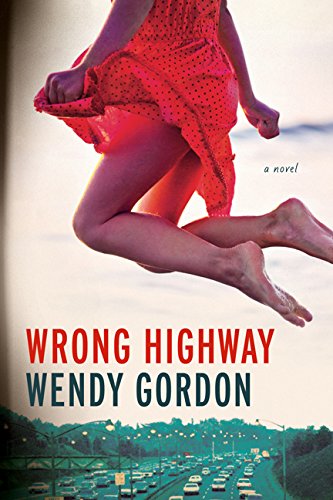
Review: Wrong Highway by Wendy Gordon


Wendy Gordon's debut novel, Wrong Highway, gives fresh energy to the story of a frazzled suburban mom trying to meet her family obligations and what happens when she takes that first wrong turn.

Erica and Debbie are sisters, both married and living seemingly calm family lives on Long Island. But when Debbie’s teenage son rebels against his straight-laced parents and turns to Erica for help, Erica is the one who ends up in trouble.

The book takes place in 1980s and has a strong ‘80s vibe, with music and cultural references that capture the brash, sometimes destructive energy of the decade. While many of the themes of the story are timeless, the pre-digital setting gives Gordon room to explore themes of family obligation, personal freedom, addiction, and secrecy without technical interruptions from today’s text messages and social media.

Whether or not you grew up in the ‘80s, if you enjoy family dramas with well-developed, original female characters, you will like Wrong Highway.

NOTES

Read my author interview with Wendy Gordon here.

OTHER REVIEWS

The Magic Around Us
Mama Vicky Says
Puddletown Reviews
No More Grumpy Bookseller
Patricia's Wisdom 

If you would like your review of Wrong Highway listed here, please leave a comment with a link and I will add it.

Tuesday, August 23, 2016

Teaser Tuesday: Froelich's Ladder by Jamie Duclos Yourdon


It was a June morning in 1871 when Froelich disappeared. Dawn had erased the stars from the sky, and a rosy shoal of clouds was swimming towards the coast.

Froelich's Ladder by Jamie Duclos-Yourdon, published by Forest Avenue Press. This fairytale like adventure story set in frontier Oregon territory is generating a lot of buzz. Read more about author Jamie Duclos-Yourdon and his debut novel:


  • My First Time on The Quivering Pen (Jamie Duclos-Yourdon describes his first book cover experience)


Teaser Tuesdays is hosted by MizB at Books and a Beat, where you can find the official rules for this weekly event.

Saturday, August 20, 2016

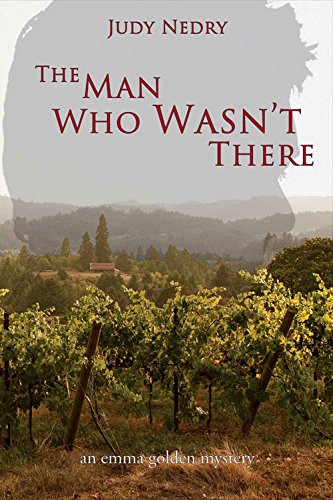
Review: The Man Who Wasn't There by Judy Nedry


Judy Nedry returns to her vineyard roots in The Man Who Wasn’t There, the third book in her Emma Golden mystery series. Emma is a feisty, sometimes grumpy, free-lance writer who – as happens with amateur sleuths – stumbles across a dead body and gets pulled into solving the mystery. In this case, it is more like the dead body stumbles on Emma, and that is the charm of Nedry’s cozy-with-an-edge series – it doesn’t follow every expected pattern.

Emma, for instance, is no spring chicken, but she’s no Miss Marple, pottering about and then solving the crime because the killer reminded her of the vicar’s dentist before the last war. Emma is right there in the middle of things, invited or not, often with a wisecrack, sometimes with a grumble. She complains about little annoyances, struggles as an alcoholic in recovery, and squabbles with her best friend and sidekick, B&B owner Melody Wyatt. It’s like watching someone you actually know crack the case.

Here, the case involves the violent death of a venerable Oregon winery owner at a wine festival Salmon Bake dinner. James Ryder dies shortly after his loud and public fistfight with Max Weatherman, a Nevada developer trying to build a water-hogging resort and spa uphill from Ryder’s vineyards. When Weatherman disappears, he’s the natural suspect in Ryder’s murder, but Emma and her posse think there’s more to the story.

Nedry, who wrote about Northwest wines for over 20 years and who co-founded what became Chehalem Winery, knows winemaking and Oregon wine country right down to the red dirt of the Dundee Hills. She laces the story with information about grape growing, winemaking, and the wine industry just enough to add local interest and individuality without being pedantic. And she brings a sense of place to the story, from the opening scenes at the International Pinot Noir Celebration, to winding back roads through a patchwork of vineyards, to panoramic views of Oregon’s Coast Range. The Man Who Wasn’t There is a mystery that shows it terroir to full advantage.

NOTES

Read my author interview of Judy Nedry here.

OTHER REVIEWS

Oregon Wine Press
Kings River Life Magazine
Great Northwest Wine
Home for Book Lovers

If you would like your review of any of Judy Nedry's Emma Golden books listed here, please leave a comment with a link and I will add it.


Thursday, August 18, 2016

Book Beginning: Froelich's Ladder by Jamie Duclos Yourdon


THANKS FOR JOINING ME ON FRIDAYS FOR BOOK BEGINNING FUN!

Please join me every Friday to share the first sentence (or so) of the book you are reading, along with your initial thoughts about the sentence, impressions of the book, or anything else the opener inspires. Please remember to include the title of the book and the author’s name.

EARLY BIRDS & SLOWPOKES: This weekly post goes up Thursday evening for those who like to get their posts up and linked early on. But feel free to add a link all week.

FACEBOOK: Rose City Reader has a Facebook page where I post about new and favorite books, book events, and other bookish tidbits, as well as link to blog posts. I'd love a "Like" on the page! You can go to the page here to Like it. I am happy to Like you back if you have a blog or professional Facebook page, so please leave a comment with a link and I will find you.

TWITTER, ETC: If you are on Twitter, Google+, or other social media, please post using the hash tag #BookBeginnings. I try to follow all Book  Beginnings participants on whatever interweb sites you are on, so please let me know if I have missed any and I will catch up.

TIE IN: The Friday 56 hosted by Freda's Voice is a natural tie in with this event and there is a lot of cross over, so many people combine the two. The idea is to post a teaser from page 56 of the book you are reading and share a link to your post. Find details and the Linky for your Friday 56 post on Freda’s Voice.

YOUR BOOK BEGINNING


MY BOOK BEGINNING


It was November 1851 when Harold and Froelich arrived in Oregon Country. Disembarking at Fort Astoria, they journeyed inland by foot, hiking over the Cascades in a gale that swept off the ocean like a push broom.

Froelich's Ladder by Jamie Duclos Yourdon, published by Forest Avenue Press. I included the first two sentences for a change because I love the push broom image of the gale driving the brothers inland.

Froelich's Ladder is a "nineteenth century madcap adventure novel" with a fairytale feel.

PUBLISHER'S DESCRIPTION:
Froelich nurses a decades-old family grudge from his permanent perch atop a giant ladder in this nineteenth century madcap adventure novel. When he disappears suddenly, his nephew embarks on a rain-soaked adventure across the Pacific Northwest landscape to find him, accompanied by an ornery girl with a most unfortunate name. In their encounters with Confederate assassins, European expatriates, and a general store magnate, this fairytale twist on the American dream explores the conflicts between loyalty and ambition and our need for human connection, even at the highest rungs.


Favorite Authors: Maj Sjöwall and Per Wahlöö


Maj Sjöwall and Per Wahlöö are Swedish authors who collaborated on a series of crime novels featuring homicide detective Martin Beck. They wrote the books in the 1960s and '70s, until Wahlöö's death in 1975.

So far, I haven't read any of the Martin Beck books. But it has lured me in because I'm working my way through the Edgar Award winners and The Laughing Policeman won the award in 1971; the books count for my European Reading Challenge; the Vintage Mystery Challenge has me hooked on "Silver Age" vintage mysteries; and all the Nordic Noir I'm watching on Netflix puts me in the mood for Swedish mysteries.

I can't wait to start!

Roseanna (1965)
The Man Who Went Up in Smoke (1966)
The Man on the Balcony (1967)
The Laughing Policeman (1968) (Edgar Award, Best Novel, 1971)
The Fire Engine That Disappeared (1969)
Murder at the Savoy (1970)
The Abominable Man (1971)
The Locked Room (1972)
Cop Killer (1974)
The Terrorists (1975)


Wednesday, August 17, 2016

Author Interview: Kem Luther


Kem Luther is a naturalist, writer, and former professor who grew up in the Nebraska Sandhills and now lives on Vancouver Island. He is the author of Cottonwood Roots and The Next Generation Gap.

His new book, Boundary Layer: Exploring the Genius Between Worlds (OSU Press), is a highly readable collection of essays about the what grows close to the ground -- lichens, mosses, ferns, fungi, and other diminutive plant life -- and the scientists who study this boundary layer.


Kem recently answered questions for Rose City Reader:

How did you come to write Boundary Layer?

“How long did it take you to write this book?” is a question often put to writers. “All my life” is the clever retort. In this case, though, the boilerplate answer has a ring of truth. I’ve been drawn to natural settings since I was a boy. Boundary Layer is my just latest attempt to put on paper some of the stories from a lifelong engagement with the natural world.

West Coast ecosystems were a blank spot on my natural history map. When my wife and I moved to British Columbia twelve years ago, I liked what I saw and I soon entangled myself with several of the natural history groups on southern Vancouver Island. Boundary Layer emerged from this entanglement. The book looks at some components of the Pacific Northwest ecosystems— mosses, fungi, lichens—and the fascinating characters who have spent their lives studying these often overlooked subsystems.

What is your work background? How did it lead you to writing this book?

I spent my professional career in colleges and universities, both in the U.S. and Canada. I taught philosophy at first, later computer science. Toward the end of my career, I moved into educational administration in order to launch a cross-disciplinary program at the University of Toronto, a program that now enrolls about a thousand students. About ten years before I retired, I started writing trade books, books directed at wide audiences. Keeping up both a writing career and a full time job were too much, so I took an early retirement from teaching and administration in order to concentrate on my writing.

In the last chapters of Boundary Layer, I delve into material that was close to my heart when I was a student and teacher of philosophy. The narrative of the book is stitched together with what physicists and biologists have discovered about boundary layers, the narrow regions that lie between large, stable systems. In the first part of the book, I deal with several of the more tangible boundary layers, the ones that are found on seashores and forest floors in the Pacific Northwest. As the story progresses, the metaphor of a boundary layer become a way to talk about our wider human posture toward natural systems. Certain crucial issues in biology—the tension between species concepts and ecosystem thinking, the debate about what is wilderness what is artificial—can be approached as conflicts that generate conceptual boundary layers. These more abstract boundary layers, I find, resolve some of the differences between the bounding systems. At the end of the book, I take up (briefly) the largest conceptual boundary layer in Western society, the struggle between a cultural understanding based on humanities and one based on science.

You write about the stegnon, the layer closest to the ground, where things like lichen, moss, and fungi grow. How did you become interested in this layer between earth and air and the diminutive life forms that live there?

There’s a wonderful line in the 1939 film adaptation of Frank Baum’s The Wizard of Oz. When Dorothy and her crew finally get to meet the wizard, they are confronted with a fearsome image with a thunderous voice. Dorothy’s dog, Toto, runs over to the side of the interview hall and pulls back a curtain, exposing a normal, all-too-human person engineering the wizard’s image. Seeing himself exposed, the wizard makes the image say “Pay no attention to that man behind the curtain.” I think that I became interested in the nondescript stuff along the forest floor because I was getting a subtle message from some biologists and naturalists that the denizens of the bottom storey of West Coast forests were not as important as the trees and shrubs and mammals. The more I looked into the life cycles of the neglected mosses and lichens and mushrooms, the more it became clear to me that they were the ones who were really calling the shots. That made me want to pay attention to what was behind the curtain, to retell the story of these ecosystems in a way that included these smaller life forms.

Your book is an enlivening mix of botany, natural history, philosophy, and biographical sketches of the scientists who study the stegnon. Who is your intended audience?

I tried to write Boundary Layer so that a person with a high school background in biology could follow the stories in it. I didn’t always succeed. As I edited the book in the months before handing it over to Oregon State University Press to publish, for example, I removed a least two dozen technical terms from the text. I find it distressing how quickly I can drop into the jargon of the professionals who study what I am writing about, often without even realizing that I’m doing it.

What did you learn from writing Boundary Layer – either about the subject of the book or the writing process – that most surprised you?

My encounter with the composite nature of lichens helped me rethink the integrity of biological species. I began to investigate more closely the way that almost all organisms are composite entities. Some of this investigation ended up in the text of Boundary Layer, but not all of it. I have since developed a slide talk that carries my thoughts on this topic a bit further (“Lichens, Chimeras, and Superorganisms: Life On the Borderlands between Species and Ecosystems.” You can view a web list the book-based talks I’ll be doing over the next few months under the Events tab on the book’s web site,)

What writers inspire your own work and why?

Some of our best nature interpreters were also great writers. I’ve been influenced by the superb styles of Aldo Leopold, Annie Dillard, Loren Eiseley, Henry David Thoreau, and John McPhee, among others. But I don’t just read books on natural history. I’m attracted to magnificent prose on any subject, whether nonfiction (George Orwell) or fiction (Anne Tyler). When I find a great writer, I tend to binge read everything the person has written.

Do you have any favorite books of nature writing you would recommend to readers new to the genre?

Those who are interested in what I wrote in Boundary Layer about the concept of nature will find sympathetic treatments of the subject in two recent books, Emma Marris’s Rambunctious Garden and J.B. MacKinnon’s Once and Future World. These books came out after I wrote the section in Boundary Layer on the concept of nature, but before my book was published. When I read these books, I was surprised to see how our thoughts had been moving along similar grooves at the same time.

What kind of books do you like to read? What are you reading now?

At any time, I have about a dozen books on the go. Three books on the stack at the moment are The Gene by Siddhartha Mukherjee, Garry Wills's Head and Heart, Robert Macfarlane’s Landmarks. I’ve always found it curious that I can only work on one book at a time, but I can’t read just one book at a time.

What’s next? What are you working on now?

I’ve always had a fascination with language and words. Just last week I completed the first draft of a book on eggcorns, language slips that involve both sound and sense.


THANKS, KEM!

BOUNDARY LAYER IS AVAILABLE FROM OSU PRESS, OTHER ON-LINE SELLERS, OR ASK YOUR LOCAL BOOKSTORE TO ORDER IT!


Monday, August 15, 2016

Mailbox Monday


Thanks for joining me for Mailbox Monday! MM was created by Marcia, who graciously hosted it for a long, long time, before turning it into a touring event. Mailbox Monday has now returned to its permanent home where you can link to your MM post.

Two books came into my house last week and both have captured my imagination!


Froelich's Ladder by Jamie Duclos Yourdon, published by Forest Avenue Press. I love this description: "a fabulist adventure novel with YA crossover appeal, set in a reimagined nineteenth-century Pacific Northwest."


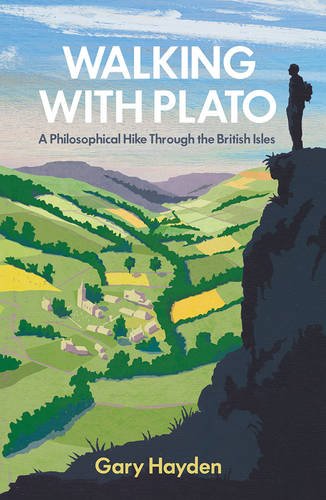
Walking with Plato by Gary Hayden, published by Oneworld Publications. Philosophical and other musings inspired by the author's thousand-mile walk from John o’Groats, the northern tip of Scotland, to Land’s End, the southernmost tip of England.

Related Posts Plugin for WordPress, Blogger...