Monday, March 15, 2021

New Memoir, Historical Fiction, Mystery, & Coffee Table Book on MAILBOX MONDAY


Several books came into my house last week for one reason or another. How about you? Did you get any books?

Here is my stack:


-- Wife | Daughter | Self: A Memoir in Essays by Beth Kephart, which came out last week from Forest Avenue Press. I featured this one on Book Beginnings on Fridays last week, so you can read more about it here


-- The Bridgetower Sonata: Sonata Mulattica by Emmanuel Dongala (Author),  Marjolijn de Jager (Translator). This one launches April 15 from Schaffner Press and is available for pre-order.

The Bridgetower Sonata is historical fiction about a Black violin prodigy who fled Paris to London on the eve of the French Revolution. He later moved to Vienna where he became a friend and collaborator with Ludwig von Beethoven. What a story!

Emmanuel Dongala is a Congolese author living in Massachusetts. The novel is translated from French.


-- Son of Holmes and Rasputin's Revenge by John T. Lescroart. This omnibus includes two early books by a favorite mystery writer. Before he wrote his long and popular Dismus Hardy series set in San Francisco, Lescroart wrote these two historical mysteries featuring Auguste Lupa, the putative son of Sherlock Holmes. The first is set in WWI France. The second in Russia in the last days of the Czar.


-- John Derian Picture Book by John Derian. Yes, that's the cover! I left the picture big because the book is big, even for a coffee table book it is over-sized. I love it. I splurged on this big beauty as a treat for myself because we successfully settled thee cases we've worked on for the last 2 1/2 years. 

I love coffee table books. One of my coronatime projects has been to actually sit and read them, instead of just leave them stacked on the coffee tables. I love the heft and beauty of them. It's brought me real pleasure to go through several of them this past year and appreciate the pictures and the narrative that accompanies them.

MAILBOX MONDAY

Join other book lovers on Mailbox Monday to share the books that came into your house last week. Or, if you haven't played along in a while, like me, share the books that you have acquired recently.

Mailbox Monday is hosted by Leslie of Under My Apple Tree, Serena of Savvy Verse & Wit, and Martha of Reviews by Martha's Bookshelf. Visit the Mailbox Monday website to find links to all the participants' posts and read more about Books that Caught our Eye.

Saturday, March 13, 2021

Tina Ontiveros, Author of rough house, a Prize-Winning Memoir from OSU Press -- AUTHOR INTERVIEW


Tina Ontiveros is a writer, teacher, and bookseller based in the Pacific Northwest. Her memoir, rough house, tells her story of growing up below the poverty line in small timber towns around the Pacific Northwest, living mostly with her charming but abusive father, sometimes with her mother, who struggled with her own demons.

Release last fall from OSU Press, rough house was picked as an Indie Next Great Read and won a 2021 Pacific Northwest Book Award from the Pacific Northwest Booksellers Association.


Tina talked with Rose City Reader about rough house, writing about a family like hers, and other memoirs that inspired her:

How did you come to write your memoir rough house?

Honestly, I think I have always been writing it. I think that, before I sat down to write rough house, the story was writing me. For a long time, I let anxiety about my past and the shame of poverty dictate my entire life. I didn’t really know where I was trying to go, only what I was running from. Early in my writing process, I worked with the amazing poet and writer Bhanu Kapil. I wrote to her once and asked-if Loyd was a monster, and Loyd is my father, what does that make me? Her response -- In this writing, you are the maker of Loyd -- was a liberation. Once I accepted that power, I was able to write the story with a sense of wonder and curiosity.

But I also have to say -- education and financial freedom are a big part of it. As I moved out of poverty, and as I became more educated, I was able to set down the shame and write. In her memoir, A House of My Own, Sandra Cisneros says that self expression is a privilege of the wealthy. I find this to be true. If I were not financially secure, I don’t think I’d have the courage, the space, the privacy, or the free time to take the risk of writing the story.

Your book won a 2021 Pacific Northwest Book Award – congratulations! Can you tell us how the Pacific Northwest shaped your childhood and your story?

My environment -- the natural world and the towns I grew up in -- are an integral part of rough house. Everything about the book is shaped by the landscapes of the Pacific Northwest. My mom, once she left my dad, lived on the edge of the Oregon desert. The Dalles is almost always sunny, brown, dry. My dad roamed around the region, but almost always in the green spaces. With my dad, it was evergreens, water, rich brown soil. So I came to experience my life as having these two opposite environmental poles -- just as my parents were like the opposing poles that marked the boundaries of my life growing up. I was always existing back and forth between them. While I grew to build a life more like my mother’s -- living within the bounds of more conventional society -- I always preferred my father’s physical environment. Today, I live next to the water, surrounded by green trees.

Your memoir is intensely personal – did you have any qualms about sharing so much?


While I was writing the first draft, I never considered the idea I might publish. I knew that would shape the work and my focus was on the work. It’s always important to remember that the book is not my life -- it is a made thing. I used many tools to make it. My personal history is the central element of the work, but because I applied the tools of fiction and poetry to this work, there is a distance between me and the made thing that is rough house. My discipline is reading and writing, my practice is reading and writing. And making the book was an act of discipline and practice.

Once I knew it would be published, I had a moment of worry over some of the more personal parts. I even wrote that anxiety into the Worst Thing chapter -- but even there, those are some of the most revised and rewritten pages in the book. Every aspect of it is a made thing. My only concern was how it might impact my mom and my brother -- I wouldn’t have published without their blessing. But they both loved the book and wanted it to be shared with the world.

Did you consider turning your own experience into fiction and writing the book as a novel?

No, not in this case. Because I had become financially secure and had the privilege of education, I felt a responsibility to put a family like mine in a book. I wanted to share the strength and valor of women like my mother -- who really do not have my options and do the best they can. And I hoped that children who grow up with parents whose choices are so limited could see themselves in my pages. I think books about the poor can be too focused on hardship and darkness. For me, a big part of growing up below the poverty line was this sense of always feeling outside of society. And often, the books we read about the poor reduce people to images that are easy for us to consume. I worry about writing something that might further marginalize and shame people who live in poverty. I wanted to tell the truth about the hard parts, but also capture the joy, beauty, and poetry of our lives. There is treasure there that I would not have found in any other life.

Who is your intended audience and what do you hope your readers will gain from your book?

I think I wrote the book for people who live, or have lived, in similar circumstances. I get letters from people like that and I love it -- just hearing their stories and how reading rough house made them feel proud of their stories. But I also wanted it to reach people who have not lived that way. Now that I am middle class, I notice the ways we make rash judgments of the poor and I’d like to help change that if I can. In this country, we like to say anyone can pull themselves up by the bootstraps, but it simply isn’t true. Not everyone has boots. Some are born at such a deficit, it takes generations to catch up. Not all people are given the chance to realize their potential. And it is very frustrating to live that way, to try to raise your children in joy when you can’t give them the same opportunities as other children.

Can you recommend other memoirs that deal with traumatic childhoods? Do any tell about growing up in turmoil and poverty with the candor and heart you put into your own story?

I read so many memoirs while I was writing rough house! Not just those about traumatic childhoods, but anything that might help me build my own. I think Maya Angelou did it best in I Know Why the Caged Bird Sings. I love Joy Harjo’s Crazy Brave. Maxine Hong Kingston, The Woman Warrior. The poet Mark Doty has a wonderful memoir called, Firebird. More recently, Ta-Nehisi Coates, The Beautiful Struggle. Terese Marie Mailhot, Heart Berries. Jaquira Diaz, Ordinary Girls. But I was influenced by novelists, poets, and essayists as well, like James Baldwin, Nobody Knows My Name, Rebecca Solnit, The Faraway Nearby, Toni Morrison, Sula, Leslie Jamison, The Empathy Exams and so many more -- too many to list.

What did you learn from writing your book – either about the subject of the book or the writing process – that most surprised you?

So many things! But one that always proves true -- just keep writing and trust the process. I had no idea what shape the book would have, which stories would stay in and which would have to be cut, what I was even trying to say with the book. But I just kept writing until I had enough pages to stand back and really consider what they wanted to be. Then I revised and revised and revised, until the book emerged. For me, revision is like 93% of writing. So often, I work with students who want to be writers but don’t sit down to read & write each day. That’s what it is to be a writer. Not to publish, but to write and to read as part of your daily life.

What kind of books do you like to read? What are you reading now?

I read everything, I will give pretty much any book a bit of my time. But mostly, I spend my money on essays, poetry, and literary/lyric nonfiction by women, writers of color, and folks who are working to give voice to people we have not heard from enough in our literary canon. I am interested in life in the margins, ways we can untangle the web of shame that binds people in poverty for generations, and in people who create and sing despite oppression.

I just finished reading an advanced copy of Elissa Washuta’s new book, White Magic, which releases in April from Tin House. It’s amazing. I also just finished Willy Vlautin’s new novel, The Night Always Comes, which is a wonderful and sad book that really illustrates the truth that capitalism just does not work for everyone. Now I’m reading Hanif Abdurraqib’s new book, A Little Devil in America. I was so excited to get my hands on it. Abdurraqib is one of my favorite writers working today. I’ll read anything he writes.

Do you have any events coming up to promote your book?

This is actually my first week off from book events since the end of September! I am lucky and grateful for such a wonderful launch to my first book -- despite the pandemic. rough house was a PNBA bestseller for 17 straight weeks. We are now headed into the third printing. With the PNW Book Award, the Indie Next honor, it has all just been amazing. It has also been very time consuming. I didn’t realize it would be like another job!

I have quite a few private events coming up but nothing open to the public for a while. I’m lucky to have some interest around the region in rough house as a community read book. I’ll be doing some events with the Roseburg, Oregon public library in May and it looks like some other library/community read events are in the works. I’m very excited to be joining the faculty at North Words Writer’s Symposium in Alaska this summer. Tommy Orange is scheduled as the Keynote and I admire his work very much. New events pop up all the time and are updated (with some regularity) on my website.

What is the most valuable advice you’ve been given as an author?

I could never pick just one thing as the most valuable. I owe my writing life to so many generous mentors along the way. While I was working on an early draft of this book, the poet Beatrix Gates told me to write as if nobody will ever read your work. Following her advice really made this a better book.

Any tips or hints for authors considering writing a memoir?

I think everyone should write about their lives. It just helps you to process your experience of the world peacefully and thoughtfully. But writing for yourself and writing to be read are two entirely different things.

If you are writing to be read, you have to have some emotional distance from the events of the story. I never truly enjoy a memoir when I can sense the writer is still sort of grinding an ax. Memoir that really engages me has a sense of curiosity and exploration. It’s impossible to have that if you are entrenched in a specific version of the truth or you are holding on to anger. I read that Mary Karr tells people to write the most difficult thing first -- the thing that keeps them up at night. If they can’t, then they aren't ready to write the story. I tell students the same thing -- write the worst thing first. If you can do that without too much emotion, you might be able to write the story with the sort of curiosity and wonder that makes it good literature.

What’s next? What are you working on now?

A few things. I am really interested in the essay form right now. I published an essay with Oregon Humanities magazine last year and have been working on a collection of essays ever since. I am also chipping away at another memoir, about growing up in The Dalles with my mom. It is roughly the same era as rough house, but a very different sort of poverty, with a single mom who worked all the time, which gave us kids tons of freedom. I’ve also been tinkering with another project that is based on my family but I’m playing with magical realism and imagination in that project -- sort of pushing the boundaries of nonfiction. Everything I write is concerned with inequality and class. That just seems to be where my curiosity goes right now.

THANK YOU, TINA!

ROUGH HOUSE IS AVAILABLE ONLINE, IN PAPERBACK OR EBOOK.


Friday, March 12, 2021

Wife | Daughter | Self: A Memoir in Essays by National Book Award Finalist Beth Kephart -- BOOK BEGINNINGS


BOOK BEGINNINGS ON FRIDAYS

Well, so much for my good intention of getting Book Beginnings on Fridays posted early this week! There was a big "Town Hall" zoom meeting for Boy Scout sex abuse survivors yesterday afternoon to talk about updates in the Boy Scout bankruptcy. I'm up to my eyeballs with that case because I represent many survivors with claims. So once again work made me forget my blog duties!

My apologies! And for those of you who prefer to post on Thursday or early Friday, thanks for coming back now. 

Thanks for all of you who join in every week to share the first sentence or so of the book you are reading. Book Beginnings on Fridays has been going on for years now and it is a highlight of my reading week. I don't always get around to visit everyone, but I do appreciate everyone who participates! 

MY BOOK BEGINNING

My book beginning this week is from a brand new book, out last week, called Wife | Daughter | Self: A Memoir in Essays by Beth Kephart, a National Book Award finalist.

It's not hard to be good at kayaking across a smooth-topped lake on a puff-sky day, but I am actually so good.

-- from "Lily Lake," the first essay in the Wife section. 

Wife | Daughter | Self launched on March 2 from Forest Avenue Press, a Portland indie publisher with a big reputation for putting out first-rate fiction and literary nonfiction like Kephart's new memoir. 


YOUR BOOK BEGINNINGS

Please link to your blog or social media post, not home page or social media profile. If you post on or link to social media, please use the #BookBeignnings hashtag.

Mister Linky's Magical Widgets -- Thumb-Linky widget will appear right here!
This preview will disappear when the widget is displayed on your site.
If this widget does not appear, click here to display it.


THE FRIDAY 56

Freda at Freda's Voice hosts another teaser event on Fridays. Participants share a two-sentence teaser from page 56 of the book they are reading -- or from 56% of the way through the audiobook or ebook. Please visit Freda's Voice for details and to leave a link to your post.

MY FRIDAY 56

From "A Shelter for the Truth" in the Wife section of Wife | Daughter | Self:
Sometimes Bill and I go from town to town, pretending, as we walk, that we live wherever we have found ourselves, wherever we have gone.

We choose as our own the house with a wide porch and blue-striped pillows on the wicker chairs, say, where marigolds grow in pots and mint in window boxes and a black cat nudges the edge of a stair with its chin.


Sunday, March 7, 2021

Mohammad Yadegari, Author of Always an Immigrant -- AUTHOR INTERVIEW


Mohammad Yadegari immigrated to the United States for college and graduate school where he met and married his wife Pricilla. He wrote his new memoir, Always an Immigrant, in the form of personal stories and anecdotes about growing up in the Middle East in the the 1940 to early 1960s and then moving to America. He's a good storyteller and the book is full of humor and real life wisdom.


Mohammad talked with Rose City Reader about cultural observations, his Always and Immigrant memoir, and his availability for book clubs: 

Please tell us a little of your background and how you came to write Always an Immigrant.

I was born in 1941 in the holy city of Karbala in Iraq in an Iranian family, lived until the age of 18 in that country, then traveled to Iran and lived four years there, and came to the United States to study in 1964. I received my BS and MS from State University of New York at Albany in Mathematics and my PhD from New York University in Middle East Studies.

As a professor of cultural history of the Middle East at Union College and The University at Albany, I was surprised at how little American students knew about the complexity of life outside the United States and how little they knew about past generations in America itself. For example, while women students made fun of modest Middle Eastern attire, they did not realize that similar modesty existed in the kind of clothing their own mothers and grandmothers used to wear. I was puzzled that almost all of my students were unaware that fitness centers were a fairly recent innovation in the U.S. Much has changed during the last half century of my stay in this country and many of my students did not realize the effects of those changes on society. Most such changes are learned through oral tradition which is dying steadily nowadays.

In my classes I drew parallels between the customs and traditions in the Middle East and those of the United States. My students were fascinated and it was they who urged me to write my stories.

The story of how you met and fell in love with your wife Priscilla is very sweet. What was her role as co-author of your book?

I love to talk and recount events of my life. When I started writing my memoir, I wrote individual vignettes about specific occurrences. Having heard most of those stories, Priscilla was in a position not only to edit my writing but to rearrange it to convey the meaning I had intended. When we had collected about thirty vignettes, it was Priscilla who arranged them in somewhat chronological order. She also suggested topics to fill in the gaps and make the material flow more smoothly. Her contribution was tremendous.

What do you want readers to take away from your book?

To understand that people of different cultures, all over the world, have similar kinds of hopes, aspirations, dreams, and even superstitions.

What do you think people can learn from immigrant stories in general?

Immigrants face special challenges when trying to acculturate to a different society. Their first and perpetual struggle is in language. In addition, they are constantly faced with prejudice related to race, color, cultural differences, and customs. What they are looking for but seldom achieve is what every human being seeks: respect.

Did you learn something about yourself from writing Always an Immigrant that you didn’t know before?

Before coming to America, I had an idealistic view of Americans and American life. Because of that, I did not realize how difficult it would be for me to be successful in the U.S. When I wrote the chapter, “Teaching at RCS,” I began to recognize how easily I had fallen victim to the racist tendencies of a group of adults who assumed they were better than me. It was then that I realized how naïve I had been.

What is your favorite review or compliment you received about your book?

“Riveting and compelling,” the first words from the editor of The Altamont Enterprise were much appreciated.

Who are your three (or four or five) favorite authors? Is your own writing influenced by the authors you read?

John Steinbeck (his style), Isabel Wilkirson (her truthfulness), Jean Paul Sartre (his existential philosophy), Maya Angelou (her irreverence to convention), Vladimir Nabokov (his vocabulary), and Jhumpa Lahiri (her ability to describe mundane occurrences in an interesting manner).

My style may have been influenced by Steinbeck.

What kind of books do you like to read? What are you reading now?

I like to read books on human relations and social interaction. I recently read Isabel Wilkirson’s books The Warmth of Other Suns and Caste. I am presently reading Maya Angelou’s The Heart of a Woman.

What is the most valuable advice you’ve been given as an author?

Write and rewrite.

Do you have any virtual events coming up to promote Always an Immigrant?

I have promoted my book by podcast and speaking to book clubs. If anyone reading this interview has a book club and is interested in suggesting my book to your group, I can be reached at Myadegar@mac.com and I can join your group via Zoom or speaker phone for a more in-depth conversation.

What’s next? What are you working on now?

I am in the process of reading and editing the translation of Always an Immigrant in Persian to be published by Jarf Publication in Tehran, Iran.

THANK YOU, MOHAMMAD!

ALWAYS AN IMMIGRANT IS AVAILABLE ONLINE.


Thursday, March 4, 2021

The Lighthouse by P. D. James, an Adam Dalgliesh Mystery -- BOOK BEGINNINGS


I love mysteries! One of my all-time favorite series is P. D. James's Adam Dalgliesh series featuring Scotland Yard special Commander -- and published poet -- Adam Dalgliesh and his team of loyal inspectors. 

Are there other P. D. James fans among our Book Beginnings crew?

BOOK BEGINNINGS ON FRIDAYS

It is time again for Book Beginnings on Fridays, where we share the opening sentence or so of the book we are enjoying this week. You can play along on your blog, social media account, or in the comments below. 

If you post on a blog, Instagram, Facebook, or some other way that creates a link, please post it in the Linky box below. If you share on social media, please use the #BookBeginnings hashtag so we can find each other.

MY BOOK BEGINNING

From The Lighthouse by P. D. James:

Commander Adam Dalgliesh was not unused to being urgently summoned to non-scheduled meetings with unspecified people at inconvenient times, but usually with one purpose in common: he could be confident that somewhere there lay a dead body awaiting his attention.

That is an excellent opening sentence, I think. I prefer long, opening sentences that get your attention right off the bat.

The Lighthouse is the penultimate book in the series and I'm sort of reluctant to read it, knowing there is only one book left after this. Oh well, there are so many series I still have to complete. And I suppose I can always reread this one!


YOUR BOOK BEGINNINGS

I don't know why the pictures didn't show up on the Linky last week. Gremlins! We'll see if it works this time. 

Mister Linky's Magical Widgets -- Thumb-Linky widget will appear right here!
This preview will disappear when the widget is displayed on your site.
If this widget does not appear, click here to display it.


THE FRIDAY 56

Another fun Friday event is The Friday 56. Share a two-sentence teaser from page 56 of your book, or 56% of the way through your e-book or audiobook, on this weekly event hosted by Freda at Freda's Voice.

MY FRIDAY 56

From The Lighthouse:
As soon as he had begun unpacking the books, he had found Monica's letter, place between the two top volumes. Now he took it from the desk top and read it again, slowly and with careful attention to every word, as if it held a hidden meaning which only a scrupulous rereading could discern.


Tuesday, March 2, 2021

John Haines, Author of Never Leaving Laramie -- AUTHOR INTERVIEW


John Haines was an adventure seeker from a young age. He biked through Tibet, kayaked the Niger River, and rode the Trans-Siberian Express from Beijing to East Berlin. His new memoir, Never Leaving Laramie (2020, OSU Press) weaves his travel stories with his philosophy of travel.


John talked with Rose City Reader about his travels, his work, and Never Leaving Laramie:

What lead you to write your memoir, Never Leaving Laramie?

I had time and a box of writing from over the years, usually for magazines, and detailed journals. Writing became another form of adventure, stringing stories into a thread for a book. I refer to the book as an "essayistic memoir" blending travel, culture, history and landscapes, mostly in places in transition, as I was.

Of all the trips you describe in your book, what was your favorite?

My favorite trip is always the next one. Beyond iconic places – The Potala Palace in Lhasa or the Great Mosque in Timbuktu – I value simple but durable moments: waking to dawn light in the Himalayas; sea kayaking on calm water off the coast of Hvar in Croatia after working in a war zone in Bosnia; walking alone on snow in a medieval Czech village remarkably undamaged by wars; and eating fish with water lily bulbs shared by the Bozo, a semi-nomadic fishing people in the Inland Delta of the Niger River in Mali.

You write about how growing up in the rural community of Laramie, Wyoming shaped your worldview. Can you explain a little about that?

Laramie is home to the only university in Wyoming, which gives it a continual cycle of student energy. It is surrounded by open space that begins on the edge of town and extends forever into the prairie, creeks and rivers, and mountains on the far edge of the high plains. The landscape serves as an escape for kids and eventually, inevitably, as a launchpad for wanderers into a wider world.

You had some amazing travel adventures and patched together a career around your travels before you went to work at Mercy Corps. Can you tell us about that transition?

I first heard about Mercy Corps when I was working in Central Europe and in Bosnia, and admired their predisposition for action and innovation. After helping to start an environmental bank in Portland, I joined Mercy Corps in 2002 to direct their domestic work. While there I worked on this idea to allow low-income people to invest in commercial real estate in their neighborhoods. In 2014 we formed the Community Investment Trust, a national project for Mercy Corps that puts real estate ownership into the hands of the BIPOC community, renters and first-time investors.

Who is the audience for your book?

People who are curious and have a taste for adventure, however large or small. I hope any reader will find something fresh in the stories of places in transition – from East Berlin to Bosnia, Tibet to Guinea – where the book moves. Themes of risk with beauty, pain, persistence and possibility flow through the book much as various rivers around the globe carry the stories.

In general, what do you hope readers will take away from your book?

I hope people have fun and relate to the elasticity of time and place that blends home with travel in the world.

What did you learn from writing your book – either about the subject of the book or the writing process – that most surprised you?

I can write watching sports while drinking a beer, but I edit in quiet with coffee.

What kind of books do you like to read? What are you reading now?


I read a range between creative fiction (anything by David Markson, for instance) and history (Michael Oren’s Power, Power, Faith, and Fantasy is amazing). I am currently reading Caste by Isabelle Wilkerson and Analogia by George Dyson, both of which take some time to absorb between chapters. I slip into reading the essays in Horizon, the final book of a favorite of mine, Barry Lopez.

What's next for you? What are you working on now?


I am committed to growing the Community Investment Trust into a national force, building replication from our successful East Portland pilot, to close the racial wealth gap throughout the US. I continue to write essays and am editing short stories I had mothballed.

THANK YOU, JOHN!

NEVER LEAVING LARAMIE IS AVAILABLE ONLINE IN PAPERBACK AND EBOOK.


Monday, March 1, 2021

Windhall and Princes of the Renaissance -- MAILBOX MONDAY


Two new books came into my house last week. How about you? Anything new?

These two new books are both from Pegasus Books and are vying for my attention:

book cover of Windhall by Ava Barry


Windhall by Ava Barry. Described as a "literary thriller," this debut novel finds investigative journalist Max Hailey trying to solve the cold case murder of a Hollywood starlet. 

FROM THE PUBLISHER'S DESCRIPTION:

1940s Hollywood was an era of decadence and director Theodore Langley was its king. Paired with Eleanor Hayes as his lead actress, Theo ruled the Golden Age of Hollywood. That ended when Eleanor's mangled body was discovered in Theo's rose garden and he was charged with her murder. The case was thrown out before it went to trial and Theo fled L.A., leaving his crawling estate, Windhall, to fall into ruin. He hasn't been seen since.

Decades later, investigative journalist Max Hailey, raised by his gran on stories of old Hollywood, is sure that if he could meet Theo, he could prove once and for all that the famed director killed his leading lady. When a copycat murder takes place near Windhall, the long reclusive Theo returns to L.A., and it seems Hailey finally has his chance.


Princes of the Renaissance: The Hidden Power Behind an Artistic Revolution by Mary Hollingsworth. This new nonfiction book tells the history of the patrons of the art and architecture of the Italian Renaissance. It is a beautiful book, filled with color pictures or the art described.

FROM THE PUBLISHER'S DESCRIPTION:

The fifteenth and sixteenth centuries was an era of dramatic political, religious, and cultural change in the Italian peninsula, witnessing major innovations in the visual arts, literature, music, and science.
. . . . 
A vivid depiction of the lives and times of the aristocratic elite whose patronage created the art and architecture of the Renaissance, Princes of the Renaissance is a narrative that is as rigorous and definitively researched as it is accessible and entertaining. Perhaps most importantly, Mary Hollingsworth sets the aesthetic achievements of these aristocratic patrons in the context of the volatile, ever-shifting politics of an age of change and innovation.

MAILBOX MONDAY


Join other book lovers on Mailbox Monday to share the books that came into your house last week. Visit the Mailbox Monday website to find links to all the participants' posts and read more about Books that Caught our Eye.

Mailbox Monday is hosted by Leslie of Under My Apple Tree, Serena of Savvy Verse & Wit, and Martha of Reviews by Martha's Bookshelf.


Friday, February 26, 2021

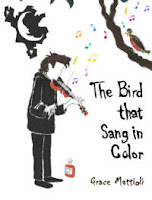
The Bird that Sang in Color by Grace Mattioli - BOOK BEGINNING

 book cover of Grace Mattioli's new novel, The Bird that Sang in Color

BOOK BEGINNINGS ON FRIDAY

I'm here on Friday again, not Thursday evening. My apologies. It was another crazy work week. I.m going to try to schedule a few Book Beginning and other blog posts for upcoming weeks this weekend to get a jump on things. 

I hope your week is more calm than mine! What are you reading? Let's share the first sentences or so of the books we are enjoying this week. Please use the hashtag #BookBeginnings if you post or share on social media. 

Share your link in the Linky box below. You can participate with a blog or a social media account like Instagram, Facebook, or anything else that works. Or just leave a comment with your opening sentence and the name of your book.

MY BOOK BEGINNING

My book beginning is from Grace Mattioli's new novel, The Bird that Sang in Color:

What pictures will you have of yourself by the end of your life? By pictures, I mean drawings, not photographs. A picture is easy. A drawing is earned. 

I offer a longer excerpt than usual because I thought it was interesting. What do you think?

The Bird that Sang in Color came out last month. It is a brother/sister story about Donna Greco and her brother Vincent. Donna sought the conventional successes in life, compared to Vincent who was an artistic free spirit. The story follows their relationship from their childhood in the 1970s to the near present. Mattioli tells this heartfelt family story with finesse and humor.


YOUR BOOK BEGINNINGS

Mister Linky's Magical Widgets -- Easy-Linky widget will appear right here!
This preview will disappear when the widget is displayed on your site.
If this widget does not appear, click here to display it.


THE FRIDAY 56 

Another weekly teaser event is The Friday 56, hosted by Freda at Freda's Voice, where you can find details and add a link to your post. The idea is to share a two-sentence teaser from page 56 of the book you are featuring. You can also find a teaser from 56% of the way through your ebook or audiobook.

MY FRIDAY 56

From The Bird that Sang in Color:
"Hey, I'm doing the best I can," Vincent said defensively.
"That's why you'll never be anything but a flub!" Dad shouted at him.


Friday, February 19, 2021

The Anglophile's Notebook by Sunday Taylor - BOOK BEGINNINGS


 BOOK BEGINNINGS ON FRIDAYS

I'm very late with my Book Beginnings post this Friday! I forgot to post last evening because I went to visit my mom and sister for an overdue celebration of my birthday. The festivities made me forget my blogging duties!

Snow and ice pushed back our celebration by over a week, so it was nice to finally get together out at their house. After lunch, we visited Tony's Garden Center, where this blanket of primroses made our eyes pop.

So, better very late than never, please share the first sentence or so of the book your are reading this week. Share the link to your blog post or social media post in the linky box below. If you link or share on social media, please use the hashtag #bookbeginnings. 

MY BOOK BEGINNING


My Book Beginning is from The Anglophile's Notebook by Sunday Taylor:

Claire Easton awoke suddenly rom a deep sleep, her mind in a tangled fog.

This new novel follows Claire Easton, a magazine editor from LA on assignment in England to research a book about Charlotte Brontë. It's part literary travelogue, part romantic adventure, and all wonderful entertainment.


YOUR BOOK BEGINNING

Please link to your Book Beginning post:

 Mister Linky's Magical Widgets -- Thumb-Linky widget will appear right here!

This preview will disappear when the widget is displayed on your site.
If this widget does not appear, click here to display it.


blog event button for The Friday 56 on Freda's Voice

THE FRIDAY 56

Another fun Friday event is The Friday 56. Share a two-sentence teaser from page 56 of your book, or 56% of the way through your e-book or audiobook, on this weekly event hosted by Freda at Freda's Voice.

MY FRIDAY 56

From The Anglophile's Notebook:

Though today Carlyle is far from a fashionable figure, in the 1830s and ‘40s he was one of Victorian London’s foremost men of letters. A Scottish writer and historian, Thomas lived with his wife, Jane, a prominent essayist and famous wit, in a little house at 25 Cheyne Row, one of London’s best-preserved Georgian streets.


Tuesday, February 16, 2021

Suzzy Roche: Writer, Singer, Songwriter -- AUTHOR INTERVIEW

Photo of musician and author Suzzy Roche

AUTHOR INTERVIEW WITH SUZZY ROCHE

Suzzy Roche has had a successful career as a singer/songwriter, recording numerous CDs with her band The Roches, as a solo artist, and with her daughter Lucy Wainwright Roche. She turned to prose writing with two earlier books, a novel Wayward Saints, and a children's book Want To Be in a Band?

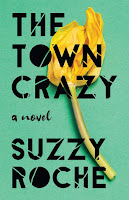
Suzzy's second novel, The Town Crazy, is out now from Gibson House Press. Find my review on this post.

book cover of The Town Crazy by Suzzy Roche

Suzzy talked with Rose City Reader about her new book, new music, and authors who inspire her: 

How did your new book, The Town Crazy, come about?

I don’t know! Unlike my first book, which came out of a short story I had written, this one seemed to appear out of thin air. I simply sat down at the computer and started to write from a deeply unconscious place, much like dreaming.

The story is set in suburban Pennsylvania in 1961, in a Catholic community. What drew you to this time and place for the setting of your novel?

The novel takes place during a time when I was a young child. I don’t remember much of my childhood, just fleeting images. I was interested in exploring those shards of memory. Though all the characters are fictional, and the plot does not bear specific resemblance to my life, there is something of the mood in the book that reminds me of my early childhood. 1961 seems like another era these days. I was also often thinking of the poet Anne Sexton as I wrote the book.

What themes do you hope readers will find in your novel?

Themes of motherhood and marriage. Childhood terrors and cruelty. Religion, as it is used to control and shame people. Small town power struggles. And how art can flourish or be destroyed.

You have had a successful career as a singer and songwriter. How did that career lead to fiction writing?  

I’ve always been drawn to the idea of making something out of nothing. As an artist, you are always coming up against the very hard truth that no one is waiting for your work. You just have to sit down and do it. Writing is a solitary endeavor, and therefore can save an artist’s creative life.

What did you learn from writing your book – either about the subject of the book or the writing process – that most surprised you? 

What I’ve learned over the years about creating anything is to keep going, never quit, but don’t push. Creations have a way of taking their time. They are like living organisms that need shepherding. You have to listen deeply to the thing you are creating.

Did you know right away, or have an idea, how you were going to end the story? Or did it come to you as you were in the process of writing?  

In this case, I had no idea what was going to happen any chapter. I let the story play out in my mind like a movie.

Were books an important part of your household when you were growing up? 

My mother instituted a tradition called “Reading Hour.” Typically, it occurred while she made dinner. She’d put on classical music and we all had to sit in the living room and read. We moaned and groaned all the way through it. We were also busy writing our own stories.

Who are your three (or four or five) favorite authors? Is your own writing influenced by the authors you read? 

Larry McMurtry for his empathy, Elizabeth Strout for her biting wit, John Coetzee for his heartbreaking clarity, Meg Wolitzer for her vulnerability, Toni Morrison for her wild fearlessness. Just to name a few. Reading has so much to do with the frame of mind of the reader. Sometimes I revisit a book, and it hits me in a totally different way.

What kind of books do you like to read? What are you reading now? 

Right now I am reading Ronnie Gilbert’s autobiography because I am going to record it for Audible. She was a member of the folk group The Weavers.

What is the most valuable advice you’ve been given as an author? 

You can start with 10 or 15 minutes a day. Also, keep the adjectives and adverbs to a minimum and try not to overuse the words was or is. REWRITE.

What is the best thing about being a writer? 

You can live in an alternate universe.

You have a great website and are also active on Twitter and Facebook. From an author's perspective, how important are social networking sites and other internet resources to promote your book? 

I am very active on Facebook and I do have a website. Because my book is published by Gibson House Press, an independent press, I doubt anyone would have noticed it was there if I didn’t have a fan base. I am very interested in my readers and listeners. They have kept me alive when the rest of the world ignores me. But it’s a relationship that requires care and respect, like any other relationship.

What’s next? Are you working on anything new right now? 

I just released a CD with my daughter Lucy Wainwright Roche. It’s called I Can Still Hear You. It’s a beautiful recording. Between that and The Town Crazy I pretty drained right now. I don’t have an idea in my head. Always an unsettling part of the creative process. But the field must lie fallow. I hope I’ll be lucky enough to get lost in another project, but who knows.


THANK YOU, SUZZY!

THE TOWN CRAZY IS AVAILABLE ONLINE IN PAPERBACK AND EBOOK.


Monday, February 15, 2021

New Books and Birthday Books for MAILBOX MONDAY


It's Mailbox Monday and an icy Presidents' Day weekend here in Portland. Three-day weekends, snow days -- these concepts don't mean much when you are working from home anyway! So my office officially declared today a bon bon day and we are doing no real work. Which means I have time to catch up on my book blogging!

What new books have come into your house lately? A few have come my way since I last posted for Mailbox Monday:


-- The Anglophile's Notebook by Sunday Taylor, a novel about a magazine editor who travels to England to research a book about Charlotte Brontë. I've flipped through it and it is overflowing with literary tidbits and British coziness. This one has gone straight to the top of my TBR stack.


-- The First Lady of Underfashions by Christina Erteszek (available for pre-order now). This is the story of Erteszek’s parents Jan and Olga escaping WWII Poland, immigrating to America, and starting the Olga “underfashion” company. I love real-life stories of family businesses. 


Hubby knows how much I love coffee table books and got me two for my birthday he knew would be right up my alley:


-- Winston Churchill: Painting on the French Riviera by Paul Rafferty. Rafferty tracked down the location of many of the 120 or so paintings Churchill made in the South of France. The book features 35 of the paintings juxtaposed with a photograph of the scene from the same angle, taken in the same light. Rafferty also provides the story behind the paintings and locations, along with dozens of photographs of Churchill, his friends and family, the places he visited, and historic artifacts. It’s gorgeous and fascinating!


-- The English Country House by James Peill, photographs by James Fennell, forward by Julian Fellowes. Can’t wait to snuggle up with this coffee table queen on this snowy weekend!


MAILBOX MONDAY 

Join other book lovers on Mailbox Monday to share the books that came into your house last week. Visit the Mailbox Monday website to find links to all the participants' posts and read more about Books that Caught our Eye.

Mailbox Monday is hosted by Leslie of Under My Apple Tree, Serena of Savvy Verse & Wit, and Martha of Reviews by Martha's Bookshelf.


Thursday, February 11, 2021

Fear of Fifty by Erica Jong -- A Birthday BOOK BEGINNING


BOOK BEGINNINGS ON FRIDAYS

Hello 55! It's my double nickel birthday this week! 

I'm celebrating all week with cozy at-home festivities, since restaurants aren't open in Portland anyway and on top of corona lockdown we are gearing up for a big snowstorm. They predict five to ten inches of snow and the last time we had real snow like that, Portland shut down for two weeks! We stocked up on groceries and are ready to hibernate until it melts. 

So let's share some book beginnings. Please share the opening sentence or so of the book you are featuring this week. Share your link below. If you post on social media, please use the #bookbeginnigns hashtag. 

MY BOOK BEGINNING


As part of the celebration of my 55th birthday, I'm finally reading Fear of Fifty, Erica Jong's "Midlife Memoir," published in 1994.  

So there I am at the spa with Molly, facing my fiftieth birthday, and feeling hideously depressed. I am no longer the youngest person in the room, nor the cutest.

My mom gave me Fear of Fifty when I turned 50 -- makes sense -- but I forgot to read it then. Just as good now! So candid, warm, enthusiastic, and honest. I love, love, love this book.


YOUR BOOK BEGINNING

Please add the link to your Book Beginning post and not your blog home page or social media profile. 

Mister Linky's Magical Widgets -- Thumb-Linky widget will appear right here!
This preview will disappear when the widget is displayed on your site.
If this widget does not appear, click here to display it.


THE FRIDAY 56

TIE IN: The Friday 56 hosted by Freda's Voice is a natural tie in with this event and there is a lot of cross over, so many people combine the two. The idea is to post a teaser from page 56 of the book you are reading and share a link to your post. Find details and the Linky for your Friday 56 post on Freda’s Voice.

MY FRIDAY 56

From Fear of Fifty:
Now, you have to know that my father is the kind of guy who never has lunch with me alone because he thinks my mother might be jealous. If we meet during the week – which may happen every seventeen years or so – we snatch lunch at a greasy spoon like rushed adulterers.
I look forward to finish reading Fear of Fifty in front of the fireplace this weekend, with a warm beverage and a snuggly blanket. What are your weekend plans?

My other birthday week activities included:

  • Watching that lawyer cat filter video about 5,500 times!
  • Recording an episode of the Great Trials podcast about our BSA sex abuse cases, particularly a big trial here in Portland that resulted in the public release of the BSA’s “Perversion Files” on child molesters. I believe transparency about child sexual abuse is important, so I am always glad for the opportunity to talk about this tough subject..
  • Texted and FaceTimed with friends and family wishing me happy birthday. Definitely the highlight of my week!


Thursday, February 4, 2021

The Nine Tailors by Dorothy L. Sayers - BOOK BEGINNING

book cover of The Nine Tailors by Dorothy L. Sayers

BOOK BEGINNINGS ON FRIDAYS

Back again for another Book Beginnings on Fridays. I don't know what it's like where you are, but here in Portland, it is cold! Cold and damp and the rain is coming back tomorrow. This is exactly the kind of winter weekend that calls for an old-fashioned murder mystery.

Which is why I'm hunkering down with The Nine Tailors by Dorothy L. Sayers. This is the ninth novel in Sayers' Lord Peter Wimsey series and was published in 1934. It is my first read for the 2021 Vintage Mystery Challenge hosted by Bev at My Reader's Block. It counts as my "Murder by the Numbers" entry in the Golden Era category (mysteries published before 1960).

Please share your book beginning here by sharing a link to the opening sentence (or so) of the book you are highlighting this week. Share a link to your blog post or social media post if you play along on Instagram, Facebook, or some other social media that generates a link. If you just want to leave your opening sentence in a comment below, that's fine too! Make sure to tell us the name of the book and th author!

If you link to social media or post on social media, please use the hashtag #bookbeginnings.

MY BOOK BEGINNING

From The Nine Tailors:

"That's torn it!" said Lord Peter Wimsey.

That first line doesn't tell you much, but the opening scene is a good one. Lord Peter and his butler Bunter have driven into a ditch in a snowstorm on New Year's Eve. They take refuge with the parson of the local church and become embroiled in a local murder that may be linked to the theft of an emerald necklace 15 years earlier. 

The title has nothing to do with sewing clothes. Nine Tailors refers to the tradition of tolling nine church bells when a man dies. 


YOUR BOOK BEGINNING

Mister Linky's Magical Widgets -- Thumb-Linky widget will appear right here!
This preview will disappear when the widget is displayed on your site.
If this widget does not appear, click here to display it.


THE FRIDAY 56 

Another weekly teaser event is The Friday 56, hosted by Freda at Freda's Voice, where you can find details and add a link to your post. The idea is to share a two-sentence teaser from page 56 of the book you are featuring. You can also find a teaser from 56% of the way through your ebook or audiobook.

MY FRIDAY 56

Fenchurch St. Paul is the smallest village, and has neither river nor railway; it is, however, the oldest; its church is by far the largest and the noblest, and its bells beyond question the finest. This is due to the fact that St. Paul is the original abbey foundation.

There is a lot about bells, the old church, and village life in this one. It is right up my alley!

Any other Dorothy L. Sayers fans? It's one of my favorite series. I hope to finish all the novels this year -- I only have two more to go after this. I haven't read the short stories yet and will save them for another day.


Related Posts Plugin for WordPress, Blogger...