Friday, July 24, 2020

The Likeness by Tana French on Book Beginnings


BOOK BEGINNINGS ON FRIDAYS

I am late posting this week! So sorry!

My sister is moving and I was helping her the last couple of days. I lost track of the days of the week. Good grief! Things are a little crazy here in Portland. My sister is fed up with living downtown and is moving to the suburbs, for a lot of reasons. She will miss her beautiful apartment in an old building, but I understand her decision completely.

Here is the link to post your Book Beginnings. I will come back after a work meeting and post my own.

YOUR BOOK BEGINNINGS


Mister Linky's Magical Widgets -- Thumb-Linky widget will appear right here!
This preview will disappear when the widget is displayed on your site.
If this widget does not appear, click here to display it.


MY BOOK BEGINNING


Some nights, if I'm sleeping on my own, I still dream about Whitethorn House.

-- The Likeness by Tana French.The Likeness is the second book in French’s Dublin Murder Squad series after In The Woods. Detective Cassie Maddox is the star of this one.

Any other Tana French fans? What did you think of The Likeness?

I confess I gave up on Hilary Mantel’s The Mirror and the Light and switched to this one. I was looking forward to it, but it just wasn’t keeping my attention like the first two did. And the audiobook is 38 hours long! After two days, I was only 9% of the way through. Maybe someday. But not now.

I’m a completist and rarely give up on a book, especially the third in a trilogy. In fact I probably can count on one hand the books I’ve abandoned. One of my goals is to be better about giving up on books that I don’t enjoy and not be bothered by that feeling of leaving something unfinished.

Is there a name for the need to scratch things off lists? If there is, I have it. Who else? Is there a cure?


THE FRIDAY 56

Over at Freda's Voice, Freda hosts The Friday 56 where participants share a teaser from page 56 of the book they are reading or featuring. Visit Freda's Voice for details or to link your post.

MY FRIDAY 56

The squad room holds 20, but it was Sunday-evening empty: computers off, desks scattered with paperwork and fast-food wrappers -- the cleaners don't come in till Monday morning. In the back corner by the window, the desks where Rob and I used to sit were still at right angles, the way we liked them, so we could be shoulder to shoulder.


Wednesday, July 22, 2020

Sandell Morse, Author of The Spiral Shell: A French Village Reveals its Secrets of Jewish Resistance in WWII: Author Interview

headshot of author Sandell Morse

Author Sandell Morse has written widely for literary magazines including Ploughshares and the New England Review. Her new book, The Spiral Shell: A French Village Reveals its Secrets of Jewish Resistance in World War II is out now from Schaffner Press. It is both a memoir and the history of the Jewish resistance movement in the French village of Auvillar.

book cover of The Spiral Shell by Sandell Morse

Sandell talked with Rose City Reader about The Spiral Shell, writing in France, WWII stories, and book tours during COVID19:


How did you come to write your memoir, The Spiral Shell?

In 2011 at age 72, I was awarded a writing residency at Moulin à Nef, an artists’ retreat owned and operated by the Virginia Center for the Creative Arts in Auvillar, a village in southwest France. Before leaving home, I researched the village and learned that Auvillar was on one of the pilgrimage routes that ends at the Shrine of Saint James in Santiago del Compostello, Spain. I thought of Crusaders walking that route, and whenever I think of Crusaders, I think of Jews. My thoughts jumped to the Second World War and I wondered if Jews had lived there then. My original intent was to write a series of essays on this subject.

Your memoir is also the story of Jewish resistance during World War II in the French village of Auvillar. Can you tell us a little bit about that?

I was very lucky to find Gerhard Schneider, a German, Catholic theologian who lived in the village. Not only was Gerhard willing to talk to me, he was interested in facing the dark history of both Germany and France. Gerhard was married to a French woman, and early in their marriage, he set out to bridge the two cultures. So, like me, Gerhard was interested in connection and our common humanity. Others, also shared stories of their families. I read a lot, researched a lot.

If you’re asking me about specific resistance in that area, yes, the resistance worked there. I researched Jean Hirsch, a nine-year-old resistance courier during the war. He and his family sheltered in Auvillar. His father and mother both worked for the Jewish Scouts of France, a normal scouting organization before the war, an organization dedicated to saving Jewish children during the war. Both parents were sent to Auschwitz. I won’t say more because I tell their story in the book. Also the German presence was nearby. There were also Nazis sympathizers in the village.

How does your story, the memoir part of your book, connect with the story of Auvillar?

My maiden name is Hirsch, and I felt an immediate connection to Jean Hirsch and his family. I was not on a quest for my roots, but I understood, that my fate as a Jew rested on the fact that my father’s family had left the Alsace Lorraine in the mid 19th century and his had not. In addition to his story, I tell the story of four families deported from Auvillar, a history that to this day remains hidden to most villagers and visitors. Nothing marks the houses where they lived. For years and even today, many in France do not want to face their past any more than we in the States want to face our legacy of slavery or our native American genocide. I would say the memory part of my book connects with Auvillar on a deeply human level.

What is the meaning of the title, The Spiral Shell?

I was on a walking tour in Paris, exploring a part of the marais, Jewish Section, I hadn’t explored before. The tour leader stopped and pointed to a limestone building block. France was once an inland sea and buildings in Paris are made from limestone dug from quarries under the city. I couldn’t see what I was supposed to see. Then I saw it, the indentation of a spiral shell, a fossil. Then, later the tour leader found a tiny spiral shell among crushed up shells that made a path. He dropped it into my palm. It sits on my desk. The shell is like my narrative; it spirals up.

Did you consider turning your personal experiences and what you learned about Auvillar into fiction and writing your story as a novel?

I did not. I started out as a fiction writer, and I have about four unpublished novels on my shelf. I’ve had agents. I’ve come in second in contests. I figured that was enough. I turned to essays, and I loved the form.

Who is your intended audience and what do you hope your readers will gain from your book?

I want everyone to read and love The Spiral Shell. In the book, I cultivate empathy and connection, two things we need desperately right now.

Can you recommend any other memoirs about the Holocaust or Jewish resistance in World War II?

A classic would be Margaret Duras, The War, A Memoir. I loved The Hare With Amber Eyes by Edmund de Wall, not exactly a resistance story, but I found myself retracing his peoples’ steps in Paris. De Waal led me to the Musée Nissim de Camando in Paris. I highly recommend The Lost Childhood by Yehuda Nir. It’s published by Schaffner Press, publisher of The Spiral Shell. Three more are A Woman of No Importance by Sonia Purnell, The Crooked Mirror by Louise Steinman, and The Rescuer by Dara Horn.

What do you think people today can learn from the stories about WWII and the Holocaust?

Is everything an okay answer? The struggle for justice is never over. It’s an ongoing fight. The challenge is to retain our humanity in dark times. This, too, is an ongoing struggle.

You have a terrific website and are active on Twitter, Facebook, Instagram, and Goodreads. From an author's perspective, how important are social networking sites and other internet resources?

In this time of COVID19, they are my lifeline. So many wonderful people have taken me under their wing. I’m a debut book writer with no track record, and my book came out when the country shut down. I felt like Sisyphus rolling his boulder up hill. Then, the wonderful Jenna Blum introduced the book on pub day on A Mighty Blaze.

Many, but not all, of my bookstore events went to Zoom. I’ll be interviewed by Annie Mcdonnell of The Write Review on August 31st.  I list all of my events on the events page on my website.

What are you working on now?

I’m keeping it pretty close. I will say it’s another memoir, and it takes place during the time I was writing this memoir and visiting France, so 2011- 2017. It’s a family story, and it has many of the same themes, social justice, what it means to be a mother, and for me a grandmother. We live simultaneous lives, but we can only write about one at a time.


THANK YOU, SANDELL!

THE SPIRAL SHELL IS AVAILABLE ONLINE FROM ALL MAJOR SOURCES.


Saturday, July 18, 2020

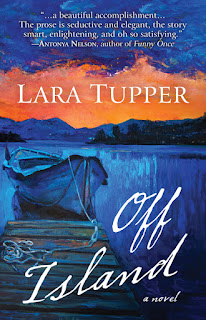
Off Island by Lara Tupper: Book Review

book cover of Off Island by Lara Tupper

Off Island by Lara Tupper (Encircle Publications, 2020)

In Off Island, Lara Tupper creates an imagined history of artist Paul Gauguin, famed for his vibrant paintings from the South Seas, visiting an island off the coast of Maine. A hundred years later, a contemporary painter finds the paintings and letters Gauguin left behind and learns that maybe Gauguin also left a family in Maine.

The two stories run parallel. While Gauguin is in Maine painting and writing letters home, his wife Metter Gad is in Denmark, raising five children and trying to make ends meet. In 2003, Pete is a painter and Molly holds down the fort. Both Gauguin and Pete wrestle with addiction issues. The most powerful part of the book is Mette's story. Tupper is careful to give her an independent voice and not make her a victim. The two story lines intersect convincingly by the end.

Tupper teases out coastal themes that work with the story. Artists paint seascapes; characters are at sea. There is tension between permanent residents and outsiders, the fishing community and artists who live there and the city tourists. These themes and conflicts give the story a nice heft.

Off Island is a terrific book for anyone who enjoys fictionalized art history and historical fiction with a braided contemporary narrative.

NOTES

Lara Tupper has written short stories, an earlier novel, and a screenplay, and is a jazz and pop singer. She taught at Rutgers University for many years and now presents writing workshops and retreats in Massachusetts where she now lives.

Read my Rose City Reader author interview with Lara Tupper here, where Lara talked about Off Island, the authority of a narrator's voice, Zooming her book tour, and other fun bookish stuff.

Read an article about Lara Tupper and Off Island from The Boothbay Register, where Lara talks about her book and the research that went into it, as well as growing up in Maine.


Thursday, July 16, 2020

A Small Earnest Question and Signatures: Literary Encounters of a Lifetime on Book Beginnings


BOOK BEGINNINGS ON FRIDAYS

Fridays seem to come around faster and faster, even though the hours of each coronatime day can go so slowly! All this working from home is distorting my sense of time as well as dissolving my social skills.

But here it is, Friday again and time to share our Book Beginnings. Please share the opening sentence (or so) from the book you are featuring this week. Link to your blog or social media post. Or, if you want, just leave the opening sentence and name of the book in a comment below.

If you post on social media, please use the hashtag #bookbeginnings so we can find each other and encourage others to join in the fun!

MY BOOK BEGINNINGS

I have two book beginnings today because loads of new books have been drifting into my house lately.


It was early spring on Washington Island, which, as any Islander could attest, is frequently an exercise in disappointment.

A Small Earnest Question by J. F. Riordan. This is the fourth book in Riordan's North of the Tension Line series. It looks completely charming. I haven't read the earlier books, so I'll give you the publisher's description and you will know what I do:

It's spring on Washington Island. Despite her concerns about Roger's desire to bartend, Elisabeth is eager to plan a grand opening for their newly remodeled hotel, but she quickly realizes that she may also need to make accommodations for Roger's proposed goat yoga classes. Bored and lonely, Oliver Robert joins bartender Eddie in forming a great books club at Nelsen's, and Emily Martin, determined to make her mark on the community, forms a new Committee of the Concerned. When Emily decides that the Island needs a literary festival, complete with a famous author, she imprudently seeks out a notorious celebrity, hoping, as always, to enhance her own prestige. Real estate agent Marcie Landmeier confides that an unknown someone is buying up the Island's shoreline, newly-appointed Fire Chief Jim Freeberg contends with a string of suspicious fires, and Pali and Ben have a spiritual encounter that will change them both. Meanwhile, drawn once more into local controversy, and awash in suspicion herself, Fiona Campbell must determine the answers to questions that will affect her future, and the future of the entire Island. A Small Earnest Question is Book Four in the award-winning North of the Tension Line series, set on a remote island in the Great Lakes. Called a modern-day Jane Austen, author J.F. Riordan creates wry, engaging tales and vivid characters that celebrate the beauty and mysteries of everyday life.

What do you think? It sounds good to me! A Small Earnest Question launches August 3 from Beaufort Books and is available for pre-order.


The convention is that if you happen to meet authors and have just bought or acquired a book of theirs, you ask them to sign it.

Signatures: Literary Encounters of a Lifetime by David Pryce-Jones, from Encounter Books. Pryce-Jones is a British author and commentator. Signatures, his latest book, is a collection of vignettes describing 90 authors and the personally inscribes books they gave him.

I knew I wanted a copy of Signatures as soon as I read about it. It is the kind of bookish memoir filled with literary tittle-tattle that is right up my alley. Authors featured include several of my favorites like Kingsley Amis, Saul Bellow, Lawrence Durrell, Rose Macauley, Jessica and Nancy Mitford, Edna O'Brien, and Muriel Spark.

YOUR BOOK BEGINNINGS

Mister Linky's Magical Widgets -- Thumb-Linky widget will appear right here!
This preview will disappear when the widge tis displayed on your site.
If this widget does not appear, click here to display it.


THE FRIDAY 56

Also on Fridays, Freda of Freda's Voice hosts The Friday 56 where participants share a two-sentence teaser from page 56 of their book. You can also share the equivalent from your e-book or audiobook by finding a teaser at 56%.

MY FRIDAY 56s

From A Small Earnest Question:

He arrived at the shop one morning at his usual unearthly hour to discover that one of the yoga groupies had set up camp in his parking lot. There was a bright blue pup tent accompanied by a pickup truck.

From Signatures:

Pentwyn is our family farmhouse twenty minute from Hay-on-Wye, and every time I drive to that bibliophile town I pass Oakfield, the handsome red-brick house that used to be the Burney home. At the age of eighteen, Christopher Burney ran away from Wellington in the hope of becoming a soldier rather than the classical scholar that the headmaster intended him to be.

-- from the chapter on Christopher Burney, author of The Dungeon Democracy (1946).


Sunday, July 12, 2020

Peter Meech, author of Billy (the Kid): Author Interview

headshot pf author Peter Meech

Peter Meech is an author and screenwriter. His debut novel, Billy (the Kid), came out earlier this year. In it, Meech imagines the famous outlaw survived Pat Garrett's bullet and, in 1932, is living as a retired dentist in Pueblo, Colorado, avoiding rum runners and falling in love with the town widow.

book cover of Billy (the Kid) by Peter Meech

Peter talked with Rose City Reader about his Billy (the Kid) novel, the authors who inspire him, Thomas Pynchon, and creative idleness:

The story takes place in Pueblo, Colorado in 1932. What drew you to this time and place for the setting of your book?

My mother was a fifth-generation Coloradoan and was born and raised in Pueblo. I grew up hearing stories of her childhood, which took place during the Great Depression. While my novel is not about the history of my mother’s childhood, it draws upon many of her childhood memories. I set the novel in 1932 because that’s when bootlegging was at its zenith. It’s also a time when the Old West was colliding with the New West, when aging outlaws were confronting young gangsters, when new inventions were replacing traditional ways of living.

How did you research the historical information and detail found in your book?

I used the internet, of course, but even in this day and age, libraries are invaluable when it comes to research. So I spent a lot of time in a lot of libraries. The Pueblo Lore, a monthly publication put out by the Pueblo Historical Society, was a great resource. But by far the greatest resource was my mother.

What is your professional background? How did it lead to writing fiction?

I studied screenwriting at Stanford and received a Master’s degree in Communications and later a Stanford Nichol fellowship. Alas, neither the screenwriting program nor the Stanford Nichol fellowship exists anymore. After Stanford, I began writing half-hour television, both live-action and animation, which lead to writing feature scripts, which I sold or had optioned. I love screenwriting, it’s an art form unto itself, but it’s no substitute for writing prose. With screenwriting everything is pared down to a minimum – character description, dialogue, scene description. At one point after writing screenplays for a few years, I found myself champing at the bit to write prose, and not just the typical three-line paragraph of description you find in a screenplay, but great swaths of prose, pages and pages of prose. Eventually I carved out the time to do it. I had no choice in the end. The impulse was that strong.

What did you learn from writing your book that most surprised you?

As I wrote the book I was constantly surprised at how the characters were interacting with each other. They behaved in ways I could never have imagined. Over the course of the novel many of the characters became more complex, more dimensional, in particular the female characters. At the heart of the novel there’s now a great romance that was greatly expanded from the initial outline.

Did you know right away, or have an idea, how you were going to end the story?

Before I write a story I always start out with an outline, and an outline consists of plot complications, twists, reveals, reversals, and it always has a beginning, middle and an end. But with Billy (the Kid), I was dealing with an unreliable narrator and whenever I sat down to write his story, Billy would refuse to cooperate. He would contradict what he had said a page earlier, or reveal an aspect of his character I was unaware of. So I wasn’t quite sure how I was going to end Billy’s story, but I decided to forge ahead anyway, and the ending came to me when I was writing the last page, which was the first time I understood who this man really was.

Is there a particular writer who inspired you to become a writer? And if so, what form did that inspiration take?

In high school I discovered Babylon Revisited and Other Stories by F. Scott Fitzgerald and immediately fell under Fitzgerald’s spell. Like a man possessed, I proceeded to hunt down everything Fitzgerald had ever written, including his correspondence and the lyrics he wrote for the Princeton musicals. After I had exhausted the Fitzgerald canon, I went searching for his literary influences, or literary forebears, beginning with the Romantic poets. And after immersing myself in the Romantic poets, particularly Keats and Byron, I read some of Fitzgerald’s favorite writers. Among them were Booth Tarkington, Conrad, Kipling, Dickens, Rupert Brooke, Joyce, Wilde, Dostoevsky, Virginia Woolf and Dorothy Parker. And then I sought out those writers who might be called Fitzgerald’s literary heirs, prose stylists of the first water, and became acquainted with writers like J.D. Salinger, Truman Capote, Jay McInerney, Thomas McGuane, and Gabriel Garcia Marquez. And that’s how one collection of short stories by F. Scott Fitzgerald introduced me to a constellation of extraordinary writers.

What kind of books do you like to read? What are you reading now?

Besides novels of literary fiction, I like to read short stories, poetry and graphic novels. I also read a lot of nonfiction, including memoirs and biographies. At the moment I’m reading Slow Learner: Early Stories by Thomas Pynchon. What’s remarkable about this slim volume of stories is not the high quality of the stories, which you would expect from Pynchon, but the twenty-three page Introduction, in which an older Pynchon candidly discusses the literary shortcomings of his younger self. On one of my bookshelves is an unread copy of Mason & Dixon. I’ll get to it eventually, but right now these early stories are just the perfect amount of Pynchon for me.

What’s the most valuable advice you can give to young writers?

Don’t follow literary trends, or try to be fashionable. Write the book you would love to read.

What’s next? What are you working on now?

I’m taking the summer off and catching up on my reading. I believe in creative idleness.

THANK YOU, PETER!

BILLY (THE KID) IS AVAILABLE FROM A VARIETY OF ONLINE SELLERS YOU CAN FIND ON PETER'S WEBSITE.


Thursday, July 9, 2020

Make Russia Great Again by Christopher Buckley on Book Beginnings

blog event button for Book Beginnings on Fridays on Rose City Reader

BOOK BEGINNINGS ON FRIDAYS

It's time for Book Beginnings on Fridays again and it finally feels like summer here in Portland! What is it like where you are?

Please share the first sentence (or so) of the book you are reading or featuring this week. Link to your post below, or just share the opening sentence(s) in a comment. If you post on social media, please use the hashtag #bookbeginnings.

MY BOOK BEGINNING

Christopher Buckley's new book, Make Russia Great Again, comes out next week. I got a sneak peek thanks to Simon & Schuster and it looks hilarious. It is Buckley at his best in this "whipsmart fake memoir by Herb Nutterman -- Donald Trump’s seventh chief of staff -- who has written the ultimate tell-all about Trump and Russia."

No matter which side of the aisle you sit, it looks like a funny book. It is over the top, taking jabs at everyone. Political satire is much more fun than the real thing.

book cover of Make Russia Great Again by Christopher Buckley

“How could you work for a man like that?”
“What were you thinking?”
“What possessed you?”
All the time I get this, even in here, which frankly strikes me as a bit rich. Who knew inmates at federal correctional institutions had such keenly developed senses of moral superiority?

I offer a longer bit than the first sentence to give a sense of the tone. If you liked Thank You for Smoking or any of Buckley's other books, you will breeze right through this one, laughing right along.

YOUR BOOK BEGINNING

Mister Linky's Magical Widgets -- Thumb-Linky widget will appear right here!
This preview will disappear when the widget is displayed on your site.
If this widget does not appear, click here to display it.


THE FRIDAY 56

blog event button for The Friday 56 on Freda's Voice

Another fun Friday event is The Friday 56. Share a two-sentence teaser from page 56 of your book on this weekly event hosted by Freda at Freda's Voice.

MY FRIDAY 56

Oleg had named it Maria Ivanova, in honor of Mr. Putin's mother. Apparently, no fewer than fourteen oligarchs also named their megayachts after her.


Sunday, July 5, 2020

Listening at Lookout Creek: Nature in Spiritual Practice by Gretel Van Wieren - BOOK REVIEW

Listening at Lookout Creek: Nature in Spiritual Practice by Gretel Van Wieren

Gretel Van Wieren went on a retreat to the HJ Andrews Experimental Forest in Oregon’s western Cascade Mountains to reconnect with the natural world. She grew up on west Michigan’s lakeshore and her favorite childhood memories were of fishing with her dad, hunting for morels, digging in the garden, boiling maple sap, identifying birds, and generally spending time outdoors.

She decided to treat her writing residency in Oregon as a "spiritual experiment" to try to recapture that sense of deep connection with nature she had when growing up. Living a busy life of a college professor with a husband and three teenagers had her feeling over-scheduled, over-screened, and over-stressed. The question was whether ten days in the woods would be enough to spiritually reconnect with the natural world. She wrote about her experience and what she learned in Listening at Lookout Creek: Nature in Spiritual Practice (OSU Press).

The book describes Gretel's time at the Andrews Forest, what she did and saw and what she thought about while she was there. She looks back at her childhood and experiences with her husband and children. The unifying theme of the book is her spiritual practice and how it connects her to the natural world. Gretel first realized that her childhood experiences of nature influenced her spiritual outlook when she was at Divinity School. Later, when working as a pastor in rural upstate New York, she began to explore the world of nature mysticism, which inspired and informs much of Listening at Lookout Creek.

While this book has more trees and moss – and fewer bugs (thank goodness) – it reminded me a bit of Annie Dillard's Pilgrim at Tinker Creek, which I loved despite the bugs. Reader's who enjoyed Dillard's classic will enjoy Listening at Lookout Creek, as would parents thinking about getting their kids outdoors more and on screens less, the fishing and hunting community, and spiritual seekers. It's a book that made me want to slow down and spend time in a forest.

NOTES

Read my Q&A interview with Gretel Van Wieren here, where Gretel talks about getting kids outdoors, a spiritual connection with the natural world, and her new book, Listening at Lookout Creek.

Read Gretel's 10 Tips for Getting Your Kids Outdoors.

Saturday, July 4, 2020

Happy Independence Day!


This is the text of the Declaration of Independence, signed by representatives of the original 13 United States. The original document is on display in the Rotunda at the National Archives Museum. The spelling and punctuation reflects the original.


DECLARATION OF INDEPENDENCE

The unanimous Declaration of the thirteen united States of America, When in the Course of human events, it becomes necessary for one people to dissolve the political bands which have connected them with another, and to assume among the powers of the earth, the separate and equal station to which the Laws of Nature and of Nature's God entitle them, a decent respect to the opinions of mankind requires that they should declare the causes which impel them to the separation.

We hold these truths to be self-evident, that all men are created equal, that they are endowed by their Creator with certain unalienable Rights, that among these are Life, Liberty and the pursuit of Happiness.--That to secure these rights, Governments are instituted among Men, deriving their just powers from the consent of the governed, --That whenever any Form of Government becomes destructive of these ends, it is the Right of the People to alter or to abolish it, and to institute new Government, laying its foundation on such principles and organizing its powers in such form, as to them shall seem most likely to effect their Safety and Happiness. Prudence, indeed, will dictate that Governments long established should not be changed for light and transient causes; and accordingly all experience hath shewn, that mankind are more disposed to suffer, while evils are sufferable, than to right themselves by abolishing the forms to which they are accustomed. But when a long train of abuses and usurpations, pursuing invariably the same Object evinces a design to reduce them under absolute Despotism, it is their right, it is their duty, to throw off such Government, and to provide new Guards for their future security.--Such has been the patient sufferance of these Colonies; and such is now the necessity which constrains them to alter their former Systems of Government. The history of the present King of Great Britain is a history of repeated injuries and usurpations, all having in direct object the establishment of an absolute Tyranny over these States. To prove this, let Facts be submitted to a candid world.

   He has refused his Assent to Laws, the most wholesome and necessary for the public good.

   He has forbidden his Governors to pass Laws of immediate and pressing importance, unless suspended in their operation till his Assent should be obtained; and when so suspended, he has utterly neglected to attend to them.

   He has refused to pass other Laws for the accommodation of large districts of people, unless those people would relinquish the right of Representation in the Legislature, a right inestimable to them and formidable to tyrants only.

   He has called together legislative bodies at places unusual, uncomfortable, and distant from the depository of their public Records, for the sole purpose of fatiguing them into compliance with his measures.

   He has dissolved Representative Houses repeatedly, for opposing with manly firmness his invasions on the rights of the people.

   He has refused for a long time, after such dissolutions, to cause others to be elected; whereby the Legislative powers, incapable of Annihilation, have returned to the People at large for their exercise; the State remaining in the mean time exposed to all the dangers of invasion from without, and convulsions within.

   He has endeavoured to prevent the population of these States; for that purpose obstructing the Laws for Naturalization of Foreigners; refusing to pass others to encourage their migrations hither, and raising the conditions of new Appropriations of Lands.

   He has obstructed the Administration of Justice, by refusing his Assent to Laws for establishing Judiciary powers.

   He has made Judges dependent on his Will alone, for the tenure of their offices, and the amount and payment of their salaries.

   He has erected a multitude of New Offices, and sent hither swarms of Officers to harrass our people, and eat out their substance.

   He has kept among us, in times of peace, Standing Armies without the Consent of our legislatures.

   He has affected to render the Military independent of and superior to the Civil power.

   He has combined with others to subject us to a jurisdiction foreign to our constitution, and unacknowledged by our laws; giving his Assent to their Acts of pretended Legislation:

   For Quartering large bodies of armed troops among us:

   For protecting them, by a mock Trial, from punishment for any Murders which they should commit on the Inhabitants of these States:

   For cutting off our Trade with all parts of the world:

   For imposing Taxes on us without our Consent:

   For depriving us in many cases, of the benefits of Trial by Jury:

   For transporting us beyond Seas to be tried for pretended offences

   For abolishing the free System of English Laws in a neighbouring Province, establishing therein an Arbitrary government, and enlarging its Boundaries so as to render it at once an example and fit instrument for introducing the same absolute rule into these Colonies:

   For taking away our Charters, abolishing our most valuable Laws, and altering fundamentally the Forms of our Governments:

   For suspending our own Legislatures, and declaring themselves invested with power to legislate for us in all cases whatsoever.

   He has abdicated Government here, by declaring us out of his Protection and waging War against us.

   He has plundered our seas, ravaged our Coasts, burnt our towns, and destroyed the lives of our people.

   He is at this time transporting large Armies of foreign Mercenaries to compleat the works of death, desolation and tyranny, already begun with circumstances of Cruelty & perfidy scarcely paralleled in the most barbarous ages, and totally unworthy the Head of a civilized nation.

   He has constrained our fellow Citizens taken Captive on the high Seas to bear Arms against their Country, to become the executioners of their friends and Brethren, or to fall themselves by their Hands.

   He has excited domestic insurrections amongst us, and has endeavoured to bring on the inhabitants of our frontiers, the merciless Indian Savages, whose known rule of warfare, is an undistinguished destruction of all ages, sexes and conditions.

In every stage of these Oppressions We have Petitioned for Redress in the most humble terms: Our repeated Petitions have been answered only by repeated injury. A Prince whose character is thus marked by every act which may define a Tyrant, is unfit to be the ruler of a free people.

Nor have We been wanting in attentions to our Brittish brethren. We have warned them from time to time of attempts by their legislature to extend an unwarrantable jurisdiction over us. We have reminded them of the circumstances of our emigration and settlement here. We have appealed to their native justice and magnanimity, and we have conjured them by the ties of our common kindred to disavow these usurpations, which, would inevitably interrupt our connections and correspondence. They too have been deaf to the voice of justice and of consanguinity. We must, therefore, acquiesce in the necessity, which denounces our Separation, and hold them, as we hold the rest of mankind, Enemies in War, in Peace Friends.

We, therefore, the Representatives of the united States of America, in General Congress, Assembled, appealing to the Supreme Judge of the world for the rectitude of our intentions, do, in the Name, and by Authority of the good People of these Colonies, solemnly publish and declare, That these United Colonies are, and of Right ought to be Free and Independent States; that they are Absolved from all Allegiance to the British Crown, and that all political connection between them and the State of Great Britain, is and ought to be totally dissolved; and that as Free and Independent States, they have full Power to levy War, conclude Peace, contract Alliances, establish Commerce, and to do all other Acts and Things which Independent States may of right do. And for the support of this Declaration, with a firm reliance on the protection of divine Providence, we mutually pledge to each other our Lives, our Fortunes and our sacred Honor.


Thursday, July 2, 2020

The Spiral Shell and Braided in Fire: BOOK BEGINNINGS


BOOK BEGINNINGS ON FRIDAY

As we head into this long Independence Day weekend here in the US, I have two books to share on Book Beginnings on Friday. Please join me to share the first sentence (or so) of the book you are featuring this week.

Add the link to your post in the Linky below. If you share your post on social media come up please use the #bookbeginnings so we can find each other.


MY BOOK BEGINNING

Both books I have are new World War II histories described as memoirs. I get the idea they are “memoirs” because the authors inserted themselves into the narratives, describing the way they investigated the histories they wanted to write about and how they interacted with the people whose stories they told. But I will understand more when I read the books. They both look excellent.

The Spiral Shell: A French Village Reveals Its Secrets of Jewish Resistance in World War II by Sandell Morse

I knew so little of my own history. On my father's side, I had two names: Henriette Ducas and Jacques Hirsch, my great-grandparents, both born in Héricourt, France, a commune in the Alsace that used to go back and forth between France and Germany, a spoil of war.

The Spiral Shell: A French Village Reveals Its Secrets of Jewish Resistance in World War II by Sandell Morse.

When Sandell Morse was 71 years old, she got a writer's grant to go to France. The result is The Spiral Shell in which she explores her inward journey to find her own identity as a Jew, and her outward journey as she pieces together the history of French Jews under the Vichy government.

Braided in Fire: Black GIS and Tuscan Villagers on the Gothic Line by Solace Wales

I stood in dappled shade on a small hilltop in northern Tuscany, somewhat perplexed. How had I, despite walking daily past this monument to World War II heroes, missed seeing this name before?

Braided in Fire: Black GIS and Tuscan Villagers on the Gothic Line by Solace Wales.

Solace Wales tells the story of Sommocolonia and the Black 366th Infantry Regiment that defended the village in WWII during the Battle of Garfagnana. At the center of her story are Lieutenant John Fox, who won the Medal of Honor for his heroism and the brave Biondi family.

YOUR BOOK BEGINNING

Mister Linky's Magical Widgets -- Thumb-Linky widget will appear right here!
This preview will disappear when the widget is displayed on your site.
If this widget does not appear, click here to display it.


THE FRIDAY 56

Freda at Freda's Voice hosts a weekly event where participants share a two-sentence teaser from page 56 of their book of the week. Please visit her blog to share your post on The Friday 56.

MY FRIDAY 56

From The Spiral Shell:

"This is important to me, that he became a gendarme afterward."

Important to me, too. His father was not involved in round-ups and deportations.

From Braided in Fire:

Most of the students at Ft. Benning were white. Apart from having separate sleeping quarters, Ft. Benning was not segregated.


Saturday, June 27, 2020

Kevin T. Myers - Author Interview

headshot of Kevin T. Myers, author of novel Hidden Falls

Kevin T. Myers has worked as a stand-up comic, comedy writer, journalist, editor, speechwriter, and media liaison, among other jobs. He grew up in Massachusetts and now lives in Portland, Oregon where he works at a spokesperson for Reed College. 

Myers's new novel Hidden Falls launches July 15 from Beaufort Books. It is available for pre-order now.

book cover of Hidden Falls by Keven T. Myers

Kevin talked with Rose City Reader about his new book, Hidden Falls, its New Bedford setting, and what books he likes to read:

How did you come to write Hidden Falls?

When I began Hidden Falls, I was emerging from a dark time when I was processing a lot of old trauma through my writing. I set out to write the book I wanted to read to help lift me out of that place. At the time, my guilty pleasure (read: obsession) was reading the missed connections classifieds. It was a carnival midway of ideas, emotions, magical thinking, hope, optimism, denial, and sometimes depravity. Mostly it was filled with romantic souls exposing their secret desires to the world in hope of finding a connection. So, I started to write a comedic love story whose protagonist was pursuing a relationship through an ad he found.

I don’t write following an outline, and somewhere along the way my protagonist, Michael Quinn, went lookin’ for trouble. The original story almost necessitated that Michael be an unreliable narrator. As I dug deeper into why he was so lacking in self-awareness, his backstory became more interesting to me than what I was writing. Had I not had that false start, I don’t think Michael would have been as interesting, and I don’t think the book would be as fun.
The setting of New Bedford, Massachusetts, is key to the story because the location shaped the personalities of many of the characters. Why did you choose New Bedford?

Well, nobody had ever written a decent book connected with New Bedford. I was going to begin with the line, “Call me Michael.” Kidding. The story of Hidden Falls was invented whole cloth. It is also deeply rooted in the milieu of New England’s lower middle class, where I was raised. As I get older, I find myself becoming more appreciative of what I think was a pretty unique upbringing. In the first draft, Michael was from my hometown of Peabody, Massachusetts, but when the story started taking on elements of crime, I decided to change it to New Bedford. Not because of how it would reflect on the city, but because illegal gambling was so prevalent in Peabody that I didn’t want people to mistake the book for a memoir.

I chose New Bedford because I think it is the archetype of the kind of New England town I wanted to write about. The once great centers of now dead American industries. At one time, Peabody was to leather tanning what New Bedford was to whaling. The towns’ high school teams are named the Tanners and Whalers. We took great pride in an era and trade we never knew. It’s part of our heritage. The people from my hometown have a special bond that’s not easily explained. There’s also a connection to sports, professional and otherwise, that a lot of people who have never been exposed to that environment don’t understand. I wanted to explore those themes and I thought New Bedford was a great place to do that.

Your book is a mix of family drama and gangster story, kind of Richard Russo meets Elmore Leonard. Did you plan it that way or did the story take a turn as you went along?

The writer/director Judd Apatow said Hidden Falls was like Dennis Lehane meets David Sedaris; a theme seems to be developing that I’m really enjoying. I read Russo’s Straight Man around the time I started Hidden Falls. I never thought it influenced my book, but now you have me wondering. To answer your question, the book evolved into what it became. The characters lead me into the family drama and gangster stuff. I was about 30,000 words into what I was calling Missed Connections when it really became a different book. I went back and threw out most of it and reworked a few things. The rewrite was very intentional. I added some characters and gave others more of a voice.

The idea of combining genres was inspired by the French New Wave. I studied filmmaking in college and became fascinated by the idea of altering the construction of a film’s reality as it progresses. In Hidden Falls I wanted the narrator, Michael Quinn, to gradually ease readers from his workaday life in Portland to his extraordinary life in New Bedford without hitting readers over the head. That’s why there is an emphasis on Michael’s internal dialogue. His Portland concerns don’t go away, they just change perspective as he falls deeper into the realities of his life in New Bedford.

What do you admire most about your protagonist Michael Quinn? What is his least endearing trait?

I think what I admire most is that Michael is his willingness to take in new information, learn from it, and adapt his behavior as a result. He’s slow on the uptake, for sure, but he eventually gets there. His least endearing trait is still endearing when it’s not infuriating. He has a little Walter Mitty in him, but his fantasy life is more functional than fantastic. Michael is an editorial writer for the fictional Portland Daily, and his lack of self-awareness expresses itself in his columns; they are more aspirational than accurate when he’s writing about his own life.

What did you learn from writing Hidden Falls – either about the subject of the book or the writing process – that most surprised you?

I learned to trust my process and my instincts. I’ve been writing for a very long time, but only started writing novels about 10-years ago. My first manuscript was never published. I read it recently and totally understand why. It was very stiff. I made all the obvious choices. It was like I was imitating someone else’s writing. With Hidden Falls, I just listened to my own voice and gave the characters freedom to explore. My first manuscript was written while I was in a writing group and it reads like it was written for the group’s approval rather than my own creative expression. To be clear, that was my fault, not their influence. There were some really good writers in that group, but I think I was more concerned with impressing them, or at least not embarrassing myself—I lacked confidence as a writer at that time. What surprised me was following my process and trusting my instincts brought Hidden Falls to places that I didn’t foresee.

What is your professional background? How did it lead you to writing this novel?

My resume looks like a shotgun blast. I started out my adult life as a standup comic and comedy writer in Hollywood, including writing for the Archie comic strip. I was an agent for syndicated newspaper columnists, like Hunter S. Thompson and Ann Landers. Then I wrote screenplays and directed a low budget feature film. I sold newspaper ad space and wrote movie reviews for the Concord Monitor in New Hampshire and became the first editor of their website. I was a bartender. I moved to Alaska and did communications for the Sierra Club; trained as a bagel maker; was the morning news anchor for the pop radio station. I was the general manager and editor of the Capital City Weekly, which all lead to my first job in Higher Education at the University of Alaska Southeast. Now, I’m the director of communications for Reed College.

I’ve always tried to move in a direction that would sharpen my skills as a communicator, and my career choices have given me a lot of life experience from which to draw.

What is the most valuable advice you’ve been given as an author?

I don’t know that I’ve ever been given a single piece of advice about being an author that was all that valuable. The most useful advice came from my standup days—it’s some version of find your voice. There are no tricks or shortcuts, you have to put in the work. I was talking about this recently with a group of writers. I’ve been to scores of readings and lectures by wonderful, talented, and successful writers; but it’s seldom you hear the same piece of advice twice. All the contradictory counsel leads me to believe that the best advice is to find what works for you.

Who are your three (or four or five) favorite authors? Is your own writing influenced by the books you read?

This is a tough one. I do think I my writing is more influenced by specific books rather than certain authors, but there are writers who blow me away like, Ishmael Beah. Radiance of Tomorrow has stayed with me from the moment I first picked it up. It’s so beautifully written. It’s filled with love and hope while navigating the most horrific setting imaginable. In some ways it’s like Cormac McCarthy’s The Road, I couldn’t put it down, but I didn’t want to read on. Shirley Jackson’s The Lottery was the first piece of writing that I have carried with me my whole life, and I love The Haunting of Hill House for very different reasons – it’s funny, quiet, and meticulous in its exposition of a mind unraveling. Fitzgerald’s The Great Gatsby was the book that made me want to be a writer. I also love Kurt Vonnegut, Peter Rock, Dennis Lehane, and David Eggers.

What are you reading now?

I recently finished Peter Rock’s, The Night Swimmers, which I highly recommend, and now I’m about halfway through Peter Stark’s Astoria. Evidently, I’m going through a Peter phase.

What do you do to promote your book? Do you use social networking sites or other internet resources?

I have a website that has links to some of my other writing and some of the nice things people have said about Hidden Falls. I also have an author Facebook page where I have recorded a few readings from the book.

What’s next? What are you working on now?

Well, I bought a Ferrari with my anticipated royalties from the book. So, there’s that. I’m working on a novel manuscript that’s set during the late ’70s in my hometown of Peabody, Massachusetts. The story takes place as the last of the factories are folding up and leaving town. The protagonist is going into his freshman year of high school and desperately wants to make the varsity basketball team—but the book is really about coping with sexual abuse in an environment of toxic masculinity.


THANKS, KEVIN!

HIDDEN FALLS COMES OUT JULY 15 AND IS AVAILABLE FOR PRE-ORDER ONLINE NOW.


Thursday, June 25, 2020

Arzak + Arzak and Create Beautiful Food at Home: BOOK BEGINNINGS


It's Friday! Time to share the first sentence (or so) of the book capturing your attention right now. For me, two new cookbooks have captured my attention.

Please share your Book Beginning on Friday by adding the link to your post below, or leaving a comment telling us where to find you on social media. Or just leave a comment with the opening sentence and name of the book.

Please use the hashtag #bookbeginnings so we can find each other.

MY BOOK BEGINNINGS

Arzak + Arzak by Juan Mari & Elena Arzak (Grub Street Books)

Arzak has been a household name in Spain since the 1970s and Juan Mari Arzak, who presides over the family restaurant, is the innovative force behind its rise to the upper echelons in the world of culinary art.

-- from the Introduction by Gabriella Ranelli.

Restaurante Arzak in San Sebastian is legendary. It has had three Michelin stars, the most awarded, since 1989. I’ve never been to Spain, San Sebastian, or Arzak. But I am fascinated by San Sebastian and Restorante Arzak since I watched an episode of Parts Unknown with Anthony Bourdain when he visits Arzak and tours San Sebastian with Juan Mari. Juan Mari is the third generation of chefs at his family's eponymous restaurant. He has shared chef duties with his daughter Elena for 20 years.

This new cookbook is half a history of the New Basque cuisine that Juan Mari pioneered, and half featured recipes from the last ten years. The photographs throughout are stunning. I will most likely never cook out of this book, but I will read it cover to cover.

Creating Beautiful Food at Home by Adrian Martin (Mercier Press)

Food is something that keeps me up at night. I dream of the perfect, balanced recipe.

Adrian Martin is a young, popular Irish chef. His new cookbook takes reasonably easy to make at home recipes and makes them look very, very fancy. His breezy explanations and the lovely photographs have me convinced.

YOUR BOOK BEGINNINGS

Mister Linky's Magical Widgets -- Thumb-Linky widget will appear right here!
This preview will disappear when the widget is displayed on your site.
If this widget does not appear, click here to display it.

THE FRIDAY 56

Please also share a teaser from page 56 of your current book on The Friday 56, hosted by Freda on Freda's Voice.

MY FRIDAY 56s

From Arzak + Arzak:

During the development process, a dish's foundation may depend on a specific ingredient or technique that fascinates the team, but something keeps it from coming together. Time marches on, the search continues until a new element arrives, if it ever does. 

From Create Beautiful Food at Home:

Mushroom soup made from wild mushrooms has the most extraordinary, intense flavour. Don't be afraid to mix and match the mushrooms here. 


WEEKEND COOKING


Weekend Cooking is a weekly blog event hosted by Marg at The Adventures of an Intrepid Reader. Beth Fish Reads started the event in 2009 and bloggers have been sharing book and food related posts ever since.


Tuesday, June 23, 2020

Tina Egnoski - Author Interview

headshot of author Tina Egnoski

Author Tina Egnoski writes poetry and fiction. Her first novel, Burn Down This World, came out this year from Adelaide Books. She is a native of Florida and now lives in Rhode Island where she works in the Liberal Arts Division at the Rhode Island School of Design.

book cover of Burn Down This World by Tina Egnoski

Tina talked with Rose City Reader about Burn Down This World, what inspires her, and books she loves: 

How did you come to write Burn Down this World?

I blame it on Jane Fonda! Seriously. But first, let me step back and give you a quick overview of the book. It centers on Celeste and Reid Leahy, siblings raised in a military family who come-of-age in the South in the late 1960s, at the height of social change and national unrest over the Vietnam War. As students at the University of Florida in the early 1970s, they’re active in antiwar demonstrations. Those activities, which begin as peaceful and soon turn violent, eventually tear the sister and brother apart. The braided narrative tells the story of their history, as well as their reunion after years of estrangement.

The events of the novel were inspired by real anti-Vietnam War demonstrations that took place at the University of Florida in May of 1972. I’m an alumna of the university, although I didn’t attend during the time of the protests. I did, however, work for a time in the university archives.

Now, here’s the Jane Fonda connection. While working in the Photograph Collection, I found a picture of her giving an antiwar speech on campus in 1971. She’s at a podium on a wooden platform at Graham Pond. Students are crowding around the pond and, in the background, many are hanging out of dorm windows. I was fascinated by that picture. It stuck with me. Years later, when I decided to write about student activism, the picture was readily available online. I used it as a jumping-off point.

Jane Fonda giving anti-war speech at University of Florida in 1971


You describe the story as having a "braided narrative." Describe what you mean.

A braided narrative is typically a structure with two or more plotlines interwoven throughout story. This structure allowed me to move between what I call the “present tense” of the story—when Celeste and brother reunite in 1998—and the past tense of the story—the year they spent together in college. The timelines run parallel and each story informs the other. It can be a challenging structure—a bit of a balancing act. I had to give the reader just enough information in each storyline to keep her/him engaged without revealing too soon the twists-and-turns so pivotal to the plot.

Both story lines take place in Florida, one at the University of Florida in 1971-72 and one during the wildfires of 1998. What drew you to these settings for your novel?

Both settings are ripe for drama. While I wasn’t living in Florida in 1998, my mother was. I experience the wildfires through my daily telephone conversations with her and news reports she shared. She did finally have to evacuate. I was lucky to have a sister who lived close by could assist her with that process. It was a scary time, with so many lives, homes, and businesses danger.

In terms of the early 1970s, that time period was futile ground, and not only because of Vietnam War protests. So much was happening. At the University of Florida that academic year, the first African American student body president was elected and the student newspaper was kicked off campus for publishing a list of abortion clinics. I simply couldn’t write about it all. I tried, but the narrative became overrun with subplots. I had to narrow my focus to the protests.

Tell us why you gave Jim Morrison from the Doors a cameo in your new book.

Music is such a powerful connector of people. I knew early in the writing process that the music of the 60s and early 70s would be an important backdrop. The Rolling Stones, Creedence Clearwater Revival, Santana, The Doors: these were iconic rock bands of the time. You can’t think of Crosby, Stills, Nash & Young without thinking of the song “Ohio.”

As for Jim Morrison, well, he and I do share a birthplace. I couldn’t let that personal tidbit go unmentioned. Aside from that, I loved the idea that for Celeste music isn’t just background. Her love of The Doors brings her closer to her brother at an otherwise contentious time in their lives.

What is your background? How did it lead you to writing books?

I began writing at a young age. When I was in my teens, I wrote very, very, very bad love poetry. In high school, I appeared to be industriously taking notes while my teachers lectured, but really I was writing poetry. Everyone assumed I was a diligent student. In reality, I was a daydreamer, more interested in the language and structure of poetry than history or algebra or biology. I turned to fiction while in college.

I studying writing at Emerson College. It was in that program that I began the novel, but in a much different form. It was about Celeste and Reid and their estrangement, but I hadn’t yet figured out the cause. I set it aside for several years. In that time, I had a son and wrote three other books. Then, in 2013 I rediscovered that picture of Jane Fonda and knew I had found the heart of my story.

Who are your three (or four or five) favorite authors? Is your own writing influenced by the authors you read?

There are number of writers who have influenced my writing. In terms of classics, I love James Baldwin, the Brontë sisters, Zora Neale Hurston, Fitzgerald, Flaubert, Toni Morrison, and Edith Wharton. I also write short stories, so I admired short fiction writers like John Cheever, Lauren Groff, Flannery O’Conner, and Alice Monroe.

The one book I re-read every few years is Erica Jong’s Fear of Flying. The reason I love that book so much is because it was one of the first books I read that spoke frankly and from a feminist point of view about love, sex, family, family dysfunction, politics, psychotherapy, literature, and religion. In other words—it has it all!

What kind of books do you like to read? What are you reading now?

I love contemporary literary fiction. Authors I read and admire include Chimamanda Ngozi Adichie, Tracy Chevalier, Karen Joy Fowler, Ian McEwan, Claire Messud, and Zadie Smith.

Recently, I finished The Snakes by Sadie Jones and The Most Fun We Ever Had by Claire Lombardo. Two of the best books I read in 2019. Both are well-written, engaging, with meaty family dysfunction at the center. And what’s better in fiction than a messy family saga?

What is the most valuable advice you’ve been given as an author?

Perfection kills creativity. It’s been said many times, many ways, and it’s true. I have to battle perfectionism with every piece I write. I’ve also had to learn when to let go and send out a story. No creative endeavor is ever going to be perfect. When I deem it “good enough”—and that’s a tricky judgement call—I let it go by submitting it to a journal or press.

What’s next? Are you working on your next book?

I’m working on a collection of short fiction. The stories are historical in nature and focused on writers who have a connection to Florida. For instance, I read recently about the poet Edna St. Vincent Millay and a trip she took to South Florida in 1936. After checking into a hotel on Sanibel Island, she walked down to the beach. Just as she hit the sand, the hotel caught fire. She lost the only copy of a manuscript she was working on. She was able to rewrite the manuscript from memory and the book, Conversation at Midnight, was published in 1937. That’s the kind of fact I love to turn into fiction.


THANKS, TINA!

BURN DOWN THIS WORLD IS AVAILABLE ONLINE IN PAPERBACK AND E-BOOK.


Saturday, June 20, 2020

Writing Wild: Women Poets, Ramblers, and Mavericks Who Shape How We See the Natural World by Kathryn Aalto: REVIEW


I was lucky to grow up in a time and place that allowed little kids to roam. From the time I was five and "old enough" to walk to Kindergarten by myself, my parents considered me old enough to wander my neighborhood by myself. And I did. My memories of childhood summers in Nebraska are a series of explorations, alone or with a best friend, of back yards, the enormous neighborhood park, and, once we got bikes, nearby farms, woods, and creeks. I could spend a whole day alone with a book in the woods. Or spend several days in a row with a friend playing on the Platte River. We were ten.

Despite my early adventures, I didn't grow up to be a rugged outdoor enthusiast. These days, my idea of camping is a cabin at a National Park. But those childhood wanderings taught me a love for the natural world and instilled a yearning for exploration, often solitary. Kathryn Aalto's new book, Writing Wild: Women Poets, Ramblers, and Mavericks Who Shape How We See the Natural World, appeals to both parts of my character.

Aalto set out to rebalance the perception that nature writing is entirely the realm of white male authors. Writing Wild honors women writers whose work has helped readers connect to the natural world from the Romantic poets to today. The book is a collection of Aalto's biographical sketches of 25 influential women writers, drawing on excerpts of their work; select bibliographies; notes on other women poets and prose authors; and ancillary material, all beautifully illustrated by Gisela Goppel.

The book is not an anthology of nature writing; it is an introduction to women nature writers. A few are probably familiar, like Annie Dillard or poet Mary Oliver. Others are new to me and likely new to most readers. The book, of course, does not include every woman who has written about nature. As Aalto described:

Think of these pages as a glance backwards and a look forward, as well as a celebration of women who bring a different dimension to nature writing, rather than a compendium of every woman who ever wrote about the natural world.

Following each five- to seven-page biography, Aalto inserts either the featured author's bibliography or information about three related authors. For example, after the opening essay on Dorothy Wordsworth, Aalto includes a paragraph each on three other women writers under "More About Mountains": Dorothy Pilley, Helen Mort, and Cheryl Strayed. After the essay on Amy Liptrot, she offers three suggestions for "More Recovery Narratives": Sue Hubbell, Olivia Laing, and Jessica Lee.

You can see from these examples that Aalto broadly defines "nature writing." She includes writers of natural history, environmental philosophy, country life, scientific writing, gardening, poetry, memoir, fiction, and meditation. The writing of the women featured spans more than 200 years and many genres, not all easily categorized.

Read and be inspired. I was.


NOTES

The 25 women featured in Katheryn Aalto's Writing Wild are:

Dorothy Wordsworth

Susan Fenimore Cooper

Gene Stratton-Porter

Mary Austin

Vita Sackville-West

Nan Sheppard

Rachel Carson

Mary Oliver

Carolyn Merchant

Annie Dillard

Gretel Ehrlich

Leslie Marmon Silko

Diane Ackerman

Robin Wall Kimmerer

Lauret Savoy

Rebecca Solnit

Kathleen Jamie

Carolyn Finney

Helen MacDonald

Saci Lloyd

Andrea Wulf

Camille T. Dungy

Elena Passarello

Amy Liptrot

Elizabeth Rush

Thursday, June 18, 2020

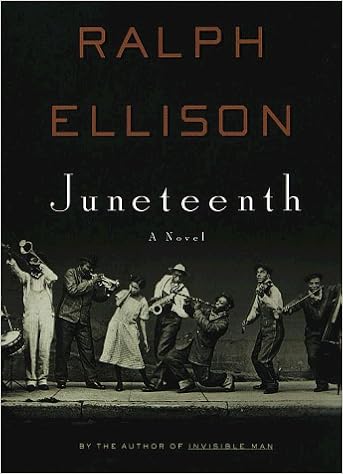
Juneteenth by Ralph Ellison - BOOK BEGINNING


It's time for Book Beginnings on Fridays! Time to share the opening sentence (or so) of the book you are featuring this week.

Post a link to your post below. Or put your book beginning in a comment. You can also participate on social media -- just leave a comment to tell us where to find you.

If you post or crosspost on social media, please use the #bookbeginnings hashtag so we can find each other.

MY BOOK BEGINNING


Two days before the shooting a chartered planeload of Southern Negroes swooped down upon the District of Columbia and attempted to see the Senator.

-- Juneteenth by Ralph Ellison.

JUNETEENTH, THE BOOK

Juneteenth is set in 1950s and is the story Adam Sunraider, a race-baiting senator from a New England state. When he is wounded in an assassination attempt, he shocks all who know him by asking for Hickman, an elderly black minister. The story unfolds that Sunraider, known as a child by the name Bliss, was raised by Reverend Hickman in a joyful black Baptist community steeped in religion an music, a community much like the one Ellison grew up in himself.

Ralph Ellison is best known for his novel Invisible Man, which won the National Book Award in 1952. He started writing Juneteenth in 1954, bit it was still incomplete at his death in 1994 and was published posthumously in 1999. His wife Fanny worked with his literary executor John Callahan to edit the book in preparation for its publication. Callahan was a friend of Ellison's, a leading scholar of his work, and my favorite college professor in my undergraduate days.

JUNETEENTH, THE HOLIDAY

Juneteenth, the holiday, is getting a lot of attention this year. So I thought Ralph Ellison's book of the same name would be a good choice to highlight on June 19, the date Juneteenth is celebrated.

Juneteenth is an unofficial national holiday and an official state holiday in Texas. It marks the date in 1865 that that the Union Army arrived in Galveston, Texas to read the official order proclaiming that slaves in Texas had been freed. President Lincoln had signed the Emancipation Proclamation almost two and a half years earlier, and the American Civil War had ended in April of 1865, but it took a long time for the news to get to Texas.

YOUR BOOK BEGINNING

Mister Linky's Magical Widgets -- Thumb-Linky widget will appear right here!
This preview will disappear when the widget is displayed on your site.
If this widget does not appear, click here to display it.

THE FRIDAY 56

Freda at Freda's Voice hosts The Friday 56 where participants share a two-sentence teaser from page 56 of their current book. Please visit her blog to link your post and find other participants.

MY FRIDAY 56
They relaxed in their chairs, the whiskey between them. Only the air-conditioning unit hummed below their voices. 
Happy Father's Day to all of you celebrating with your dads this weekend!

Related Posts Plugin for WordPress, Blogger...