Thursday, January 2, 2020

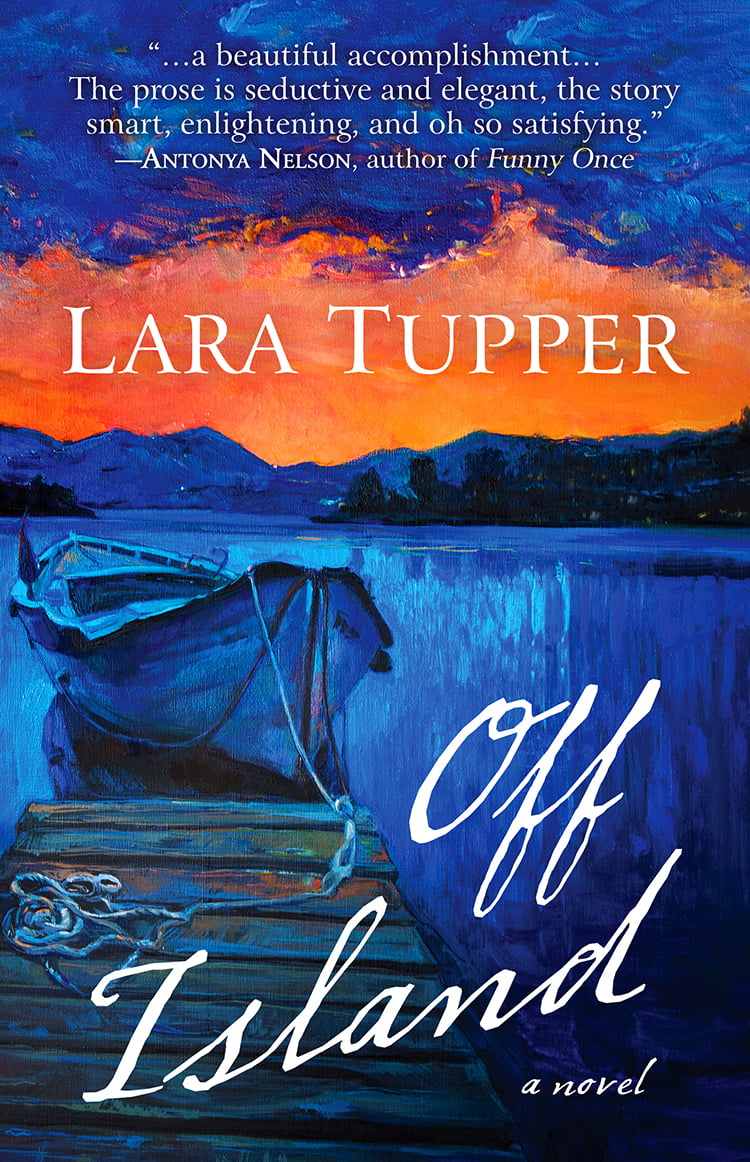
Book Beginning: Off Island by Lara Tupper

BOOK BEGINNINGS ON FRIDAYS
THANKS FOR JOINING ME ON FRIDAYS FOR BOOK BEGINNING FUN!

MY BOOK BEGINNING


The northern island looked best in morning light: slices of sheer cold rays on rugged pines and cliffs, the gray-blue sea below.

Off Island by Lara Tupper.

Tupper's new novel blends an imagined historical tale of artist Paul Gauguin living on an island off the the coast of Maine with a contemporary story of another painter who finds the art and letters Gauguin left behind.

Off Island launches January 6, 2020 and is available for pre-order from Encircle Publications.

From the publisher's description:
With wry humor and clear-eyed precision, Tupper captures the lure of the unknown, the pull of the familiar and the strangers our loved ones turn out to be. A novel of love and disappointment, duty and wanderlust, Off Island questions what it means to be loyal to one’s art, one’s family and one’s home.


Please join me every Friday to share the first sentence (or so) of the book you are reading, along with your initial thoughts about the sentence, impressions of the book, or anything else the opener inspires. Please remember to include the title of the book and the author’s name.

EARLY BIRDS & SLOWPOKES: This weekly post goes up Thursday evening for those who like to get their posts up and linked early on. But feel free to add a link all week.

SOCIAL MEDIA: If you are on Twitter, Instagram, or other social media, please post using the hash tag #BookBeginnings. I try to follow all Book Beginnings participants on whatever interweb sites you are on, so please let me know if I have missed any and I will catch up. Please find me on InstagramFacebook, and Twitter.

YOUR BOOK BEGINNING


TIE IN: The Friday 56 hosted by Freda's Voice is a natural tie in with this event and there is a lot of cross over, so many people combine the two. The idea is to post a teaser from page 56 of the book you are reading and share a link to your post. Find details and the Linky for your Friday 56 post on Freda’s Voice.


MY FRIDAY 56

The dirt road is lined with stocky pines, weak sun slanting in. In winter the dirt freezes in random stretches, making tricky planes Pete likes to crack with steel-toed boots.


2020 European Reading Challenge: WRAP UP POST PAGE

The 2020 European Reading Challenge

WRAP UP POST PAGE


January 1, 2020 to January 31, 2021

THIS IS THE PAGE FOR WRAP UP POSTS

TO LIST YOUR REVIEWS, GO TO THIS PAGE

TO SIGN UP, GO TO THE MAIN CHALLENGE PAGE, HERE,
OR CLICK THE BUTTON ABOVE

When you complete the 2020 European Reading Challenge whatever level you signed up for, please do a wrap up post and enter a link to your post here. A wrap up post can be as simple as an update of your original sign up post. Please link to your wrap up post, NOT the main page of your blog.

LINK YOUR WRAP UP POST HERE:


You can complete the challenge simply by reading one to five books (or more), each set in a different European country or written by an author from a different European country.

You do not have to review books to complete the challenge. But only books reviewed count towards the Jet Setter Prize. So if you are going for the prize, link your reviews on the review page here. Only one book per country counts towards the prize.

When I announce the prize winner, Honorable Mention will go to the participants who visited the most countries, with links to their wrap up posts. If you don't link a wrap up post, I won't be able to find you.

NO BLOG? NO PROBLEM!

You do not need a blog to participate! If you don't have a blog, be flexible about how you alert us to your wrap up. If you post on a platform that allows you to post a link here, post the link. If you post your wrap up on Instagram, Goodreads, LibraryThing, Facebook, or some other place that doesn't generate a link, just leave a comment here with a list of your books and the countries. Please name the countries as well as the book titles so I don't have to guess.

NOTE ABOUT DATES

There is overlap in January 2020 between the last month of the 2019 challenge and the first month of the 2020 challenge. If you participated both years, only count books read in January in one of the years, not both.


2020 European Reading Challenge: REVIEW PAGE

The 2020 European Reading Challenge

REVIEW PAGE


January 1, 2020 to January 31, 2021

THIS IS THE PAGE TO LIST YOUR REVIEWS.

IF YOU HAVE FINISHED, WRAP UP POSTS GO ON THIS PAGE.

TO SIGN UP, GO TO THE MAIN CHALLENGE PAGE, HERE,
OR CLICK THE BUTTON ABOVE.

LINK YOUR REVIEWS HERE

Please put your name or the name of your blog, the name of the book you reviewed, and the country of the book or author. For example: "Rose City Reader, A Gentleman in Moscow, Russia."


When you review a book for the 2020 European Reading Challenge, please add it to this list using the Linky widget above. Please link to your review post, NOT the main page of your blog.

You do not have to review books to complete the challenge. You can complete the challenge simply by reading one to five books (or more), each set in a different European country or written by an author from a different European country. If you complete the challenge, please link some kind of wrap up post (even an updated version of you original sign up post) on the wrap up page. That way, I know who finished the challenge.

But only books reviewed count towards the Jet Setter Prize. So if you are going for the prize, link your reviews here. Only one book per country counts towards the prize.

NO BLOG? NO PROBLEM!

You do not need a blog to participate! If you don't have a blog, be flexible about how you alert us to your reviews. If you post them on a platform that allows you to post a link here, post the link. If you post your reviews on Instagram, Goodreads, LibraryThing, Facebook, or some other place that doesn't generate a link, just copy your review into a comment here. That way, I can find the reviews and count them towards the Jet Setter Prize.

NOTE ABOUT DATES

There is overlap in January 2020 between the last month of the 2019 challenge and the first month of the 2020 challenge. If you participated both years, only count books read in January in one of the years, not both.


Wednesday, January 1, 2020

Review: A Place in the World by Amy Maroney


A Place in the World by Amy Maroney (2019)

A Place in the World wraps up Amy Maroney's historical fiction series about a female Renaissance artist and the modern-day art historian on her trail. The story throughout the series moves between Mira, the Renaissance artist, to her modern-day counterpart, art historian Zari Durrell. Most of the action of Mira’s story takes place in the Pyrenees, along the pilgrim’s route of Camino de Santiago.

Mira was born into dangerous circumstances and her mother named her Miramonde, "one who sees the world." Growing up, she became known as Mira and set out to fulfill the promise of her name. She makes an admirable heroine, overcoming obstacles, dangers, and heartbreak that would challenge the most formidable spirit. Zari shares the same impulsive, curious nature and strong moral compass. The dual story line works well.

The series was inspired by a 500-year-old portrait of a mysterious woman at Oxford University attributed to female artist Caterina van Hemessen. Maroney wove historical research about women artists during the Renaissance with an adventure story to shine a light on these lost artists of the 16th Century. The books also explore the technical world of art conservation, which has evolved to the point where we can see beneath layers of paint and discover truths that have been buried for centuries.

In this last book, Maroney brings Mira and Zari’s adventure to a satisfying close. Like the first two books, A Girl from Oto and Mira’s Way, A Place in the World is fast-paced and the writing seems effortless. Maroney’s Miramonde series is storytelling at its best.


NOTES

Read my Rose City Reader interview with Amy Maroney here. Amy talks about her books, female artists, and what drew her to historical fiction. She also gives a list of her favorite authors and recent favorite books.

From the Publisher's Description:

1505: Pregnant and reunited with the love of her life, artist Mira survives a harrowing journey to the city of her dreams. But Bayonne is nothing like she imagined. Navigating a dangerous world ruled by merchants and bishops, she struggles to reignite her painting career. When an old enemy rises from the shadows, Mira’s life is thrown into chaos all over again—and she is faced with a shattering decision.

2016: Scholar Zari seizes the chance to return to Europe as a consultant for an art dealer. Overwhelmed by her job, she has little time to hunt for clues about Mira. But when art experts embrace a theory that Mira’s paintings are the work of a famous man, Zari must act. Racing against time, she travels to a windswept corner of Spain. What she discovers there solves the puzzle of Mira forever—and unlocks the secrets of Zari’s own past.

A thrilling tale of obsession, mystery, and intrigue, this mesmerizing saga will stay with you long after you read the last page.


Hope for the New Year!


Over on Instagram, bookstagrammers are collecting #2020hopetitles, “book titles that reflect your hopes for 2020, whether they be personal or global.”

Mine are gathered here with my favorite cuddly throw blanket and Christmas tea mug from Dallmayr’s in Munich because one of my hopes for the new year is to spend more time curled up with a good book. But that’s always my hope for the new year and I don’t know that this coming year will be any different than years past.

Of course, with the 2020 US elections looming, the new year is gearing up to be even more acrimonious than ever. Two of my choices reflect my hopes for civility in public discourse and personal relationships. I have friends all along the political spectrum, from one end to the other, and my hope is we are all still talking by the end of the year.

The first book is Culture Counts by Roger Scruton, a series of essays defending what T. S. Eliot called “the common pursuit of true judgment.” I’m reading this now to remind me of fundamentals.

The next is Reclaiming Conversation: The Power of Talk in a Digital Age by Sherry Turkle. My hope is we could all talk more, tweet less.

Closer to home, my personal hope is that I spend more time with IRL friends in 2020, so I included Among Friends by M. F. K. Fisher.

I added these Los Angeles and San Francisco books to reflect my hopes for my job in 2020. On January 1, California opens a three-year “window” in its statute of limitations for child sexual assault that allows victims who were abused at any time in the past to bring claims against abusers or organizations. My law partner and I are filing at least 14 new sex abuse cases against the Boy Scout next week. There will be more. Many of our clients have waited many years for this law to change. My hope is that they finally get justice and accountability for the wrongs done to them as children.

And finally, I included Walk There! because I need surgery on my foot to fix a pinched nerve. Right now, walking feels like stepping on ground glass. So my hope is to get it over soon, successfully, and with a quick recovery.

How about you? What hopes do you have for the new year? Can you find book titles that reflect your hopes? Feel free to list your own titles, in a comment here, or on your own blog, Instagram, or other social media.

Monday, December 30, 2019

Review: Celibate by Maria Giura


When she was a young woman, Maria Giura fell in love with a Catholic priest. In her new memoir, Celibate, Giura writes about their complicated, angry relationship and how it led her to finally find her true calling.

In working through her history with Father Infanzi, Giura writes about how she began to appreciate that neither partner in their relationship was all right or all wrong; everyone brings emotional wounds from youth into adult relationships. Unlike what she felt at the time, Giura came to understand that she was not a victim of circumstance or even God’s will, but that she had choices.

Writing her book – and figuring out the real truth about her relationship with the priest, her mother, others close to her, even her relationship with God – helped Giura grow up and leave behind a lot of anger. Giura tells her story with guts and grace.

Recommended for readers interested in stories about personal relationships, mother/daughter relationships, faith, the Catholic Church, and Italian American families.

NOTES

Read my Rose City Reader interview with Maria Giura here. Maria talked about her book, writing, and upcoming projects. She also gave a list of her favorite contemporary and classic memoirs by women dealing with crises of faith. It's worth checking out!

Publisher's Description:
When twenty-eight-year-old Maria Giura fell in love with Catholic priest Father James Infanzi, she had no idea how needy and angry they both were nor how complicated their attraction would become.

His attention seemed to fill the void left by her fractured family, but he also seemed to be a sign for her to finally face the celibate vocation she'd been running from ever since she first felt God's call. Celibate focuses on her ten-year struggle to let go of this priest, to heal from her childhood, and to finally embrace her true calling. Fiercely honest and tender, this memoir is ultimately a story about surrender, forgiveness, and facing one's deepest needs.


Sunday, December 29, 2019

2020 CHALLENGE: The Audiobook Challenge

2020 AUDIOBOOK CHALLENGE


I'm signing up this year for the 2020 Audiobook Challenge hosted by Hot Listens and Caffeinated Reviewer. The goal is to listen to more audiobooks in 2020 than in 2019. I love audiobooks and read a lot of books with my ears. I listened to 42 audiobooks in 2019. It might be hard to top that.

I am signing up for the "My Precious" level 30+ audiobooks in 2020, with the goal of getting to at least 43 and beating my 2019 number. I don't have any in mind yet. I keep a wish list on my library account, and keep several holds going, so I often take pot luck of what hold comes up first.

My usual method of adding to my wish list or library holds is to go through all the book lists I'm working on and see what's available from my library. They add audiobooks all the time. I've gotten through a number of Must Reads and Prize Winners this way, which appeals to the list ticker in me.

BOOKS READ FOR THIS CHALLENGE

I will list my books here as I read them.

MY THOUGHTS ON AUDIOBOOKS

First, I am firmly in the camp that counts an audiobook as "reading" a book. (As long as it is an unabridged edition; but I don't count reading an abridged edition with your eyes as reading the book either.) If the words of a book go into your brain through one of your sense receptors - eyes, ears, or fingertips - that counts as reading the book, in my book.

Second, I love audiobooks. Especially now that they are available for instant download, they are so convenient! And the download versions have the nice added features of being able to back up in 15 second bits if you miss something and listen at faster speeds, which is really nice. I find 1.25 is good for most books. I listen while I fold laundry, cook, walk to work, drive, or putter around the house. I can't listen while I do anything that requires verbal thinking.

Finally, audiobooks have helped me get through several chunky classics I probably wouldn't have tackled in paper. I prefer audio books for older literature. Someone else has parsed the dense, long paragraphs and figured out the proper phrasing; the use of different voices for the characters make them more engaging; and the books are just more lively. It's like the difference between trying to read a Shakespeare play -- difficult -- and watching one performed -- enjoyable.

Saturday, December 28, 2019

2020 CHALLENGE: The Reading Classic Books Challenge

2020 READING CLASSIC BOOKS CHALLENGE

hosted by the The Broken Spine


I am signing up for the 2020 Reading Classic Books Challenge hosted by Erica at The Broken Spine.

The goal is to read more classic books. Erica isn't a stickler about her definition, although book must have been originally published more than 50 years ago. There are 12 prompts and each book can count for one or two prompts. I'm going to try to read at least six classic books for this challenge. I'm trying to make some progress on my Classics Club list in 2020 and this challenge will be a good way to do it.


CHALLENGE PROMPTS


1) Read a classic over 500 pages
2) Read a classic by a POC and/or with a POC as the main character
3) Read a classic that takes place in a country other than where you live
4) Read a classic in translation
5) Read a classic by a new to you author
6) Read a book of poetry
7) Read a classic written between 1800-1860
8) Read a classic written by an LGBT author and/or with an LGBT main character
9) Read a classic written by a woman
10) Read a classic novella
11) Read a classic nonfiction
12) Read a classic that has been banned or censored

MY BOOK POSSIBILITIES

1) over 500 pages: The Woman in White by Wilkie Collins
2) POC:
3) another country: Something to Answer For by P. H. Newby (Egypt)
4) translation: Cheri by Colette
5) new author: The Late George Apley by John Phillips Marquand
6) poetry:
7) 1800-1860:
8) LGBT: Naked Lunch by William S. Burroughs
9) woman: A Severed Head by Iris Murdoch
10) novella:
11) nonfiction: Prospero's Cell: A Guide To The Landscape And Manners of The Island Of Corfu by Lawrence Durrell
12) banned or censored:

SOCIAL MEDIA, ETC.

Goodreads @ Reading Classic Books
Twitter @Read_Classics
Instagram @Reading Classic Books
hashtag #readclassicbooks2020

THE CLASSICS CLUB

The Classics Club is an ongoing book challenge where participants pledge to read at least 50 classic books in five years. It has been going since 2012 and many participants are on their second or more lists by now. I am still working on my first CC list.

Anyone can join. The Classics Club website has lots of fun stuff for participants, like games, events, and an enormous book list if you need inspiration for "classic" books.

2019 Challenge: COMPLETED - Back to the Classics

2019 Back to the Classics
COMPLETED


I love the Back to the Classics Challenge hosted by Books and Chocolate, but I've been hit or miss with it over the years. The prompts are good and I enjoy participating, but I have failed several times to sign up in time. But I got on board in time for 2019 and I finished the six book I signed up to read!

The idea is to read six, nine, or 12 books published more than 50 years ago, one each from a list of categories. Other than being more than 50 years old, Karen at Books and Chocolate does not strictly define a “classic” book. However, she provides guidelines for each of her categories.

I signed up in 2019 at the six-book level, and ended up reading nine.

CATEGORIES AND BOOKS READ

Karen offers a prize for those who complete the challenge and review the books they read. She does a drawing for the prize and participants get one entry if they complete six books, two entries for those who complete nine books, and three entries for those who complete 12 books.

I didn't review any of the books I read for this challenge -- I haven't had much time to review books lately! So I'm just happy to have read my nine books even though I don't qualify for the drawing. Like I said, I'm a little hit or miss with this one. Oh well. Book blogging is supposed to be fun!


Friday, December 27, 2019

2020 CHALLENGE: The European Reading Challenge

MY SIGN-UP POST
for the 2020 European Reading Challenge


This is my sign-up post or the 2020 ERC. To sign up yourself (and I hope you do), go to the main page for the 2020 European Reading Challenge here, or click the picture above.

The idea is to read books set in different European countries or written by authors from different European countries. You can sign up to complete the challenge by reading one to five books, each from a different country. Of course, you can read more than five to compete for the Jet Setter Prize. Or just to visit more countries! Read all the details on the main challenge page.

I've signed up for the "FIVE STAR (DELUXE ENTOURAGE)" level to read at least five books by different European authors or books set in different European countries. This year, I decided to read five nonfiction books. My nonfiction shelves are overflowing. None get me to far-flung corners of Europe, but this year I’m determined to clear some space on my nonfiction shelves!

MY CHALLENGE BOOKS


ITALY: A Thousand Days in Venice: An Unexpected Romance by Marlena de Blasi.

FRANCE: Paris to the Past: Traveling Through French History by Train by Ina Caro.

GREECE: Prospero’s Cell: A Guide to the Landscape and Manners of the Island of Corfu by Lawrence Durrell.

U.K.: Britain by the Book: A Curious Tour of Our Literary Landscape by Oliver Tearle.

IRELAND: Country Girl: A Memoir by Edna O’Brien.


NOTE: WHAT COUNTS AS "EUROPE"? For the European Reading Challenge, we stick with the standard list of 50 sovereign states that fall (at least partially) within the geographic territory of the continent of Europe and/or enjoy membership in international European organizations such as the Council of Europe. This list includes the obvious (the UK, France, Germany, and Italy), the really huge Russia, the tiny Vatican City, and the mixed bag of Baltic, Balkan, and former Soviet states.

Albania, Andorra, Armenia, Austria, Azerbaijan, Belarus, Belgium, Bosnia and Herzegovina, Bulgaria, Croatia, Cyprus, Czech Republic, Denmark, Estonia, Finland, France, Georgia, Germany, Greece, Hungary, Iceland, Ireland, Italy, Kazakhstan, Latvia, Liechtenstein, Lithuania, Luxembourg, Malta, Moldova, Monaco, Montenegro, Netherlands, Norway, Poland, Portugal, Republic of Macedonia, Romania, Russia, San Marino, Serbia, Slovakia, Slovenia, Spain, Sweden, Switzerland, Turkey, Ukraine, United Kingdom, and Vatican City.


Thursday, December 26, 2019

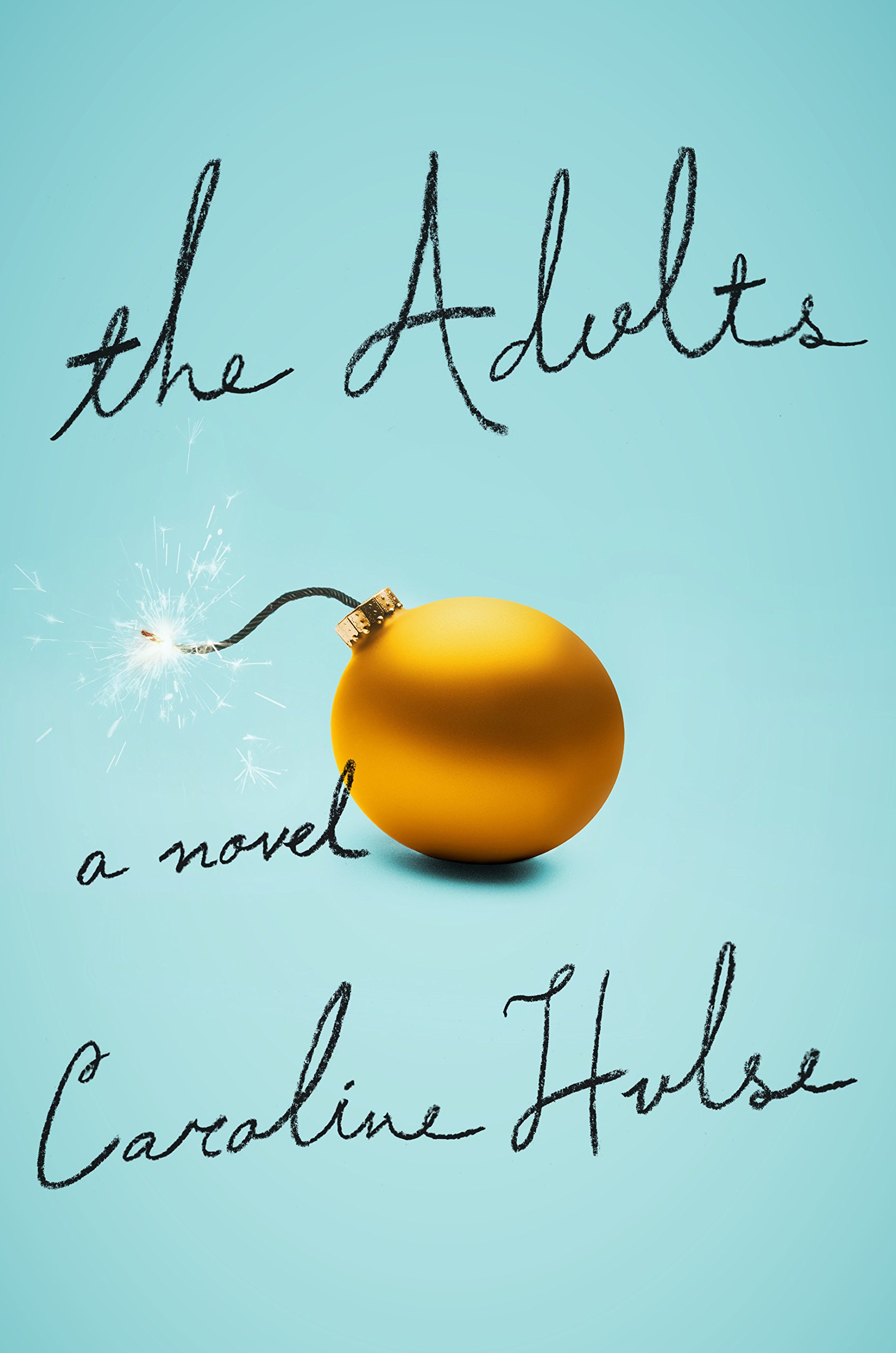
Book Beginning: The Adults by Caroline Hulse

BOOK BEGINNINGS ON FRIDAYS
THANKS FOR JOINING ME ON FRIDAYS FOR BOOK BEGINNING FUN!

MY BOOK BEGINNING


Matt had known about the trip for months before he dropped it into conversation.

The Adults by Caroline Hulse. A divorced couple convince their new partners to go on vacation together over Christmas for the good of their young daughter, who invites her imaginary friend Posey the giant purple rabbit along on the trip. Things go farcically downhill and blood is shed before the happy ending. It's a delightful holiday romp of a book.

From the publisher's description:

Claire and Matt are no longer together but decide that it would be best for their daughter, Scarlett, to have a “normal” family Christmas. They can’t agree on whose idea it was to go to the Happy Forest holiday park, or who said they should bring their new partners. But someone did—and it’s too late to pull the plug. Claire brings her new boyfriend, Patrick (never Pat), a seemingly sensible, eligible from a distance Ironman in Waiting. Matt brings the new love of his life, Alex, funny, smart, and extremely patient. Scarlett, who is seven, brings her imaginary friend Posey. He’s a giant rabbit. Together the five (or six?) of them grit their teeth over Forced Fun Activities, drink a little too much after Scarlett’s bedtime, overshare classified secrets about their pasts . . . and before you know it, their holiday is a powder keg that ends where this novel begins—with a tearful, frightened call to the police.


Please join me every Friday to share the first sentence (or so) of the book you are reading, along with your initial thoughts about the sentence, impressions of the book, or anything else the opener inspires. Please remember to include the title of the book and the author’s name.

EARLY BIRDS & SLOWPOKES: This weekly post goes up Thursday evening for those who like to get their posts up and linked early on. But feel free to add a link all week.

SOCIAL MEDIA: If you are on Twitter, Instagram, or other social media, please post using the hash tag #BookBeginnings. I try to follow all Book Beginnings participants on whatever interweb sites you are on, so please let me know if I have missed any and I will catch up. Please find me on InstagramFacebook, and Twitter.

YOUR BOOK BEGINNING


TIE IN: The Friday 56 hosted by Freda's Voice is a natural tie in with this event and there is a lot of cross over, so many people combine the two. The idea is to post a teaser from page 56 of the book you are reading and share a link to your post. Find details and the Linky for your Friday 56 post on Freda’s Voice.


MY FRIDAY 56

Sometimes he felt like Claire enjoyed the whole thing a little too much. Like Claire wanted an imaginary friend too.


Sunday, December 22, 2019

2019 Challenge: COMPLETED - 2019 European Reading Challenge

2019 European Reading Challenge

COMPLETED

MY WRAP-UP POST


This is my wrap-up post for the 2019 European Reading Challenge. 

To sign up for the 2020 challenge (and I hope you do), go to the main 2020 Challenge page here.

To post your own wrap-up post for the 2019 Challenge, go to the wrap-up post here

I've been hosting the The European Reading Challenge here on Rose City Reader since 2012. It is a tour of Europe through books. The idea is to read books by European authors or books set in European countries (no matter where the author is from).

Participants sign up to read 1 to 5 books. In addition, the person who reads and reviews books from the most countries wins a prize. There are, officially, 50 sovereign states commonly recognized as part of Europe, so someone could read 50 books for this challenge if they wanted to guarantee a shot at the prize.

I signed up in 2019 for the "Five Star (Deluxe Entourage)" level to read five books.

BOOKS I READ

I ended up visiting eight countries in 2019. As usual, I read many UK books this year, so could have picked several. Likewise, I had quite a few Irish books and French choices. The rule of the challenge is that you only count one book from each country.

The Girl from Oto by Amy Maroney (Spain)

Tatiana by Martin Cruz Smith (Russia)

The Story of the Lost Child by Elena Ferrante (Italy)

The Quiller Memorandum by Adam Hall (Germany)

The Abbess of Crewe by Muriel Spark (U.K.)

The Heart-Keeper by Françoise Sagan (France - the book was set in Hollywood, but Sagan was from France and the book was first published there, in French)

The Little Book of Lykke by Meik Wiking (Denmark)

Milkman by Anna Burns (Ireland)


2020 CHALLENGE

If you want to play along in 2020, please sign up on the main 2020 Challenge page. You do not have to have a blog to join in. Play along on Goodreads, Facebook, Instagram, Twitter, or on your own. Just leave a comment on the main challenge page to let us know you are participating and where to find you if applicable. Leave updates in comments on the review page and a wrap up in a comment on the wrap-up page.


3 Days to Christmas!


Saturday, December 21, 2019

2019 Challenge: COMPLETED - 2X19 and Mt. TBR

2X19 AND MT. TBR CHALLENGES

At the beginning of 2019, book challenge season, I posted a dual challenge for myself that I've been doing for seven years now. The goal of these two challenges is to clear some books off my TBR shelves, which is always a good idea.

I've now completed both challenges. I'm going to do similar challenges in 2020. Who else has TBR challenges lined up for the new year?

2X19: The first of my two 2019 challenges was a personal challenge I called the 2X19 Challenge and was to read 38 books off my TBR shelves. I've done the same thing since 2013 -- tried to read a "two times the year" number of books off my shelves. Of course, the challenge kept getting more difficult!

I plan to switch to one book for each year in 2020. There must be a challenge already planned for this. I've seen a few "read 20 books in 2020" challenges. Is there a "read 20 books on your TBR shelves" challenge? "TBR 20" or something?

MtTBR: The second TBR challenge I do every year is the Mt. TBR Challenge. Bev hosts this popular annual event on her blog, My Reader's Block.

I've now finished both challenges, although I will polish off at least one more and maybe another for the Mt. TBR challenge before we ring in the new year.

Happy Holidays!

2X19 CHALLENGE:
READ 38 TBR BOOKS IN 2019

COMPLETED


Because 2019 involved reading 38 books, I intentionally chose short books this year (short in pages, not height, but see below). My preference is for long, shaggy, plot-driven novels, so intentionally picking short books made me read books that have been sitting on my TBR shelves for a long, long time.

The results were mixed. There were a couple gems I am glad I finally read, like the Muriel Spark dark satire, The Abbess of Crewe and Levels of Life by Julian Barnes for the essay on grief. But a couple of the short ones I could have skipped, like the maudlin short story, Friend of My Springtime by Willa Cather.


MY 2X19 BOOKS


I took this picture last December when I planned the challenge, which explains the Christmas theme.  I read them in the order listed below: The first were New Year's resolution books; the next two I was excited to read; and the rest I read in order of height, from tallest to shortest, for no reason except I was feeling goofy. After I took the picture, I realized I had two Françoise Sagan books, so I swapped one for Wise Virgin.

A Year of Living Kindly: Choices That Will Change Your Life and the World Around You by Donna Cameron (my interview with Donna Cameron is here)

On Reading Well: Finding the Good Life through Great Books by Karen Swallow Prior

The Girl from Oto by Amy Maroney (my interview with Amy Maroney is here)

The Shame of Losing by Sarah Cannon (my interview with Sarah Cannon is here)

An Affair with a House by Bunny Williams

Mark Hampton on Decorating by Mark Hampton

The Tenth Man by Graham Greene

Friend of My Springtime by Willa Cather

Licking Flames: Tales of a Half-Assed Hussy by Diana Kirk (my interview with Diana Kirk is here)

Queen of Spades by Michael Shou-Yung Shum

Zuckerman Unbound by Philip Roth

The Last Thing He Wanted by Joan Didion

The Robineau Look by Kathleen Moore Knight

Agents and Patients by Anthony Powell

Sexing the Cherry by Jeanette Winterson

A Woman of Means by Peter Taylor

The Poorhouse Fair by John Updike

Girl, 20 by Kingsley Amis

The Murder of Roger Ackroyd by Agatha Christie

Slam by Nick Hornby

Lady Into Fox by David Garnett (James Tait Black Memorial Prize Winner)

Old Possum's Book of Practical Cats by T. S. Eliot

Henri, le Chat Noir: The Existential Musings of an Angst-Filled Cat by William Bradon

The Great Mortdecai Moustache Mystery by Kyril Bonfiglioli

The Gift of a Letter by Alexandra Stoddard

Do the Windows Open? by Julie Hecht

Dirty Friends by Morris Lurie

Something Special by Iris Murdoch

The Imitation Game by Ian McEwan

The Small Room by May Sarton

I'd Rather Be Reading: The Delights and Dilemmas of the Reading Life by Anne Bogel

Wise Virgin by A. N. Wilson

The Little Book of Lykke by Meik Wiking

The Return of the Native by Thomas Hardy

The Heart-Keeper by Françoise Sagan

The Abbess of Crewe by Muriel Spark

Levels of Life by Julian Barnes

First Love by Joyce Carol Oates


THE MT. TBR CHALLENGE:
READ A TOTAL OF 60 TBR BOOKS IN 2019

COMPLETED


Every year, I join the Mt, TBR Challenge on My Reader's Block. In 2019, I signed up for the Mr. Kilimanjaro level of 60 books. I tried this same level in 2018 and fell sort by two books. This year, I have to read 22 in addition to the 38 from my 2X19 Challenge.

I've read 61 books so far, so reached the top of Mt. Kilimanjaro and am still climbing. I will probably finish two more books before the end of the year. That won't get me to the next peak in Bev's challenge, but it will get a few more books off my shelves.

BOOKS READ

In addition to the 38 books listed above, I read:

Educated by Tara Westover

The Jewel in the Crown (The Raj Quartet, Book I) by Paul Scott

The Year of the French by Thomas Flanagan

The Day of the Scorpion (The Raj Quartet, Book II) by Paul Scott

The Towers of Silence (The Raj Quartet, Book III) by Paul Scott

A Division of Spoils (The Raj Quartet, Book IV) by Paul Scott

Staying On by Paul Scott (Booker Prize winner)

In the Woods by Tana French

Collected Poems by Kingsley Amis

A Man of Property (The Forsyte Saga, Book I) by John Galsworthy

In Chancery (The Forsyte Saga, Book II) by John Galsworthy

To Let (The Forsyte Saga, Book III) by John Galsworthy

A Short History of Tractors in Ukrainian by Marina Lewycka

The Best of Friends by Joanna Trollope

A Sight for Sore Eyes by Ruth Rendell

Lincoln in the Bardo by George Saunders

Lonesome Dove by Larry McMurtry

The Spy Who Came in from the Cold John le Carre

Set in Darkness by Ian Rankin

I'd Rather Be Reading: The Delights and Dilemmas of the Reading Life by Anne Bogel

A Cat Abroad by Peter Gethers

The Know-It-All: One Man's Humble Quest to Become the Smartest Person in the World by A. J. Jacobs

Shattered by Dick Francis

The Hunter by John Lescroart


NOTES

Updated as of December 21, 2019.

Author Interview: Dawn Newton


In her new book, Winded: A Memoir in Four Stages, Dawn Newton writes about living life to the fullest after she was diagnosed with stage IV lung cancer. Her new book is available now from Apprentice House Press.


Dawn recently talked with Rose City Reader about her book, memoir writing, her health, and mindfulness: 

How did you come to write your new memoir Winded?

I’d been a practicing writer and college instructor for years, focusing primarily on fiction. I had a handful of short story publications and an even bigger handful of rejections for a novel I’d written. Shortly after my fall semester of teaching began, I experienced a series of events that eventually lead to a cancer diagnosis. I took the winter semester off work to adjust to my treatment, and I began journaling about my days and my apprehension about my diagnosis. I think if you have writing in your bones – and I’d developed the itch early in life, arguably during elementary school – you just go to writing as your therapy or your way to understand things. Up to that point, I’d focused primarily on fiction in my life, but I’d also been a writer in more mundane ways, writing drafts of thank you notes, scripts for difficult phone calls, and instruction manuals for babysitters. I’d never been a dedicated keeper of journals, but that winter, I started writing in one journal, filled it up, started another one, and just kept going.

You write unflinchingly but with tenderness about your cancer and your struggle with depression. Was it difficult to tell such an intimate story?

I like that phrase – “unflinchingly but with tenderness.” For me, the writing or telling of the story was different from the publication of the book. I am a straightforward person and talk honestly about a lot of things in my life to close friends and family. The first-person voice telling the story in most sections of the book tumbled out easily, as if I were talking things through with family members, friends, or my psychologist. Much more challenging was the idea of publishing these personal observations and struggles. I worried a lot about revealing too much about family dynamics and intense emotions, especially because a lot of people see my calm exterior and don’t realize that I’m rather intense on the inside.

On the other hand, I’ve struggled so much with depression over the course of my life that once I was diagnosed with cancer, I felt a strong urge to come out of the closet with my depression. That idea – coming out of the closet – filled me with both relief and with some trepidation. My biggest fear: Did I whine too much? Did I not take responsibility for my actions? I am quite hard on myself, so once I told the story, I needed to perseverate about whether to publish it.

Who is your intended audience and what do you hope your readers will gain from your book?

The intended audience is anyone who has ever suffered from depression, cancer, or a chronic illness as well as individuals close to those who’ve had that experience.

In terms of what I want readers to gain, initially, I don’t think I had an agenda other than a deep need for understanding. At the most basic level, I wanted to speak to a large-scale audience with the plea for understanding of one person’s story about parenting with depression and then cancer. Now that I can step back from it a bit, I think it is also a story about economics and how difficult it is to negotiate the world if you don’t have the right tools. My mother and father didn’t know much about getting a college education because they hadn’t gotten one themselves. But when I talked about being a writer, my father kept urging my sisters and me into computers. We were living in the late seventies, and he was so prescient about what was to come with computers. Unfortunately, I wanted to write. Thus, one of the key lessons I’ve learned is about the difficulty of being or becoming an artist if you’re raised in the working class.

A second lesson I learned is that in any sort of art, only a small percentage of people are going to “make it.” Which means you need to find a reliable day job that you can have for years, so you can secure reliable health insurance as well as some sort of retirement plan. And that’s ultimately where I settle, in terms of pinpointing a message that I’d like readers to gain -- all my experiences in being an artist and just a plain citizen lead me to this bolus of frustration with health care. I don’t want to be the person who speaks the dark, disillusioning message about the world not being a fair place, but in many ways, I don’t think we’re going to get anywhere in the world of American economics if we don’t recognize that health insurance or the lack thereof traps everyone, whether it’s the General Motors employee who stays in her job for 20 years because she knows the union will negotiate to get her family (particularly offspring) the best health insurance possible, or whether we’re the family of the cancer patient who doesn’t have the insurance to get the radiation necessary for extending survival, or whether we are the family of the late-twenty or thirty-something who takes her life because she’s got depression-based neurochemistry in her brain and doesn’t have the kind of job that allows her to seek out mental health treatment. So, I want to encourage readers to stay in touch with their capacity for empathy, whenever they can, so we can support one another. And we all need to appreciate the moments whenever we can.

Some people may shy away from a “cancer memoir” because they fear it will be unbearably sad. Yours is sad, but not unbearably. Can you give a little explanation of the treatment you get and your current situation?

Thank you for asking. One of the other soapboxes I occasionally climb onto is the one about how living with metastatic cancer is not the same as being in remission. Since there is no cure for most of the metastatic cancers out there, there is no remission. You get to live longer, but you are still getting treatment, generally. I take a generic version of the original drug I started on, Tarceva. The generic is called erlotinib, and I take 100 milligrams every day. It is a tolerable drug, although it has side effects that can create complications. For example, I have the “Tarceva rash” on my face. I took a stronger antibiotic than usual in the couple of months leading up to my book launch to help clear up the rash, but after the book launch and reading was over, I went back on the milder drug, minocycline, and the rash has re-sprouted pretty intensely. Thus, I am Cinderella without the slipper and the nice dress again. Avoiding the mirror.

I was diagnosed with stage IV lung cancer because I originally had metastasis to the bones. Those spots are not currently active. However, every three months I receive CT scans to check on the lungs and bones. Every year or so, I get an MRI. The reason for the MRI is that the brain is one of the places to which lung cancer often metastasizes. I went for five years taking the daily pill before I had a significant finding on my lung scans; I then had stereotactic body radiation for a growing spot in my lungs in February of 2018. The oncologist’s goal is to keep the disease localized. But any mystery spot on my scan is fodder for more testing. I recently had to undergo a colonoscopy because of a shadow that showed up on my colon in one of my routine scans.

At present, I have a few questionable spots in my lungs, one of which appears to be growing. Even though I get a bit of a reprieve from worrying until my next appointment in February, my oncologist has already mentioned the possibility of stereotactic body radiation again early next year. It’s relatively painless, so no sweat, right? Except how many people can’t have this treatment because they don’t have the right health insurance, or any at all? And having these treatments and this worry of what’s coming next takes its toll on any type of personality, whether one has a tendency toward anxiety or depression or not. I just turned 60, and I have been telling people that with all the drugs, tests, side effects and anticipatory worries, I’m more like a 70-year old. It’s been great to have seven years on a drug that usually gives people 18 months, don’t get me wrong. But I am weary.

What did you learn from writing your book – either about the experiences you describe or the writing process – that most surprised you?

From the pure perspective of learning, I loved learning about writing memoir, and about my own limitations in working with that genre. In many ways, I probably learned how to write non-fiction essays before I learned about writing fiction. But I got a degree in writing fiction, and I spent the bulk of my early adult life studying it with various teachers and reading, reading, reading. I love writing dialogue, and although most of my fiction is quiet and not too talky, “scene” is a basic staple of writing for me in fiction.

But with non-fiction, or, in this case, memoir, I found that I avoided writing in scene, or at least the kind of scene that uses dialogue, which I refer to as “active scene.” I didn’t want to imagine dialogue from the past. I don’t judge anyone for doing do; I understand that with memoir, since so few of us can remember word for word those past discussions or arguments, we have to rely on our imaginations to fill in some of the details, preserving the basic remembered flavor or main emotion of a given scene. And yet, I found it difficult to do, especially since I wasn’t writing about the distant past but about events that were unfolding quickly.

I read a lot of memoirs, but I also read a couple of books about memoir that made me more comfortable with the sparse dialogue in my book. I learned a lot from Vivian Gornick’s The Situation and the Story, but I feel like I got “permission” to go with less dialogue from Sven Birkerts’ book, The Art of Time in Memoir: Then, Again. Like Gornick, Birkerts asserts that the memoirist “serves the spirit of the past, not the letter.” In his presentation of various memoirs and types to examine, he also discusses “lyrical seekers,” focusing on Woolf, Nabokov, and Dillard. I latched onto that label. I am not particularly poetic in my writing, but I allowed this label, “lyrical seeker” to give me permission to move away from narrative scene with dialogue to discussion or sometimes just description and imagery. Birkerts provided an appellation, and whether it’s accurate or not, I grabbed it to describe my approach and decided I didn’t have to work so much in active scenes.

What non-medical activities or resources have helped you the most since your cancer diagnosis?

One of the practices that my psychologist introduced me to as we dealt with my relentless depression is that of mindfulness breathing. I learned about it in conjunction with Acceptance and Commitment Therapy (ACT), but also as a separate approach to well-being in general. I purchased The Mindful Way Through Depression: Freeing Yourself from Chronic Unhappiness by Mark Williams, John Teasdale, Zindel Segal, and Jon Kabat-Zinn, and started using the CD that went along with it, which happened to be narrated by Jon Kabat-Zinn. I fell in love with his voice. I’d included an essay about him in my memoir which I removed when I realized it was merely a plagiarized portion of one of the CD tracks along with a joke about the seductiveness of his voice.

But truthfully, the thing about his guiding style I was most struck by is the way he works with the depressed person’s tendency to be self-critical. He emphasizes repeatedly that you can’t do mindfulness incorrectly. This kind of affirmative support is huge for the depressed person who has the tendency to feel incompetent. I’ve talked to so many people who had the same apprehension about meditation that I did: you must practice, practice, practice, and do it in this one right way. Zinn debunks that idea. And I think that’s why “mindfulness” is more appealing to me than “meditation” although they might be viewed as the same. In addition to the Zinn materials, a friend also gave me Being Well (Even When You’re Sick): Mindfulness Practices for People with Cancer and Other Serious Illnesses by Elana Rosenbaum. It’s extremely helpful. I also do yoga classes when I can, to augment the mindfulness. I sing with a church choir, and I dance around my house from time to time, usually to Motown.

Are there other memoirs, either about people with cancer or other memoirs, you recommend?

There are two significant memoirs about cancer that I have NOT read, although I will someday. I was already writing my memoir when the book When Breath Becomes Air by Paul Kalanithi came out. I didn’t want it to affect my writing, although I was obviously drawn to it. I bought it and made my husband read it, which he did for a book group discussion at his work. Then my daughter sent me "One Day," the Nina Riggs piece from The Bright Hour: A Memoir of Living and Dying in the NYT Modern Love series, saying, “Mom, this is like something you would write.” I think about Paul Kalanithi and Nina Riggs often, especially when I’m not being appreciative of my “extra time.” I read Valerie Harper’s memoir I, Rhoda just after it came out. There is only a chapter on her cancer, but I have Googled her over the years and took it hard when she passed away this year; I believe she, too, took Tarceva.

As for other memoirs, I have read several of the mainstream stories; one of the not-so-mainstream is White Matter: A Memoir of Family and Medicine by Janet Sternburg, which I found powerful and humbling, with its mental health component. My interest in depression also led me to Jill Bialosky’s History of a Suicide: My Sister’s Unfinished Life and Darin Strauss’s Half a Life. And although it is more classic nonfiction than memoir, Bryan Stevenson’s Just Mercy: A Story of Justice and Redemption reads like a memoir, and I think everyone should read it. The Argonauts by Maggie Nelson and Hunger by Roxane Gay provide pain, wisdom, and crucial reflection. I hope to read Patricia Hampl’s The Art of the Wasted Day next; I heard her speak once, and I loved her honesty.

Do you have any events coming up to promote your book?

Thank you for asking! On November 26, my 60th birthday, my family held a fabulous book launch, public reading, and birthday celebration at my church. It was one of the most memorable events of my lifetime. I was so touched and overwhelmed. In 2020, I have some readings and library events coming up in Michigan.


THANK YOU, DAWN!

WINDED IS AVAILABLE ONLINE, OR ASK YOUR LOCAL BOOK SELLER TO ORDER IT.


4 Days to Christmas!


Thursday, December 19, 2019

Book Beginning: Pelham Grenville Wodehouse: Volume 1: "This is Jolly Old Fame" by Paul Kent

BOOK BEGINNINGS ON FRIDAYS
THANKS FOR JOINING ME ON FRIDAYS FOR BOOK BEGINNING FUN!

MY BOOK BEGINNING


In 2015, three of Pelham Grenville Wodehouse's best-loved comic characters celebrated their 100th birthdays.

-- Pelham Grenville Wodehouse: Volume 1: "This is Jolly Old Fame" by Paul Kent. He was talking about Bertie Wooster (without surname in 1915), Jeeves, and Clarence Threepwood, ninth Earl of Elmswoorth. Shows you the enduring power of P. G. Wodehouse's comic genius.

I am a huge Wodehouse fan. I keep a list of Wodehouse books here on this blog and am working my way through them, sometimes in order, sometimes when I can find an audiobook at the library. I especially love Wodehouse in audiobook editions.

This is the first volume of Paul Kent's three-volume biography of Wodehouse, based in part on new access to Wodehouse's papers and library. This first volume is out in the UK. For American readers, you have to order it from the publisher, TSB an imprint of Can of Worms Enterprises, or from Book Depository.

Honoria Plum at Plumtopia has a fun review here.

From the publisher's description:
Whether you re an absolute beginner or an aficionado, Paul Kent has captured the essence of what made Wodehouse tick without spoiling all the fun; and makes a compelling case for why we owe it to our collective sanity to keep on reading him. P.G. Wodehouse 1881-1975 Humourist, Novelist, Lyricist, Playwright So reads the simple inscription on the memorial stone unveiled in London s Westminster Abbey in September 2019, honouring the greatest comic writer of the 20th century. It takes a steady hand and a steely nerve to insist that sweetness and light can prevail in a world that seems hell-bent on proving the opposite, and over 40 years after his death, Wodehouse is not just surviving but thriving all over the world. Young Indian professionals can t get enough of him; he s hugely popular in Japan; his books have been translated into more than 30 languages, from Azerbaijani to Ukrainian via Hebrew, Italian, Swedish and Chinese; and there are established Wodehouse societies in the UK, the USA, Belgium, Holland and Russia. His books are demonstrating the staying power of true classics, and are all currently in print, making him as relevant and funny - as he ever was.


Please join me every Friday to share the first sentence (or so) of the book you are reading, along with your initial thoughts about the sentence, impressions of the book, or anything else the opener inspires. Please remember to include the title of the book and the author’s name.

EARLY BIRDS & SLOWPOKES: This weekly post goes up Thursday evening for those who like to get their posts up and linked early on. But feel free to add a link all week.

SOCIAL MEDIA: If you are on Twitter, Instagram, or other social media, please post using the hash tag #BookBeginnings. I try to follow all Book Beginnings participants on whatever interweb sites you are on, so please let me know if I have missed any and I will catch up. Please find me on InstagramFacebook, and Twitter.

YOUR BOOK BEGINNING


TIE IN: The Friday 56 hosted by Freda's Voice is a natural tie in with this event and there is a lot of cross over, so many people combine the two. The idea is to post a teaser from page 56 of the book you are reading and share a link to your post. Find details and the Linky for your Friday 56 post on Freda’s Voice.


MY FRIDAY 56

“If you must kill off one of your characters”, the young sage recommended, “do it behind the scenes and let someone else tell a friend all about it”. . . . A small but telling recommendation from the future master of lightness.


6 Days to Christmas!


Related Posts Plugin for WordPress, Blogger...