Wednesday, August 7, 2019

Author Interview: Judy Nedry


Judy Nedry's latest book is a moody mystery set in the Columbia River Gorge of the Pacific Northwest. Blackthorn is a stand alone books, a break from Nedry's Emma Golden series.


Judy recently talked with Rose City Reader about her new book and other pursuits, including an event this weekend for those in the Portland area:

You describe your new book Blackthorn as a “gothic thriller.” What do you mean?

 A lonely, damaged young woman in a great house (in this case, a derelict hotel and barely functioning spa). There is the mystery of her dead brother, sinister goings on, the question of who to trust, and an aura of general creepiness. I was inspired by classic gothics like Jane Eyre and Wuthering Heights, Daphne du Maurier’s Jamaica Inn and Stephen King’s The Shining, as well as many other elements from du Maurier’s legacy of wonderful mysteries including Rebecca and My Cousin Rachel.

What part does the Columbia River Gorge setting play in your story? 

I had to write a story set in the Columbia River Gorge. I’ve known that for 40 years. To me, the Gorge is a place that is beyond beautiful, as well as mystical and moody. It’s sacred ground, with Indian fishing villages covered by The Dalles Dam and others, Indian legends of the creation of Wy’east (Mt. Hood) and the other mountains surrounding it. It is such a rich location on so many levels that I find it irresistible.

Blackthorn is a break from your Emma Golden mystery series. Why the break and will we see Emma again? 

Emma will return, chastened and a little wiser, in Book #4. The break from the series occurred because I finally had enough ammunition to write Blackthorn, both in terms of research and writing skill. I have always wanted to write a gothic. This was a huge departure for me, and I feel happy with the result.

What did you learn from writing this stand alone mystery – either about the subject of the book or the writing process – that most surprised you? 

I was surprised at how I was able to dredge up memories from my own life—rodeos, salting the birds’ tails, building forts in the woods, stuff of the senses—and apply them in meaningful ways in the story. They came to me almost effortlessly and contributed layers to Sage’s character. I was surprised that I loved writing in third person. I’ll definitely do that again, which means there will be more stand alones. I learned that Sage’s story doesn’t need to continue. I am very satisfied with where I left her in her life. And I love writing a series because I enjoy reading them.

Did you start with the end of the mystery in mind and work backwards? Or did the ending come to you as you wrote the story? 

I begin my novels with a vague idea of an ending. I know who dunnit, and that helps me stay focused and build the story to its end. However, the specifics of endings are elusive, and they are something I have struggled with in all my books. I write up to the ending, then mess around and get myself all worked up about HOW TO FINISH THE DAMN BOOK. It takes weeks sometimes. Fortunately, during that time, there is plenty to do. I’m rewriting and further developing what I’ve already written to that point, working on design issues, and all the other stuff an indie writer has to deal with. Then, finally, resolution! The ending is always the very last thing.

Who are your three (or four or five) favorite authors? Is your own writing influenced by the authors you read? 

Daphne du Maurier was one of my all-time favorites. I read everything she’s written at least twice, and reread Jamaica Inn as I was writing Blackthorn. She is with me in everything I write. Stephen King is a great storyteller. I read all his early books and short story collections and listened to It last summer. Every writer can learn just from listening to the way King builds scenes, how every detail is thought of to wring the most drama out of a situation, how the dialog works, how all his characters stay in character.

Winston Graham (Marnie, The Poldark Series) was a huge inspiration. P.D. James was a master of setting and psychology and great mysteries. Elizabeth George’s Lynley series for setting and psychology. Plus her Sgt. Barbara Havers is one of the great creations of crime fiction, and always ALWAYS is good for a long, hard laugh. Tana French—everything she’s written to date. These writers deliver literary fiction as well as fine mysteries. I loved Sue Grafton and like to think of Emma Golden as an older version of Kinsey Milhone. New-to-me mystery writers like Jane Harper, Candice Fox, and Attica Locke have been exciting discoveries.

What are you reading now? 

Charcoal Joe by Walter Mosley, another of my favorite mystery writers.

You are also doing Oregon theater reviews. Tell us about that project.

I started writing play reviews to stay sane. I wrote some for my blog, then pitched them to local theatres. It’s a love affair that began in my freshman year in college when I volunteered at the Whitman College drama department. I love being around people who are a bit edgy, so these folks feel like my tribe. Courage, talent, quirkiness, creativity, and CRAZY HARD WORK—and then, showtime. It’s magic. For me, it’s a break from fiction, a discipline, and fun.

You have a terrific website and are active on social media, like twitter and facebook. From an author's perspective, how important are social networking sites and other internet resources to promote your book?

They are all very important. An author must have a website. The one I have now allows access to my blogs, excerpts from all the novels, and a resource for purchasing signed copies of all my books, plus play reviews, and upcoming events. Facebook and twitter are fun, interactive, and a fantastic way to get the word out on short notice. A few years ago these tools didn’t exist!

Do you have any events coming up to promote your book? 

I will be at the Oregon City Festival of the Arts on August 10 from 10 a.m.-1 p.m. with all of my books. I’m part of the Northwest Independent Writers Association and will be manning their booth. It’s a great place for people to meet and visit with writers in a number of genres, so come on out. Also, on Tuesday, October 15, I will give a book talk at the Lake Oswego Public Library at 7 p.m. More to come: check my website.

What’s next? Are you working on your next book? 

I just finished five days of research in Central Oregon for a new mystery. Haven’t decided if it will be Emma #5 or a stand alone. Emma #4 is alive and well in my brain, but no words to paper yet. The ideas are marinating. It’s been a pretty intense six months due to a number of things—not the least of which launching and marketing a new book—so the plan is to regroup during the Dog Days of August and then hit the ground running in September.

THANKS JUDY!

BLACKTHORN IS AVAILABLE ONLINE OR ASK YOUR LOCAL BOOK SELLER TO ORDER IT!


Tuesday, August 6, 2019

Teaser Tuesday: Artificial Intelligence: Rise of the Lightspeed Learners by Charles Jennings


Personally, I'm less concerned in the short term about doing battle with self-controlled AIs then I am about defending against bad guys who have powerful AIs at their command, particularly Machiavellian dictators of rogue nations. Long before we have sentient, malevolent androids at the gates, dictators will be weaponizing AI for war.

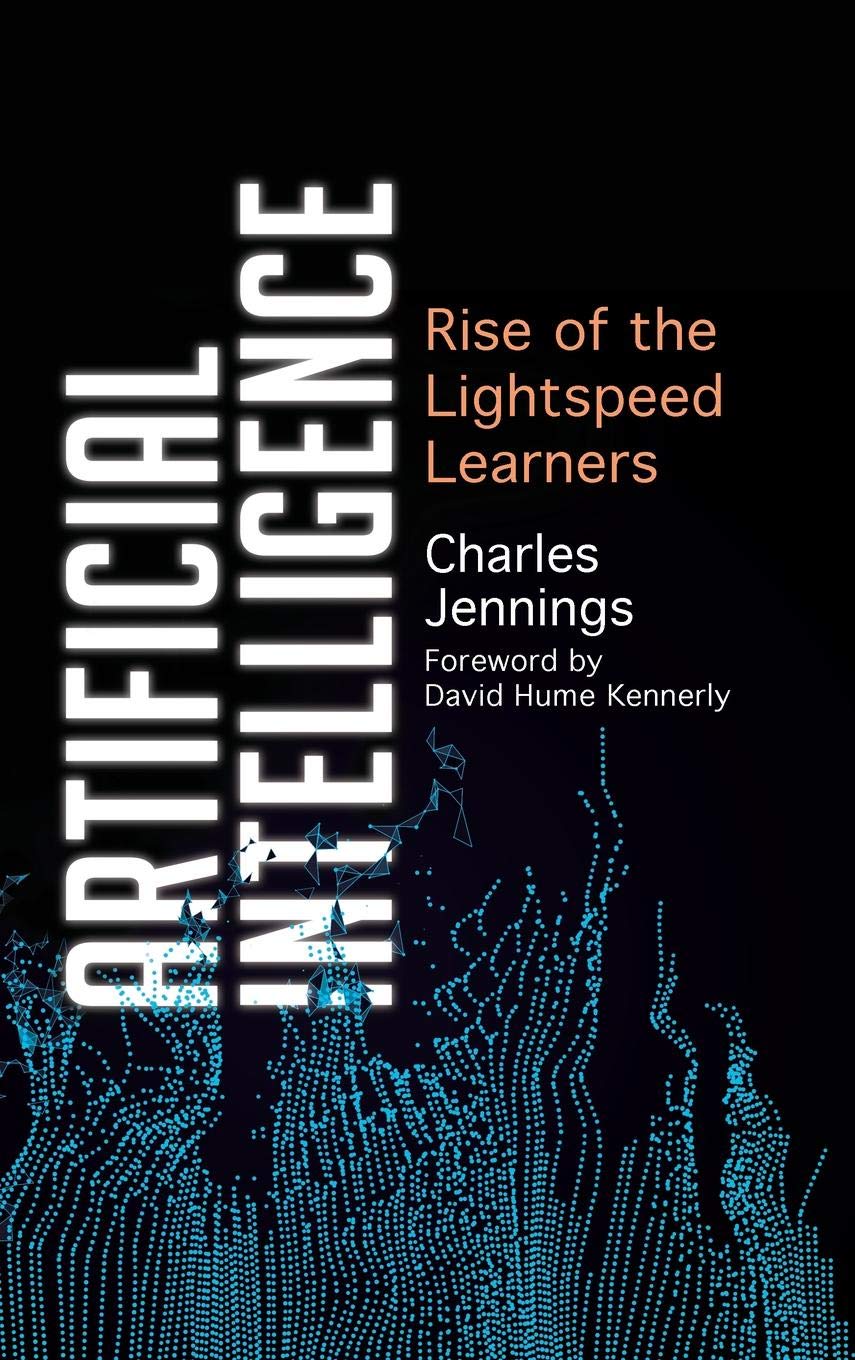
Artificial Intelligence: Rise of the Lightspeed Learners by Charles Jennings. AIs are self-learning machines with artificial intelligence. This new book about is a quick and easy primer on AI and its key issues.


Teaser Tuesdays is hosted by The Purple Booker, where you can find the official rules for this weekly event.

Monday, August 5, 2019

Mailbox Monday: Shrug by Lisa Braver Moss

I'm excited to have a sneak peek at a new novel scheduled to drop August 13.


Shrug by Lisa Braver Moss. Set during the social upheaval of 1960s Berkeley, Shrug is the story of a teenage girl's quiet rebellion against her abusive father.

What books came into your house last week?


Thanks for joining me for Mailbox Monday, a weekly "show & tell" blog event where participants share the books they acquired the week before. Visit the Mailbox Monday website to find links to all the participants' posts and read more about Books that Caught our Eye.

Mailbox Monday is graciously hosted by Leslie of Under My Apple Tree, Serena of Savvy Verse & Wit, and Martha of Reviews by Martha's Bookshelf.

Saturday, August 3, 2019

Author Interview: Charles Jennings


Entrepreneur and author Charles Jennings wants to help non-techies understand artificial intelligence (AI). His new book, Artificial Intelligence: Rise of the Lightspeed Learners is a short and fascinating introduction to how AI affects our lives today and what's in store for the future.


Charles recently talked with Rose City Reader about AI, his new book, and strategies for controlling this brave new technology.

Can you explain for those not in the field what Artificial Intelligence is and what you mean by “Lightspeed Learners”?

Artificial Intelligence, now generally known as AI, is self-learning software. Which means, basically, it has a mind of its own. (The term “artificial intelligence” emerged at a 1956 conference and stuck, but the more you discover about it, the more you realize there is nothing artificial about this intelligence.)

According to Stephen Hawking, Bill Gates, Elon Musk, Sam Harris, Internet inventor Vint Cerf and many other contemporary high-tech thinkers, AI is the most important technology in human history. Think of AIs as a new intelligent species that has just popped up in our ecosystem. Like dolphins or orangutans, only smarter.

I coined the term Lightspeed Learners to highlight what is both most unique and most important about AIs: they leverage our massively connected global infrastructure to learn very, very quickly. Today, this learning occurs inside narrow swim lanes; tomorrow, who knows?

What is your work background? How did it lead you to writing your book?

I’ve been both an entrepreneur and a writer all my life. In 1992, I started my first tech company, which in 1999 had a welcome IPO; in 2014, I started my (probably) last company, an AI startup partnered with Caltech/JPL. What I learned, 2014–17 as a CEO in the AI industry, made me want to sound alarm bells. Hence this book.

Why did you write Artificial Intelligence: Rise of the Lightspeed Learners?

First, speaking as a writer, AI is a great story. So it’s fun to write about. Second, I’m convinced that the more Americans know and understand about AI, the better. So I gave myself the challenge of explaining AI through stories, and by examining AI’s big existential questions at the level of a good Trevor Noah Show.

Who is the audience for your book?

Book readers and audiobook listeners who like good stories, are curious in general, care about the future of humanity, and are not afraid of a few basic tech terms.

What do you think is the best thing AI will bring to our future?

A deeper appreciation of what it means to be human.

What is the biggest risk AI poses for our future?

Short term, AI war. We need an International Atomic Energy Commission type treaty between U.S. and China on AI yesterday, controlling the use of AI by warfighters. Longer term—say by 2030—AIs will literally be beyond human control. The threat won’t be Skynet. It’ll be the electric grid with an AI brain who, in a crisis, takes matters into its own hands. We’ll need sophisticated international AI control strategies by 2030—which means we need to start working now!

Can you recommend additional books or resources for people who want to learn more about AI?

We’re in the midst now of a massive AI information tsunami. If you read nothing else on AI in the next year, read the first 60 pages of MIT professor Max Tegmark’s book, Life 3.0. To learn more about AI science and technology, there is no better source than any Andrew Ng video on YouTube (Stanford professor and founder of Google Brain). And Elon Musk on AI is always worth a listen.

What did you learn from writing your book that most surprised you?

Great question…easy answer. While researching the book, I came across a scientific paper signed by 51 legitimate AI scientific researchers, most working in big tech companies, asserting that the most common result of AI research is surprise. AIs doing the unexpected, solving problems well outside the box. I write about this paper extensively in Chapter 3 of my book.

What’s next for you?

I’m promoting my audiobook, which I think is better than the print version, frankly; and writing op eds and blog posts on the role of AI in society—with a special focus on the 2020 election.


THANKS CHARLES!

ARTIFICIAL INTELLIGENCE: RISE OF THE LIGHTSPEED LEARNERS IS AVAILABLE ONLINE IN PRINT, KINDLE, OR AUDIOBOOK, OR ASK YOUR LOCAL BOOK SELLER TO ORDER IT. 


Thursday, August 1, 2019

Book Beginnings: At the Narrow Waist of the World: A Memoir by Marlena Maduro Baraf

BOOK BEGINNINGS ON FRIDAYS
THANKS FOR JOINING ME ON FRIDAYS FOR BOOK BEGINNING FUN!

MY BOOK BEGINNING


In the 1950s the country of Panama was small – about 750,000 people. We lived in the capital city and knew everyone who was white and the people surrounding our lives who were darker, un café-con-leche mix tipico de Panama.

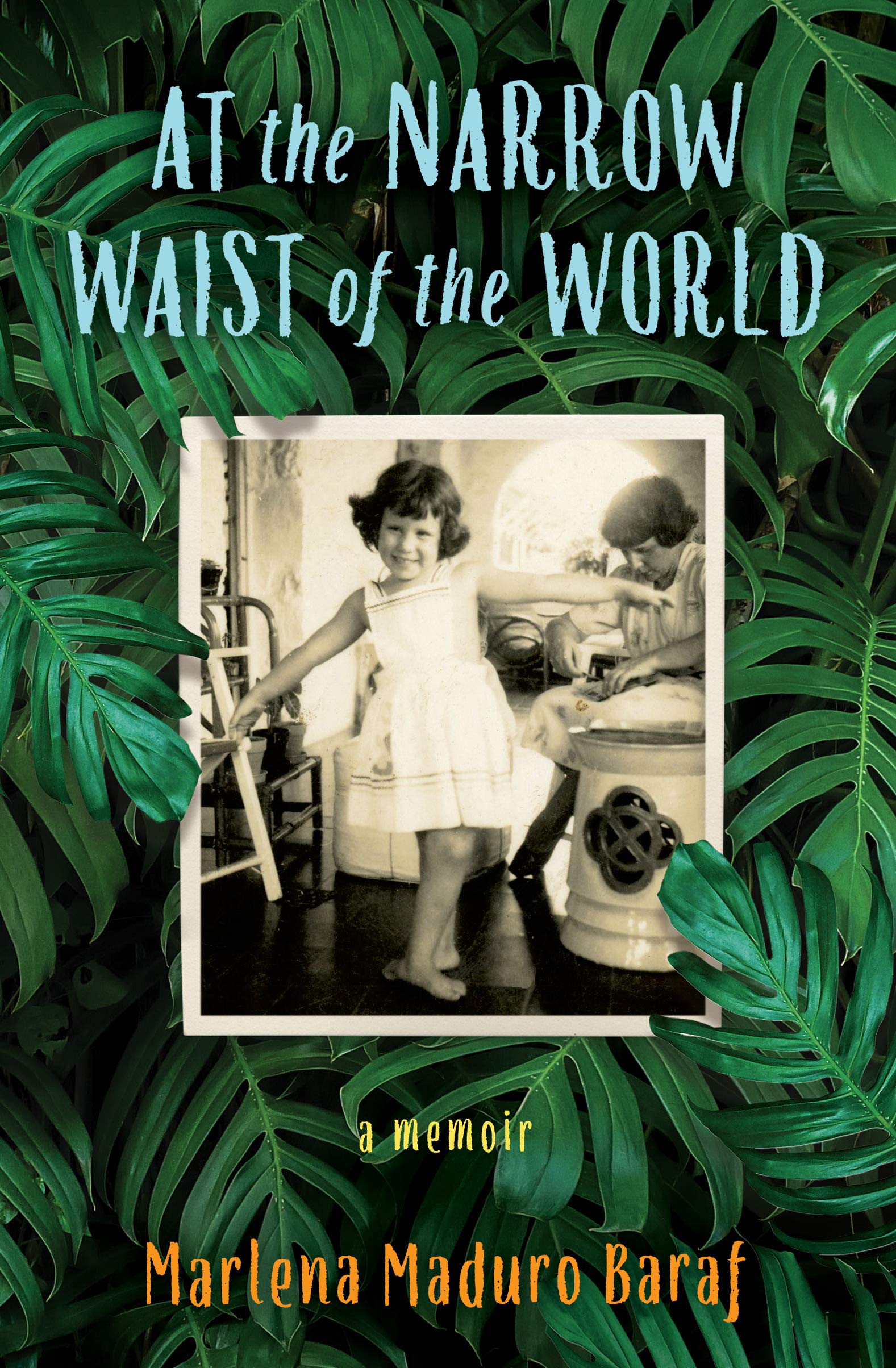
-- At the Narrow Waist of the World: A Memoir by Marlena Maduro Baraf. Marlena grew up in a large, extended Jewish family in Catholic Panama of the 1950s and 1060s, then moved to the US in her late teens.


Please join me every Friday to share the first sentence (or so) of the book you are reading, along with your initial thoughts about the sentence, impressions of the book, or anything else the opener inspires. Please remember to include the title of the book and the author’s name.

EARLY BIRDS & SLOWPOKES: This weekly post goes up Thursday evening for those who like to get their posts up and linked early on. But feel free to add a link all week.

SOCIAL MEDIA: If you are on Twitter, Instagram, or other social media, please post using the hash tag #BookBeginnings. I try to follow all Book Beginnings participants on whatever interweb sites you are on, so please let me know if I have missed any and I will catch up.

YOUR BOOK BEGINNING


TIE IN: The Friday 56 hosted by Freda's Voice is a natural tie in with this event and there is a lot of cross over, so many people combine the two. The idea is to post a teaser from page 56 of the book you are reading and share a link to your post. Find details and the Linky for your Friday 56 post on Freda’s Voice.


MY FRIDAY 56
Our sinagoga Kol Shearith Isreal is a long rectangle with stucco walls and a turret in the middle. . . . There is a minyan every Friday night, the required ten men for public worship.


Related Posts Plugin for WordPress, Blogger...