Thursday, May 7, 2020

Author Interview: Gretel Van Wieren, Listening at Lookout Creek


Gretel Van Wieren went on retreat to the Andrews Experimental Forest in Oregon’s western Cascade Mountains to reconnect with the natural world. She wanted to conduct a "spiritual experiment" to try to recapture the sense of deep connection with nature she had when growing up, but felt she had lost while living a super busy, high-tech life with kids.

She wrote about her experience and what she learned in Listening at Lookout Creek: Nature in Spiritual Practice by Gretel Van Wieren, from OSU Press.
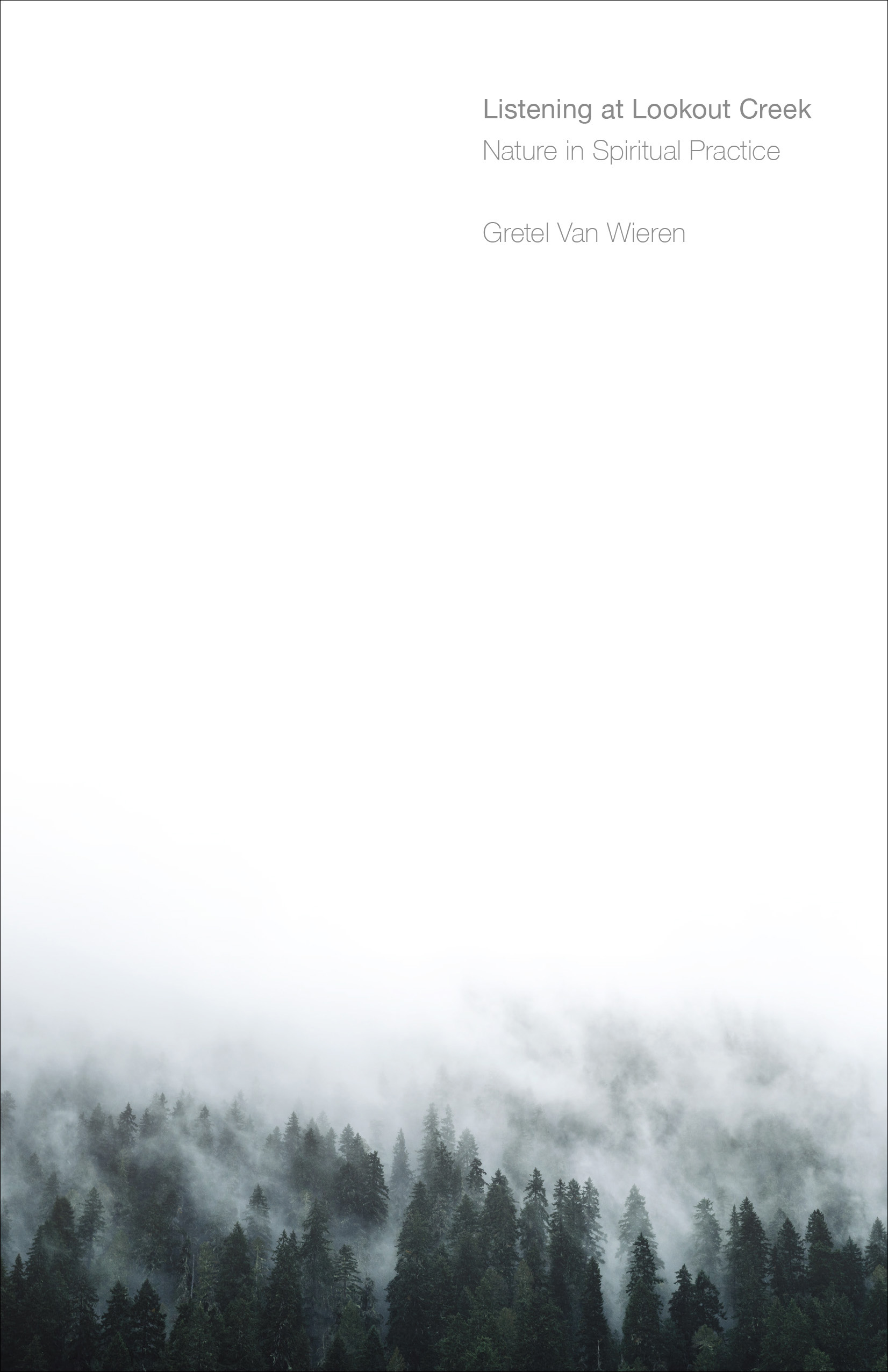


Gretel Van Wieren talked with Rose City Reader about getting kids outdoors, a spiritual connection with the natural world, and her new book, Listening at Lookout Creek:

What is your family and work background and how did it lead to writing Listening at Lookout Creek?

I grew up on west Michigan’s lakeshore where I and my three sisters spent a huge amount of time outdoors. My father is a real outdoorsman and took us along on all his activities – fishing with down riggers on Lake Michigan, wading for trout at our family cabin, hunting for morels, digging in the garden, boiling maple sap, identifying birds, collecting night crawlers, picking up roadside trash, you name it, we were out there.

It wasn’t until I was a student at Yale Divinity School that I realized just how much these experiences of nature had influenced my spiritual outlook. After I graduated, I worked as a rural parish pastor in upstate New York where many of my parishioners were dairy farmers. They often talked about the deep connections they had with the land, and even though conversations were not always the most direct, it was clear that their relationship with nature was foundational to their sense of spirituality. It was during that time that I really began to explore the world of nature mysticism, which serves as the basis for the writing of Listening at Lookout Creek.

You describe a "spiritual experiment" that inspired this book. Can you explain more about that?

I generally think of the spiritual life as a kind of ongoing investigation, an experiment, if you will, about what gives life meaning and significance. The “spiritual experiment” that served as the impetus for this book was a condensed version of that. I went into my writing residency at the H.J. Andrews Forest with a specific research question – was it possible, I wanted to know, to rekindle the sense of deep connection I had once had with the natural world, and could it be done in just ten days? The experiment also held a sense of urgency, as it was a particularly restless spiritual time in my life. To be honest, I was so over-taxed at the time with all my obligations, I developed the idea of a spiritual experiment on the plane ride from Detroit to Eugene. I actually think it was my husband, Jeff’s idea.

At the end of the ten day experiment I did feel a sense of reconnection with nature and my own self, though I also wound up discovering what most scientific experiments do – questions lead to further questions. I wondered how long my sense of spiritual connection with nature would last, and whether it was actually possible to live a life of such connection in the midst of my insanely busy, suburban, hi-tech life? I’m still not sure.

Who is the audience for your book?

I would say parents and people in general who are concerned about getting kids outdoors more and on screens less, the fishing and hunting community, and spiritual seekers. In the past month, I have been contacted about the book by the Children & Nature Network, Friends of Michigan Rivers, and The Society of Friends/Quakers in Michigan. I think that well sums up the book’s audience.

During this time of corona virus stay home orders and quarantines, are there particular lessons families can gain from your book?

Get outside as much as you can! I realize that access to the outdoors varies depending on where we live. Still, many of us are spending more time than ever outside, which is a real up-side to the pandemic, in my mind. When Listening at Lookout Creek first came out, my publisher asked me to write a listicle based on the book’s theme of connecting children with nature. It’s called “Ten Tips for Getting your Kids Outdoors.” A few tips that I have found to be especially helpful during this time are: ask your kids what they want to do outdoors; do it with them; work it into their daily study schedules; and make outside somewhere they want to be.

In general, what do you hope readers will take away from your book?

Don’t give up working to connect with the natural world, no matter how small the activities. There are a lot of articles out there right now talking about all the amazing things people are doing in and for nature. It is truly inspiring. At the same time, I find it a bit overwhelming at times. As if now that we have all this time on our hands we should be putting in giant gardens, going on marathon-long walks, learning to identify hundreds of bird species, joining environmental activist campaigns, and the list goes on. Many, if not most of us, are just trying to get by, juggling work and kids at home, paying bills, doing chores. So be generous with yourself and with your loved ones when it comes to getting outdoors during these times. And that goes for all the time. Get outside daily, for sure; but appreciate and be satisfied with the tiny moments you spend in nature and with each other.

What did you learn from writing your book – either about the subject of the book or the writing process – that most surprised you?

I think I realized just how demanding I am, too demanding I’m afraid, when it comes to spending time outdoors. I don’t think parents should necessarily shy away from forcing their children to spend time outside. But I do think, at least in my case, such a single-minded attitude can create a wedge between parents and children, particularly since most of their peers spend so much time online, and those social relationships are extremely important. I guess I would say that I learned even more what a difficult balance it is to both resist and embrace technology, especially when parenting.

In terms of the writing process, it was much more gratifying than I would have expected to work through my recollections of my own childhood experiences of nature and my experiences of nature with my own children – and then to work through them again and again when writing and rewriting about them. It really provided a source of inner renewal and strength that I had not anticipated.

Who are your favorite authors? Is your own writing influenced by the authors you read?

I have a lot of favorite authors, given how interdisciplinary my work is. In terms of those who especially influenced the writing of this book, I’d have to say Rick Bass, Todd Fleming Davis, Alison Hawthorne Deming, Jerry Dennis, Annie Dillard, Tom Montgomery Fate, Robin Kimmerer, Kathleen Dean Moore, and Scott Russell Sanders. Since I have no formal training in creative writing, their books were some of my best teachers and guides along the way.

What kind of books do you like to read? What are you reading now?

The pandemic has opened more time for reading, as we all know. For me this has meant reading fiction, which I rarely have time for during the academic year. I just finished, and loved, Delia Owens’ Where the Crawdads Sing, based on the recommendation of my two daughters, Inga and Clara. At the beginning of the quarantine, we stayed for several weeks at my childhood home, where I just chose books that looked interesting from my parents’ book shelves; I read Ann Packer’s The Dive from Clausen’s Pier and Heather Morris’ The Tattooist of Auschwitz.

I also recently finished some books of creative nonfiction that have been on my desk for a while – Jill Sisson Quinn’s Deranged: Finding a Sense of Place in the Landscape and in the Lifespan and Don Mitchell’s Flying Blind: One Man’s Battle with Buckthorn, Coming to Peace with Authority, and Creating a Home for Endangered Bats, a book I picked-up at (shout out to!) Otter Creek Used Books in Middlebury, Vermont. Currently on my shelf are Pam Houston’s Deep Creek: Finding Hope in High Country and Ann Irvine’s Trespass: Living at the Edge of the Promised Land.

And I am always reading spiritual writing, and scholarly articles and books in my field of religion and the environment. Carolyn Finney’s Black Faces, White Spaces: Reimagining the Relationship of African Americans to the Great Outdoors is one of my latest favorites.

What's next for you? What are you working on now?

I am writing a lot of poetry these days, because that feels doable with the scattered snippets of time I have. I am also working on a book on place, tentatively titled Staying Put: The Ambiguity of Place in an Age of Uncertainty. It’s a kind of follow-up to Listening at Lookout Creek, focusing on my suburban home place, rather than the wild places of the Andrews Forest and my family’s hunting cabin. I had titled the book before the pandemic, though now it feels like it rings eerily true. It’s certainly given me more to think about in terms of the meaning of place, and how that changes when we’re forced to stay somewhere.

THANKS GRETEL!

LISTENING AT LOOKOUT CREEK IS AVAILABLE ONLINE, LIKE ALL BOOKS THESE DAYS.


Monday, May 4, 2020

Mailbox Monday: Box of Books from Powell's

A box of books from Powell's Books was the highlight of my week last week! What new books came to your house?


Do any of these catch your fancy? There was a reason I picked each one:

A Crime in the Neighborhood by Suzanne Berne. Berne won the 1999 Women's Prize for Fiction (then called the Orange Prize) for this debut novel. I'm working my way through the winners of the Women's Prize.

Theory of War by Joan Brady. Brady won the Costa Book of the Year Award (then called the Whitbread BOTY Award) in 1993 for this novel about the American Civil War. I'm also reading the winners of this prize.

The Cat Who Went to Paris and The Cat Who'll Live Forever by Peter Gethers. These are for my mom and sister, who just finished Gethers's other book about Norton the Cat, A Cat Abroad.

Bamboo by William Boyd. I'm working my way through all of Boyd's books, including this collection of essays and criticism.

Powell's Books is Portland's – and the world's – largest independent bookstore. It is a book-lovers' Mecca, general tourist attraction, and the cultural heart of downtown Portland. Known as Powell's City of Books, Powell's downtown store is a labyrinth of new and used books.

Like most retail stores, Powell's has been closed for almost two months now because of coronavirus. Portlanders have rallied around our favorite shops and restaurants, including Powell's. I've been trying to buy as many books from as many local bookstores as I can, including Powell's. I ordered Easter books for my grandkids and ordered a batch of used books for myself. Powell's offers free shipping on orders over $25.

Lots of local bookstores are offering curbside pickup or even local delivery these days. If there is no local bookshop where you live, you can also order from Bookshop.org and it will find the nearest independent bookstore or your favorite book shop and that store will get a percentage of the proceeds from every order.


Mailbox Monday is  a weekly "show & tell" event to share the books you acquired the week before. Visit the Mailbox Monday website to find links to all the participants' posts and read more about Books that Caught Our Eye the prior week.

Leslie of Under My Apple Tree, Serena of Savvy Verse & Wit, and Martha of Reviews by Martha's Bookshelf host Mailbox Monday.


Saturday, May 2, 2020

List: Edgar Award Winners for Best Novel


Every year, the Mystery Writers of America award the "Edgar" Award in nine categories of mystery and crime writing, plus a handful of special awards. I'm reading through the list of winners of Edgar Award for Best Novel.

The award is named in honor of Edgar Allen Poe, born in 1809. The first Edgar Award went to Watchful at Night by Julius Fast in 1947 for Best First Novel by an American Author. The "Best Novel" Award has been around since 1954.

Although I enjoy a good mystery, there are few on this list that I have read. Why is this? There may be many clues, but I suspect foul play.

I you are also reading Edgar winners and have a related post, leave a link in a comment and I will add your link in a list at the bottom of this post.

Those I have read are in red. Those on my TBR shelf are in blue.

2020 The Stranger Diaries by Elly Griffiths

2019 House Witness by Mike Lawson

2018 Bluebird, Bluebird by Attica Locke

2017 Before the Fall by Noah Hawley

2016 Let Me Die in His Footsteps by Lori Roy

2015 Mr. Mercedes by Stephen King

2014 Ordinary Grace by William Kent Krueger

2013 Live by Night by Dennis Lehane

2012 Gone by Mo Hayder

2011 The Lock Artist by Steve Hamilton

2010 The Last Child by John Hart

2009 Blue Heaven by C. J. Box

2008 Down River by John Hart

2007 The Janissary Tree by Jason Goodwin

2006 Citizen Vince by Jess Walter (reviewed here)

2005 California Girl by T. Jefferson Parker

2004 Resurrection Men by Ian Rankin

2003 Winter and Night by S.J. Rozan

2002 Silent Joe by T. Jefferson Parker

2001 The Bottoms by Joe R. Lansdale

2000 Bones by Jan Burke

1999 Mr. White's Confession by Robert Clark

1998 Cimarron Rose by James Lee Burke

1997 The Chatham School Affair by Thomas H. Cook (reviewed here)

1996 Come to Grief by Dick Francis

1995 The Red Scream by Mary Willis Walker

1994 The Sculptress by Minette Walters

1993 Bootlegger's Daughter by Margaret Maron

1992 A Dance at the Slaughterhouse by Lawrence Block

1991 New Orleans Mourning by Julie Smith

1990 Black Cherry Blues by James Lee Burke

1989 A Cold Red Sunrise by Stuart M. Kaminsky

1988 Old Bones by Aaron Elkins

1987 A Dark-Adapted Eye by Barbara Vine

1986 The Suspect by L.R. Wright

1985 Briar Patch by Ross Thomas

1984 La Brava by Elmore Leonard

1983 Billingsgate Shoal by Rick Boyer

1982 Peregrine by William Bayer

1981 Whip Hand by Dick Francis

1980 The Rheingold Route by Arthur Maling

1979 The Eye of the Needle by Ken Follett

1978 Catch Me: Kill Me by William H. Hallahan

1977 Promised Land by Robert B. Parker

1976 Hopscotch by Brian Garfield

1975 Peter's Pence by Jon Cleary

1974 Dance Hall of the Dead by Tony Hillerman

1973 The Lingala Code by Warren Kiefer

1972 The Day of the Jackal by Frederick Forsyth

1971 The Laughing Policeman by Maj Sjowall, Per Wahloo

1970 Forfeit by Dick Francis

1969 A Case of Need by Micheal Crichton (as Jeffery Hudson)

1968 God Save the Mark by Donald E. Westlake

1967 The King of the Rainy Country by Nicolas Freeling

1966 The Quiller Memorandum by Adam Hall

1965 The Spy Who Came in from the Cold by John le Carre

1964 The Light of Day by Eric Ambler

1963 Death and the Joyful Woman by Ellis Peters

1962 Gideon's Fire by J.J. Marric

1961 The Progress of a Crime by Julian Symons

1960 The Hours Before Dawn by Celia Fremlin

1959 The Eighth Circle by Stanley Ellin

1958 Room to Swing by Ed Lacy

1957 A Dram of Poison by Charlotte Armstrong

1956 Beast in View by Margaret Millar

1955 The Long Goodbye by Raymond Chandler

1954 Beat Not the Bones by Charlotte Jay


OTHERS READING THESE BOOKS

If you would like to be listed here, please leave a comment with your links to any progress reports or reviews and I will add them.

Friday, May 1, 2020

Book Beginnings: The Tiger's Wife by Téa Obreht


It's a new month and a new start for Book Beginnings. I've also remodeled Rose City Reader, as you can see!  

The blog needed freshening up, after 12 years. So the green is gone, along with the pink trim. I wanted a nice modern, fresh look. So I painted the walls white. What do you think?

Book Beginnings is also looking different today. The "official rules" section is gone. The idea of this weekly event is easy. Post the first sentence (or so) of the book you are reading on whatever platform you like and link it below or leave a comment. Read the details here

My Book Beginning posts haven't been showing up in my google analytics and I can only think it's because the content looks too similar week to week. So no more posting the same instructions section every week. 

With explanations over, here is . . .

MY BOOK BEGINNING


The forty days of the soul begin on the morning after death.

-- The Tiger's Wife by Téa Obreht. I didn't read this when it came out about ten years ago, even though it was hugely popular. Now I love it. I'm reading it with my ears because I'm finding audiobooks easier to concentrate on these days. How about you?

One reason I didn't read this earlier is because I get The Tiger's Wife confused with Battle Hymn of the Tiger Mother by Amy Chua. That memoir about "raising children the Chinese way" sounds interesting but not something that resonates with this childless 50-something. The Tiger's Wife is a novel about a young doctor, Natalie, in an unnamed Balkan country recovering from a civil war. She is recovering from the death of her grandfather and and unraveling the mystery of his death.


YOUR BOOK BEGINNING


THE FRIDAY 56

Freda's Voice hosts The Friday 56, is a natural tie in with Book Beginnings. Find details and the Linky for your Friday 56 post on Freda’s Voice.


MY FRIDAY 56

"The story of this war – dates, names, who started it, why – that belongs to everyone. Not just the people involved in it, but the people who write newspapers, politicians thousands of miles away, people who've never even been here or heard of it before."


Wednesday, April 29, 2020

Author Interview: Billy Lombardo, Morning Will Come


Billy Lombardo is an author, editor, and writing coach. After teaching literature and creative writing for 25 years, Billy now runs a writing and editing business called Writing Pros/e. He is also the founder and managing editor of Polyphony Lit, a global literary magazine for high school writers and editors. His latest book, Morning Will Come, is the story of a marriage and family struggling with the disappearance of the oldest daughter.


Billy Lombardo talked with Rose City Reader about how a collection of stories became his novel, Morning Will Come, and some of his favorite books and authors:

How did you come to write Morning Will Come?

It began with four stories told to me by two people. I thought they were just too beautiful not to write about. By the time I had five somewhat disconnected stories written, Other Voices Books announced that they were looking to publish a collection of short stories or a novel-in-stories as their next book, and so I wrote three more stories and sent them off.

Why did you decide to tackle the almost unbearable subject of a missing child and how that tragedy affects a marriage and a family?

It wasn't a decision. As it turned out, Isabel, a character in the first story I had written, "At Khyber Pass," wasn’t present in any of the other stories in the collection.

I was in my first residency at Warren Wilson, a low-residency MFA program, and my workshop class had read an early draft of one the stories, "The White Rose of Chicago." A couple of students in the workshop didn’t know what to make of the story taking place beneath the story. The teacher, Wilton Barnhardt, stood up, gestured fluently, and said, “But what if Audrey is grieving over the death of child?”

I had written that draft without knowing what Audrey was grieving over. So when Gina Frangello, the editor at Other Voices, encouraged me to connect the stories, I realized that Isabel had to make the sacrifice for the novel. To break my heart further, I revised that first story in a way that made me fall for Isabel even more.

I didn’t realize until much later, that I wasn’t attempting to tackle the unbearable subject of the disappearance and death of a child, as much as I was trying to language my own grief by trying to understand Audrey’s.

What is your "day job"? How did it lead you to writing fiction?

I’ve recently taken an early retirement from a teaching career, so right now my day job is building a writing and editing business called Writing Pros/e. My teaching did not lead me to writing, though. I came to writing by way of doing performance poetry at The Green Mill, the birthplace of slam poetry. My work was very narrative, though, and after reading and meeting Stuart Dybek, I gave short fiction a shot, and never looked back.

Did you know right away, or have an idea, how you were going to end the story? Or did it come to you as you were in the process of writing?

I didn’t have any idea where the story would end. What I wanted was some small hope. And sharing my son’s baseball life with him had always been a great source of joy for me as a young father. Neither Audrey nor Alan knew how to language their grief and sadness in Morning Will Come, and I wasn’t sure if they’d ever get to that point. So I gave the final story to Dex, the son.

Morning Will Come is a "re-issued, re-titled, re-edited, re-beautifully jacketed version" of your 2009 novel, How to Hold a Woman. Tell us about your decision and the process of reworking your debut novel.

I had recently gotten released from the contract with the publisher of How to Hold a Woman, and was encourage to reach out to Jerry Brennan of Tortoise Books to see if he might be interested in re-issuing the book, and to my delight, he agreed to acquire it.

What did you learn from writing your book – either about the subject of the book or the writing process – that most surprised you?

I think that every time a writer sits down to the table and strives to string words together to get at the thing within, they can’t help but learn—so, in that way, I came away a better writer. More importantly, though, I think I learned something about how to use my own interior world to gain access to the interiority of my characters.

What did you enjoy most about writing this book?

Oh, there’s just such great joy in writing stories that do something, that language some universal thing in some completely singular way, that move people. The joy in this one was that I noticed my own growth as a writer.

You dedicate your book "For Mickie Flanigan, that I may live long and well enough to pay some bit of it forward." What's the story there?

She’d kill me if I said anything more.

Who are your three (or four or five) favorite authors? Is your own writing influenced by the authors you read?

I don’t think so much of authors as I think of individual works. I’d say that William Maxwell’s So Long, See You Tomorrow, was one of the most important books to me as a writer. I love Steinbeck’s Cannery Row and Salinger’s Franny & Zooey. I love Gatsby. I continue to learn from short stories by ZZ Packer and Amy Bloom, Tobias Wolff and Charles Baxter, Flannery O’Connor.

What kind of books do you like to read? What are you reading now?

Right now I’m reading a collection of stories by Lucia Berlin called A Manual for Cleaning Women. I’m also re-reading To Kill a Mockingbird for an online enrichment course I’m teaching. I grew up in a house with no books, and a consequence of that, for me, is that I really have to be deliberate about putting my butt in a chair to read. And every time I do it, it ends up to be productive.

You have a terrific website and are active on twitter, Facebook, and Instagram. From an author's perspective, how important are social networking sites and other internet resources to promote your book?

Thank you. I guess my understanding of the value of those things comes from my work as the founder and managing editor of Polyphony Lit, a student-run literary magazine and global online literary platform for young writers and editors. We’ve received submissions from high school writers in more than 70 countries, and our staff has editors from dozens of countries. That’s so wild to me. The digital world makes that all possible.

Amy Danzer, my partner and housemate, deserves all the credit for urging me to build and tend to my personal and business websites. There are certainly great authors who seem to do all right without websites and twitter handles, but it’s been good for me. I actually don’t know if it’s helped me sell any books, but it has helped me immensely with my writing and editing business, Writing Pros/e.

What’s next? What are you working on now?

I’ve got a YA novel that I’m just in love with, and I’m working on a book on the craft of fiction for apprentice writers.

Thank you, Billy!

Morning Will Come is available online, like all books these days.


Related Posts Plugin for WordPress, Blogger...