Monday, April 20, 2020

Mailbox Monday: Black Box by Gary D. Cole to Benefit CoHo Productions

Black Box by Gary D. Cole came through my front door mail slot the other day and I was pleased to see it. Book mail is particularly fun when we are staying home during this coronavirus pandemic!


Gary Cole was the co-founder of CoHo Productions, a theater company in Portland, Oregon known for 25 years co-producing exceptional theater.

Black Box is a novel set in the theater world, the story of an actress and the two men mesmerized by her charms.

Because CoHo Productions has to close during the COVID 19 crisis, Gary is donating the 100% of the proceeds of the sale of Black Box to CoHo Productions. For $25, the price of a CoHo Productions ticket, you get a paperback edition of Black Box shipped to your door. Go to the CoHo website here to buy the Black Box book or learn more.

PUBLISHER'S DESCRIPTION
Black Box is Gary’s first novel. The lead character, Ned Prince, leads an enviable life. An acclaimed young writer and heir to an ample fortune, he spends a handsome allowance playing at working. But when tragedy strikes Ned’s father, leaving a depleted estate, Ned is forced to take a real job as a theater critic in Portland. He is mesmerized by an actress who has sold herself to a financier for a stage of her own – a black box. After all off-stage attempts fail, Ned resorts to theater to avenge his father and liberate the actress. Sparks fly when an actress, a critic, and a patron form a dramatic triangle whose ambitions collide, all within the confines of the “black box” theater – an unadorned performance space enclosed by black walls. Black Box contains mature content.


Thanks for joining me for Mailbox Monday, a weekly "show & tell" blog event where participants share the books they acquired the week before. Visit the Mailbox Monday website to find links to all the participants' posts and read more about Books that Caught our Eye.

Mailbox Monday is graciously hosted by Leslie of Under My Apple Tree, Serena of Savvy Verse & Wit, and Martha of Reviews by Martha's Bookshelf.

Saturday, April 18, 2020

List: James Tait Black Prize for Fiction


The James Tait Black Prizes, established in 1919, are Britain's longest running literary awards. The Prizes for fiction and biography have been awarded since 1919; the Prize for drama was added in 2013. The James Tait Black Prizes for Fiction, Biography, and Drama are awarded by the University of Edinburgh’s School of Literatures, Languages and Cultures, established in 1762.

The two book prizes are judged by senior staff from the English Literature department at the University, assisted by a group of postgraduate students. Each prize is £10,000.

I'm working my way through the winners of the James Tait Black Prize for Fiction. Those I have read are in red. Those on my TBR shelf are in blue. If you are also working on this list, and would like your related posts linked here, please leave a comment with links and I will list them below.

2018 Crudo by Olivia Lang

2017 Attrib. and Other Stories by Eley Williams

2016 The Lesser Bohemians by Eimear McBride

2015 You Don’t Have to Live Like This by Benjamin Markovits

2014 In the Light of What We Know by Zia Haider Rahman

2013 Harvest by Jim Crace

2012 The Deadman's Pedal by Alan Warner

2011 You and Me by Padgett Powell

2010 The Lotus Eaters by Tatjana Soli

2009 The Children's Book by A. S. Byatt

2008 The Secret Scripture by Sebastian Barry (reviewed here)

2007 Our Horses in Egypt by Rosalind Belben

2006 The Road by Cormac McCarthy

2005 Saturday by Ian McEwan

2004 GB84 by David Peace

2003 Personality by Andrew O'Hagan

2002 The Corrections by Jonathon Franzen

2001 Something Like a House by Sid Smith

2000 White Teeth by Zadie Smith

1999 Renegade or Halo2 by Timothy Mo

1998 Master Georgie by Beryl Bainbridge

1997 Ingenious Pain by Andrew Miller

1996 Last Orders by Graham Swift and Justine by Alice Thompson

1995 The Prestige by Christopher Priest (reviewed here)

1994 The Folding Star by Alan Hollinghurst

1993 Crossing the River by Caryl Phillips

1992 Sacred Country by Rose Tremain

1991 Downriver by Iain Sinclair

1990 Brazzeville Beach by William Boyd (reviewed here)

1989 A Disaffection by James Kelman

1988 A Season in the West by Piers Paul Read

1987 The Golden Bird: Two Orkney Stories by George Mackay Brown

1986 Persephone by Jenny Joseph

1985 Winter Garden by Robert Edric

1984 Empire of the Sun by J. G. Ballard and Nights at the Circus by Angela Carter

1983 Allegro Postillions by Jonathan Keates

1982 On the Black Hill by Bruce Chatwin

1981 Midnight's Children (reviewed here) and The Mosquito Coast by Paul Theroux

1980 Waiting for the Barbarians by J. M. Coetzee

1979 Darkness Visible by William Golding

1978 Plumb by Maurice Gee

1977 The Honorable Schoolboy by John le Carre

1976 Doctor Copernicus by John Banville

1975 The Great Victorian Collection by Brian Moore

1974 Monsieur, or The Prince Of Darkness by Lawrence Durrell

1973 The Black Prince by Iris Murdoch

1972 G by John Berger (reviewed here)

1971 A Guest of Honour by Nadine Gordimer

1970 The Bird of Paradise by Lily Powell

1969 Eva Trout by Elizabeth Bowen

1968 The Gasteropod by Maggie Ross

1967 Jerusalem the Golden by Margaret Drabble

1966 Such by Christine Brooke-Rose and Langrishe, Go Down by Aidan Higgins

1965 The Mandelbaum Gate by Muriel Spark (reviewed here)

1964 The Ice Saints by Frank Tuohy

1963 A Slanting Light by Gerda Charles

1962 Act of Destruction by Ronald Hardy

1961 The Ha-Ha by Jennifer Dawson

1960 Imperial Caesar by Rex Warner

1959 The Devil's Advocate by Morris West

1958 The Middle Age of Mrs Eliot by Angus Wilson

1957 At Lady Molly's by Anthony Powell

1956 The Towers of Trebizond by Rose Macauley

1955 Mother and Son by Ivy Compton-Burnett

1954 The New Men and The Masters (in sequence) by C. P. Snow

1953 Troy Chimneys by Margaret Kennedy

1952 Men at Arms by Evelyn Waugh

1951 Father Goose by W. C. Chapman-Mortimer

1950 Along the Valley by Robert Henriquez (out of print)

1949 The Far Cry by Emma Smith

1948 The Heart of the Matter by Graham Greene

1947 Eustace and Hilda by L. P. Hartley

1946 Poor Man's Tapestry by G. Oliver Onions

1945 Travellers by L. A. G. Strong

1944 Young Tom by Forrest Reid

1943 Tales From Bective Bridge by Mary Lavin

1942 Monkey by Wu Ch'eng-en (translation by Arthur Whaley)

1941 A House of Children by Joyce Cary

1940 The Voyage by Charles Morgan

1939 After Many a Summer Dies the Swan by Aldous Huxley

1938 A Ship of the Line and Flying Colours by C. S. Forester

1937 Highland River by Neil M. Gunn

1936 South Riding by Winifred Holtby

1935 The Root and the Flower by L. H. Myers

1934 I, Claudius and Claudius the God by Robert Graves

1933 England, Their England by A. G. Macdonell

1932 Boomerang by Helen Simpson

1931 Without My Cloak by Kate O'Brien

1930 Miss Mole by E. H. Young

1929 The Good Companions by J. B. Priestley

1928 Memoirs of a Fox-Hunting Man by Siegfried Sassoon

1927 Portrait of Clare by Francis Brett Young

1926 Adam's Breed by Radclyffe Hall

1925 The Informer by Liam O'Flaherty

1924 A Passage to India by E. M. Forster

1923 Riceyman Steps by Arnold Bennett

1922 Lady Into Fox by David Garnett

1921 Memoirs of a Midget by Walter de la Mare

1920 The Lost Girl by D. H. Lawrence

1919 The Secret City by Hugh Walpole

NOTE

List updated on April 18, 2020.

RELATED POSTS

Please leave comments with links to related posts -- progress reports, reviews, etc. -- and I will list them here.

Thursday, April 16, 2020

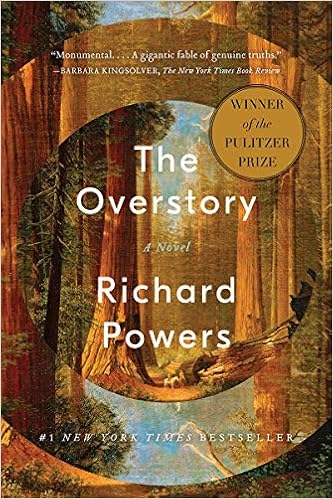
Book Beginning: The Overstory by Richard Powers

BOOK BEGINNINGS ON FRIDAYS
THANKS FOR JOINING ME ON FRIDAYS FOR BOOK BEGINNING FUN!

MY BOOK BEGINNING


Now is the time of chestnuts.

-- The Overstory by Richard Powers. I love this book so far, although I am only about four hours into a 24 hour audiobook. I heard some people complain it was dreamy and slow and I do not find it that way at all. So far, it has plenty of story enough for me. Each chapter has been like a separate short story introducing a new character. I understand from the book description that they are all going to connect in some way.

The Overstory won the 2019 Pulitzer Prize for fiction. I'm trying to read all the Pulitzer fiction winners, which is why I'm reading this, but I am glad I am.


Please join me every Friday to share the first sentence (or so) of the book you are reading, along with your initial thoughts about the sentence, impressions of the book, or anything else the opener inspires. Please remember to include the title of the book and the author’s name.

EARLY BIRDS & SLOWPOKES: This weekly post goes up Thursday evening for those who like to get their posts up and linked early on. But feel free to add a link all week.

SOCIAL MEDIA: If you are on Twitter, Instagram, or other social media, please post using the hash tag #BookBeginnings. I try to follow all Book Beginnings participants on whatever interweb sites you are on, so please let me know if I have missed any and I will catch up. Please find me on InstagramFacebook, and Twitter.

YOUR BOOK BEGINNING


TIE IN: The Friday 56 hosted by Freda's Voice is a natural tie in with this event and there is a lot of cross over, so many people combine the two. The idea is to post a teaser from page 56 of the book you are reading and share a link to your post. Find details and the Linky for your Friday 56 post on Freda’s Voice.


MY FRIDAY 56

Jean takes her brothers into the forest preserve. There, the three of them hold the service their father won't allow.


Wednesday, April 15, 2020

Author Interview: Jackie Shannon Hollis, This Particular Happiness


Jackie Shannon Hollis is a writer, storyteller, and speaker who grew up with the assumption she would get married and have kids. When she fell in love with a man who didn't want children, she had to examine her assumptions and chose a different path. Her new memoir, This Particular Happiness: A Childless Love Story (Forest Avenue Press), looks back on her happy life without children of her own.


Jackie talked with Rose City Reader about her memoir, self-discovery, and some recent favorite books:

How did you come to write your memoir This Particular Happiness?

The book started off as an essay to explore the experience of being childless when I was beyond the time of longing and the possibility had passed. I wanted to shine the light on the complex decisions around becoming a parent or not. From the outside childless people are often seen as either selfish (because they didn’t want children), or sad (because they wanted and couldn’t have children). The true experience is much more textured, and it changes over time. Many people who are childless are quiet about their experience, and people around them don’t typically ask about it. I wanted to open up the conversation.

As I worked on the essay, I realized I needed to address bigger questions. How did the way I was raised influence my choices in relationships and also in the question of whether to become a parent? How much of my longing came from external pressure and how much was my own desire? What was it about my husband’s history that made him uninterested in becoming a parent? Why was he the person I wanted to spend my life with? This led me to the bigger topic I wanted to explore, to unravel the what’s and why’s that lead us to finding our true self. And so, while I see This Particular Happiness as a book for readers interested in the decisions we make about parenthood, it is also a book for readers who want to go on a journey of self-discovery.

What is the meaning of the title?

The definition of happiness given to us by society is often a narrow band: grow up, graduate high school, go to college, career, marriage, children. But happiness is beautifully complex, and we each have our own “particular” way of being happy. The title reflects my sense of surprise at finding my happiness in a shape I didn’t expect. Looking for it to come in one form risks missing it in the form it arrives in.

The subtitle: A Childless Love Story. reflects all the kinds of loving that are woven into my story –in addition to romantic love and the love of a long-term partner, this love story explores mother and daughter, father and daughter, sisters, friendship, and the love that comes from being an aunt.
My own particular happiness is hard won, and I never take it for granted. And by “happiness” I mean being present for all the joys and pains of being alive.

You describe your book as exploring "the complicated relationship with the self through the lens of childlessness." How defining was your decision to not have children?

When I shifted from an automatic “plan” to have children, to questioning why I wanted them, and ultimately deciding I would not have them, I knew (given my generation and upbringing), that this would be a different path from the traditional and expected. The role of “mother” tends to be elevated and romanticized in our pronatalist society. People are often uncomfortable with the woman who says, with no apology, or explanation. “No, I don’t have children.” Not choosing motherhood pushed me to ask, what else? There is no lovely word to define a non-mother. All the words are about absence. So that isn’t validated externally, I had to find a way to value it in myself.

At the same time, I also never wrapped the identity of childless or childfree around myself. I am and have always been a woman who loves children and for a number of years, despite my plan not to have children, I felt the dual pull of longing to have one alongside the specific freedoms of being childfree. I think my defining identity became a woman who loves wholeheartedly. This has led to a life full of friends, family, work and travel, and more children and young people than I could ever have imagined. And a relationship with my husband Bill that has been the truest joy of my life.

Writers often follow the rule, “Write what you know.” But did you learn something about yourself from writing your memoir that you didn’t know before?

Oh yes. It would be impossible (and not very interesting) to write about a personal experience without discovering something new. In fact, I think the discovery is why most memoirists (and writers in general) write.

Perhaps one of the biggest discoveries was how I had shielded myself from the judgements of others by hiding the part of me that longed for a child. I got in touch with the sadness that I had carried in a mostly hidden pocket of myself. Similarly, as a person who survived having been raped, I understood on a deeper level than ever before how that life-threatening assault had given me a certain kind of urgency to live the fullest life.

Did you consider turning your experiences into fiction and writing your story as a novel?

I did consider this, briefly. But I think part of what is compelling about my memoir is that it is a very honest story. It seems to me that, had I shaped this as fiction, the power of the story would have been diminished. And then there would be the question always, of which parts are true and which aren’t…which I understand happens to writers who write novels inspired by their own lives. The fiction gets layered onto them anyway.

One of the great delights of book events with my memoir has been doing these with people who are part of this story. My niece, my husband, my dear friend, my cousin, each came and joined me at different events and they talked about their own stories that I had written about. For instance my cousin Patti talked about the death of her daughter at 19, which I write about from the perspective of a non-mother who loved her. My niece Annilee talked about her decision not to have biological children, but to adopt and also about the aunt/niece relationship. My friend Amy and I did an event together where we talked about the impact her becoming a mother had on our friendship and how we healed from what was a 17-year breakup. Bill and I, have done several event together talking about how we navigated as a couple through the experience of wanting very different things.

Are there other memoirs about women finding their authentic selves that you recommend?

Oh my gosh. So many books. I hate choosing because it means I will later think of another and another.

Of course, Wild by Cheryl Strayed is a wonderful example of this (a deeply honest and inspiring personal journey, both internal and external). A memoir from some time ago that I have never forgotten is A Girl Named Zippy by Haven Kimmel (oh how I loved and laughed through this book). The Telling by Zoe Zolbrod is a complex exploration of childhood incest and the impact over time. Most recently I read Carmen Maria Machado’s In the Dream House, which blew me away in the originality of the story structure as well as the power of the story itself.

I give this range of books as an example of how many ways there are to tell a personal story with the same arc, tension, devastation, and hope that can be found in fiction. And I could give so many more examples. Because women are writing with power and authenticity.

Who are your favorite authors and is your own writing influenced by the authors you read?

I cannot choose a favorite author. I read a lot and a wide range of fiction and nonfiction, in short and long form. I’ve been reading a collection of short stories Shine of the Ever by Claire Rudy Foster and I admire their writing very much. And I’ve just finished The Dutch House. Ann Patchett is a master. I plan to read this again as I go back to writing fiction because the way she unfolds story and character and helps me like EACH character in all their complexity. Well, I’d love to have one ounce of her talent. Ramiza Koya’s book, The Royal Abduls (recently released by my publisher, Forest Avenue Press), is on my mind a lot because the two narrators of the story are a childless aunt and her nephew. What a delight to see this relationship unfold as part of the story.

People who write are my favorites authors and there are many gems to be discovered. Even in work that is less than perfect, I learn something as a writer and a reader. I do find as a writer that it is a harder to get completely lost in a book because I am often paying attention to the how it is written in terms of structure, voice, and so on. A really great book makes me forget all that, and then I go back and reread to try to figure out how the author helped me get lost in the story.

You have a terrific website and are active on Facebook, twitter, and Instagram. From an author's perspective, how important are social networking sites and other internet resources to promote your book?

The important thing about all these mediums is to be yourself and make it fun to do. What I post on social media comes from my truth, and I try to have a good time doing it. If it’s not natural to me I won’t do it. That’s why I am less active on Twitter. It just goes so dang fast and people are so witty.

I’m glad to hear you like my website! For new authors especially, a good website with helpful information, and a social media presence will really help them and their book be more visible. It helps both readers and media make contact with the author or their representatives. My website has links to reviews, interviews, other stories, blog posts, and a photo gallery for folks who read the book to see pictures that mirror parts of the memoir.

It’s challenging to draw the attention of readers. Social media is important especially for authors published by indie presses. We hope news of our book gets out to the world and that people buy it. A good review from an influential publication helps. But for an indie author, that is often hard to do. So the author and the publisher spread the word in all the other ways. I am lucky to have Laura Stanfill of Forest Avenue Press championing my book.

Social media offers great resources for writing and throughout the publishing process. Writers supporting each other, indie bookstores, reading series, bloggers (like you!) and podcasts are all wonderful opportunities to connect with readers. And by the way, one of the delights of this publishing process has been the connection with readers (personal messages to me, Instagram shares, GoodReads and Amazon reviews). So readers, if you LOVE a book, let the world and the author know. It means so much to us.

What other projects are you working on?

I’m slowly finding my way back to a novel that I began some years ago. At the Wheat Line is set in rural Oregon in the 1970’s. Back then, wheat harvests were mostly done by teenagers -- boys running combine, girls driving truck. Carly Lang, the narrator, is on one of the harvest crews. She is grieving the recent death of her mother which happened under shameful circumstances and the whole town is still talking about it. A new boy joins the crew. A city boy with big ideas. Teenagers, tinder dry wheat, those big machines are all fuel for an explosive summer. The 1970’s were also a time when national agricultural policies began to favor larger corporate farms and small farmers began to feel the pressure of these changes. That time has roots in some of the current urban/rural divide and this is a backdrop of the novel.

Thank you for this interview, Gilion, and for Rose City Reader, and your support of books and authors. You are wonderful.

THANK YOU, JACKIE!

THIS PARTICULAR HAPPINESS IS AVAILABLE THROUGH MANY SELLERS ONLINE.


Tuesday, April 14, 2020

Teaser Tuesday: To the Survivors by Robert Uttaro


I was born on Holy Thursday.. . . My parents left the hospital after three days on Easter Sunday, which is celebrated by Catholics and Christians as the Resurrection of Jesus Christ, and brought me to Sunday mass. I was in a Catholic Church before I was in a home.

To the Survivors: One Man's Journey as a Rape Crisis Counselor by Robert Uttaro. That seemed like a good teaser for the week after Easter.

To the Survivors is Robert Uttaro's account of his experiences and lessons from working as a rape crisis counselor, along with essays and first hand accounts from sexual assault survivors about their experiences and healing. The stories are rough, but powerful in their honesty.

Right now, To the Survivors is available on Kindle for only $.99.

FROM THE AUTHOR'S WEB SITE:

To the Survivors is about my journey as a rape crisis counselor with true stories of sexual violence shared by survivors in their own words. Gently and beautifully constructed, To the Survivors is moving, tender, sharp, and piercingly true all at once. Readers will encounter uncensored written stories, poems, and interviews from women and men who have experienced rape and sexual assault, plus some of my stories as a counselor and educator. The survivors are diverse in age, gender, and ethnicity, yet each gives a similarity raw and heartfelt account of his or her victimization and recovery. The authenticity and vulnerability with which survivors speak resonates profoundly. But this book is not just for survivors of sexual violence. I believe anyone can benefit from the words in these pages, rape survivor or not.


Teaser Tuesdays is hosted by The Purple Booker. Participants share a two-sentence teaser from the book they are reading or featuring. Please remember to include the name of the book and the author. You can share your teaser in a comment below, or with a comment or link at the Teaser Tuesday site, where you can find the official rules for this weekly event.

Friday, April 10, 2020

Book Beginning: The Sweeney Sisters by Lian Dolan

BOOK BEGINNINGS ON FRIDAYS
THANKS FOR JOINING ME ON FRIDAYS FOR BOOK BEGINNING FUN!


MY BOOK BEGINNING


"Does this come in teal?"
Liz looked up from her computer and tried not to make any noise that would indicate her disdain.
The Sweeney Sisters launches on April 28. It’s a family comedy about three sisters gathered for their father’s wake, only to discover that their dad had a secret daughter. Lian Dolan is one of the Satellite Sisters from the popular and long-running podcast of the same name.

FROM THE AUTHOR'S WEBSITE:

With the rise of at home DNA tests, we’ve all heard stories or had our own experiences uncovering family secrets – sometimes good, maybe a little sad, and occasionally secrets that should have remained just that. In her new novel THE SWEENEY SISTERS (On Sale April 28, 2020), Lian Dolan delivers a brilliant and entertaining story about books, love, sisterhood, and what makes up a family, tapping into the zeitgeist of 23 and Me, Ancestry.com and the surprises we can discover in our DNA.

Maggie, Liza, and Tricia Sweeney grew up as a happy threesome in the idyllic seaside town of Southport, Connecticut. But their mother’s death from cancer fifteen years ago tarnished their golden-hued memories, and the sisters drifted apart. Their one touchstone is their father, Bill Sweeney, an internationally famous literary lion and college professor universally adored by critics, publishers, and book lovers. When Bill dies unexpectedly one cool June night, his shell-shocked daughters return to their childhood home. They aren’t quite sure what the future holds without their larger-than-life father, but they do know how to throw an Irish wake to honor a man of his stature.

But as guests pay their respects and reminisce, one stranger, emboldened by whiskey, has crashed the party. It turns out that she too is a Sweeney sister.


Please join me every Friday to share the first sentence (or so) of the book you are reading, along with your initial thoughts about the sentence, impressions of the book, or anything else the opener inspires. Please remember to include the title of the book and the author’s name.

EARLY BIRDS & SLOWPOKES: This weekly post goes up Thursday evening for those who like to get their posts up and linked early on. But feel free to add a link all week.

SOCIAL MEDIA: If you are on Twitter, Instagram, or other social media, please post using the hash tag #BookBeginnings. I try to follow all Book Beginnings participants on whatever interweb sites you are on, so please let me know if I have missed any and I will catch up. Please find me on InstagramFacebook, and Twitter.

YOUR BOOK BEGINNING


TIE IN: The Friday 56 hosted by Freda's Voice is a natural tie in with this event and there is a lot of cross over, so many people combine the two. The idea is to post a teaser from page 56 of the book you are reading and share a link to your post. Find details and the Linky for your Friday 56 post on Freda’s Voice.


MY FRIDAY 56

Nothing about her tempted him. As he had said to Cap once, "There's no amount of alcohol that would get me to sleep with Lois."
Hmmmmmm . . . I sense foreshadowing.

Thursday, April 9, 2020

List: French Connections


France holds allure for most readers I suppose. Paris is a world capitol. French food is the basis of fine dining. The country has a rich history and culture. Everyone who reads has probably read at least one book about France, probably several.

I don't read books in French, and have to remind myself to read translations of French literature. But I go on tears when I like to read books about, or set in, France. In anticipation of such spells, I keep a list of Frenchy books I plan to read and always have a few handy on my TBR shelf.

What I liked best about Debra Ollivier's Entre Nous: A Woman's Guide to Finding Her Inner French Girl, besides its perfect cover, were the book recommendations she salted throughout. Olliver listed specific recommendations in sidebars labeled "Le Livre" as well as book suggestions in mini-biographies of "French Girls We Love."

My list of French-themed books follows. These are books I have read or want to read. Those I had read are in rouge. Those on my TBR shelf are in bleu. Those recommended in Entre Nous are marked with an asterisk.

This is a long list, but I would still welcome suggestions! Please leave your idea in comments.

Abundance, A Novel of Marie Antoinette by Sena Jeter Naslund

Acquired Tastes by Peter Mayle

L’Affaire by Diane Johnson

An Alphabet for Gourmets by M. F. K. Fisher*

Anything Considered by Peter Mayle

Apéritif : Recipes for Simple Pleasures in the French Style by Georgeanne Brennan

Au Revoir to All That by Michael Steinberger (reviewed here)

The Autobiography of Alice B. Toklas by Gertrude Stein

Between Meals: An Appetite for Paris by A.J. Liebling*

Bistro Cooking by Patricia Wells

Birdsong by Sebastian Faulks

Bonjour Tristesse by Francoise Sagan*

Break of Day by Colette*

The Castle of Pictures and Other Stories: A Grandmother’s Tales by George Sand*

Catherine de Medici by Honoré de Balzac

Chanel: Her Style and Her Life by Janet Wallach*

Chasing Cezanne by Peter Mayle

The Cheese Plate by Max McCalman*

Cheri by Colette*

Chocolat by Joanne Harris

Claude & Camille: A Novel of Monet by Stephanie Cowell

Consider the Oyster by M. F. K. Fisher

Corked by Kathryn Borel (reviewed here)

The Count of Monte Cristo by Alexandre Dumas

The Courtesans: The Demi-Monde in Nineteenth-Century by Joanna Richardson

The Da Vinci Code by Dan Brown

Death in the Truffle Wood by Pierre Magnan

The Delta of Venus by Anais Nin*

Le Divorce by Diane Johnson

Down and Out in Paris and London by George Orwell

Earthly Paradise: Colette’s Autobiography Drawn from Her Lifetime Writings, edited by Robert Phelps*

Elle Décor: The Grand Book of French Style by Francois Baudot and Jean Demachy

The Elegance of the Hedgehog by Muriel Barbery

Encore Provence by Peter Mayle

Entre Nous: A Woman's Guide to Finding Her Inner French Girl by Debra Ollivier (reviewed here)

The Feasting Season by Nancy Coons

The Flaneur by Edmund White* (reviewed here)

The Food Lover’s Guide to Paris by Patricia Wells*

The Food of France by Waverley Root (reviewed here)

The Fragrant Year by Caire Louise Hunt*

French Lessons: Adventures with Knife, Fork, and Corkscrew by Peter Mayle

French Spirits: A House, a Village, and a Love Affair in Burgundy by Jeffry Greene

French Ways and Their Meaning by Edith Wharton*

The Gastronomical Me by M. F. K. Fisher*

Gigi by Colette*

The Glass-Blowers by Daphne Du Maurier

A Good Year by Peter Mayle

At Home in France: Eating and Entertaining with the French by Christopher Petkanas*

At Home in Provence: Recipes Inspired By Her Farmhouse In France by Patricia Wells

Hotel Pastis by Peter Mayle

How to Cook a Wolf by M. F. K. Fisher*

Inspirations from France & Italy by Betty Lou Phillips

Joan of Arc by Mark Twain

Joan of Arc: Her Story by Regine Pernoud*

The Josephine Bonaparte Collection (a three-volume fictionalized biography) by Sandra Gulland*

Josephine: The Hungry Heart by Jean-Claude Baker*

The Lais of Marie de France*

A Life in Letters: Correspondence 1929-1991 by M. F. K. Fisher

A Literary Passion by Anais Nin and Henry Miller (letters)*

Living in Provence by Dane McDowellf

The Lover by Marguerite Duras*

Madame Bovary by Gustave Flaubert*

Madame de Pompadour by Nancy Mitford*

Madame de Pompadour: Images of a Mistress by Colin Jones*

Mademoiselle Fifi and Other Short Stories by Guy de Maupassant

Marie Antoinette: The Journey by Antonia Fraser*

Le Marriage by Diane Johnson

Mastering the Art of French Cooking, Vols. I and II, by Julia Child*

Meet Me in Venice by Elizabeth Adler

Me Talk Pretty One Day by David Sedaris

Messengers of Death by Pierre Magnan

Les Miserables by Victor Hugo

A Moveable Feast by Earnest Hemingway

Murder in Belleville by Cara Black (reviewed here)

Murder in the Marais by Cara Black

Murder in the Sentier by Cara Black

My Life in France by Julia Child (reviewed here)

Nana by Emile Zola

Napoleon & Josephine: An Improbable Marriage by Evangeline Bruce*

Paris: A Love Story by Kati Marton

Paris to the Moon by Adam Gopnik

The Paris Wife by Paula McLain

The Physiology of Taste by Jean Anthelme Brillat-Savarin (translated by M.F.K. Fisher)*

A Place in the World Called Paris, edited by Steven Barclay

Postmark Paris by Leslie Jonath

The Power of Style by Annette Tapert and Diana Edkins*

Practicalities by Marguerite Duras*

Provence A - Z by Peter Mayle

Ravelstein by Saul Bellow

Remembrance of Things Paris: Sixty Years of Writing from Gourmet, edited by Ruth Reichl

The Road from the Past: Traveling through History in France by Ina Caro

Rosa Bonheur: The Artist’s (Auto) Biography by Anna Klumpke*

Saint Joan of Arc by Vita Sackville-West*

In Search of Lost Time by Marcel Proust

The Sea Wall by Marguerite Duras*

The Second Sex by Simone de Beauvoir*

Serve it Forth by M. F. K. Fisher*

She Came to Stay [L’Invitee] by Simone de Beauvoir*

Silk Roads: The Asian Adventures of Clara and Andre Malraux by Axel Madsen

Simple Passion by Annie Ernaux*

Son of Holmes by John LesCroarte

Suite Francaise by Irene Nemirovsky

The Sun Also Rises by Ernest Hemingway

A Tale of Two Cities by Charles Dickens

A Taste of Provence by Francie Jouanin

Tender Is the Night by F. Scott Fizgerald

Therese Raquin by Émile Zola (reviewed here)

The Three Musketeers by Alexandre Dumas

Toujours Provence by Peter Mayle

Tropic of Cancer by Henry Miller

Two Towns in Provence by M. F. K. Fisher*

The Vagabond by Colette

Vie De France: Sharing Food, Friendship and a Kitchen in the Lorie Valle by James Haller (reviewed here)

The Virgin Blue by Tracy Chevalier

Walks in Hemingway's Paris: A Guide To Paris For The Literary Traveler by Noel Fitch

A Well Kept Home: Household Traditions and Simple Secrets from a French Grandmother by Laura Fronly and Yves Duronson*

The Wine Bible by Karen MacNiel*

A Year in Provence by Peter Mayle


NOTES

List updated April 9, 2020.

OTHER LISTS/OTHER READERS

Boston Bibliophile's list of French favorites

If you have a similar list or are reading the books on this list, please leave a comment with links to any progress reports or reviews and I will add them here.

Wednesday, April 8, 2020

Author Interview: Benita Matofska, Generation Share


Benita Matofska is the author of Generation Share: The Change Makers Building the Sharing Economy, a new book from Policy Press. The book features stunning photographs by Sophie Sheinwald and interviews highlighting 200 case studies of the new worldwide sharing movement.


Benita talked with Rose City Reader about the sharing economy, Generation Share, and COVID-19:

What is the "sharing economy" referred to in the title of your book Generation Share: The Change-Makers Building the Sharing Economy?

The Sharing Economy is much more than a collection of new types of Silicon Valley backed ventures, it is wide-reaching and changing society as we know it. It is at once an economic system built around the sharing of human and physical resources and a mind-set. The media has presented a very narrow perspective of the Sharing Economy, one that doesn’t represent its wide reaching impact and the spectrum of sharing that is life-saving and is happening around the world. Generation Share evidences this.

I define the Sharing Economy simply: A Sharing Economy is a way of life, where we share available resources, however we can.

With the COVID-19 crisis, we are seeing how the Sharing Economy is enabling us to live and survive this pandemic. From peer-to-peer community food relief efforts, to volunteering support for essential healthcare and emergency services, to online collaborative tools or platforms enabling people to safely work from home and maintain livelihoods, the Sharing Economy is proving to be vital.

Your book is based on interviews with 200 people around the world dedicated to building a sharing economy. What was your process for finding and interviewing these people?

As a global expert and leader in the Sharing Economy since its beginnings in 2008-9, the Founder of non-profit The People Who Share and creator of Global Sharing Week, I have met many change-makers worldwide through my work in this field. The starting point for Generation Share was to draw on my global connections, networks and research conducted over the last decade. I have long been a collector of inspiring, positive stories of sharing and change-making. My process was to organize these into demographics and categories, to represent the breadth of the Sharing Economy, ensure broad coverage, a diversity of people and types of stories. For each destination visited, I identified a strong "feature story" and then contacted key organisations, social entrepreneurs, community activists and change-makers in those locations who have a focus on sharing, sustainability, community, social enterprise to unearth further stories. These organisations in turn connected me to change-makers. UnLtd India, for example, introduced me to several change-makers in their network including Ashok Rathod, our Football Sharer and Inir Pinheiro, our Village Sharer. The reality is that I uncovered a tsunami of change-making and inspiring people transforming society, many more stories than I could possibly include in the Generation Share book.

Selection was difficult and I made decisions based on the following criteria: the passion of the change-maker, the social impact of their work, how they represented a part or aspect of the Sharing Economy, whether their work propelled wider, sustainable systemic change, the potential visual impact of the story and the diversity of people, representing a broad range of demographics. For each change-maker in the book though, there are thousands of others who I could have featured. The 200 change-makers who appear are really a taster of who is out there. Each person interviewed for the book was asked a simple question: "What does Sharing mean to you?" The result is an array of different perspectives, that each make up the whole and demonstrate the broad spectrum of the Sharing Economy.

The photographs in the book capture the energy and excitement of your message. Tell us a little about Sophie Sheinwald, the photographer you collaborated with on this project, and how you came to work with her.

Several academic books have been written about the Sharing Economy and I wanted to do something different. I specifically chose to write a book that contained powerful visual messaging, in order to reach and resonate with broader audiences. I had known Sophie Sheinwald for several years both personally and professionally and saw in her work an ability to capture human emotion and the power of sharing or connection. I invited her to join me on this journey because I knew she would be able to make these incredible change-maker stories visible, in a deep, impactful, human way. The response has been extraordinary; a frequent comment from readers worldwide is that they feel they "know these people," that the stories speak directly to them and inspire change.

What is your professional background and how did it lead to your involvement in the sharing economy movement?

I had a successful 20-year career in broadcasting and journalism. I worked for BBC Radio, then television in the UK before relocating to New York for 8 years in 1995. I have always been a speaker, a storyteller, fascinated by creating positive societal change by showcasing stories of transformation and community. In 2009, I moved into the charity sector in order to help inspire positive impact on people and planet. As Head of Global Entrepreneurship for a (then existing) charity called Enterprise UK, I led a worldwide campaign inspiring young people to be entrepreneurial for the benefit of the planet and society at large. In 2010, I was invited to be a "counselor" for the One Young World Congress and had the very humbling experience of sharing a platform with world-leading human rights activist Desmond Tutu. Inspired by this experience, I realized, that although our planetary resources may be finite, our potential to share is unlimited and if we could unleash our unlimited potential to share, there is no end to what we could achieve. I pledged that my mission would be to build a worldwide movement based on the sharing of human and physical resources and campaign for a caring, sharing economy. In January 2011, I launched The People Who Share, a charity that cares for the planet and people in need by promoting and enabling the sharing of human and physical resources. Our flagship campaign is Global Sharing Week, which takes place each June and reaches and inspires over 100 million people worldwide to care for the planet and share resources with people living in hardship.

Who is your intended audience for your book?

The target audience for Generation Share is young, millennial, educated, socially conscious, English speakers. That said, the book showcases stories from 30 countries worldwide from a variety of demographics, cutting across age, financial status, urban, rural, developed, developing countries, gender and disability. The narrative, the visuals and the presentation are accessible and consequently, Generation Share is resonating with a broader audience from a variety of diverse backgrounds. In addition, given that this book is sustainably produced from 100% waste materials with each copy sold helping to educate a girl in the slums in Mumbai and plant a tree, audiences are able to ‘share’ in the positive impact created and make a difference with each purchase.

What will readers learn from your book?

Generation Share evidences the power of Sharing to save and transform lives. I believe that to change the world, we need to change the narrative. By showcasing these trailblazers and bringing their stories of positive change and activism to life through remarkable photography and first-hand interviews, readers are being inspired to create their own projects of change and know that change is possible. We all have change-maker potential and Generation Share is about unleashing this inner change-maker in order to positively impact society and the planet. Generation Share has also been dubbed "the big yellow book of hope," it’s a "dipping-in" book that readers can sample when they are in need of some hope and positivity, particularly relevant with the current COVID-19 crisis. We need connection (albeit mostly virtual) in these challenging times and I believe people are now seeing that the Sharing Economy has come of age.

Do you think there will be more interest in the sharing economy because of the COVID 19 pandemic?

Currently, we are seeing people turning to the Sharing Economy to help them through the COVID-19 pandemic. Out of necessity, people are having to come together (virtually) to help stop the spread of the virus, to support each other often with basic necessities, to reach out to those who are isolated and to help save lives. We are seeing a new kind of active, collective citizenship (sharing) emerging. From COVID-19 mutual aid groups, to community food drives, delivering food to those in quarantine or at risk, to support for vital frontline healthcare workers and virtual check-ins with family and friends. The Sharing Economy technology and platforms that have been developed over the last decade are providing lifelines across the world. From on-demand delivery services, to apps that identify surplus food and divert it to the most needy. Children and young people are benefiting from online teaching and collaborative classroom technology, remote working from home is possible, PPE is being designed and manufactured using the latest technology; pop-up hospitals are being built in under a week to answer intensive care demand; the whole economy has become reliant on cooperation, collaboration and innovative ShareTech. The Sharing Economy over the last 10 years has to a degree been a test-bed for how this pandemic is now being handled. We have seen partnerships across sectors, public, private, charity; groups of all types finding ways to work together virtually to handle the crisis. The Sharing Economy has a lot to answer for. At its heart is the desire to put people and society center stage.

Can you recommend other resources or organizations for people who want to join or learn more about the sharing economy?

The People Who Share has an online resource called The Share Guide. Albeit in need of updating, it has over 7,000 platforms, apps, sharing projects. Shareable has the largest source of online content about sharing. They have a great guide 10 Ways to Share During the COVID-19 Pandemic.

What did you learn from writing your book that most surprised you?

I learned that our collective potential to share is unlimited, world-changing and life-saving. Sharing has the potential to solve world hunger, climate change, and poverty. We have all the resources and capabilities, we just need to share. The coronavirus crisis is already demonstrating the positive impact we can have on the planet by dramatically reducing our consumption, international flights, transport etc. In a matter of weeks, we are seeing the planet breathe again; blue skies in China, fish in Venice…
I set out to discover who were the change-makers building the Sharing Economy and this is the conclusion from the book.

"This is a pan-generational, pan-geographical, pan-economic, pan-gender group. They demonstrate explicitly that Sharing knows no boundaries. Generation Share, rather than a demographic, is a mind-set, a lifestyle that we can choose to adopt. It represents a new consciousness that is emerging, an awareness that consumption doesn’t lead to happiness or wellbeing, but that through Sharing and harnessing the power of technology for good, we can create a more equal, human, happy, healthy, resource efficient, connected and sustainable economy.

What’s apparent is that Sharing is everywhere, if we look for it. It’s in our homes, our communities, our schools, our businesses, our cities, our villages. It’s within each of us, in unlimited supply. Sharing isn’t an age thing, a gender thing, a culture thing; it’s simply, a human thing. As Generation Share shows, to share is to be human."

What is the most valuable advice you’ve been given as an expert on the sharing economy?

The most valuable advice was given to me at the start of my journey over a decade ago. A fellow social entrepreneur told me to find my purpose and once I had identified that, use that to solve any problem or challenge I encountered. To this day, when faced with a challenge, I ask myself – "what difference would ‘sharing’ make to that situation / challenge?" It’s incredible how that serves me.

What else would you like people to know about your book or the sharing economy?

The production of this book is important. We deliberately sought out a brave, change-maker publisher, aligned with the values of Generation Share. Policy Press has been incredibly collaborative and has worked with us to produce a high quality, ethical product, made from 100% waste materials. Each copy sold educates a girl in the slums in Mumbai (via Aarti Naik’s Sakhi school for girls) and plants a tree (via the Eden Reforestation Project). The inks used in the book are organic and every aspect has been mindfully considered and fairly produced. The book is also designed and presented in a very accessible way, so people can easily read and connect with it.

What’s next? What are you working on now?

Right now I am working on COVID-19 Food Relief – a mass participation, emergency food campaign and call to action, to ensure that we let nobody in the UK go hungry in this crisis. The campaign is run by The People Who Share. We wanted to ensure that our most basic need is met and that anyone anywhere can help or be helped. Rather than duplicating what is already being done, we will act as an amplifier for the multitude of food projects and initiatives that are helping the most vulnerable. As The People Who Share, we will do what we do best by sharing information, ensuring a mass, collective effort to help as many people as possible survive this pandemic. Nobody should go hungry, especially not now.

I have also started a blog called Love in the Time of Corona, sharing positive stories of hope, social action and kindness at this extraordinary time. This may become a bigger project in and of itself. In terms of my public speaking all live events are obviously cancelled for now, but I’ll be doing online events, webinars and masterclasses over the coming months, focusing on change-making, inspiring positive social action and creating value for people and planet.

THANKS BENITA!

GENERATION SHARE IS AVAILABLE ONLINE IN THE US, OR IN THE UK AND ELSEWHERE.


Tuesday, April 7, 2020

Teaser Tuesday: Her Sister's Tattoo by Ellen Meeropol


Her Sister's Tattoo, Ellen Meeropol's new novel, launches today from Red Hen Press! Here's a teaser:

Waiting for Jake or Esther to answer their doorbell the next afternoon, Allen admitted to himself that he probably shouldn’t have come. He could have telephoned with the news, or even asked Rosa’s lawyer to tell them.

There's no big bash for publication day when everyone is inside and socially distancing. But that means there are online events we can all watch on Ellen's author webpage, where you can also order the book in paperback or ebook.

PUBLISHER'S DESCRIPTION
In August 1968, Rosa and Esther Cohen march through downtown Detroit protesting the war in Vietnam. The march is peaceful, but when a bloodied teenager describes a battle with mounted police a few blocks away, the sisters hurry to offer assistance. Trying to stop the violence, they instead intensify it. An officer is seriously injured. Rosa and Esther are arrested and charged with conspiracy and attempted murder.

For Rosa, their arrest offers an opportunity to make a political statement, another way to protest an unacceptable war. Esther wants to avoid prison and stay home with her infant daughter, Molly; the only way to do that is to accept a plea bargain and testify against Rosa at trial. The consequences of these actions lead one sister underground and to prison, the other to leave town to bury her past in a new life. Molly grows up unaware of her family history until she meets Rosa's daughter, her cousin Emma, at summer camp.

Told from multiple points of view and through the sisters' never-mailed letters, and bracketed by the Vietnam and Iraq wars, HER SISTER'S TATTOO explores the thorny intersection of sibling loyalty and clashing political decisions.
Read my earlier interview with Ellen Meeropol here, about her novel Kinship of Clover.


Teaser Tuesdays is hosted by The Purple Booker. Participants share a two-sentence teaser from the book they are reading or featuring. Please remember to include the name of the book and the author. You can share your teaser in a comment below, or with a comment or link at the Teaser Tuesday site, where you can find the official rules for this weekly event.

Related Posts Plugin for WordPress, Blogger...