Thursday, May 21, 2020

Book Beginnings: Burn Down this World and Her Sister's Tattoo


Please join me to share your book beginnings on Fridays and join Freda on Freda's Voice to share a teaser on The Friday 56. Read details about both events here.

I have a Book Beginnings twofer this week because these two new books share a theme. I think it is cool how they dovetail. Both are sibling stories with a past story line about Vietnam War protests and a more contemporary story line.

Reading them together is a particularly rich experience, a way to immerse yourself in the Vietnam war period by looking at the similar stories told in different ways.


It was the summer of fire, 1998. The east coast of Florida burned.

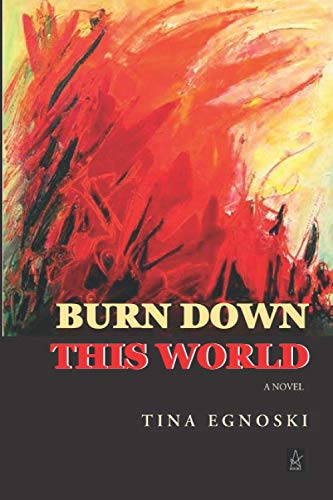
Burn Down this World by Tina Egnoski (Adelaide Books). The two stories in Burn Down this World involve a sister and brother who both protested the Vietnam war at the University of Florida but then parted ways. The other part of the story takes place during the 1998 Florida wildfires when the siblings reconnect and try to reconcile -- with each other and their past.


The August air was charged with whiffs of marijuana and patchouli oil, the sulfur stench of asphalt softening in the heat, and the distant admonition of tear gas.

Her Sister's Tattoo by Ellen Meeropol (Red Hen Press). Egnoski uses a "braided narrative" format, going back and forth between events in 1972 and 1998. Meeropol moves chronologically, starting with two sisters joining in anti-war protests in Detroit in 1968, following events through 1980, then jumping to a final section set in 2003.

YOUR BOOK BEGINNING

Mister Linky's Magical Widgets -- Thumb-Linky widget will appear right here!
This preview will disappear when the widget is displayed on your site.
If this widget does not appear, click here to display it.


MY FRIDAY 56

From Burn Down this World:

Dad came into the kitchen. He was in his uniform, ready to leave for work.

From Her Sister's Tattoo:

Under the table, he rested his hand on Rosa's thigh. "Conspiracy is what they charge when they really want to nail you big time."


Wednesday, May 20, 2020

Review: Generation Share: The Change Makers Building the Sharing Economy by Benita Matofska and Sophie Sheinwald


The "sharing economy" is an economic system built around sharing human and physical resources. Author and sharing economy advocate Benita Matofska also sees the sharing economy as a mind set and a way of life, where we share available resources, however we can. Her book, Generation Share: The Change Makers Building the Sharing Economy, features stunning photographs by Sophie Sheinwald and interviews highlighting 200 case studies of an emerging, worldwide sharing movement.

The book is a collection of inspiring, positive stories of sharing and change-making. Participants were asked simply, "What does Sharing mean to you?" The result is an array of perspectives that demonstrate a broad spectrum of the sharing economy. Matofska organized the stories into different demographic categories: age, gender, urban, rural, economic, cultural, disability, and geography. The stories come from 30 countries and cover a variety of sharing initiatives.

Some examples of the stories are:
  • A Share Shed in Devon, UK where people can check out tools and equipment like borrowing a book from a library.
  • A kibbutz in Israel where 350 people live communally.
  • A tour company in India that specializes in organizing trips to rural villages so urban and rural Indians can share each other's cultures.
  • A woman who started an online sharing platform to help people find sharing opportunities.

Matofska's target audience for Generation Share was young, millennial, educated, socially conscious, English speakers. But with its striking visuals and compelling stories, the book has broad appeal for anyone interested in learning more about the sharing economy.

The book is produced from 100% waste materials. Proceeds from the sale of each copy of Generation Share go to help educate girls in Mumbai and to plant trees, so readers "share" with each purchase.


NOTES

Benita Matofska talked with Rose City Reader about the sharing economy, Generation Share, and COVID-19. Read the interview here.


Tuesday, May 19, 2020

Author Interview: Stanley Flink, Due Diligence and the News


Stanley E. Flink had a long career in journalism before teaching "Ethics and the Media" to journalism students for over 25 years. His new book Due Diligence and the News: Searching for a Moral Compass in the Digital Age is a collection of essays drawn from his lectures. The book is timely, readable, and captivating for any newshound, whether journalist or news junky.


Stanley Flink talked with Rose City Reader about Due Diligence and the News, social media, journalism, and ethics:

How did your book, Due Diligence and the News, come about?

After teaching a seminar called “Ethics and the Media” for more than 25 years, beginning at New York University Journalism School and then for many years a Yale undergraduate course, I encountered a great paucity of knowledge about American history---particularly in the Constitutional rights area. For example, after engaging with hundreds of students, it was clear that only a handful knew how many rights there were in the First Amendment. Even the brightest young people were unable to describe the major Supreme Court cases involving freedom of the press. There were exceptions, of course, but very few.

When I retired and came to the lifecare institution I live in now, they asked me to adapt my seminar for the people who were my friends and neighbors. I did so with some reluctance because I didn’t believe there would be much interest. I began lecturing once a week and did so for about a year before settling on every other week. (Let’s face it, I am, after all, retired.) In any event, what emerged was a great deal of interest and remarkable attentiveness. Forty to fifty people showed up for more than four years of these lectures, and many of them wanted to discuss the ideas in separate meetings. 

That’s when I decided to write the book. I wanted it to be a kind of portrait of freedom of expression that covered history, legal conflicts, technology, and the future. I selected what I believed to be the most important events, issues, and key figures in the evolution of free expression in America. Surely there are other sources and examples, but I am content with my selections. I hope these essays, taken together, will provoke a greater interest among the readers in the importance of free expression, and at least a useful understanding of how that presence developed in our democratic system.

What is your work background and how did it lead to your writing essays on the relationship between the press and American civic life?

My background is largely in the field of journalism. I was the editor of my high school newspaper, and in college I was a columnist. Towards the end of World War II I spent a little time working for Yank magazine, and immediately after graduation, in 1948, I went to work for Life magazine. When television news matured and began to assume a major role, I joined NBC News and later CBS. 

Throughout my experience in each of these places, I became increasingly aware of the ethical issues that inevitably arise in reporting the news. I talked about it a lot with my colleagues and read many of the books that were being published each year on the subject of a responsible press. I wrote one of those books myself, called Sentinel Under Siege, which was published in 1999. Before that, in the 1980s, I had been asked to teach a seminar at NYU Journalism School (mentioned earlier). That was the beginning of an interesting focus ever since.

Who is the audience for your book?

I envisioned high school seniors and college freshmen, but I’ve been surprised at how many people of all ages have written me about the book.

What do you hope people will learn or think about when they read your book?

I hope they will become sharply aware of the significant role that a free and responsible press has in our society. I would also hope they will think more urgently about truth and trust in a democracy. The technology has changed the environment in which information and news are conveyed so fundamentally that journalism has to devise new methods and styles of expression.

How do you see social media changing traditional media when it comes to delivering and consumption of straight news?

I see social media as a great threat to the respect for truth. I chose the title Due Diligence and the News because I realized that there was no easy formula for combating the effects of falsity and deliberate fabrication that can manifest themselves on social media platforms, except the careful weighing of fact-based evidence that we call “due diligence.” The enormous size of the circulations of social media on various platforms, and their ability to target audiences, provides limitless opportunities for deception and manipulation. There is no way to identify carefully constructed falsification and distortion of news material except by the most thorough research and comparison and fact-checking.

The major platforms like Facebook can reach millions of people repetitively and insidiously overnight. Obviously, they influence all kinds of activities including voting patterns. The problem in finding a remedy to fight deliberate falsification and distortion is to avoid limiting freedom of expression in the process. I came to the conclusion that there has to be a reevaluation of the First Amendment which will produce some discipline over deliberate misuse of a free press. The damage that can be done by these massive circulations online---often politically targeted---is so great that the means of preventing or managing their use becomes essential.

This dilemma may require legislative and regulatory innovations, but if it is left to the voluntary actions of the corporations that own the platforms, I fear profit will overwhelm principle. Confronting this problem is probably the most difficult and significant challenge the modern news media faces. Public affairs news reporting is vital to the survival of democracy and cannot be left, in my view, to vague assurances of voluntary action.

 I do believe that the two most important factors beyond corporate control, are due diligence and education. Quite a few states have already mandated public school curriculums to include courses in “media literacy.” These programs examine and help to reveal the issues of falsification and misuse. They are reportedly doing well and deserve our support. Education in general deserves our support. There remains the reality that no matter what actions are taken, people who want to use the news media to serve their special interests will find ways that may escape detection. The question then becomes for how long, how deeply, and what corrections are possible.

What is the role of the public, the consumer, in watchdogging the press?

The public has a major responsibility which is, as already cited in these comments, due diligence. The public, however, needs help, which should come from education, fact-checking services, and individual voices of conscience and ethical perception. These voices might be teachers, columnists, writers or philosophers---sometimes called public intellectuals. The single most important factor, in my view, is greater awareness of the need for truth. If we do not respect truth, we will never be able to engender trust. And if we cannot trust our leaders and our press, we cannot sustain democracy.

Can you recommend additional books or resources for people who want to learn more about media and the ethical issues you raised in your book?

I will limit myself in this answer to a few of the books I find the most useful: Alexis de Tocqueville’s Democracy in America; John Stuart Mill’s essay On Liberty; Walter Lippmann’s books, especially Public Opinion; Alexander Bickel’s The Morality of Consent; Richard Clurman’s Beyond Malice; Eugene Goodwin’s Groping for Ethics in Journalism; Edmund Lambeth’s Committed Journalism: An Ethic for the Profession; and Gordon Wood’s The Creation of the American Republic.

What did you learn from writing your book that most surprised you?

The strong connectedness of ideas and commitment to freedom of expression that flows through the history, the philosophy and the education of America since the founding. And, all along the way, the inescapable fact that what is in the public interest doesn’t always interest the public.

What’s next for you?

I will be 96 years old in less than a month---May 28---and I’m still learning.

Thanks Stan!

Due Diligence and the News is available online, like all books these days.

And see Stan Flink on YouTube, discussing his book Due Diligence and the News.


Monday, May 18, 2020

Mailbox Monday: The Nest and a Virtual Shopping Trip to the Arrangement, a Favorite Local Shop

Book shopping has been my retail therapy during corona time. I got one new book last week, along with some other cozy treats. Did you get any new books last week?


THE BOOK

The Nest by Cynthia D'Aprix Sweeney. The Nest was an impulse purchase for me, mostly based on the beautiful cover. It is a family story about a drunk driving accident that jeopardizes the anticipated inheritance of four adult children. The book is being adapted for a movie.

The Nest was one of the things I picked up on a virtual shopping trip I took to one of my favorite local shops last week. The Arrangement celebrated its 40th anniversary this month, although it wasn't much of a celebration since the store is not open right now because of coronavirus.

THE SHOPPING

One or two people are working at The Arrangement each day to take phone orders. It's a local shop, not set up with a full-on website for e-commerce. So I first got some ideas from pictures on their Facbook page and website. Then I called up and, after making sure the helper wasn't busy, we did a FaceTime call so she could walk around the shop and show me some specific things I had questions about. For example, I asked her to show me which 500-piece puzzles they had in stock, the size and scents of my favorite candles, and to show me the size of the little lemon plate I saw on the website. It worked great! My order was available for curbside pick up or local delivery. What a fun pick-me-up!

I'm inspired by the ingenuity of local businesses to stay in business when they can't be open to customers. Mail orders, sidewalk service, local delivery -- all these innovations are less than ideal, but if it gets a business over this rough patch, I'm willing to meet them half way.


MAILBOX MONDAY


Thanks for joining me for Mailbox Monday!  This weekly "show & tell" blog event lets participants share the books they got the week before.

Leslie of Under My Apple Tree, Serena of Savvy Verse & Wit, and Martha of Reviews by Martha's Bookshelf host this fun event.

Saturday, May 16, 2020

Cape Mediterranean: The Way We Love to Eat by Ilse van der Merwe -- Book Review


The Western Cape is a province of South Africa on the southwest coast, probably best known to Americans for Cape Town, its largest city. Because of its Mediterranean climate and abundance of Mediterranean-style local produce, including wine and olive oil, the Western Cape has developed a  style of food and cooking known as Cape Mediterranean. Cape Mediterranean food mixes the flavors of Southwestern Europe, the Middle East, and Northern Africa with ingredients and tastes of South Africa.

Ilse van der Merwe is a self-taught cook, culinary enthusiast, blogger, and food writer. She has been blogging about cooking, food, and entertaining on her blog, The Food Fox, since 2011. She wanted to write a book about Cape Mediterranean food and cooking to document the contemporary style of cooking popular in the Western Cape. She describes Cape Mediterranean food as "a hybrid cuisine strongly influenced by the broader Mediterranean basin," although with more meat and dairy.

Her new cookbook, Cape Mediterranean: The Way We Love to Eat includes more than 75 tasty recipes, well-illustrated with beautiful photographs, that cover everything from bread and appetizers to fish and roasts, vegetable dishes and pastas, and several lovely desserts. It is a "Pan-Mediterranean" collection, with recipes as diverse as a classic chicken liver pate with brandy to harissa paste, arancini with smoked mozzarella to split pea soup with smoked pork, Greek-style youvetsi (a lamb casserole) to preserved lemons.

The collection skews Italian, and maybe a little more northern Italian than what some would think of as typically Mediterranean, with plenty of cheese and cream. But there are, overall, more than enough vegetable dishes and lashings of olive oil to round out the compilation. None of the recipes are terribly difficult and van der Merwe gives clear instructions. The one tricky bit is that temperatures have not been converted from Celsius to Fahrenheit.

All in all, Cape Mediterranean is an enticing cookbook for American home cooks curious about how people cook and eat in Cape Town, or looking for a new, one-stop collection of popular, tasty dishes.


WEEKEND COOKING


Weekend Cooking is a weekly blog event where book bloggers have been sharing food-related posts on the weekends since 2009, when Beth Fish Reads started the event. Marg at The Adventures of an Intrepid Reader took over hosting duties from Beth this weekend.

Thank you Beth for hosting for so long! And thank you Marg for taking over! Ever since I started my own law firm, I haven't had the time I would like for book blogging, including this fun event that I always enjoyed. One upside of sheltering in place is I have a little more time to blog.

Related Posts Plugin for WordPress, Blogger...