Monday, August 26, 2019

Mailbox Monday: Cold Warriors by Duncan White & Why I Love LibraryThing

I got one new book last week from the LibraryThing Early Reviewer program.


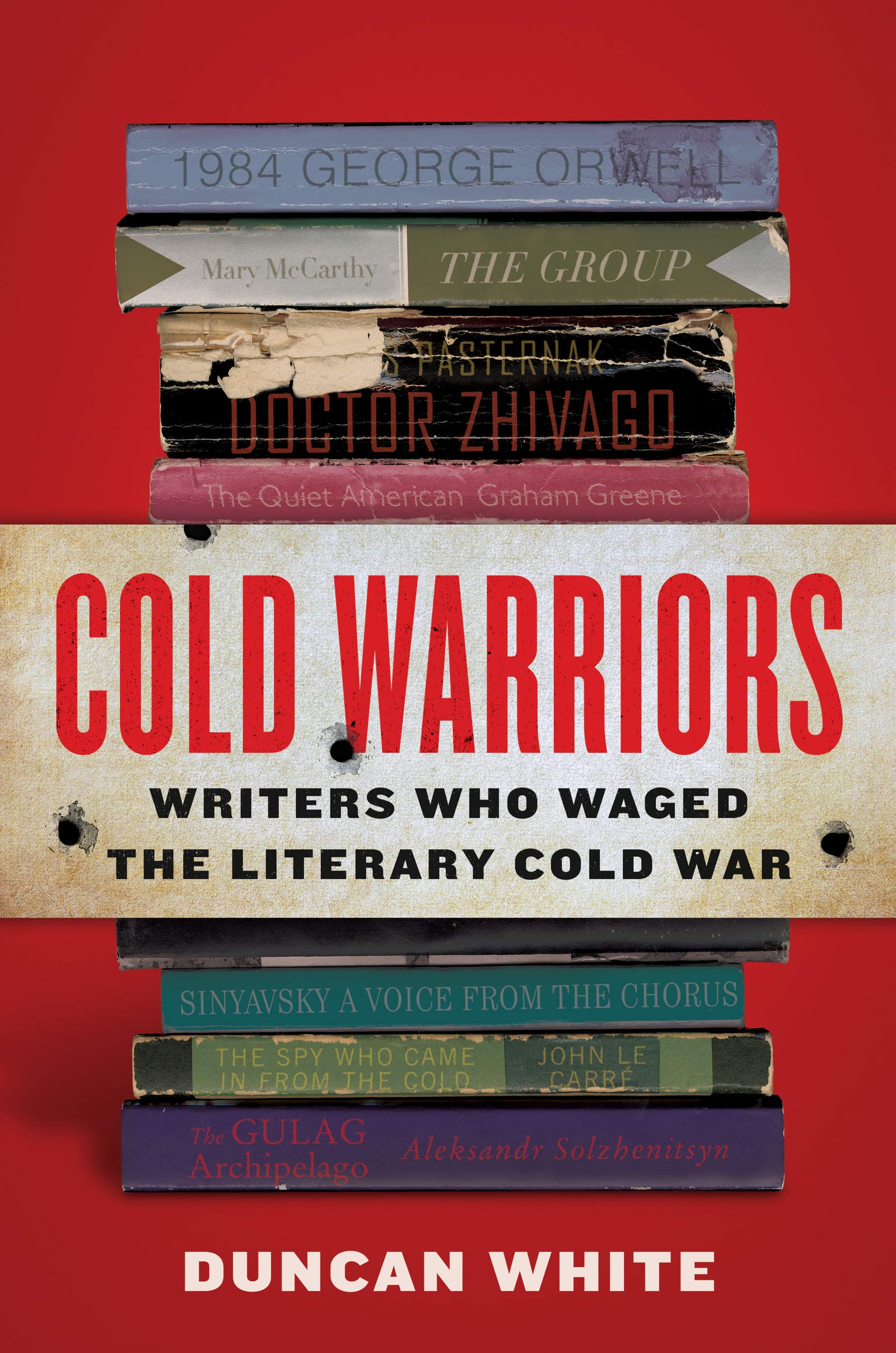
Cold Warriors: Writers Who Waged the Literary Cold War by Duncan White. This new book focuses on five writers who the author argues engaged in "literary warfare" on both sides of the cold war: George Orwell, Stephen Spender, Mary McCarthy, Graham Greene, and Andrei Sinyavsky. McCarthy and Greene are two of my favorites, so that alone makes me want to read this.

While I'm here, I'll give my unsolicited plug for LibraryThing. I've been on it since 2006 and use it to keep track of and organize my library. You can find my LibraryThing profile and library here. I like tracking my personal library on LibraryThing because you can add your books, tag them, and track them in spreadsheet format.

You can use the standard columns to track things like author name, publication date, page numbers, or date read. Or you can track by tag to really manage your library. This gives you flexibility to keep track of which books are still "TBR" or which are "finished" or "read." I tag "NIL" if the book is no longer physically in my library, which saves a lot of time searching through shelves. And I tag the year I read it so I can make a list of books read each year. "Wishlist" is a popular way to keep track of books you want.

Finally, I like that LibraryThing lets you add your books by ISBN so the edition on your spreadsheet is the exact edition on your shelf. If for some reason the cover doesn't match, you can chose from another cover on LibraryThing or upload your own cover.

I'm also on goodreads. Maybe there is a way to track a personal library on goodreads the same way as on LibraryThing, but I've never figured out how to do it. So I do not use goodreads the same way I use LibraryThing. I most use goodreads to post some book reviews and as as a social site. Although there is also a community of book lovers on LibraryThing -- people review books, join discussions and groups, and there is a robust Early Reviewer program.

If you are on either LibraryThing or goodreads, please come and find me!


Thanks for joining me for Mailbox Monday, a weekly "show & tell" blog event where participants share the books they acquired the week before. Visit the Mailbox Monday website to find links to all the participants' posts and read more about Books that Caught our Eye.

Mailbox Monday is graciously hosted by Leslie of Under My Apple Tree, Serena of Savvy Verse & Wit, and Martha of Reviews by Martha's Bookshelf.


Saturday, August 24, 2019

Author Interview: Peter Nathaniel Malae


Peter Nathaniel Malae's new novel, Son of Amity, is the story of three lives converging in small town Oregon, and the little boy who brings them together.


Peter talked with Rose City Reader about his new book, small towns, and how books influenced his own childhood:

Your book is set in the small town of Amity, Oregon. What role does the town play in the story?

For several generations in rural Oregon, small towns like Amity have been bilaterally sustained by logging and small family legacy farms. When the logging industry got hit by a state-wide downsize in the late nineties and early zeroes, an unintended consequence, obvious in hindsight, was that these towns were left with a lot of youngsters, especially young men, with very few vocational options. Sissy and her mother are from this increasingly impoverished side of Amity. It’s no coincidence that drug use rapidly shot up in these areas, such that your standard video-game playing tweaker became a trope, and military enlistment, even during war, manifested as less sacrifice than deliverance. Michael, who joins up after 9-11, does five tours in Iraq.

Something else was simultaneously happening, though, most notably in the Yamhill Valley where Amity sits on its southern edge: the influx of wine. Although the original wineries of the 80’s and 90’s were almost exclusively homegrown, the success of these wines “outed” the area internationally. The recent fires in California exacerbated this exposure, as a lot of winemakers, foregoing rebuilding in the Golden State, headed north where water has never been in short supply. All of this translated into the import of money and culture, both of which are typically in conflict with what was already here. The new money is relatively inaccessible to the old working class Oregonian, and the “fast, loud, progressive” culture of Californians seems to swallow the slower, traditional rural culture already in place. This dichotomy, of course, is a narrative goldmine, and something I wanted to capture in Son of Amity. I’ve lived on the edge of rural Oregon for eleven years now, and it took me about five years to really understand this social phenomenon. That’s right about the time I started writing the novel.

One of your main characters, Sissy, is a recent Catholic convert. How do the themes of conversion and repentance play out in your story?

I feel for Sissy quite a bit, not in a fatherly way, really, even though I wrote her story, but just in the way of someone who loves another human being from afar, but can probably do little for that person. She’s young and faces judgment from her community, and from her husband-to-be’s mother, and pretty much everyone else she comes in contact with in Amity, and so it maybe seems strange that she’d gravitate to an institution which, at its best, operates with judiciousness and empathy, but, at its worst, finger-snaps judgment. I think understanding Sissy begins with the fatalism from which she views her own life: this somewhat vague, maybe undefinable idea that if her life is not meant to be, then nothing ever was, is, or will be meant to be. The epigraph from Agee’s book ties into this. Her mother tells her, “I wish I’d never birthed you,” and this is not so much a new dagger in Sissy’s heart as it is a potential nexus point for conversion. She knows this is wrong. She always has. When she responds by shoving her mother against the wall, this act itself so hurts her heart that she straightens her mother upright at once, and then runs off. She does not know what to do with her life, and is seeking the sturdiness of goodness, something, anything, she can stand by.

It’s important to note that on the night of her conversion she has just come from a house party where she’s been used, essentially, as a sex toy by high school boys. She walks to the monastery, where she’s never been before, instead of down to the South Yamhill River, where she’s spent many a night, among the shotgun shells and monster trucks and discarded needles. She does not know what she is doing, but her feeling of steadying a story that’s saddled her for so long finally appears to be happening. She doesn’t emerge of anything, I think. Troubles still lie ahead. Rather, she’s basically facing her life for what it is, as Michael demands of her before his fifth tour in Iraq kicks in, and her decision to lean away from an inheritance of ruin is at the same time terrifying and liberating. She could’ve stayed at the house party, and she will pay in a horrible way, later, for having gone at all, but she is ready at that mass to face her life in a soiled tube-top mini skirt and ice pick heels, and, from my perch of authorial disinterestedness, I admire that of her.

Did you know right away, or have an idea, how you were going to end the story? Or did it come to you as you were in the process of writing?

I’d had the basic skeletal plot of the story, about 85-90% of it, in the first five minutes of conceiving the novel’s opening scene. It’s true, however, that I worked pretty hard on the ending, those last nine pages of both lasting death and lasting brotherhood. I just kept working it over and over, building it up and tearing it down, etc. One accrues over the years many scenes related to that last scene, both in one’s own real-life experience, and in one’s own direct contact with other narratives, such that it’s difficult, maybe impossible, to empirically trace the source of the scene’s genesis. I mean, I know I thought it up, that’s a fact, but how I thought it up requires a lifetime of review, and that’s also a fact. That’s one reason among many why certain writers are so tough to talk to: we’ve already talked on the page, and that’s the best way we can talk on a given topic and probably even anything at all, and a deconstruction of that talk can sort of sink the ship. Or it does mine, anyway. It’s not that writing just happens; it’s more that there’s so much in you, so much to you, as a human who happens to be a writer, that, even if you were inclined to do so, there’s not enough time to find that pearl at the bottom of the sea. The writing is an unending process, until your end, and not nearly as illuminating as most non-writers assume. I guess it’s good we have scholars for this type of deep dive, and it’s probably even better that the writer is usually gone when (if!) this happens.

How did you choose the title?

Amity’s etymology can be traced to the Latin amare, which means to “love.” Benji is a “son of
Amity” in that he was born there, obviously, but also, figuratively speaking, in that he was is sustained by “love.” It just takes the three adults some time to discover this, and each of them will pay terribly for not discovering it earlier.

Were books an important part of your household when you were growing up?

My father was always reading books about war, and is pretty much an expert on the common soldier, the grunt, and the soldier’s outlook, the fibrous consistency of a soldier, whatever country he’s from. He’s an immigrant to this country, and so admires courage on behalf of this country, as do I. Dad did three combat tours in Vietnam as a Special Forces tracker, and is a true hero, officially in the Army’s eyes, who’d awarded him a Silver Star for Valor, a Bronze Star and a Purple Heart, and in my own eyes, as a son who knows him even better than they do. He’d gone to Vietnam to follow his brother Faulalogofie, a UDT-certified Force Recon Marine, who was killed by Pacifica police in ’76; or else to get some much-needed money for his family back in Section 8 Housing in Halawa; or else to continue to do something – fight for his life – that had been the theme of his life long before he ever went to war. It was all of these things, of course, and more, too much to include here. But as a boy, I’d watch my father read his books, and listen to him talk of these books and of the soldiers he’d known and hadn’t known in these books, and I eventually even read some of his books, too.

My brother and I were athletes and always playing in the streets 'til dark and so I honestly have to say that, though we were both good students, we were also always on the go, and didn’t like to settle in to read. That was too slow for our pace, and we wanted to skin our knees. No one really encouraged us to read novels, or big books, or anything like that. In the 6th grade, I’d read I am Third, by Gale Sayers, about his friendship with Brian Piccolo, a teammate on the Chicago Bears, who was dying of cancer. Piccolo was an Italian kid from Brooklyn or something, and Sayers, the greatest halfback of his era, was a brotha from, if I recall it rightly, Kansas. Their friendship had a lot to do with hearing the other guy out, and letting him get his two cents in, even if you didn’t want to keep the two cents. I don’t know if it was a great book or not, but I loved it, and it somewhat modestly started things for me, until my freshman comp class in high school, where I got steamrolled by Homer. I was thirteen, and totally lost in the pantheon of warring mortals and immortals that is The Iliad, but I’d get my feet again. I recently listened to that epic poem on tape with my children, driving around our town, and that was better than the first time. If I can handle the flood of nostalgia, I’ll probably revisit I am Third, too, just to see the changes. As it can’t be anything but, the changes will be in me, not the book.

Who are your three (or four or five) favorite authors? Is your own writing influenced by the authors you read?

This is constantly changing for me because I’ll read writers into the ground, pretty much, and get tired of their voice and subject matter for a long stretch, and this cycle has happened so many times now that certain writers have actually come back again, like the resilient invasive blackberry bush that Oregon deems a weed (ha), despite my having moved on to other writers years ago. This happens not just in prose, but also poetry. Restricted to prose, though, I guess my best answer here would be to break it up into the four or five favorite authors from the last three decades, respectively: 90’s: Hemingway, Faulkner, Steinbeck, Baldwin, Dostoevsky; ‘00’s: Oe, Bellow, Marilyn Robinson, Russell Banks, Denis Johnson; ‘10’s: Kesey, Stegner, Nicole Krauss, Saramago, Sebald. I feel sort of bad that so many great writers (Dickens, McCarthy, Alexie, Solzhenitsyn, Styron) got skipped on this list, and that probably explains why I cheated right there, parenthetically squeezing them in, anyway.

What are you reading now?

There There by Tommy Orange. Also a biography about Descartes.

What’s next? Are you working on another book?

I’ve told everyone who’ll listen that I’m working on two epic novels, and as I think about this confession of sorts, it probably has something to do with my evil kernel of human doubt that I’ll ever finish them. I don’t want to look like a flake to anyone, most especially myself, and so it’s a kind of healthy reinforcing pressure, in many ways, for someone to say to me, “How’s that novel going that you’re working on?” I can’t look around and shrug, “Who? Me?” because I’d done given them the dirt the last time they’d seen me. My answer, of late, has been to use a metaphor of boats at sea: the novels-in-progress are destroyers trying to sink me, and I’m in a little rowboat skiff. I’ve got tricks up my sleeve, though, like Santiago in the The Old Man and the Sea, and so we’ll see who wins out, if it’s at all about winning out. It probably isn’t. That book ends with the old man crawling up onto the sand with a mast over his shoulder, three days “lost” at sea, his great fish decimated, and tourists mistaking the fish for a shark. So it’s not too encouraging, practically, to stay on this reference. But I also don’t care if it’s not too encouraging. Time to face it, talk myself up to straight handle it: I’m like the characters in SON OF AMITY, Pika, Michael, Sissy and even the boy, Benji: I ain’t going back no matter what. That’s right. I’ll live or die with these stories, and that’s the same old story for me.


THANKS PETER! 

SON OF AMITY IS AVAILABLE ONLINE, OR ASK YOUR LOCAL BOOK SELLER TO ORDER IT.


Thursday, August 22, 2019

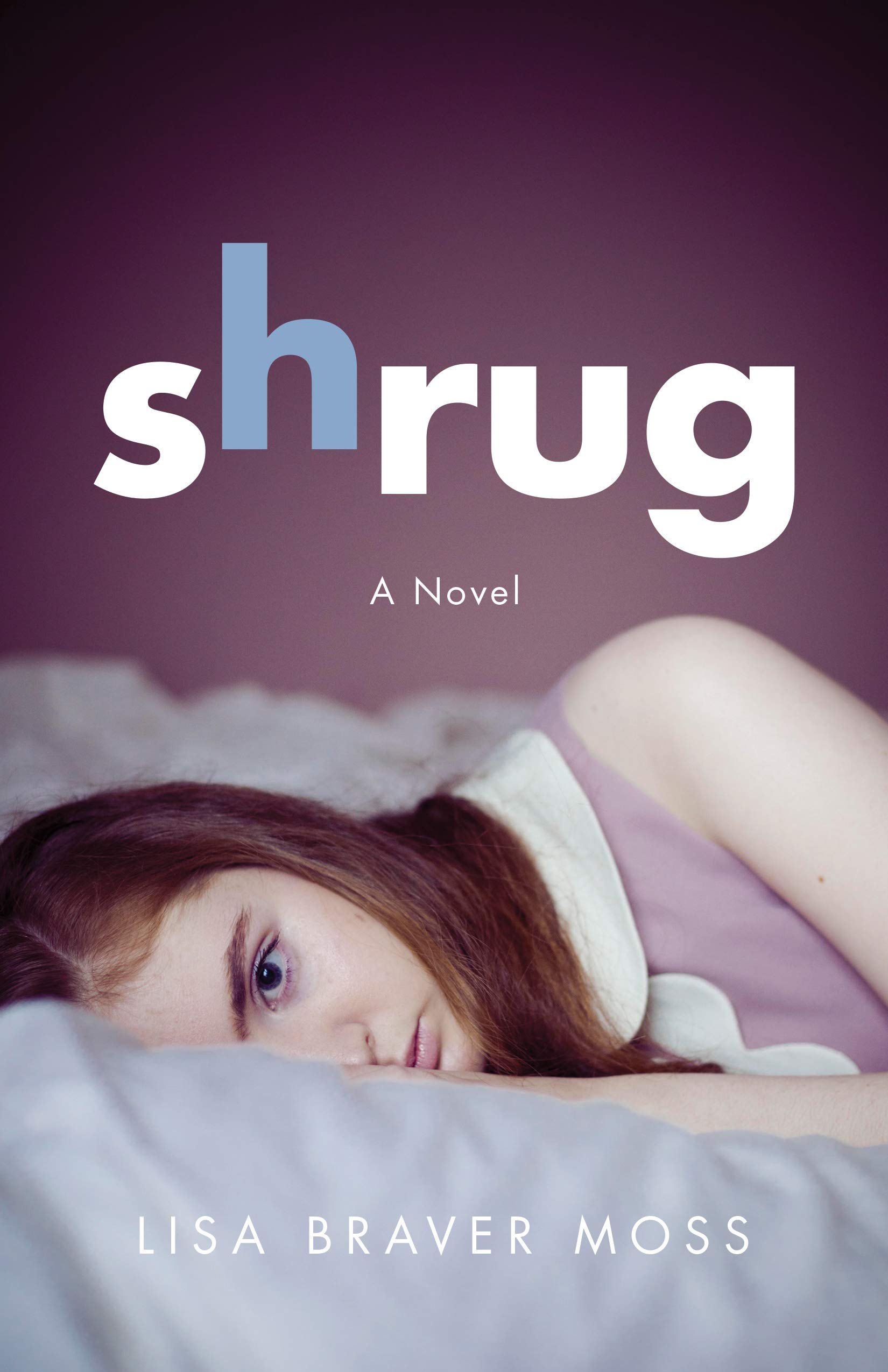
Book Beginning: Shrug by Lisa Braver Moss

BOOK BEGINNINGS ON FRIDAYS
THANKS FOR JOINING ME ON FRIDAYS FOR BOOK BEGINNING FUN!

MY BOOK BEGINNING


I call it my shrug, but it is not a regular shrug. It doesn't mean I don't care about stuff, or that I don't want to talk.

-- Shrug, by Lisa Braver Moss. The tumultuous Berkeley of the 1960s is the backdrop of this coming of age story about a teen-aged girl navigating the complexities of family abuse. Her violent father owns a record store and her mother is off the rails. Neither are helping her finish high school and go to college.


Please join me every Friday to share the first sentence (or so) of the book you are reading, along with your initial thoughts about the sentence, impressions of the book, or anything else the opener inspires. Please remember to include the title of the book and the author’s name.

EARLY BIRDS & SLOWPOKES: This weekly post goes up Thursday evening for those who like to get their posts up and linked early on. But feel free to add a link all week.

SOCIAL MEDIA: If you are on Twitter, Instagram, or other social media, please post using the hash tag #BookBeginnings. I try to follow all Book Beginnings participants on whatever interweb sites you are on, so please let me know if I have missed any and I will catch up.

YOUR BOOK BEGINNING


TIE IN: The Friday 56 hosted by Freda's Voice is a natural tie in with this event and there is a lot of cross over, so many people combine the two. The idea is to post a teaser from page 56 of the book you are reading and share a link to your post. Find details and the Linky for your Friday 56 post on Freda’s Voice.


MY FRIDAY 56

My father hadn't said anything about having to send Beatles albums back to Capitol, or about not having gotten the ones with the original cover. But then, maybe he'd been too busy hitting people to mention it.


Thursday, August 15, 2019

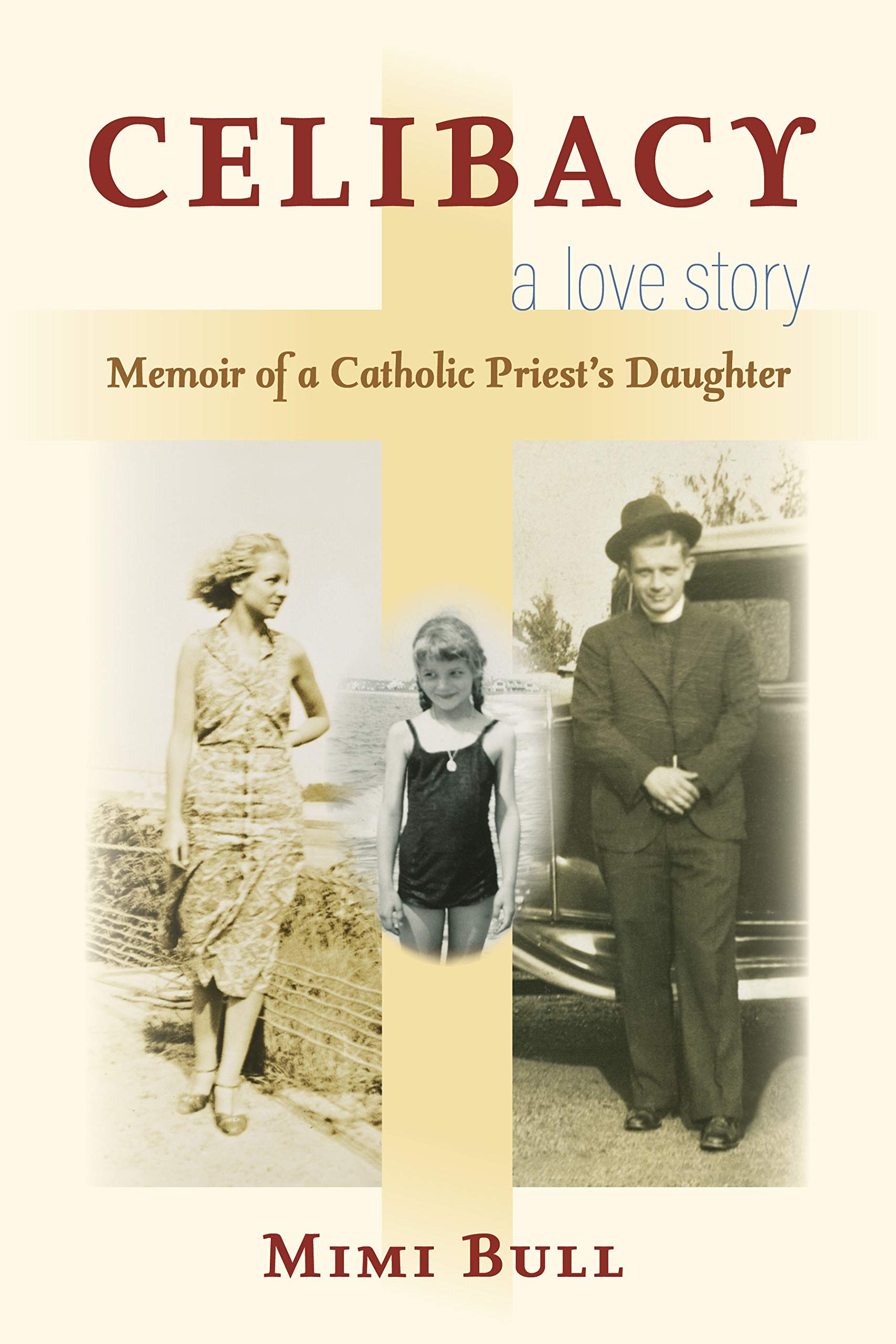
Book Beginnings: Celibacy, A Love Story: Memoir of a Catholic Priest's Daughter

BOOK BEGINNINGS ON FRIDAYS
THANKS FOR JOINING ME ON FRIDAYS FOR BOOK BEGINNING FUN!

MY BOOK BEGINNING


Even though, growing up, I didn't spend a lot of time thinking about my status as an adoptee, it was the back story to my childhood. I'd been told that I was adopted early on, and more information filtered down as I grew into adulthood: Alice Foyette adopted me in July of 1937 in Philadelphia when I was eight-and-a-half months old and brought me back to Norwood, Massachusetts, to live with her and her grown daughter, Florence.

Celibacy, A Love Story: Memoir of a Catholic Priest's Daughter by Mimi Bull. We learn by the second page that Florence was, in fact, Mimi's real mother. And the parish priest, whom her mother loved, was her father.


Please join me every Friday to share the first sentence (or so) of the book you are reading, along with your initial thoughts about the sentence, impressions of the book, or anything else the opener inspires. Please remember to include the title of the book and the author’s name.

EARLY BIRDS & SLOWPOKES: This weekly post goes up Thursday evening for those who like to get their posts up and linked early on. But feel free to add a link all week.

SOCIAL MEDIA: If you are on Twitter, Instagram, or other social media, please post using the hash tag #BookBeginnings. I try to follow all Book Beginnings participants on whatever interweb sites you are on, so please let me know if I have missed any and I will catch up.

YOUR BOOK BEGINNING


TIE IN: The Friday 56 hosted by Freda's Voice is a natural tie in with this event and there is a lot of cross over, so many people combine the two. The idea is to post a teaser from page 56 of the book you are reading and share a link to your post. Find details and the Linky for your Friday 56 post on Freda’s Voice.


MY FRIDAY 56

Neil dramatically upped the ante by asking me to marry him on the second evening. Utterly dazzled by this charming man and totally unprepared for the impact of his proposal, which I did not respond to, I danced and socialized and tried to deny what was unfolding.


Wednesday, August 14, 2019

Author Interview: Wendy Thomas Russell


Author and publisher Wendy Thomas Russell wrote ParentShift with Linda and Ty Hatfield, founders of Parenting from the Heart. Their book offers a new way to raise resilient, confident, and kind children.


Wendy recently talked with Rose City Reader about her new book, parenting, and universal truths about children:

What is the “shift” in the title of your book, ParentShift: Ten Universal Truths that Will Change the Way You Raise Your Kids?

It’s a paradigm shift.

In America, most parents fall into one of two categories: Controlling or permissive. Controlling parents tend to set loads of limits, place unreasonably high expectations on their kids, and fail to demonstrate enough empathy with children. Permissive parents, on the other hand, can be empathetic to a fault — treating their children’s problems as their own. They also expect far too little of children and tend to be weak limit- and boundary-setters.

Our book offers a third and wholly distinct parenting style: heart-centered. These parents set strong limits and boundaries, know how to genuinely empathize with their kids, and have high and reasonable expectations of them — all of which is associated with children who are kind, confident, compassionate, capable, resilient, and healthy.

Unfortunately, most adults were not raised in a heart-centered way, which is why it requires a paradigm shift.

Tell us a little about Linda and Ty Hatfield, and how you came to collaborate with them.

Linda is an educator by trade, and her husband, Ty, is a police lieutenant. Twenty years ago, they put their heads together and created an incredible program called Parenting from the Heart — a program based on all they had learned in in their years of study and experience. I met Ty when I was working for the Long Beach Press-Telegram as an investigative reporter in the early 2000s. After I gave birth to my daughter, he told me about a class and, eventually, my husband and I decided to take it ourselves. Seven years later, we decided to collaborate on the book.

Why did you write ParentShift?

When my daughter was in preschool, I began to encounter problems that I wasn’t sure how to solve. Our usual bag of tricks suddenly seemed insufficient. That’s why we chose to take Ty and Linda’s class. The class changed our lives. It made us better parents. It made us better spouses. It made us better people. As a writer, it’s hard to have a life-changing experience and not write about it. And, as it turned out, Ty and Linda always had wanted to turn their program into a book but needed a professional writer to do it. It was a no-brainer.

Your book is structured as a practical guidebook. How do you hope people will use it?

I hope people will see the book as the comprehensive guide that it is. This is not a book aimed at solving one particular kind of problem or navigating one particular age group. ParentShift aims to help parents identify and address virtually any challenge at any age. I hope people will read to the end and then refer back to it for years to come.

What is your professional background and how did it lead to you writing a book about parenting?

I fell into this genre quite by accident! I spent fifteen years in newspapers and when I left, I wrote a couple of books for the Girl Scouts before starting work on a novel. It was during that time that I started a blog about secular parenting, specifically about navigating the thornier issues — like talks about death without heaven and what to do when someone tells your child she’s going to go to hell. The blog, which eventually moved to the Patheos network under the name “Natural Wonderers,” was based on personal experience, as well as interviews I conducted with various experts. The blog became my first parenting book, Relax, It’s Just God: How and Why to Talk To Your Kids About Religion When You’re Not Religious (Brown Paper Press, 2015). ParentShift is my second and, most likely, my last. I’ve said just about everything I need to say on this subject!

Who do you hope will read your book?

It’s tempting to say everyone, because, frankly, much of the book’s advice can be applied partners, parents, co-workers, employees, friends, you name it. But, more realistically, our audience is parents, grandparents, caregivers, and teachers of children around age three to five. That’s when most parents start noticing that their old reliable techniques are starting to break down and — like me — turn to books, blogs and other parents for advice.

What makes your book different than other books about raising children?

This is going to sound self-serving, but I truly believe it: Ours is the most comprehensive, down-to-earth, actionable, and forward-thinking parenting book on the market. ParentShift provides detailed advice, true stories, unbiased research, and a modern sensibility. And because we have a sense of humor and a plain-spoken style, it’s fun to read.

What will readers learn from your book?

All children, regardless of their culture or background or socio-economic status, are driven by ten universal truths. These truths are things like “All children have emotional needs,” “All children have innate, neurological responses to stress,” “All children model their primary caregivers,” and “All children go through developmental stages.” These truths account for the vast majority of children’s behavior — whether it’s the tantrum of a toddler, the snarkiness of a nine-year-old, or the sullenness of a teenager. The thing is, it’s not always obvious which “truths” are at work at any given time. In ParentShift, readers will learn how to locate the underlying cause of a child’s behavior so that they can choose a heart-centered course of action appropriate for that situation.

In addition, parents will learn how to set consistent, reasonable limits and boundaries; curtail power struggles; minimize sibling rivalry; respond to outbursts without losing their tempers; create effective chore systems; prepare children to meet life’s challenges on their own; and build open, trusting relationships that keep kids turning to parents for guidance well into the teenage years.

Can you recommend other tools, books, or resources to parents figuring out how to raise their kids?

I recommend Your Child’s Self-Esteem by Dorothy Corkille Briggs, How to Talk So Kids Will Listen & Listen So Kids Will Talk by Adele Faber and Elaine Mazlish, Hold On to Your Kids by Gordon Neufeld and Gabor Maté, Punished by Rewards by Alfie Kohn, PET: Parent Effectiveness Training by Thomas Gordon, Raising Our Children, Raising Ourselves by Naomi Aldort, and Between Parent & Child by Haim Ginott. And for a better look into the great, wide, expanding world of brain science, check out almost anything by Daniel J. Siegel and Tina Payne Bryson.

What else would you like people to know about your book or your approach to raising kids?

This book is not about being a “perfect” parent, whatever the hell that is. We’ve all come to parenting with our own baggage, neurosis, flaws, and failures. That’s okay. We don’t ask or expect adults to nail every interaction they have with kids. Parenting is rarely a straight shot. That said, an awful lot of parents are on a path that doesn’t line up with their own goals. They are sabotaging themselves and don’t even know it. Once parents have the knowledge, their own issues and idiosyncrasies no longer threaten to torpedo the kid’s self-esteem or damage the superbly important parent-child relationship. Because when they make mistakes — which they’ll no doubt do — they’ll know how to get back on track.

THANKS WENDY!

PARENTSHIFT IS AVAILABLE ONLINE, OR ASK YOUR LOCAL BOOK SELLER TO ORDER IT. 


Related Posts Plugin for WordPress, Blogger...