Thursday, June 25, 2020

Arzak + Arzak and Create Beautiful Food at Home: BOOK BEGINNINGS


It's Friday! Time to share the first sentence (or so) of the book capturing your attention right now. For me, two new cookbooks have captured my attention.

Please share your Book Beginning on Friday by adding the link to your post below, or leaving a comment telling us where to find you on social media. Or just leave a comment with the opening sentence and name of the book.

Please use the hashtag #bookbeginnings so we can find each other.

MY BOOK BEGINNINGS

Arzak + Arzak by Juan Mari & Elena Arzak (Grub Street Books)

Arzak has been a household name in Spain since the 1970s and Juan Mari Arzak, who presides over the family restaurant, is the innovative force behind its rise to the upper echelons in the world of culinary art.

-- from the Introduction by Gabriella Ranelli.

Restaurante Arzak in San Sebastian is legendary. It has had three Michelin stars, the most awarded, since 1989. I’ve never been to Spain, San Sebastian, or Arzak. But I am fascinated by San Sebastian and Restorante Arzak since I watched an episode of Parts Unknown with Anthony Bourdain when he visits Arzak and tours San Sebastian with Juan Mari. Juan Mari is the third generation of chefs at his family's eponymous restaurant. He has shared chef duties with his daughter Elena for 20 years.

This new cookbook is half a history of the New Basque cuisine that Juan Mari pioneered, and half featured recipes from the last ten years. The photographs throughout are stunning. I will most likely never cook out of this book, but I will read it cover to cover.

Creating Beautiful Food at Home by Adrian Martin (Mercier Press)

Food is something that keeps me up at night. I dream of the perfect, balanced recipe.

Adrian Martin is a young, popular Irish chef. His new cookbook takes reasonably easy to make at home recipes and makes them look very, very fancy. His breezy explanations and the lovely photographs have me convinced.

YOUR BOOK BEGINNINGS

Mister Linky's Magical Widgets -- Thumb-Linky widget will appear right here!
This preview will disappear when the widget is displayed on your site.
If this widget does not appear, click here to display it.

THE FRIDAY 56

Please also share a teaser from page 56 of your current book on The Friday 56, hosted by Freda on Freda's Voice.

MY FRIDAY 56s

From Arzak + Arzak:

During the development process, a dish's foundation may depend on a specific ingredient or technique that fascinates the team, but something keeps it from coming together. Time marches on, the search continues until a new element arrives, if it ever does. 

From Create Beautiful Food at Home:

Mushroom soup made from wild mushrooms has the most extraordinary, intense flavour. Don't be afraid to mix and match the mushrooms here. 


WEEKEND COOKING


Weekend Cooking is a weekly blog event hosted by Marg at The Adventures of an Intrepid Reader. Beth Fish Reads started the event in 2009 and bloggers have been sharing book and food related posts ever since.


Tuesday, June 23, 2020

Tina Egnoski - Author Interview

headshot of author Tina Egnoski

Author Tina Egnoski writes poetry and fiction. Her first novel, Burn Down This World, came out this year from Adelaide Books. She is a native of Florida and now lives in Rhode Island where she works in the Liberal Arts Division at the Rhode Island School of Design.

book cover of Burn Down This World by Tina Egnoski

Tina talked with Rose City Reader about Burn Down This World, what inspires her, and books she loves: 

How did you come to write Burn Down this World?

I blame it on Jane Fonda! Seriously. But first, let me step back and give you a quick overview of the book. It centers on Celeste and Reid Leahy, siblings raised in a military family who come-of-age in the South in the late 1960s, at the height of social change and national unrest over the Vietnam War. As students at the University of Florida in the early 1970s, they’re active in antiwar demonstrations. Those activities, which begin as peaceful and soon turn violent, eventually tear the sister and brother apart. The braided narrative tells the story of their history, as well as their reunion after years of estrangement.

The events of the novel were inspired by real anti-Vietnam War demonstrations that took place at the University of Florida in May of 1972. I’m an alumna of the university, although I didn’t attend during the time of the protests. I did, however, work for a time in the university archives.

Now, here’s the Jane Fonda connection. While working in the Photograph Collection, I found a picture of her giving an antiwar speech on campus in 1971. She’s at a podium on a wooden platform at Graham Pond. Students are crowding around the pond and, in the background, many are hanging out of dorm windows. I was fascinated by that picture. It stuck with me. Years later, when I decided to write about student activism, the picture was readily available online. I used it as a jumping-off point.

Jane Fonda giving anti-war speech at University of Florida in 1971


You describe the story as having a "braided narrative." Describe what you mean.

A braided narrative is typically a structure with two or more plotlines interwoven throughout story. This structure allowed me to move between what I call the “present tense” of the story—when Celeste and brother reunite in 1998—and the past tense of the story—the year they spent together in college. The timelines run parallel and each story informs the other. It can be a challenging structure—a bit of a balancing act. I had to give the reader just enough information in each storyline to keep her/him engaged without revealing too soon the twists-and-turns so pivotal to the plot.

Both story lines take place in Florida, one at the University of Florida in 1971-72 and one during the wildfires of 1998. What drew you to these settings for your novel?

Both settings are ripe for drama. While I wasn’t living in Florida in 1998, my mother was. I experience the wildfires through my daily telephone conversations with her and news reports she shared. She did finally have to evacuate. I was lucky to have a sister who lived close by could assist her with that process. It was a scary time, with so many lives, homes, and businesses danger.

In terms of the early 1970s, that time period was futile ground, and not only because of Vietnam War protests. So much was happening. At the University of Florida that academic year, the first African American student body president was elected and the student newspaper was kicked off campus for publishing a list of abortion clinics. I simply couldn’t write about it all. I tried, but the narrative became overrun with subplots. I had to narrow my focus to the protests.

Tell us why you gave Jim Morrison from the Doors a cameo in your new book.

Music is such a powerful connector of people. I knew early in the writing process that the music of the 60s and early 70s would be an important backdrop. The Rolling Stones, Creedence Clearwater Revival, Santana, The Doors: these were iconic rock bands of the time. You can’t think of Crosby, Stills, Nash & Young without thinking of the song “Ohio.”

As for Jim Morrison, well, he and I do share a birthplace. I couldn’t let that personal tidbit go unmentioned. Aside from that, I loved the idea that for Celeste music isn’t just background. Her love of The Doors brings her closer to her brother at an otherwise contentious time in their lives.

What is your background? How did it lead you to writing books?

I began writing at a young age. When I was in my teens, I wrote very, very, very bad love poetry. In high school, I appeared to be industriously taking notes while my teachers lectured, but really I was writing poetry. Everyone assumed I was a diligent student. In reality, I was a daydreamer, more interested in the language and structure of poetry than history or algebra or biology. I turned to fiction while in college.

I studying writing at Emerson College. It was in that program that I began the novel, but in a much different form. It was about Celeste and Reid and their estrangement, but I hadn’t yet figured out the cause. I set it aside for several years. In that time, I had a son and wrote three other books. Then, in 2013 I rediscovered that picture of Jane Fonda and knew I had found the heart of my story.

Who are your three (or four or five) favorite authors? Is your own writing influenced by the authors you read?

There are number of writers who have influenced my writing. In terms of classics, I love James Baldwin, the Brontë sisters, Zora Neale Hurston, Fitzgerald, Flaubert, Toni Morrison, and Edith Wharton. I also write short stories, so I admired short fiction writers like John Cheever, Lauren Groff, Flannery O’Conner, and Alice Monroe.

The one book I re-read every few years is Erica Jong’s Fear of Flying. The reason I love that book so much is because it was one of the first books I read that spoke frankly and from a feminist point of view about love, sex, family, family dysfunction, politics, psychotherapy, literature, and religion. In other words—it has it all!

What kind of books do you like to read? What are you reading now?

I love contemporary literary fiction. Authors I read and admire include Chimamanda Ngozi Adichie, Tracy Chevalier, Karen Joy Fowler, Ian McEwan, Claire Messud, and Zadie Smith.

Recently, I finished The Snakes by Sadie Jones and The Most Fun We Ever Had by Claire Lombardo. Two of the best books I read in 2019. Both are well-written, engaging, with meaty family dysfunction at the center. And what’s better in fiction than a messy family saga?

What is the most valuable advice you’ve been given as an author?

Perfection kills creativity. It’s been said many times, many ways, and it’s true. I have to battle perfectionism with every piece I write. I’ve also had to learn when to let go and send out a story. No creative endeavor is ever going to be perfect. When I deem it “good enough”—and that’s a tricky judgement call—I let it go by submitting it to a journal or press.

What’s next? Are you working on your next book?

I’m working on a collection of short fiction. The stories are historical in nature and focused on writers who have a connection to Florida. For instance, I read recently about the poet Edna St. Vincent Millay and a trip she took to South Florida in 1936. After checking into a hotel on Sanibel Island, she walked down to the beach. Just as she hit the sand, the hotel caught fire. She lost the only copy of a manuscript she was working on. She was able to rewrite the manuscript from memory and the book, Conversation at Midnight, was published in 1937. That’s the kind of fact I love to turn into fiction.


THANKS, TINA!

BURN DOWN THIS WORLD IS AVAILABLE ONLINE IN PAPERBACK AND E-BOOK.


Saturday, June 20, 2020

Writing Wild: Women Poets, Ramblers, and Mavericks Who Shape How We See the Natural World by Kathryn Aalto: REVIEW


I was lucky to grow up in a time and place that allowed little kids to roam. From the time I was five and "old enough" to walk to Kindergarten by myself, my parents considered me old enough to wander my neighborhood by myself. And I did. My memories of childhood summers in Nebraska are a series of explorations, alone or with a best friend, of back yards, the enormous neighborhood park, and, once we got bikes, nearby farms, woods, and creeks. I could spend a whole day alone with a book in the woods. Or spend several days in a row with a friend playing on the Platte River. We were ten.

Despite my early adventures, I didn't grow up to be a rugged outdoor enthusiast. These days, my idea of camping is a cabin at a National Park. But those childhood wanderings taught me a love for the natural world and instilled a yearning for exploration, often solitary. Kathryn Aalto's new book, Writing Wild: Women Poets, Ramblers, and Mavericks Who Shape How We See the Natural World, appeals to both parts of my character.

Aalto set out to rebalance the perception that nature writing is entirely the realm of white male authors. Writing Wild honors women writers whose work has helped readers connect to the natural world from the Romantic poets to today. The book is a collection of Aalto's biographical sketches of 25 influential women writers, drawing on excerpts of their work; select bibliographies; notes on other women poets and prose authors; and ancillary material, all beautifully illustrated by Gisela Goppel.

The book is not an anthology of nature writing; it is an introduction to women nature writers. A few are probably familiar, like Annie Dillard or poet Mary Oliver. Others are new to me and likely new to most readers. The book, of course, does not include every woman who has written about nature. As Aalto described:

Think of these pages as a glance backwards and a look forward, as well as a celebration of women who bring a different dimension to nature writing, rather than a compendium of every woman who ever wrote about the natural world.

Following each five- to seven-page biography, Aalto inserts either the featured author's bibliography or information about three related authors. For example, after the opening essay on Dorothy Wordsworth, Aalto includes a paragraph each on three other women writers under "More About Mountains": Dorothy Pilley, Helen Mort, and Cheryl Strayed. After the essay on Amy Liptrot, she offers three suggestions for "More Recovery Narratives": Sue Hubbell, Olivia Laing, and Jessica Lee.

You can see from these examples that Aalto broadly defines "nature writing." She includes writers of natural history, environmental philosophy, country life, scientific writing, gardening, poetry, memoir, fiction, and meditation. The writing of the women featured spans more than 200 years and many genres, not all easily categorized.

Read and be inspired. I was.


NOTES

The 25 women featured in Katheryn Aalto's Writing Wild are:

Dorothy Wordsworth

Susan Fenimore Cooper

Gene Stratton-Porter

Mary Austin

Vita Sackville-West

Nan Sheppard

Rachel Carson

Mary Oliver

Carolyn Merchant

Annie Dillard

Gretel Ehrlich

Leslie Marmon Silko

Diane Ackerman

Robin Wall Kimmerer

Lauret Savoy

Rebecca Solnit

Kathleen Jamie

Carolyn Finney

Helen MacDonald

Saci Lloyd

Andrea Wulf

Camille T. Dungy

Elena Passarello

Amy Liptrot

Elizabeth Rush

Thursday, June 18, 2020

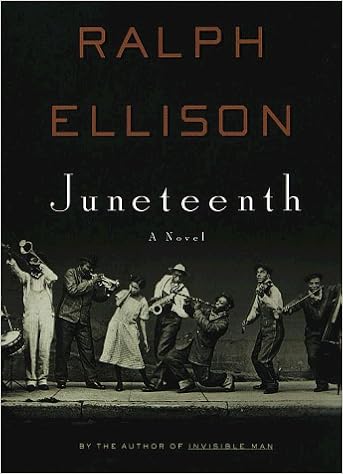
Juneteenth by Ralph Ellison - BOOK BEGINNING


It's time for Book Beginnings on Fridays! Time to share the opening sentence (or so) of the book you are featuring this week.

Post a link to your post below. Or put your book beginning in a comment. You can also participate on social media -- just leave a comment to tell us where to find you.

If you post or crosspost on social media, please use the #bookbeginnings hashtag so we can find each other.

MY BOOK BEGINNING


Two days before the shooting a chartered planeload of Southern Negroes swooped down upon the District of Columbia and attempted to see the Senator.

-- Juneteenth by Ralph Ellison.

JUNETEENTH, THE BOOK

Juneteenth is set in 1950s and is the story Adam Sunraider, a race-baiting senator from a New England state. When he is wounded in an assassination attempt, he shocks all who know him by asking for Hickman, an elderly black minister. The story unfolds that Sunraider, known as a child by the name Bliss, was raised by Reverend Hickman in a joyful black Baptist community steeped in religion an music, a community much like the one Ellison grew up in himself.

Ralph Ellison is best known for his novel Invisible Man, which won the National Book Award in 1952. He started writing Juneteenth in 1954, bit it was still incomplete at his death in 1994 and was published posthumously in 1999. His wife Fanny worked with his literary executor John Callahan to edit the book in preparation for its publication. Callahan was a friend of Ellison's, a leading scholar of his work, and my favorite college professor in my undergraduate days.

JUNETEENTH, THE HOLIDAY

Juneteenth, the holiday, is getting a lot of attention this year. So I thought Ralph Ellison's book of the same name would be a good choice to highlight on June 19, the date Juneteenth is celebrated.

Juneteenth is an unofficial national holiday and an official state holiday in Texas. It marks the date in 1865 that that the Union Army arrived in Galveston, Texas to read the official order proclaiming that slaves in Texas had been freed. President Lincoln had signed the Emancipation Proclamation almost two and a half years earlier, and the American Civil War had ended in April of 1865, but it took a long time for the news to get to Texas.

YOUR BOOK BEGINNING

Mister Linky's Magical Widgets -- Thumb-Linky widget will appear right here!
This preview will disappear when the widget is displayed on your site.
If this widget does not appear, click here to display it.

THE FRIDAY 56

Freda at Freda's Voice hosts The Friday 56 where participants share a two-sentence teaser from page 56 of their current book. Please visit her blog to link your post and find other participants.

MY FRIDAY 56
They relaxed in their chairs, the whiskey between them. Only the air-conditioning unit hummed below their voices. 
Happy Father's Day to all of you celebrating with your dads this weekend!

Monday, June 15, 2020

The Spiral Shell: A French Village Reveals Its Secrets of Jewish Resistance in World War II by Sandell Morse - MAILBOX MONDAY

One book made it's way to my house last week. How about you?


The Spiral Shell: A French Village Reveals Its Secrets of Jewish Resistance in World War II by Sandell Morse (from Schaffner Press).

When she was 71, Morse got a fellowship to travel to France to write a memoir about her family. Over the next five years, she dug into the history of the village of Auvillar, got to know its people,  and learned about their role in the French resistance during WWII.

Her book, The Spiral Shell, is a memoir about her family history, her reconnection with her Jewish heritage, and the story of what she learned about Auvillar's past.

PUBLISHER'S DESCRIPTION

For author Sandell Morse what started out as a research project became an unexpected rediscovery of identity and faith. In this haunting memoir, she uncovers long silenced stories of bravery and resistance among the civilians of a small town in France during WWII, and in turn finds deeper meaning and understanding of her own Jewish heritage. After the war, as the author describes, “truth went underground” and the stories of those who resisted and escaped were left buried and unheard. Morse gradually befriended and gained the trust of several individuals who shared their stories of bravery and resistance during that harrowing time. In a narrative that unfolds and overlaps both past and present, the author in turn discovers truths about her own life and Jewish history, denied her in childhood, and that she now more fully comprehends in light of the brave and selfless actions of those who chose to fight against bigotry, oppression, and genocide.


MAILBOX MONDAY

Leslie of Under My Apple Tree, Serena of Savvy Verse & Wit, and Martha of Reviews by Martha's Bookshelf host Mailbox Monday every week where participants share the books they got the week before. Please visit and play along!

Related Posts Plugin for WordPress, Blogger...