Monday, October 21, 2019

Mailbox Monday: Two New Memoirs of the Holocaust

What books came into your house last week?

I got two new memoirs by Holocaust survivors. Both add moving and beautiful voices to this important body of work.


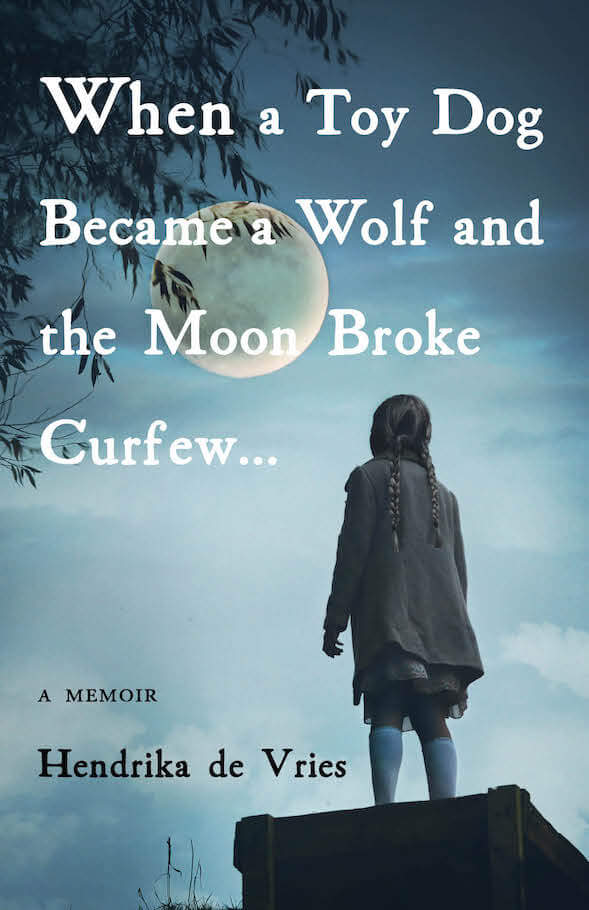
When a Toy Dog Became a Wolf and the Moon Broke Curfew: A Memoir by Hendrika de Vries. The author was in the Netherlands when her father was deported to a Nazi POW camp and her mother joined the Resistance. It is the story of the tragic events of Amsterdam during WWII, as seen through the eyes of a young girl, and a reflection on the wisdom she gained from her experience.


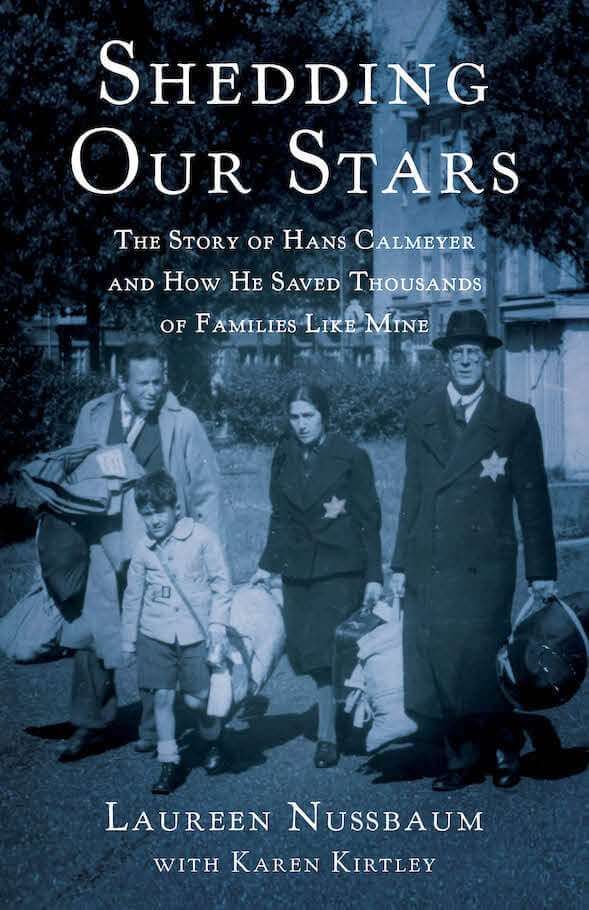
Shedding Our Stars: The Story of Hans Calmeyer and How He Saved Thousands of Families Like Mine by Laureen Nussbaum with Karen Kirtley. Hans Calmeyer was a lawyer in the Netherlands appointed by the occupying Germans to adjudicate "doubtful cases" of people trying to leave the country. He saved at least 3,700 Jews from deportation to Nazi camps, including Nussbaum and her family.

Laureen Nussbaum was a childhood friend of Anne Frank in Amsterdam. She was a professor of Foreign Languages and Literature at Portland State University. Since retiring, she lectures on the Holocaust, Anne Frank, and her experience during World War II.


Both books are available from She Writes Press, one of my favorite independent publishers. I admire their business model and they have turned out an impressive book list! What they do for women writers (and readers) is really wonderful. The Fall 2019 Catalog, as well as back list and upcoming titles, are available on the She Writes Press website.


Thanks for joining me for Mailbox Monday, a weekly "show & tell" blog event where participants share the books they acquired the week before. Visit the Mailbox Monday website to find links to all the participants' posts and read more about Books that Caught our Eye.

Mailbox Monday is graciously hosted by Leslie of Under My Apple Tree, Serena of Savvy Verse & Wit, and Martha of Reviews by Martha's Bookshelf.

Saturday, October 19, 2019

Author Interview: Lisa Braver Moss, Author of Shrug


Author Lisa Braver Moss' new novel Shrug is drawn from her own tumultuous adolescence in 1960s Berkeley, California. Moss still lives in the Bay Area. She usually writes nonfiction, specializing in family issues, health, Judaism and humor. Her essays have appeared in the Huffington Post, Parents, Tikkun, Lilith, and other publications. Shrug is her second novel; The Measure of His Grief was her debut novel.


Lisa recently talked with Rose City Reader about Berkeley in the 1960s, the teenage voice, and her new book Shrug:

How did you come to write Shrug?

I worked on Shrug, off and on, for years. It’s a book I felt I just had to write, but for a long time I didn’t know how to tell the story, partly because of the riddle of how to manage the highly emotionally-charged content. The manuscript would sit in a drawer and I would work on other writing projects. Then I’d take it out of the drawer, dust it off and revise it, but it still wasn’t quite right, so back into the drawer it would go. I did this many times! Luckily I was able to write a lot in between.

The story takes place in Berkeley in the 1960s. What drew you to this time and location for the setting of your novel?

Shrug is autobiographical, and I grew up in Berkeley during that period. The 1960s were a time of social chaos in Berkeley, but also a time of tremendous vitality. I thought my home town made a good backdrop for the story: the chaos out there in the streets, juxtaposed with the home life instability.

Your lead character Martha blames herself for the domestic violence of her parents. Why do you think children do this?

I don’t think Martha exactly blames herself for her parents’ behavior. It’s more subtle than that. Martha thinks it’s her responsibility to fix what’s in her family. She believes she sees what’s wrong, and that she therefore has an obligation to make it right. Neither of these beliefs is true, but that over-developed sense of responsibility enables Martha to hold on to the illusion that she can control her circumstances if she just tries harder. Of course, she’s already one of those people who tries too hard! But somehow, and I think this is true for many children growing up with domestic violence, feeling responsible to fix the family is more palatable than the idea that one’s own parents are unsafe. That’s too overwhelmingly painful to contemplate, so kids can often turn against themselves, feeling they’ve failed, even if that’s not a conscious feeling.

What role does music play in Martha’s life and in your book?

Music is of tremendous importance to me, and to Martha. This was one area where I just allowed Martha to be virtually the same as me (i.e., Martha has essentially the same taste in music that I had during my teen years). I had great fun with this. However, music is Martha’s only real outlet, the one thing she knows she should pursue, and she even gets some relief from her shrug while lost in the music. I had outlets other than music as a kid, and didn’t choose to pursue music seriously. In Martha’s case, music is her ticket, the one escape hatch that makes sense for her and makes her feel she has something to offer.

What did you learn from writing your book – either about the subject of the book or the writing process – that most surprised you?

I’d say I learned the power of voice. I finally tried writing the beginning as a teenager would tell the story, and it just worked. It turned out that once I “got” that voice, it wasn’t hard to bring it all the way through the novel. I still remember feeling many of the ways that Martha feels in the book, so the voice came fairly naturally. I had to go through and simplify some of the language, but that wasn’t hard. I guess that was the biggest surprise – that any aspect of writing Shrug was easy!

Did you know right away, or have an idea, how you were going to end the story? Or did it come to you as you were in the process of writing?

I knew how the book would end, and I knew much of the middle. I wasn’t sure how to start the story; that came to me later (and thank God for the cut-and-paste function in Word…!).

Who are your three (or four or five) favorite authors? Is your own writing influenced by the authors you read?

My writing, or maybe it’s just my thinking, is very much influenced by what I’m reading. I have to be careful of this, in fact – that what I’m reading doesn’t interfere with my work.

I like straight-ahead fiction like the novels of Nick Hornby and Richard Russo, and also, of course, powerful women’s voices – Barbara Kingsolver, Jane Smiley, Eve Ensler, Kate Braverman, to name just a few. However, a disclaimer – this list is so incomplete that I’m not sure it even makes sense to try to compile it. Ask me again in a month and the answers might be different!

What is the most valuable advice you’ve been given as an author?

A friend who was a writer told me early on that in writing, everything is fixable – i.e., there’s always a solution. This is not exactly advice – and there is certainly such a thing as a deadline – but it’s one of the things I love about writing. This idea of infinite “fixability” has given me the stamina to keep going when some part of me wanted to quit.

Do you have any events coming up to promote your book?

Yes! I’m speaking on Friday, November 8th at 7:30 p.m. at Temple Sinai in Oakland, California. Then I’ll be on a panel of three authors who have recent books about the 1960s. That one will be Sunday, November 10th at 1 p.m. at Book Passage in Corte Madera, California.

What’s next? Are you working on your next book?

Not just yet. Ideas are percolating… fortunately I have many interests, so I can take a little break and do other things, which I find gives my unconscious a good way to sort out my thoughts.


THANK YOU, LISA!

SHRUG IS AVAILABLE ONLINE, OR YOU CAN ASK YOUR LOCAL BOOK SELLER TO ORDER IT!


Thursday, October 17, 2019

Book Beginnings: A Place in the World and Birds of Wonder

BOOK BEGINNINGS ON FRIDAYS
THANKS FOR JOINING ME ON FRIDAYS FOR BOOK BEGINNING FUN!

I have two books again this week, one I am reading now and another I plan to read on my upcoming trip to New York state.

MY BOOK BEGINNINGS


Mira stood in the center of the entry hall, her head throbbing.

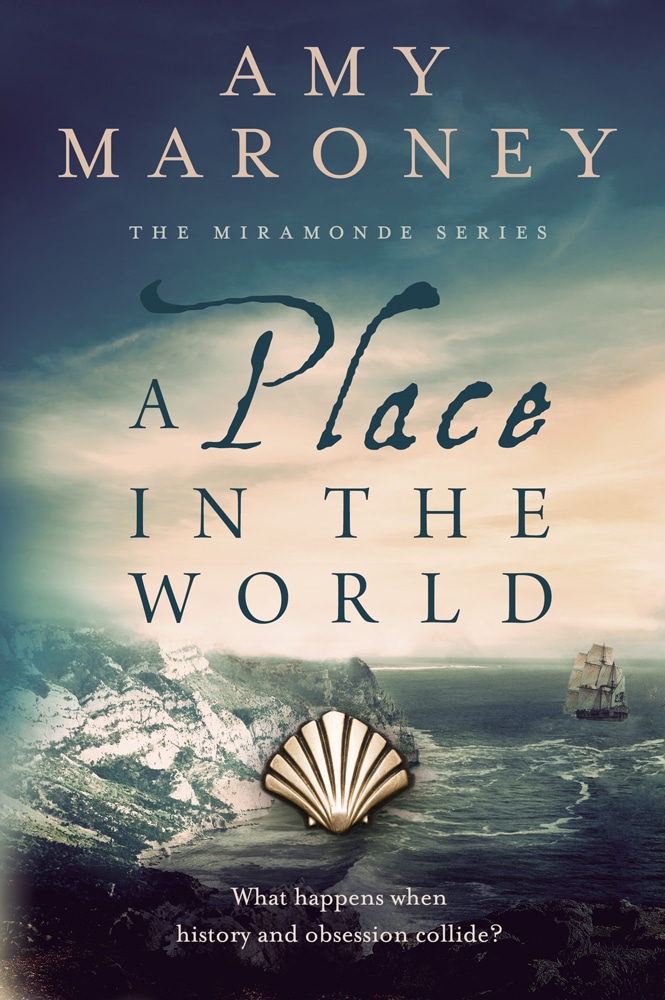
A Place in the World by Amy Maroney. This last book in Maroney's Miramonde series just came out. I am racing through the second one, Mira's Way, so I can read this one.

The Miramonde series follows a female artist in the early 1500s in Basque sheep country, and the modern day art historian tracing her story. It starts with The Girl from Oto, continues with Mira's Way, includes a preqel novella called The Promise, and concludes with A Place in the World.

Read my interview with Amy Maroney about her series, female artists, and what drew her to historical fiction.


Jes tossed the contents of the glove compartment onto the passenger seat – flashlight, two ossified sticks of gum, an old breathalyzer, the pre-digital model.

Birds of Wonder by Cynthia Robinson. This debut novel is a family drama and murder mystery set in upstate New York. Things start off complicated since Jes the police detective is the daughter of the woman who just discovered a dead body.


Please join me every Friday to share the first sentence (or so) of the book you are reading, along with your initial thoughts about the sentence, impressions of the book, or anything else the opener inspires. Please remember to include the title of the book and the author’s name.

EARLY BIRDS & SLOWPOKES: This weekly post goes up Thursday evening for those who like to get their posts up and linked early on. But feel free to add a link all week.

SOCIAL MEDIA: If you are on Twitter, Instagram, or other social media, please post using the hash tag #BookBeginnings. I try to follow all Book Beginnings participants on whatever interweb sites you are on, so please let me know if I have missed any and I will catch up. Please find me on InstagramFacebook, and Twitter.

YOUR BOOK BEGINNING


TIE IN: The Friday 56 hosted by Freda's Voice is a natural tie in with this event and there is a lot of cross over, so many people combine the two. The idea is to post a teaser from page 56 of the book you are reading and share a link to your post. Find details and the Linky for your Friday 56 post on Freda’s Voice.


MY FRIDAY 56

From A Place in the World:

“I made a promise to someone who knows the artist. I told him I would repair this painting and bring it to her one day.”

From Birds of Wonder:

A disturbing number of men would, if given the chance. Especially if they thought there wouldn’t be consequences – foster kids were low-risk targets, right up there with prostitutes and junkies.


Wednesday, October 16, 2019

Author Interview: Mimi Bull, Author of Celibacy, A Love Story


Mimi Bull grew up in New England, the adopted daughter of an older single mother who raised her alongside her adult "sister" who she later learned was her biological mother. Mimi's memoir (now out from Bauhan Publishing) tells the story of growing up the unacknowledged child of a Catholic priest and what that meant to her as a child, her mother, and raising her own children.


Mimi talked with Rose City Reader about her new book Celibacy, a Love Story: Memoir of a Catholic Priest's Daughter:

Can you give us a little of the story about your parents, so we understand why you wrote a book about your family life?

In 1936 when I was conceived and born, my parents, a single woman and a young Polish pastor together with my maternal Grandmother made the difficult decision to keep me and raise me. It would have been far simpler for them to put me up for adoption given the web of secrets and danger of exposure they would face during that rigidly strict and judgmental time in the predominantly Irish Catholic Boston Diocese and the small town where we lived.

My grandmother and mother owned a prosperous hairdressing business. Finding work for my father, had he left the priesthood, would have been hard going in the depth of the Depression and even had they married, disgrace and shame would have driven my parents out the Boston area. I speculate here, I never knew them as my parents and could not discuss any of this with them. The book sketches our early family life but moves on to the impact on my life of finding that nothing I was told as a child was true.

What prompted you, in your 80s, to write your memoir: Celibacy, a Love Story?

I actually began the book nearly twenty years ago. It was part of my effort to integrate into my life story who my parents were, who they were as a couple and as my parents, and what they had sacrificed to keep and raise me. I needed to think my way into the reality of what they had experienced, to understand their relationship, and to root myself in the truth rather than the web of protective lies necessitated by how they were constrained to live their lives. I wrote it for my family initially and began to see the impact of the unusual story on my fellow writers who encouraged me to speak out to a larger audience. There are universal themes of secrets, depression, marriage, the importance of claiming one’s roots, one’s identity.

What was your relationship like with the man you later learned was your father?

My father was a consistent part of my life until his sudden death at 48 at the end of my freshman year in college. He was like a loving uncle who lived nearby. We were members of his Polish parish. He came to dinner at our home every one or two weeks. I spent a lot of time with him after school, during trips to Boston, and at his fishing camp. He was my “guardian,” my parish priest, my teacher and disciplinarian.

There is more awareness of the many children, like yourself, fathered by Catholic priests. How has the Catholic Church responded to these revelations?

In the 900-year history of required celibacy for its clergy, there was in Canon Law (which governs all aspects of the Catholic Church) nothing to guide bishops dealing with priests who had children. Only in the last year have as-yet-secret guidelines been formulated. It came about with the addition of children of priests to the Office of the Welfare of Children, along with victims of abuse by priests. Meanwhile, the conservative estimate of the worldwide number of children of priests today is 44,000.

You mention Coping International in your book. Can you tell us a little about that organization? Are there other organizations for children of priests?

Coping International was founded in Ireland by a child of a priest, a psychotherapist who had himself studied in Spain for the priesthood. He felt the need for a center for children of priests to “meet” online and share their stories, thereby being aware that there are so many others like them. Coping is also a clearing house of information, a voice, a lobby for issues that affect this community. It was instrumental, for example, in pushing for inclusion of priest’s children in the Vatican’s Office of the Welfare of Children. If there are other such organizations, I am as yet unaware of them.

Who is your intended audience and what do you hope your readers will gain from your book?

Readers dealing with difficult issues in their life and looking for an example of a search for self-knowledge. Celibacy: A Love Story, is as yet an unusual story. People who are drawn to odd tales will like it. I am surprised by the response of younger readers in their 20s and 30s who have written me in detail about grappling with identity issues that resonated with them in my book. While it has primarily been women who have written, there are many sons of priests and men in general who experience the secrecy, shame, or separation from a parent, among other issues, who would find much that is familiar in this book.

THANK YOU, MIMI!

CELIBACY, A LOVE STORY IS AVAILABLE ONLINE, OR ASK YOUR LOCAL BOOK SELLER TO ORDER IT.

NOTES

If Mimi's memoir sounds good, Bauhan Publishing has a couple of other new books out this fall that may also appeal to you:

Someday this Will Fit: Linked Essays, Meditations & Other Midlife Follies by Joan Silverman, a collection of "bite-sized narratives" that evoke the richness and humor of daily life.

From the Midway: Unfolding Stories of Redemption and Belonging by Leaf Seligman, linked short stories depicting the lives of sideshow oddities in an early twentieth-century carnival traveling through the rural south.


Tuesday, October 15, 2019

Teaser Tuesday Twofer: The Melon by Amy Goldman & Frank's Revenge by Don DuPay

I have two teasers this week because I have stacks of new books on my desk!


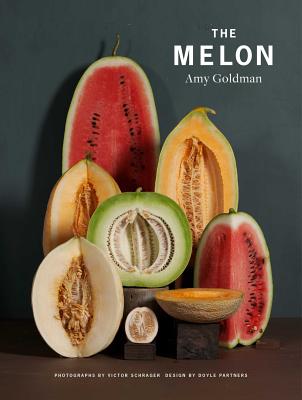
These types of plants may not be as easy to grow as tomatoes, but you don’t need a staff of gardeners and a greenhouse, either. If you are blessed with a long, warm, dry summer, and a garden with lots of room to sprawl, plants produce flavorful fruit in just a few months.

The Melon by Amy Goldman. Goodman is a gardener, writer, and heritage seed advocate, Her latest book is a voluptuous, picture-filled celebration of melons and watermelons, a revamp of her original melon book. It would make a great holiday gift for gardeners, heritage seed savers, and anyone who loves beautiful photography.

Our summers here in Portland are typically cool and damp, not warm and dry. We do not grow melons here (although Hermiston, Oregon in the eastern part of the state is known for a particularly sweet melon variety), but the gorgeous pictures in this book make me wish we did.


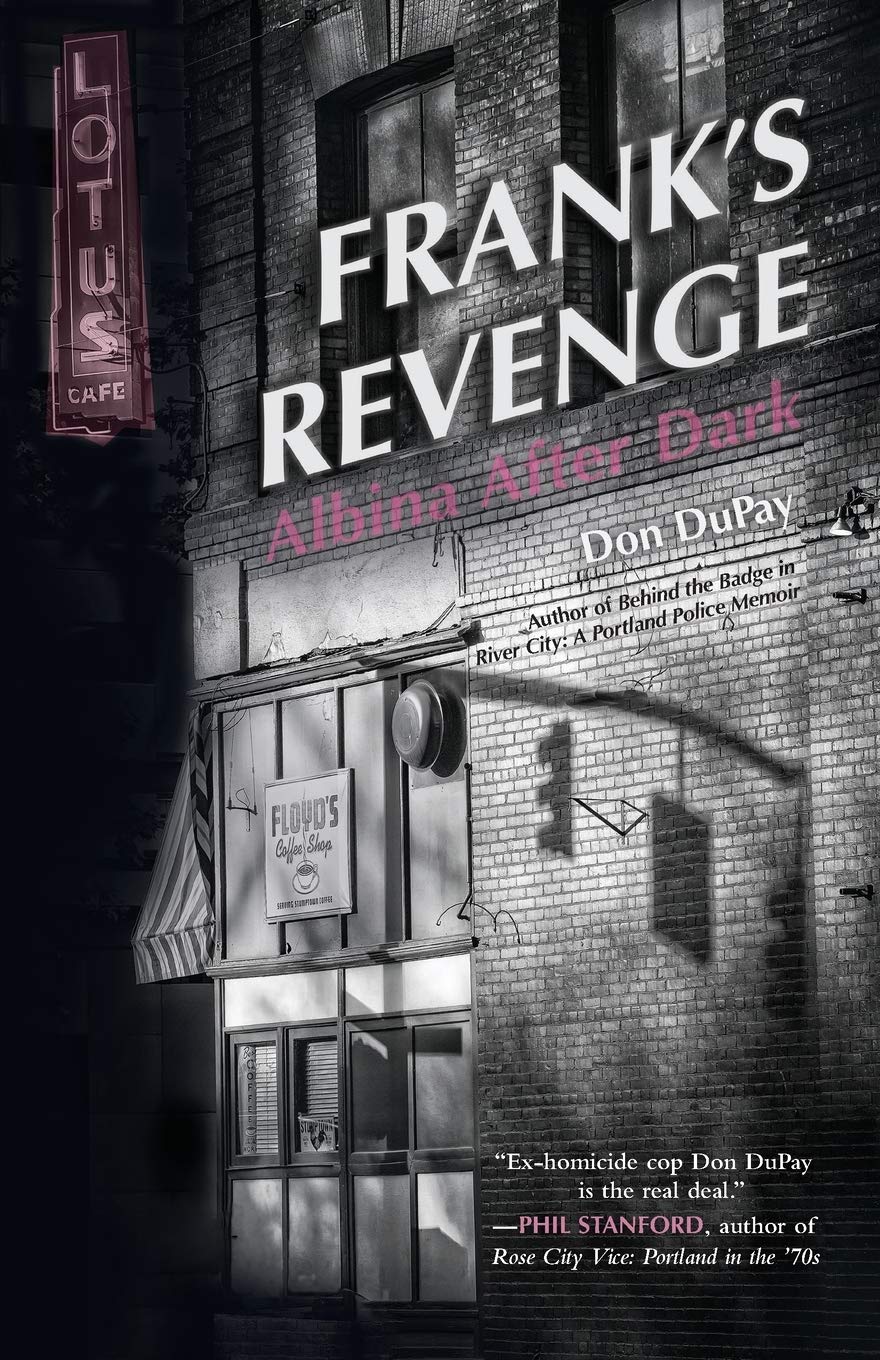
Bart turned and staggered out the back door leaving his empty Hennessey bottle on the poker table. Roosevelt tucked the .38 back in his belt, and the two men looked at each other, both taking deep breaths and looking out the window at Bart’s disappearing, bobbing head, bent forward and slumping down the darkened street.

Frank's Revenge: Albina After Dark by Don DuPay. This new crime novel set in 1970s Portland is as gritty as it gets. DuPay is a former homicide cop and his debut novel is great urban noir.


Teaser Tuesdays is hosted by The Purple Booker. Participants share a two-sentence teaser from the book they are reading or featuring. Please remember to include the name of the book and the author. You can share your teaser in a comment below, or with a comment or link at the Teaser Tuesday site, where you can find the official rules for this weekly event.


Related Posts Plugin for WordPress, Blogger...