Showing posts with label Nobel Laureates. Show all posts

Sunday, May 18, 2025

"Green But Unseen" -- BOOK THOUGHTS


BOOK THOUGHTS

Green But Unseen

This blog is my first bookish love, but I do enjoy the spontaneity and general sense of fun found among bookstagrammers on Instagram. One of my favorite things is how bookstagrammers come up with clever ways to highlight the books in their collection. One of the best is posting about a set of books based only on the color of the covers or spines. A popular version of this is to gather "Red But Unread" books. My personal favorite (because I thought of it) is to feature "Orange You Going To Read That" books.

A new one making the rounds is Green But Unseen, showcasing books with green spines or covers. I picked a baker's dozen of 13 books with green spines. These books have nothing intentionally in common besides their green spines and that I have not yet read any of them. 

These are in alphabetical order, by author. Which would you pick first? 

Family & Friends by Anita Brookner. I have so many of her books on my TBR shelf and have only read Hotel du Lac, because it won the Booker Prize. I want to read more, although I've been reluctant to start because I've read that the rest of the books don't stand up to Hotel du Lac. The only way to find out is to try for myself.

The After Party by Anton DiSclafani, a novel about Houston socialites in the 1950s. It sounds fun to me, although it gets mixed reviews.

The Old Man and Me by Elaine Dundy. This one is not a sequel to The Dud Avocado, but is similar. Avocado is about a 21-year-old American woman who find adventure in Paris. Old Man is about a slightly older American woman who finds adventure in London. 

The Beet Queen by Louise Erdrich. This one has been on my shelf the longest. I always like her books so should get cracking on this one.

Crusoe’s Daughter by Jane Gardam. Her Old Filth trilogy is a recent favorite of mine. I want to read more by her and have gathered several, including this one.

The Go-Between by L.P. Hartley. I remember that my sister read this one in college and loved it. It's a modern classic I’ve been meaning to read for quite a while.

Kaleidoscope by J. Robert Janes. I love and collect paperback Soho Crime books with these color-block spines. Occasionally, I come across a hardback version, like this. I prefer the paperbacks because they all match, but will take the hardbacks if it is all I can find.

The Secrets of the Bastide Blanche by M.L. Longworth, book 7 in her Provenรงal Mysteries series, one of the many series languishing on my shelf. My plan is to start this series as soon as I finish Martin Walker's "Bruno, Chief of Police" series, also set in rural France. 

Midaq Alley, The Thief and the Dogs, and Miramar by Naguib Mahfouz in an omnibus edition. Until I took this picture, I had it in my head that these three novels were his famous "Cairo Trilogy," but they are not. Honestly, I don’t know if I’ll ever get to these books. Should I? He did win the Nobel Prize for Literature after all. 

Civil to Strangers by Barbara Pym is one of several of her books I have in Virago Modern Classic editions. She’s a favorite, and I feel a Pym jag coming on. Maybe I'll tackle her books next, as soon as I finish my Helen MacInnes deep dive. 

The Babes in the Wood by Ruth Rendell, book 19 of 24 from her Inspector Wexford series. I’ve only read the first one, so I have a way to go!

The Charterhouse of Parma by Stendhal, in a Modern Library edition. The Red and the Black almost killed me, so I've been putting this one off. But I hear it is more enjoyable than Red & Black, so I'll get to it one of these days.

August Folly by Angela Thirkell, which now I plan to read in August. I've only read one of her books, but I know she is having a resurgence in popularity. I want to read more. 

What unread green-spined books can you find on your shelves?

And if you are a fellow bookstagrammer, drop me a comment with your user name so we can find each other over there. 


Saturday, June 3, 2023

Books I read in May -- MONTHLY WRAP UP


MONTHLY WRAP UP
May 2023

The merry month of May was a mixed-up reading month for me. I wanted to tackle a couple of classics that have been languishing on my TBR shelves. But I also went to visit my mom and we took a little road trip when I was there, so I had a chance to gulp down a few fluffier holiday reads.

Three of the book I read were from my TBR 23 in '23 list. Three were mysteries from series I’m trying to finish before a start a new series. Three were from my Classics Club list because my goal is to finish my 50 books by the end of the year. Do you have a Classics Club list? Check out the Classics Club website for details.

Do you spot any favorites on this list? 

PICTURED

The Birds by Daphne du Maurier. I'm in a buddy read group on Instagram doing a Du Maurier Deep Dive and this was our pick for May. Short stories aren’t my thing, but these were gripping! ๐ŸŒน๐ŸŒน๐ŸŒน๐ŸŒน

The Magic Barrel by Bernard Malamud, winner of the 1959 National Book Award, a Classics Club pick. More short stories, but these were also very good. ๐ŸŒน๐ŸŒน๐ŸŒน๐ŸŒน

A Cordial Water by M. F. K. Fisher is another on my Classics Club list and a TBR 23 in ’23 book. Interesting, but not my favorite M. F. K. Fisher book. It was a study of historical healing remedies, not personal essays, and I found it pretty dry. ๐ŸŒน๐ŸŒน๐ŸŒน

More Home Cooking: A Writer Returns to the Kitchen by Laurie Colwin. I read Home Cooking last month and this sequel was just as good. Both are definitely tops with me for food books. ๐ŸŒน๐ŸŒน๐ŸŒน๐ŸŒน๐ŸŒน

People We Meet on Vacation by Emily Henry was pure fun. ๐ŸŒน๐ŸŒน๐ŸŒน๐ŸŒน

Quo Vadis by Nobel Laureate Henryk Sienkiewicz, another from my Classics Club list. I've wanted to read this classic novel about the early Christian Church forever. Worth reading, but it had its repetitive and draggy spots. ๐ŸŒน๐ŸŒน๐ŸŒน

Black Dogs by Ian McEwan, an excellent short novel I avoided because some of his earlier books were so creepy. This one isn't creepy, just interesting. Another TBR 23 in ’23 read. ๐ŸŒน๐ŸŒน๐ŸŒน๐ŸŒน๐ŸŒน

Mystic River by Dennis Lehane. I can’t believe it took me so long to get around to this one, also on my TBR 23 in ’23 list. ๐ŸŒน๐ŸŒน๐ŸŒน๐ŸŒน๐ŸŒน

NOT PICTURED

Fleshmarket Close by Ian Rankin. His John Rebus series is one I’m trying to finish. I left the book with my mom. ๐ŸŒน๐ŸŒน๐ŸŒน๐ŸŒน๐ŸŒน

Mapp & Lucia by E. F. Benson was my highlight of the month. This is the fourth book in the series and the first book in Volume Two of the omnibus collection. ๐ŸŒน๐ŸŒน๐ŸŒน๐ŸŒน

Glass Houses by Louise Penny. Her Three Pines series is another I’m concentrating on. Some reviews complain she overreached on this one, but I was 100% in for the ride. ๐ŸŒน๐ŸŒน๐ŸŒน๐ŸŒน๐ŸŒน

Deception on His Mind by Elizabeth George, the third series I’m trying to complete. This one stars Barbara Havers and Lynley isn’t in it at all, but I thought it was one of the best ones so far. ๐ŸŒน๐ŸŒน๐ŸŒน๐ŸŒน๐ŸŒน

What was your reading month like? What were your standout books? 


Tuesday, February 6, 2018

Teaser Tuesday: Absalom, Absalom!


That was the French architect. Years later the town learned that he had come all the way from Martinique on Sutpen's bare promise and lived for two years on venison cooked over a campfire, in an unfloored tent made of the wagon hood, before he so much as saw any color or shape of pay.

-- Absalom, Absalom! by William Faulkner. This one is dense, but not stream-of-conscious like The Sound and the Fury, so I like it better.


Teaser Tuesdays is hosted by The Purple Booker, where you can find the official rules for this weekly event.

Thursday, July 27, 2017

Book Beginning: Death by Water by Kenzaburo Oe

BOOK BEGINNINGS ON FRIDAYS

THANKS FOR JOINING ME ON FRIDAYS FOR BOOK BEGINNING FUN!

MY BOOK BEGINNING


The year I went off to university in Tokyo, something fateful happened when I returned home to Shikoku for one of the last in a series of traditional Buddhist services for my father.

-- Death by Water by Kenzaburo Oe. Don't think from the title this is a mystery! If I weren't trying to read at least one book by every Nobel Laureate for Literature, I don't know that I could get through this one. It's pretty heavy sledding. I enjoy it for the most part, but then that part repeats itself over, and over, and over.


Please join me every Friday to share the first sentence (or so) of the book you are reading, along with your initial thoughts about the sentence, impressions of the book, or anything else the opener inspires. Please remember to include the title of the book and the author’s name.

EARLY BIRDS & SLOWPOKES: This weekly post goes up Thursday evening for those who like to get their posts up and linked early on. But feel free to add a link all week.

FACEBOOK: Rose City Reader has a Facebook page where I post about new and favorite books, book events, and other bookish tidbits, as well as link to blog posts. I'd love a "Like" on the page! You can go to the page here to Like it. I am happy to Like you back if you have a blog or professional Facebook page, so please leave a comment with a link and I will find you.

TWITTER, ETC: If you are on Twitter, Instagram, Google+, or other social media, please post using the hash tag #BookBeginnings. I try to follow all Book  Beginnings participants on whatever interweb sites you are on, so please let me know if I have missed any and I will catch up.

TIE IN: The Friday 56 hosted by Freda's Voice is a natural tie in with this event and there is a lot of cross over, so many people combine the two. The idea is to post a teaser from page 56 of the book you are reading and share a link to your post. Find details and the Linky for your Friday 56 post on Freda’s Voice.

YOUR BOOK BEGINNING


Monday, April 24, 2017

Mailbox Monday: The Hour of Daydreams and Library Sale Loot

What books came into your house last week? One new release from Forest Avenue Press came to me that looks super cool:


The Hour of Daydreams by Renee Macalino Rutledge. This debut novel reimagines Filipino folklore in the setting of a contemporary marriage. It looks wonderful!

And I got a great little shelf of new books at the Multnomah County Friends of the Library spring book sale, which I won't list, but here's a picture. What looks good?


Thanks for joining me for Mailbox Monday, a weekly "show & tell" blog event where participants share the books they acquired the week before. Visit the Mailbox Monday website to find links to all the participants' posts and read more about Books that Caught our Eye.

Mailbox Monday is graciously hosted by Leslie of Under My Apple Tree, Serena of Savvy Verse & Wit, and Vicki of I'd Rather Be at the Beach.

Tuesday, September 6, 2016

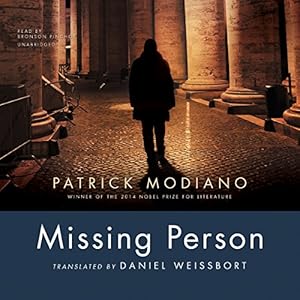
Teaser Tuesday: Missing Person by Patrick Modiano


With a single stride he was out of the cafรฉ, not turning around, and I felt an emptiness all of a sudden. . . . Without him, without his help, I wonder what would have become of me, ten years back, when I was struck by amnesia and was groping about in a fog.

-- Missing Person by Patrick Modiano, who won the Nobel Prize for literature in 2014. Missing Person was published in 1978 and is, on the surface at least, a post-war noir mystery of the narrator's search to discover his own lost identity.


Teaser Tuesdays is hosted by MizB at Books and a Beat, where you can find the official rules for this weekly event.

Monday, April 4, 2016

Mailbox Monday


Thanks for joining me for Mailbox Monday! MM was created by Marcia, who graciously hosted it for a long, long time, before turning it into a touring event. Mailbox Monday has now returned to its permanent home where you can link to your MM post.

I got two books last week, and both intrigue me:


Cabal by Michael Dibdin. I've never read one of Dibdin's mysteries featuring police detective Aurelio Zen, but I saw the short BBC series starring Rufus Sewell in the lead role and am looking forward to trying the books. Cabal isn't the first in the series but I found it at a Little Free Library in my neighborhood so I thought I'd give it a try.


The Fox Was Ever the Hunter by Herta Mรผller, translated by Philip Boehm. Mรผller won 2009 Nobel Prize in Literature. This is the new release of her 1992 novel about Romania in the last months of the Ceausescu regime. Mine is an early review copy from LibraryThing and the book is available for pre-order for its May 10 release.

Wednesday, June 26, 2013

Review: The Tin Drum by Gรผnter Grass


Most books you can read, analyze, and review, but some you just have to accept. The Tin Drum by Gรผnter Grass is a book I had to take on its own terms.

The hero of this postwar German classic is Oscar Matzerath, who thought like an adult from the moment he was born.  At his birth, he heard his mother exclaim that he would get a tin drum on his third birthday, while his father announced that the baby would someday take over the family grocery store.  Having no interest in running a grocery store, baby Oscar determined that he would stop growing on his third birthday and remain forever a toddler with a tin drum.  Which he did.

Oscar can also shatter glass with his voice, which he does in dozens of creative and destructive ways.  (The scream singing and a glass shattering are reason enough to skip the movie adaptation.)

Oscar narrates his life story from an insane asylum where he is confined awaiting the outcome of an appeal of a criminal trial.  The story begins with his grandmother rescuing and marrying an escaping arsonist, continues through childhood with his two "presumptive fathers" (his mother's husband and her lover), follows Oscar as he tours with a troupe of performing dwarfs during World War II, to his later role as the leader of a youth gang, and finally his career as a jazz drummer in an avant-garde club where the customers eat raw onions.

So, yes, The Tin Drum is a crazy book, with so much imagery and so much going on and so many ideas swirling around that it is impossible to make sense out of it.  It's a book only a Ph.D. candidate could love.  I had to just let it roll on, laughing at the funny bits – and there are many – mulling over the ideas that grabbed me, and letting go of the rest of it.

OTHER REVIEWS

If you would like your review of The Tin Drum listed here, please leave a comment with a link and I will add it.

NOTES

I've had a copy of The Tin Drum on my TBR shelf forever, but it daunted me.  The whole notion of German literature daunts me.

But I saw that my library had an unabridged audio version of the new translation of this Nobel Laureate's classic, and decided to go that route.  I never would have gotten through the paper version.  I highly recommend the new audiobook from Blackstone Audio.  The reader, Paul Michael Garcia, was over-the-top good. 

Thursday, May 23, 2013

Review: Independent People


Independent People, first published in Iceland in 1934, secured Halldรณr Laxness his Nobel Prize in 1955. It is the grim saga of Bjartur of Summerhouses and his family, early 20th Century "crofters" -- subsistence sheep farmers who live in a sod house with the sheep on the ground floor and the family huddled in the upper level. The semi-literate characters starve through the winter and spring until they can grow a few meager vegetables in the home field and sell their scrawny sheep in the fall.

The book is rich, although the plot is meager, following Bjartur from the acquisition of his farmstead through the loss of two wives and three children. Vivid scenes punctuate long passages describing geography, weather, and peasant conversations about sheep ailments and Icelandic politics. For example, in one scene, Bjatur clings to the furry antlers of a reindeer as the animal drags him across a half-frozen river. Meanwhile, his first wife -- about ready to give birth alone in the hut -- kills and butchers a ewe, salts down the meat, and then gorges herself on a pot of offal stew. The cognate, while false, is apt.

Dark humor is woven into the story but does little to lighten the somber mood. With the cadences and vocabulary of Icelandic epic poetry, Independent People reads like a cross between J. R. R. Tolkien and Thomas Hardy. Many readers praise the book's genius; others will find it a heavy slog.

OTHER REVIEWS

CaribousMom

If you would like your review of this book listed here, please leave a comment with a link and I will add it.

NOTES

Independent People counts as one of my choices for the 2013 European Reading Challenge.  At just under 480 pages, it also counts as one of my Chunkster Challenge books.


Saturday, April 6, 2013

Kitchen Remodel, Week Six: Green is the Color of Spring


In anticipation of the arrival of cupboards later this week, we got some color in the kitchen.  The walls were painted the same green as our old kitchen because I love that murky, yellowy green shade. The ceiling is the same pale khaki color as the ceilings in the rest of the house.

We also have a door to the new powder room. Tiny! Here's James Builder demonstrating its diminutive proportions. 


I've been reading food and cooking books during the kitchen remodel to buoy my spirits while cooking in a toaster oven.  But my current book is grim when it comes to food.  It sure makes me count my blessings!

Independent People secured Halldรณr Laxness his Nobel Prize, but his characters do not eat well.  Bjartur of Summerhouses and his family are early 20th Century "crofters" -- subsistence sheep farmers who live in a sod house in Iceland, with the sheep on the ground floor and the family huddled in the upper level.

With the cadences and vocabulary of Icelandic epic poetry, Independent People reads like a cross between J. R. R. Tolkien and Thomas Hardy.  The semi-literate characters starve through the winter and spring until they can grow a few meager vegetables in the home field and sell their scrawny sheep in the fall.


Other than a few batches of doughnuts or pancakes for celebrations, the only cooking described in the book was when the first wife -- about ready to give birth alone in the hut while her husband was lost in a blizzard -- killed and butchered a ewe, salted down the meat, and then gorged herself on a pot of offal stew.  The cognate, while false, is apt.


Independent People counts as one of my choices for the 2013 European Reading Challenge.  At just under 490 pages, it also counts as one of my Chunkster Challenge books.


WEEKEND COOKING


Tuesday, April 2, 2013

Teaser Tuesday: Independent People


It was an incredible blizzard. It was one of those peculiar gales when the mountain sang above the croft as if the trolls that inhabited it had gone demented and taken out their drums; the dog hung whining about the trapdoor, shivering in every limb.

-- Independent People by Halldรณr Laxness, first published in 1946, is the story of subsistence sheep farmer Bjartur of Summerhouses.  It is like a cross between J. R. R. Tolkien and Thomas Hardy.

Independent People counts as one of my choices for the 2013 European Reading Challenge.  At just under 470 pages, it also counts as one of my Chunkster Challenge books.


Teaser Tuesdays is hosted by Should Be Reading, where you can find the official rules for this weekly event. 


Friday, March 29, 2013

Book Beginnings: Independent People


Please join me every Friday to share the first sentence (or so) of the book you are reading, along with your initial thoughts about the sentence, impressions of the book, or anything else the opener inspires. Please remember to include the title of the book and the author's name.

TWITTER, ETC: If you are on Twitter, Google+ or other social media sites, please spread the word. You can use the hash tag #BookBeginnings.

MR. LINKY: Please leave a link to your post below. If you don't have a blog, but want to participate, please leave a comment with your Book Beginning.


MY BOOK BEGINNING


In early times, say the Icelandic chronicles, men from the Western Islands came to live in this country, and when they departed, left behind them crosses, bills, and other objects used in the practice of sorcery.

-- Independent People by Halldรณr Laxness, first published in 1946. Laxness was Iceland's most famous author and only Nobel Laureate.

This story of subsistence sheep farmer Bjartur of Summerhouses is set in the 20th century, but feels like an ancient epic.  So far, it reads like a cross between J. R. R. Tolkien and Thomas Hardy.

Independent People counts as one of my choices for the 2013 European Reading Challenge.  It also brings me one step closer to my goal of reading at least one book by every Nobel Laureate.


Thursday, November 15, 2012

Review: Doctor Zhivago


I probably watched Doctor Zhivago three or four times in high school and college and never could remember the plot, beyond the basics about Omar Sharif being in love with two women – his earnest wife Tanya and the elusive, flawed, and beautiful Lara. Other than that, it was all snow, trains, battles, furry hats, theme music, and Julie Christie's doe eyes.


The book is the same, but without the balaclava music or Julie Christie.

There is a chronological order to it, but with big gaps. Some threads take so long to tie together I had forgotten where they started. And in between scenes of snow, trains, trains stopped by snow, trains buried by snow, battles, battles in snow, battles on trains, and more of the same, were rambling discourses on religion and political philosophy. And I thought the movie was slow!

The themes are grand and the writing, even in translation, is beautiful. Boris Pasternak won the Nobel Prize because of the book, although the Soviet government forced him to renounce the honor. There are many reasons to read Doctor Zhivago and many reasons to enjoy it. But it is a long and often frustrating read.

OTHER REVIEWS

If you would like your review of this book listed here, please leave a comment with a link and I will add it.

NOTES

I read this one for the Eastern Europe Reading Challenge, the TBR Pile Challenge, the Mt. TBR Challenge, and the Off The Shelf Challenge. Since Pasternak won the Nobel Prize, I also made some progress on that list.

Monday, October 15, 2012

Teaser Tuesday: Doctor Zhivago


Once or twice already, Lara had stopped irresolutely and hesitated on the threshold of the drawing room, hoping that Komarovsky, who sat facing the ballroom, would notice her. But he kept his eyes of his cards, which he held fanlike in his left hand, and either really did not see her or pretended not to.
-- Doctor Zhivago by Boris Pasternak.

The book has all the sweeping grandeur of the movie, with the snow, trains, fur hats, tortured love affairs, and soulful looks. The above passage is typical of the dramatic plot.

But what is understandably missing from the movie (at least, as I recall) are long passages of crypto-religious, philosophical ramblings, usually from the mouth or pen of Zhivago's uncle, sometimes from Zhivago himself. This passage describes the general theme, but the rambling passages are much longer -- or at least feel that way.
In the books [Nikolai Nikolaevich] published there in Russian and in translation, he developed his long-standing notion of history as a second universe, erected by mankind in response to the phenomenon of death with the aid of the phenomena of time and memory. The soul of these books was a new understanding of Christianity, their direct consequence a new understanding of art. 

I'm reading this one for the TBR Pile Challenge and the Eastern Europe Reading Challenge.  Since Pasternak won the Nobel Prize because of Doctor Zhivago, I will also make some progress on that list.


Teaser Tuesdays is hosted by Should Be Reading, where you can find the official rules for this weekly event. 


Sunday, May 20, 2012

Mailbox Monday


Thanks for joining me for Mailbox Monday! MM was created by Marcia at A girl and her books (fka The Printed Page), who graciously hosted it for a long, long time, before turning it into a touring meme (details here).

This month, Mailbox Monday is hosted by Martha's Bookshelf.  Please take the time to visit her wonderfully eclectic blog.

Last week, I was down in Salem to give a CLE on Oregon's rules for mandatory child abuse reporters to a group of attorneys. Whenever I am in a different town, I try to swing by the local library to see what it's like and check out the Friends' sale shelf.

I lucked out in Salem.  They have a Friends' store, not just a shelf, and it had an impressive stock of used -- but not ex-library -- books at very good prices. I got a nice little stack of books.


Independent People by Halldor Laxness (Nobel Prize winner and an Iceland choice for the European Reading Challenge)


The Field of Vision by Wright Morris (1957 National Book Award winner and possible choice for the Battle of the Prizes, American Version, Challenge)


Longshot
and For Kicks by Dick Francis (always my favorite)


The Vintage Caper by Peter Mayle (I can't resist)


Rumpole and the Reign of Terror and The Summer of a Dormouse (a memoir) by John Mortimer (I keep buying his books because they sound good to me, but I haven't read any of them yet -- hope I like them!)


A Good Hanging
by Ian Rankin (a short story collection from the John Rebus series)

Also, not from the library store, I got my copy of Jim Harrison's latest. He is an all-time favorite of mine -- so much that I am willing to buy a new hardback.


The Great Leader by Jim Harrison

Sunday, November 15, 2009

Review of the Day: The Complete Short Stories of Ernest Hemingway


How can I review a book that took me 30 years to read? This is not just a book, it is part of my life. I have been working on The Complete Short Stories of Ernest Hemingway longer than all my formal education, two marriages, and my law practice.

I read my first Hemingway short story -- "The Short Happy Life of Francis Macomber" -- when I was a Freshman in high school. In fits and starts since then I have been working my way through the rest. There are some, such as “Hills Like White Elephants” and “The Snows of Kilimanjaro,” that I have read several times. Others, like all the bull fighting stories, maybe only feel like I read them over and over.

I know that I had to start this “Finca Vigia” edition several times, including reading the first half dozen or so stories out loud on road trips -- first with my practice husband and later with my keeper hubby. I made a concerted effort this year to finish this book and this project. Hemingway wrote all his short stories in a 38-year span – I did not want it to take me as long to read them. So I started again at the beginning and read the book all the way through. The Nick Adams stories were new to me, as were the boxing stories and the previously unpublished stories at the end of the book.

But I can’t review Hemingway, especially when my attitudes about his writing have changed over the decades. I was unquestionably awed as a teenager, snide as a college English major, a genuine fan as an adult, and now just a little weary. His writing is masterful. He was a genius with spare dialog and creating reality with only a few brush strokes. (Of course, because he taught Americans a new way of writing, reading the original does not pack the wallop it must have before everyone copied him.) What wore me out was the subject matter – the bull fights and the Spanish Civil War in particular. It just got to be a chore for me to get to the end.

Who knows? Maybe I’ll dip into the collection again in the future and have a completely new attitude about Hemingway. But for now, the book is going back on the shelf.


OTHER REVIEWS AND RELATED POSTS

(If you would like your review of this book or related posts about Hemingway or his books, please leave a comment with a link and I will add it here.)

Friday, July 3, 2009

Review of the Day: The Beggar


Published in 1965, The Beggar is, on the surface at least, the story of Omar’s midlife crisis. While less overtly political than Naguib Mahfouz’s other works, this novella takes on the biggest “political” issue of all – the meaning of life. Omar’s tale is a metaphor for the “midlife crisis” of modern Egypt, 17 years after its 1952 revolution, as both Omar and the country search for meaning after achieving worldly success.

The story reunites three childhood friends all engaged in the same struggle to find the deeper purpose of their adult lives: Othman was a bomb-throwing rebel back in their earlier days. Now, out of prison after 20 years, he is trying to adjust to an Egypt that has adopted the socialist ideals he fought for in his youth. He fights to channel his revolutionary zeal in a post-revolutionary bureaucracy.

Mustafa was an idealistic playwright who sold out and is now the host of a popular radio program sponsored by a snack food company. He embodies the discord between artistic endeavors and modern commerce.

Omar had been an aspiring poet with stars in his eyes, before he became a lawyer and real estate developer. Now, in his 40s, he is bored with his matronly wife and completely indifferent to his law practice. He cannot even get worked up over the news that the government is going to nationalize the apartment buildings he owns. In an effort to recover from this enervating “illness, ” Omar seeks stimulation in the usual combination or wine, women, and song. His reprehensible behavior – abandoning his pregnant wife for a series of trysts with showgirls – demonstrates how the pursuit of mindless, easy entertainment can lead to ruin.

The title comes from a passage in which Mustafa questions whether Omar’s crisis is caused by “suppressed art.” Omar supposes that art may be the solution, but not the cause. Then both wonder whether they would be better off, metaphysically, if they were scientifically inclined, rather than artistically, because science would offer answers that art cannot. Mustafa concludes that they cannot find the solution to Omar’s crisis, stating, “Since there is no revelation in our age, people like you can only go begging.”

The biggest problem is not the content, but the presentation. Mahfouz’s writing style is difficult to follow. He changes verb tenses at random, he uses dialog without identifying the speakers, and he changes the point of view over and over. Often Omar is referred to as “he” and “you” and “I” all in the same passage or even paragraph. It is hard to tell if these are intentional techniques or translation problems, but they are distracting.

These technical problems aside, The Beggar is full to the rim with metaphors and moral issues. It would be a good choice for a high school English class as there is plenty to chew on for such a short book.  

OTHER REVIEWS 

If you would like your review of this, or an other of Mahfouz's books, listed here, please leave a comment with a link and I will add it.

Tuesday, March 31, 2009

List: Nobel Laureates


The Nobel Prize in Literature has been awarded 107 times to 111 Nobel Laureates between 1901 and 2015. I have a goal of reading at least one book by every recipient of the Prize.

If anyone reading this has a similar goal and would like me to link their progress reports to this post, I am happy to do so. Leave a comment with your link and I will add it. There is a group blog called Read the Nobels where people more actively pursuing this project post reviews and record their progress.

Here is the list of Nobel Laureates, starting with the most recent. If I have read any of the author's books, I listed the titles in red after the name; if I have books on my TBR shelf, they are listed in blue. I plan to eventually read something by everyone of these people, even if I have nothing on my TBR shelf right now. Although some may be hard to find as I look at names that ring no bells for me.

Kazuo Ishiguro


Bob Dylan
Svetlana Alexievich
Patrick Modiano


Alice Munro
Mo Yan
Tomas Transtrรถmer
Mario Vargas Llosa
Herta Mรผller
Jean-Marie Gustave Le Clรฉzio
Doris Lessing
Orhan Pamuk
Harold Pinter
Elfriede Jelinek
J. M. Coetzee
Imre Kertรฉsz
V.S. Naipaul
Gao Xingjian
Gรผnter Grass
Josรฉ Saramago
Dario Fo
Wislawa Szymborska
Seamus Heaney
Kenzaburo Oe
Toni Morrison
Derek Walcott
Nadine Gordimer
Octavio Paz
Camilo Josรฉ Cela
Naguib Mahfouz
Joseph Brodsky
Akinwande Oluwole Soyinka
Claude Simon
Jaroslav Seifert
William Golding
Gabriel Garcรญa Mรกrquez
Elias Canetti
Czesล‚aw Miล‚osz
Odysseas Elytis
Isaac Singer
  • A Day of Pleasure: Stories of a Boy Growing Up in Warsaw
Vicente Aleixandre
Saul Bellow
Eugenio Montale
Harry Martinson
Eyvind Johnson
Patrick White
Heinrich Bรถll
Pablo Neruda
Alexsandr Isayevich Solzhenitsyn
Samuel Beckett
Yasunari Kawabata
Miguel รngel Asturias
Nelly Sachs
Shmuel Agnon
Michail Sholokhov
Jean-Paul Sartre
Giorgos Seferis
John Steinbeck
Ivo Andric
Saint-John Perse
Salvatore Quasimodo
Boris Pasternak
Albert Camus
Juan Ramรณn Jimรฉnez
Halldรณr Laxness
Ernest Hemingway
Winston Churchill
Franรงois Mauriac


Pรคr Lagerkvist
Bertrand Russell
William Faulkner
T. S. Eliot*
Andrรฉ Gide
Hermann Hesse
Gabriela Mistral
Johannes Vilhelm Jensen
Frans Eemil Sillanpรครค
Pearl S. Buck
Roger Martin du Gard
Eugene O'Neill
Luigi Pirandello
Ivan Alekseyevich Bunin
John Galsworthy
Erik Axel Karlfeldt
Sinclair Lewis
Thomas Mann
Sigrid Undset
Henri Bergson
Grazia Deledda
George Bernard Shaw
Wล‚adysล‚aw Reymont
William Butler Yeats*
Jacinto Benavente
Anatole France
Knut Hamsun
Carl Spitteler
Henrik Pontoppidan
Karl Adolph Gjellerup
Verner von Heidenstam
Romain Rolland
Rabindranath Tagore
Gerhart Hauptmann
Maurice Maeterlinck
Paul Heyse
Selma Lagerlรถf
Rudolf Christoph Eucken
Rudyard Kipling
Giosuรจ Carducci
Henryk Sienkiewicz
Josรฉ Echegaray y Eizaguirre
Frรฉdรฉric Mistral
Bjรธrnstjerne Bjรธrnson
Theodor Mommsen
Sully Prudhomme


NOTE

Updated on January 21, 2018.


OTHERS READING THE WORKS OF NOBEL LAUREATES

Read the Nobels (group blog)
Rebecca Reads

If you would like to be listed here, please leave a comment with links to your progress reports or reviews and I will add them here.

Friday, March 27, 2009

Review: Humbolt's Gift


What a wonderful, great, big, shaggy dog of a novel Humbolt's Gift is!

While litigating with his ex-wife, being bullied by a B-team mobster, and fending off the marriage plans of his young "palooka" girlfriend, narrator Charlie Citrine contemplates the life of his recently deceased best friend and meditates on big questions such as the nature of death, man's role in the cosmos, and theories of boredom.

With dozens of remarkable supporting characters and side stories, this long book is entertaining throughout. It is not a quick read, but it is worth the time.

Saul Bellow deserved his Nobel -- he was really the Grand Master of American letters. Anthony Burgess included this one on his list of favorite 99 novels.

Thursday, August 14, 2008

Review: Siddhartha


I've been reading several books by Nobel Prize winners lately, in part because I signed up for this Nobel challenge, in part because I have a goal to read at least one book by every winner of the Nobel Prize for literature. Siddhartha was one more step forward on both counts.

I can't say that it did anything for me. Siddhartha is the hero of this allegorical tale of an Indian man's development, from Brahmin student, to mystic, to successful business man and pleasure seeker, to wise ferryboat tender. Maybe back in 1922 when it was first published, or even in the 1960s and '70s when American hippies took it to heart, the examination of Indian mysticism and Buddhism would have been fascinating. But now, when Indian culture is more familiar, it just seems pretentious and overwrought. Many people love it. It just is not my cup of tea.

Related Posts Plugin for WordPress, Blogger...