Showing posts with label travel. Show all posts

Saturday, April 12, 2025

México: Exploring México’s Quality Wines and Phenomenal Cuisine by Michael C. Higgins -- BOOK REVIEW


BOOK REVIEW
Exploring Wine Regions -- México: Exploring México’s Quality Wines and Phenomenal Cuisine by Michael C. Higgins, PhD.

Michael Higgins continues his winning streak with México, the fourth book in his Exploring Wine Regions series. México: Exploring México’s Quality Wines and Phenomenal Cuisine, follows his books on Bordeaux, Argentina, and California's Central Coast, matching their high quality and enticing content.

I know that I (and maybe most people) think of tequila and beer, not wine, when considering México’s alcoholic offerings. Higgins is out to change that perception with his insiders’ guide to México’s wineries, vineyards, and wine-related restaurants and accommodations. In a beautiful, coffee-table book format, Higgins provides all the information you need to explore México’s wine regions, enjoying incredible food, specialty lodging, and side adventures along the way.

Higgins concentrates on the three main wine regions in México – Valle de Guadalupe, Guanajuato, and Queretaro – and their sub-regions. He features wineries that are open to the public, make excellent wines, and offer tourism experiences beyond what he calls “step-up-to-the-bar-to-taste.” These experiences are primarily food-related (everyone has to eat and food and wine go together), from restaurants to food and wine parings to cooking classes, but extend to wine-making lessons, horseback riding, water sports, whale watching, shopping, museums, and more. Even teetotalers can appreciate the incredible descriptions of the food and luxury accommodations the book offers.

Like the other books in his series, Higgin’s México book is crammed with gorgeous photographs, tidbits, and asides, making it a perfect armchair travel book for any wine lover as well as an indispensable resource for planning a wine tour of the region. I can't imagine visiting México’s wine country without Higgins's book!


NOTES

You can read my review of Higgins's France and Argentina books here and his California book here. Go to the Exploring Wine Regions website for more information about this book, the series, and Michael Higgins.
 

FROM THE PUBLISHER'S DESCRIPTION
Tourism in México is outstanding, we all know it. And the Méxican wine regions are no exception. Wine regions are always very beautiful places. Here, the mountains and valleys are ever so enchanting. The wineries are engaging, have lots of tourism activities available, and are especially inviting and friendly with their warm Méxican hospitality. Both connoisseurs and novices turn to this book series for insider information and inspiration. It is a must-have book for expanding your knowledge of México and its wines. With 340 full-color pages and over 600 photographic images, this fourth edition explores México's regions of Valle de Guadalupe (including Ensenada), Guanajuato (including San Miguel de Allende) and Querétaro (with its rich history).




Thursday, December 12, 2024

Exploring Wine Regions: México by Michael Higgins -- BOOK BEGINNINGS


BOOK BEGINNINGS ON FRIDAYS

Exploring Wine Regions: México by Michael Higgins

Thank you for joining me for Book Beginnings on Fridays. Please share the opening sentence (or so) of the book you are reading this week. You can also share from a book that caught your fancy, even if you are not reading it right now.

MY BOOK BEGINNING
In my quest to find knowledgeable and interesting pioneers to enlighten us on the history of viticulture in México, to set-the-stage for the value of this book, and to open our eyes to the wonderful things going on with Mexican wines in the wine regions of México... I was introduced to Doctora Marisa Ramos by Guanajuato's wine pioneer Ricardo Vega (we will hear more from him later).
-- from Exploring Wine Regions: México: Exploring México's Quality Wines and Phenomenal Cuisine by Michael Higgins (ellipses in original).

This México book is the fourth and latest in Michael Higgins's wonderful Exploring Wine Regions series. Like the earlier books, this one is meticulously researched and offers an insider account of wineries and vineyards, as well as travel tips for the food, special lodging, sights, and history of the region.

See my review of the earlier guides to Bordeaux and Argentina here and my review of the California book here.


YOUR BOOK BEGINNINGS

Please add the link to your Book Beginnings post in the box below. If you share on social media, please use the #bookbeginnings hashtag.

Mister Linky's Magical Widgets -- Thumb-Linky widget will appear right here!
This preview will disappear when the widget is displayed on your site.
If this widget does not appear, click here to display it.

THE FRIDAY 56

The Friday 56 is a natural tie-in with Book Beginnings. The idea is to share a two-sentence teaser from page 56 of your featured book. If you are reading an ebook or audiobook, find your teaser from the 56% mark.

Freda at Freda's Voice started and hosted The Friday 56 for a long, long time. She is taking a break and Anne at My Head is Full of Books has taken on hosting duties in her absence. Please visit Anne's blog and link to your Friday 56 post.

MY FRIDAY 56

-- from Exploring Wine Regions: México:
The majority of wineries in Valle de Guadalupe are located on this north side of the valley. They are primarily up into the hills of the valley with a south-facing sun exposure for the vines.
FROM THE PUBLISHER'S DESCRIPTION
This is the fourth book in this award-winning series, now exploring the México Wine Regions. Does México make wine? Yes. Any good? Very good. While México is famous for producing Tequila, this book opens our eyes to high-quality Mexican wines. And the phenomenal cuisine and extraordinary tourism. This book takes you on a journey to discover these amazing wines; combining wine education, an insider travel guide and spectacular photography. Higgins again dazzles his audience with another informative and beautiful book.


Thursday, September 21, 2023

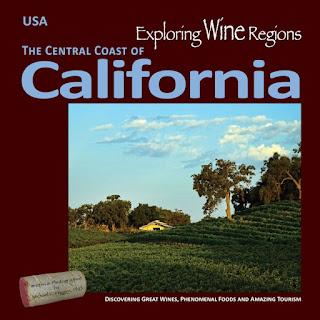
Exploring Wine Regions: The Central Coast of California by Michael Higgins -- BOOK BEGINNINGS

 
BOOK BEGINNINGS ON FRIDAYS

Please join me every Friday for Book Beginnings! Share the first sentence (or so) of the book you are reading, along with your initial thoughts about the sentence, impressions of the book, or anything else the opener inspires. Please remember to include the title of the book and the author’s name.

EARLY BIRDS & SLOWPOKES: This weekly post goes up Thursday evening for those who like to get their posts up and linked early on. But feel free to add a link all week.

SOCIAL MEDIA: If you are on Instagram, Twitter, or other social media, please post using the hash tag #BookBeginnings. I try to follow all Book Beginnings participants on whatever interweb sites you are on, so please let me know if I have missed any and I will catch up. Find me on Instagram, Facebook, and Twitter.

MY BOOK BEGINNING
It is important that we talk about terroir before we begin exploring this book.

This book about the wines of California's Central Coast is the third book in Michael Higgins's Exploring Wine Regions series. The first two books covered Bordeaux country in France and the wines of Argentina. Like the first two, this California book is a meticulously researched, insider account of wineries and vineyards, as well as a travel guide to the food, special lodging, sights, and history you will find. 

This book focusses on the Central Coast of California, specifically Monterey, San Louis Obispo, and Santa Barbara Counties. This coastal area stretches from south of San Francisco to Santa Barbara, just north of Los Angeles. 

I'm familiar with some of the wineries of the Central Coast, mostly those around Paso Robles, from when I lived in San Francisco. But we never did a deep dive into wines of this area. California is close to me here in Oregon and we have family in the Bay Area and Central Coast, so I plan to use this book to plan several wine-centered road trips. 

You can read my review of Higgins's France and Argentina books here. Go to the Exploring Wine Regions website for more information about this book, the series, and Michael Higgins. 

YOUR BOOK BEGINNINGS

Please add the link to your Book Beginnings post in the Linky box below. If you share on social media, please use the hashtag #bookbeginnings.

Mister Linky's Magical Widgets -- Thumb-Linky widget will appear right here!
This preview will disappear when the widget is displayed on your site.
If this widget does not appear, click here to display it.

FROM THE PUBLISHER'S DESCRIPTION
Exploring Wine Regions – California Central Coast is the third book in the series exploring a lesser-known area of the wine regions in California. Most everyone knows of Napa Valley and Sonoma County; however, the Central Coast Wine Regions are producing top-level, high-quality wines, and the tourism is extraordinary.

Twenty million years ago, the Pacific Plate arose from the Pacific Ocean hitting the North American Plate (Canada, United States and Mexico) leaving a sliver of land above the water along California’s coast south of San Francisco. This sliver of land has its own very special terroir highly conducive to making high-quality wines. This book takes you on a journey to discover these amazing wines.

Also, the tourism along the central coast of California is unmatched. The beaches, mountains and valleys are ever so enchanting. The wineries are engaging, have lots of tourism activities available, and are especially inviting and friendly, unlike other wine regions. It’s not uncommon to find the vintner or winemaker at the tasting room wanting to share their stories and their love of wine with you.


Tuesday, July 1, 2014

Teaser Tuesday: Turning Down the Sound


To drive home the danger, myth, and majesty of the Makah, drive back to the Cape Flattery trailhead and hike three-quarters of a mile, mostly on a cedar boardwalk, through the forest to the Cape. . . .  It's the northwesternmost point in the continental United States.

-- From the author's Introduction to Turning Down the Sound: Travel Escapes in Washington's Small Towns by Foster Church, published by OSU Press.

Turning Down the Sound is a must-have guide to exploring Washington state. It makes an excellent companion to Foster's earlier book, Discovering Main Street: Travel Adventures in Small Towns of the Northwest.


Teaser Tuesdays is hosted by Should Be Reading, where you can find the official rules for this weekly event.


Thursday, June 26, 2014

Book Beginning: Turning Down the Sound by Foster Church


THANKS FOR JOINING ME ON FRIDAYS FOR BOOK BEGINNING FUN!

Please join me every Friday to share the first sentence (or so) of the book you are reading, along with your initial thoughts about the sentence, impressions of the book, or anything else the opener inspires. Please remember to include the title of the book and the author's name.

EARLY BIRDS & SLOWPOKES: This weekly post goes up Thursday evening for those who like to get their posts up and linked early on. But feel free to add a link all week.

FACEBOOK: Rose City Reader has a Facebook page where I post about new and favorite books, book events, and other bookish tidbits, as well as link to blog posts. I'd love a "Like" on the page! You can go to the page here to Like it. I am happy to Like you back if you have a blog or professional Facebook page, so please leave a comment with a link and I will find you.

TWITTER, ETC: If you are on Twitter, Google+, or other social media, please post using the hash tag #BookBeginnings. I try to follow all Book  Beginnings participants on whatever interweb sites you are on, so please let me know if I have missed any and I will catch up.

YOUR BOOK BEGINNING


MY BOOK BEGINNING


This book celebrates the small towns Washington as places to explore, savor, and spend the night or two. It treats them as travel destinations rather than dots on a map to drive through on the road someplace else.
-- From the author's Introduction to Turning Down the Sound: Travel Escapes in Washington's Small Towns by Foster Church, published by OSU Press.

As with his earlier book, Discovering Main Street: Travel Adventures in Small Towns of the Northwest, Church revels in the often hard to find charms of small towns. He writes about farm towns that now boast art galleries and antique shops, and other villages with cultural attractions. But the real joy of Turning Down the Sound is how Church really digs in, looking for character, and visitor amenities, in even the most ordinary-seeming burgs.

Tuesday, February 5, 2013

Teaser Tuesdays: Walking Distance


We've chosen these trails as our favorites and to represent the great diversity of long distance walking. These trails are found on six continents, represent fourteen countries, and range from cultural landscapes like Cinque Terre and El Camino De Santiago to wilderness walks like the John Muir Trail and the Kungsleden, and a vast spectrum in between.

-- Walking Distance: Extraordinary Hikes for Ordinary People by Robert and Martha Manning.

This books has me planning hiking vacations enough to fill up several decades.  It is wonderful. And would make a great gift.

Walking Distance is oversized and full of gorgeous pictures of hiking trails all over the world. The husband/wife authors describe the hikes and the amenities (or lack of) along the routes. It is the perfect combination of practical guide and inspiration.


Teaser Tuesdays is hosted by Should Be Reading, where you can find the official rules for this weekly event. 


Friday, February 1, 2013

Book Beginnings: Walking Distance


Please join me every Friday to share the first sentence (or so) of the book you are reading, along with your initial thoughts about the sentence, impressions of the book, or anything else the opener inspires. Please remember to include the title of the book and the author's name.

TWITTER, ETC: If you are on Twitter, please tweet a link to your post using the hash tag #BookBeginnings. I also recently signed up for Google+ and have a button over there in the right-hand column to join my circles or whatever it is. I don't really understand yet how that one works.

MR. LINKY: Please leave a link to your post below. If you don't have a blog, but want to participate, please leave a comment with your Book Beginning.


MY BOOK BEGINNING


About ten years ago we decided to walk the aptly named Long Trail in our home state of Vermont.

-- Walking Distance: Extraordinary Hikes for Ordinary People by Robert and Martha Manning.

I love this book! It is prompting a lot of armchair traveler fantasies. 

Walking Distance is oversized and full of gorgeous pictures of hiking trails all over the world. The husband/wife authors describe the hikes and the amenities (or lack of) along the routes. It is the perfect combination of practical guide and inspiration.

Tuesday, May 17, 2011

Teaser Tuesday: Locations


I do not much like the songs of Edith Piaf, the boulevards of Baron Haussman, the furniture of Louis XIV, the sound of Gertrude Stein, the vainglory of Napoleon or the conceit of Charles de Gaulle.  I distrust, at one level, people who turn ideas into movements; at another, ideas themselves too pressingly articulated.

-- Locations by Jan Morris.

This is Morris explaining the "insular prejudices" that limit her visits to Paris. It is an example of what makes her travel writing so very, very good -- an extraordinary gift of analysis and observation and a willingness to express blunt opinions.

Teaser Tuesdays is hosted by Should Be Reading, where you can find the official rules for this weekly event.


Saturday, May 14, 2011

Opening Sentence of the Day: Locations


It is a truism that the world grows smaller, and a truism especially obvious to anyone like me, who earns a living by perpetual wandering and writing.

-- Locations by Jan Morris.

Her book on Venice, The World of Venice: Revised Edition, is my favorite armchair travel book of all times.  Oxford was also quite good.

This, instead of Morris's usual exhaustive analysis of one city, is a collection of pieces about 13 separate places.  Her unrivaled eye for detail and willingness to render judgment make each essay a treat.

Sunday, May 8, 2011

Bayerische Bücher


I am in love with Bavaria and all things Bavarian, right down to the Griebens in the Schmalz. My Grandpa Fritz came over to America in the 1930s, but we still have many relatives living in Bavaria, including my sister, who is working as a chef at a fancy hotel in Bad Wörishofen.

I'm working on my final plans for our upcoming vacation to beautiful Bavaria.  I've got housesitters lined up, the car rented, and hotels books, now it is time for the really fun stuff of planning activities and sights to see.

It will be my husband's first visit, and it ends with a big family reunion at the mountain inn my Dad's cousin still runs.  That's a lot of family time for Hubby, so I am planning the things he likes to do for the others days -- lots of alpine hikes, charming villages, and a couple of spa days.

So I have my books out today and am planning. I don't have as many travel guides to Bavaria as I thought I did.  These are the books I have, but suggestions would be welcome:

Bavaria by Rodney Bolt.  Mine is an outdated copy of this Cadogan guide, but I don't mind outdated. How much can a Baroque chapel or an Alp change in 10 years?


Karen Brown's Germany: Exceptional Places to Stay and Itineraries.  Brown's guides are always my first place to start when planning a trip, so I did this time too, even though only one of her itineraries covers Bavaria.  We are spending three nights at one of her recommended hotels.


Germany's Best-Loved Driving Tours, published by Frommer's.  Eight of the 25 tours are in Bavaria.  This one has given me several ideas.


Germany, an Eyewitness Travel Guide.  Another great source for what to see in the villages where we will be. I love all the pictures.  


Wednesday, January 19, 2011

Review of the Day: One City's Wilderness


One of Portland's many blessings is Forest Park, a swath of green on the city's western flank, covering over 5,100 acres and containing close to 80 miles of trails, including the Wildwood Trail, the longest contiguous trail in a city park in the United States.

In the updated and expanded third edition of One City's Wilderness, Marcy Cottrell Houle provides the quintessential guide to this incredible urban park. The book contains detailed descriptions of 29 hikes covering all the trails through the park. Each description includes a full-color map; useful statistics, including GPS coordinates; an elevation chart showing elevation gained and lost over the course of the hike; a precise description of the trail and what you will see; and useful sidebars providing tidbits on the history, flora, fauna, and geology relevant to that section of the park. There is also a foldout color map of the entire park inside the back cover.

The book is chock-o-block full of photographs of the park, including color pictures of the park's most beautiful features, field guide sections on plants and birds, and a few black and white photos depicting the park's history.

Houle also includes informative chapters on the history of the park, its geology, watersheds, vegetation, and wildlife. These later include checklists of the plants, mammals, and birds to be found in the park.

But the book is primarily about the trails because hiking through Forrest Park is how best to experience and enjoy it. As Houle explains:

Forest Park is not overrun with asphalt, swimming pools, picnic areas, or developed sports fields. Instead, since its inception sixty years ago, it has offered a quiet kind of enjoyment, the kind most cherished by lovers of the outdoors. The eighty miles of trails and firelanes . . . and the hundreds of acres of hills and canyons in between, make Forest Park a haven for hikers, bird watchers, nature photographers, runners, bicyclists, equestrians, teachers, and students – in short, anyone needing close-in inspiration and natural refreshment.

Every reader will be inspired to accept Houle's "All Trails Challenge" to undertake all of the 29 hikes described. Conveniently, the book contains a challenge section listing the hikes and including a place to record the date each one is accomplished.

One City's Wilderness is a must-have guide for every hiker living in or visiting Portland.


OTHER REVIEWS

(If you would like your review of this book listed here, please leave a comment with a link and I will add it.  Also, if you have hiked any of the trails described in this book and would like your review of that hike listed here, leave a comment with a link and I will list that post.)

NOTES

This is another high quality book from the Oregon State University Press.

Thursday, October 7, 2010

Reading on the Road

btt button


This week's Booking Through Thursday question asks:

When you travel, how many books do you bring with you?
Has this changed since the arrival of ebooks?

The short answer is, "too many." And that hasn't changed a bit with ebooks, since I haven't jumped on that bandwagon. Although now that I listen to audiobooks on my iPod, my book anxiety when traveling has eased somewhat. With over 70 books loaded up, I know I won't run out.

I recently went on vacation, knowing I had limited space, knowing I would undoubtedly find books during my trip that I wanted to bring back, and knowing I wouldn't have lots of time to read -- and I still brought six books for the 11-day trip:

Echoes by Maeve Binchy
Proof by Dick Francis
The Mosquito Coast by Paul Theroux
The Case Has Altered by Martha Grimes
Brazzaville Beach by William Boyd
Enquiry by Dick Francis

I did race through Echoes and Proof, but got bogged down in The Mosquito Coast. It was an incredibly good book and, although exciting, not one to read lightly. I only made it halfway through The Case Has Altered. So it is clear that I overpacked the books.

The problem was compounded by gathering books as I went. Some I picked up on the take one/leave one shelves of our B&Bs, leaving the Binchey and Francis in return. But we also -- foreseeably -- went to a couple of used book stores and even stopped at a book sale at a cottage-cute little library in an Adirondack hamlet.  I ended up bringing seven books home with me, which will show up in next week's Mailbox Monday list.

How about you? I am interested to know what other people answer.

Wednesday, October 6, 2010

Review of the Day: Lunatic Express


Lunatic Express: Discovering the World . . . via Its Most Dangerous Buses, Boats, Trains, and Planes by Carl Hoffman.  (This review was first published here, in the Internet Review of Books.)


Carl Hoffman is a travel junkie. He hits the road like some men hit the bottle. His career as a journalist and author had taken him to the far edges of the world, writing about life aboard a chemical tanker in the Atlantic, flying missionaries in New Guinea, reindeer herders in Siberia, and driving the Baja 1000.

Hoffman came to crave these adventures the way any addict craves his drug of choice. As he describes it:

Home became even more strange to return to. The two lives were jarring[,] but I didn’t tell anyone how difficult it was becoming to straddle these two worlds. I was ever more open to the world and ever more closed at home . . . until the time that I looked forward to most was walking down that Jetway, rather than coming home.

Finally, what looked like a typical mid-life crisis blossomed into full-on travel withdrawals -- Hoffman became physically ill, but with no diagnosable malady. After a year of feeling as if he had “a simmering flu,” he was finally cured by spending two months on a ship in the middle of the Pacific Ocean, writing about the search for Amelia Earhart.

Not surprisingly, Hoffman’s travel jones took a toll on his marriage. Back from the Earhart assignment, now separated from his wife, he was “conscious for the first time of a deep unhappiness, profoundly disconnected from the life I’d thought unshakable.” He decided that a real blowout of a travel bender was the answer to his problems, and the idea for The Lunatic Express was born. Hoffman wanted to travel around the world using only the most perilous means of public transportation -- the statistically most dangerous airlines, overcrowded ferries, treacherous buses, and perilous trains -- and write a book about his journey.

He sought to experience travel not as a holiday but as the necessary evil that most of the people in the world experienced.  Hearkening back to the French roots of the word travel, he described this necessary evil as “a simple daily act of moving from one place to another on the cheapest conveyance possible” but “still a punishing, unpredictable, and sometimes deadly work of travail. ” Hoffman spent five months traveling from his home in Washington, D.C., on a route that took him to Havana, then to South America, Africa, Indonesia, India, Afghanistan, China, Mongolia, and Russia, before a final leg on a Greyhound bus from Los Angeles back to home.

Each chapter opens with a snippet of a news story about a travel disaster -- airplanes crashing into mountains, ferries sinking, buses skidding off cliffs -- elated to the place or particular conveyance featured in that section of the book. Obviously, Hoffman survived to write the book, but the very real risks associated with his trek make his descriptions even more riveting. It is interesting enough to read about a rickety, overcrowded bus driving overnight through the Andes. But the tale becomes harrowing after reading of other buses along that route that plunged into 1,600-foot-deep gorges, killing everyone on board.

Hoffman’s clear, journalistic style is immediately engaging, depending as it does on descriptive details instead of purple metaphor. Readers feel the muggy heat of the Amazon; the smoky grit of the Indian train; the bone-jarring jolt of a propane truck driving off-road across the Mongolian steppe; and every rock hard, joint-numbing, third-class seat, bench, platform, and floor Hoffman tried to sleep on. Experiencing Hoffman’s travels second-hand will be uncomfortable adventure enough for most people.

The book concentrates on transport, as Hoffman rushes from train station to taxi to ferry dock to auto rickshaw to bus terminal. But his descriptions of the world beyond this series of conveyances are some of the best parts, including stories of his visits to a Brazilian gold mining barge, a bird market in Kabul, and this “Dickensian” auto garage in Nairobi:

Block after block of mud passageways littered with garbage and upended vehicles and men sleeping on piles of tires and the sparks of welders and the smell of smoke and oil and diesel and Bondo. It was one lane wide, with two-way traffic. It was hot and glaring, a place of burning fires and braziers and hammering and music, and the mud was so dark, so black, so viscous, it was like oil. It was the worst and the most compelling place I had ever seen.

Hoffman would have done better had he stuck to writing about the world outside his bus windows and spent less time gazing at his own navel. No matter how compelling his personal quest seemed to him, whether he was going to patch things up with his wife and learn to be content at home or continue roaming the world in search of distracting escapades is the sort of banal, existential conflict that is only interesting to the person conflicted.

Trying to make his personal angst relevant to the larger story only made things worse. The more Hoffman agonized over his feelings of isolation, his inability to bond with his friends, and his marginalization of his family, the more his anxieties seemed petty in comparison to the daily efforts of the people he traveled with. His conclusion -- that “I had to forgive myself and start again” -- is a particularly awkward way to wind up a book supposedly about the millions of people who face danger daily and who do not have the luxury of a fresh start.

But when Hoffman isn’t fretting about himself, The Lunatic Express is a terrific ride.

Monday, September 13, 2010

Mailbox Monday


Bermudaonion is hosting Mailbox Monday this month. Thanks Kathy! I also remembered this week to post to In My Mailbox, hosted by The Story Siren.

One book came into my house last week:

42 States of Grace: A Woman's Journey by Maureen Hovenkotter.


A mutual friend suggested that the author send me a copy of this book.  I'm afraid it is going to make me cry, but it looks very good. She was a free-lance writer and an aide to a U.S. Senator.  When her husband died unexpectedly, she set off traveling around America in an RV with her dog Charlie.

This is the sort of random, real-person memoirs that I really like.  

Sunday, September 12, 2010

Review of the Day: Peaceful Places, New York City


In Peaceful Places, New York City Evelyn Kanter explores “129 Tranquil Sites in Manhattan, Brooklyn, Queens, the Bronx, and Staten Island” and throws in a bonus section of four peaceful day trips outside of the city. The sites are listed alphabetically, but cross-indexed by neighborhood and category.

There are many categories include Enchanting Walks, Museums & Galleries, Parks & Gardens, Quiet Tables, and Spiritual Enclaves. Decent maps help pinpoint locations and Kanter gives directions to get to every place on public transportation.

Kanter is a travel writer and photographer with an active lifestyle, which shows in her choices of peaceful sites. She tends to favor hiking trails and open spaces to reading rooms or quiet chapels. For this reason, the book is as of much use to residents looking to discover the hidden corners as to visitors looking for a respite from the hustle and bustle of the Big Apple. Her descriptions of “2,800 acres of forests, meadows, ponds, hills, and valleys” or “dunes and beach grass creat[ing] the only canvas” are enough to entice explorers to Staten Island or Queens, but probably not a visitor looking to cram the most into a weekend.

Out-of-towners may prefer her tips on finding garden atriums and “vest pocket” parks hidden between the skyscrapers of Midtown. Or her short but convincing list of places for quiet cocktails. If even these oases fail to sooth city-jangled nerves, there’s always the option of becoming “temporarily vegetative in total relaxed bliss” with a YeloNap at the Yelo Spa.

Peaceful Places is an inspiration anyone planning a visit to New York, and a must-have book for any New Yorkers looking for adventure in the farther reaches of their grand city.


OTHER REVIEWS

(If you would like your review of this book listed here, please leave a comment with a link to your review and I will add it.)

NOTES

If Peaceful Places, New York City appeals to you, you may also like Secret New York: The Unique Guidebook to New York's Hidden Sites, Sounds, & Tastes, which was published in 1999 but is still my favorite NYC guidebook; Romantic New York City: A Guide to the Most Romantic Clubs, Restaurants, Bars and Hotels in New York City, which is even more out of date but still inspires; and Up in the Old Hotel by Joseph Mitchell (reviewed here), which will never be out of date and may be the best book about New York ever.

Thursday, August 5, 2010

Opening Sentence of the Day: Peaceful Places, New York City


"I have lived in New York City all my life, and I am convinced that it is the most vibrant, fascinating, creative, diverse, and, sometimes, frustrating place on earth."

-- Peaceful Places, New York City: 129 Tranquil Sites in Manhattan, Brooklyn, Queens, the Bronx, and Staten Island by Evelyn Kanter.

I laughed when I read the acknowledgment section at the beginning of this book because the author thanked GM and Ford for loaning her cars to use to get to the places she wrote about. Having no car is such a quintessential New York thing -- I feel like I will be in good hands with this woman.

Although I have been to Manhattan several times, I have never explored the other boroughs.  We are planning a trip to New York this fall -- maybe this will be my chance to venture farther afield. And maybe this will be the book that inspires me to do so.

Wednesday, July 21, 2010

Review of the Day: Peaceful Places Los Angeles


In Peaceful Places, Los Angeles, Laura Randall explores “110 Tranquil Sites in the City of Angles and Neighboring Communities,” providing descriptions, photos, and useful information for those seeking serene respite in a megalopolis known for glitz and traffic.

The sites are organized alphabetically, from Amir’s Garden in Griffith Park (Hollywood) to the Zona Rosa Caffe (Pasadena), and ranked with three stars (“heavenly anytime”), two stars (“almost always sublime”), or one star (peacefulness limited to certain designated times). Randall also offers two alternate “paths” for finding the sites – by category and by geographic area (sort of like a Zagat guide to tranquility).

The sites fall into several categories: enchanting walks, historic sites, museums and galleries, parks and gardens, quiet tables, reading rooms, spiritual enclaves and others. Randall’ s descriptions are detailed and evocative. She has a breezy style that is like getting information from a well-informed friend.

This book is a treasure for Los Angeles residents looking to explore the quieter corners of their city. It is also a must-read guide for visitors who want a break from the hectic bustle of the typical trip to southern California.


NOTE
This is one of the books I got from the LibraryThing Early Reviewer program. I am not quite caught up on my Early Reviewer list, but I am working on it.

OTHER REVIEWS
(If you would like your review of this book listed here, please leave a comment with a link and I will add it.)

Wednesday, May 5, 2010

Review of the Day: A Year in the World


Frances Mayes did not spend one year traveling around the world and then writing about it in A Year in the World. She spend five or so years taking various vacations to places, mostly in Europe, writing about them, and then collecting the essays in calendar order with the idea that the collection would give the idea of a year of travel.

Judging from amazon reviews, her approach left many people seriously miffed because she did not actually drop out of her regular life and do all her traveling in one year, on a restricted budget. These reviewers also griped because they expecting Mayes to travel to the far corners of the globe, not just a relatively small section of southern Europe, Turkey, Morocco, and a bit of Scotland.

Such criticism always make me smile because they seem so off the point – like complaining that Mastering the Art of French Cooking contains no Thai recipes. This was the book Mayes wanted to write. She did not want to write about backpacking in Asia or South America and roughing it with the natives.

For me, this was the perfect kind of armchair travel book to feed my wanderlust fantasies. Mayes and her husband traveled to the places I have been and like to remember, like the Cotswolds and Capri, or would like to go, including Portugal, Spain, Greece, and parts of Italy unfamiliar to Mayes from her “Under the Tuscan Sun” home. They stayed in nice hotels or rented houses, often with friends; ate in nice restaurants or shopped in local markets to try their hand at cooking local dishes; and visited a lot of museums.

She writes about their trips the way a close friend would tell you about her vacation – hitting the high spots, filling in a few colorful details, and leaving out practical tips. The stories are pleasant to listen to, even if they do not give practical travel advice and get a little shaggy. 

As a plus for book lovers, Mayes often read local authors or books about the places where she traveled, and incorporates her thoughts about these books into her essays. For example she wrote extensively about the poet Federico García Lorca when they went to Andalucia, Spain, and Giuseppe Tomasi di Lampedusa’s novel, The Leopard, when they went to Sicily. For anyone who enjoys themed reading when traveling, these literary digressions were highlights.


NOTES
Because Mayes writes so extensively about the books she reads on her travels, this book counts at one of my choices for the Bibliophilic Books Challenge.

OTHER REVIEWS

Ordinary Reader
Memphis Reads

(If you would like your review of this or any other of Frances Mayes's books listed here, please leave a comment with a link and I will add it.)

Thursday, February 11, 2010

Review of the Day: The Flâneur


A flâneur is a loiterer, or a stroller, or, as French poet Charles Baudelaire described him, “a person who walks the city in order to experience it.” Edmund White describes Paris through the eyes of such a person in The Flâneur: A Stroll Through the Paradoxes of Paris.

White’s book is loosely organized into chapters discussing various types of people living in Paris: French writers, American writers, blacks, Jews, artists, gays, and royalists. He uses these as starting points for rambling discussions through Paris history, politics, and the lives of famous Parisians, with detours to fashion, sex, architecture, and the city’s assorted nooks and crannies.

Writers loom large in White’s Paris. While he includes artists, jazz musicians, politicians, and aristocrats, White’s heart lies in a literary Paris. He mentions dozens of poets, novelists, critics, and philosophers, and provides detailed portraits of some of Paris’s more celebrated scribes, including Colette and Baudelaire.

The loose structure of book sometimes jumbles the information provided. It can take a while to figure out where White is heading, and the amount of information White packs in can be staggering. But the book may be all the more enticing because it lacks a rigid itinerary and provides such an abundance of particulars. As White explains:

[T]he flâneur is in search of experience, not knowledge. Most experience ends up interpreted as – and replaced by – knowledge, but for the flâneur the experience remains somehow pure, useless, raw.

NOTES
This is one of the 12 books I am reading for the Bibliophilic Books Challenge. It is also on my French Connection list.

OTHER REVIEWS
(If you would like your review listed here, please leave a comment with a link and I will add it.)

Related Posts Plugin for WordPress, Blogger...