Showing posts with label author interview. Show all posts

Wednesday, May 10, 2023

Gemma Whelan, author of Painting Through the Dark -- AUTHOR INTERVIEW


AUTHOR INTERVIEW: GEMMA WHELAN

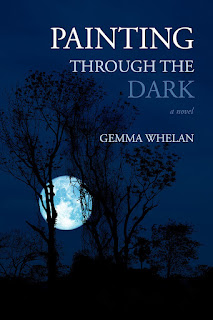
Painting Through the Dark (2022, Shangana Press)

Gemma Whelan is an award-winning director, screenwriter, educator, and author. Her own experiences as an immigrant from Ireland inform her perspective on art and culture. Gemma was the founding Artistic Director of Wilde Irish Productions in the San Francisco Bay Area and the Corrib Theatre in Portland, Oregon, where she now lives.

Painting Through the Dark is her second novel. 

Gemma talked with Rose City Reader about Painting Through the Dark, her writing, authors she loves, and more:

How did you come to write your new novel, Painting Through the Dark?

My novel is based on certain experiences I had when I arrived in the U.S. several decades ago at the age of 21, with no contacts and little money. This particular story mirrors a situation where I landed in a menacing household and felt trapped and powerless. People with power and influence tried to use that power to coerce me, and they also assumed that because I was a young Irish woman with no resources, I should be grateful for what they offered me.

Most of the story takes place in San Francisco in the summer of 1982. What drew you to this setting for your novel?

I fell in love with San Francisco when I arrived there. To me it was a mecca! It whispered freedom. In my twenties, it felt like a place I could discover who I wanted to be. The city itself is stunning — the hills, the setting on the bay, the cable cars, the architecture, the different neighborhoods. I wanted San Francisco to be a character in my story.

What is you background and how did it lead to writing fiction?

Very shortly after I arrived in San Francisco I signed up for an acting class and knew immediately that theatre was what I wanted to do. I loved that you lay on the floor (gorgeous hardwood with sun streaming in…) and actually breathed! Imagine a profession where you began with the breath! And where the process called for you to go deep into yourself and also to explore the inner workings of others. I had always been an avid reader and loved words, and theatre was a continuation of this. I studied directing at UC Berkeley in the 80’s, and in the mid-90’s enrolled in an MFA program in Cinema at San Francisco State University. That’s when I started writing. Two of the screenplays I wrote then became the basis of my first and second novels (Fiona: Stolen Child and Painting Through the Dark.)

Your main character, Ashling O’Leary, leaves Ireland for San Francisco to become an artist and uses painting to fight the demons in her past. Why did you choose painting as her medium?

She made that decision! It was possibly a way to express what she wanted to without using words. Words would have been too direct. With painting she could experiment with color and texture and light and dark and discover what she needed to express. The Ireland of my and Ashling’s youth was one of silences, taboos. You weren’t supposed to speak of certain things. Painting is a way to get around this and is also a direct line to emotions.

Did you know right away, or have an idea, how you were going to end the story? Or did it come to you as you were in the process of writing?

I had an idea of the outcome but had no idea how it was going to happen, how it would work out. I had several drafts where Ashling took different paths, but none felt right. In the end I had to let the writing lead me to finding the right way for Ashling to work her away through to the place she arrived at. I also learned that her art had to lead her there.

What themes do you hope readers will find in your novel?

Resilience, overcoming obstacles, belief in yourself, belief in art and that it can change us, and the world.

What do you hope readers will take away from your book?

I hope readers might see some of their own journey, or that of someone close to them in Ashling. She’s tough, and she has to negotiate her way through hard and often frightening circumstances. I also hope that it shows how art can heal, that it can be transformative.

What is your favorite review or compliment you received about your book?

A friend wrote: “It is living in my soul. The story, the wonderful characters, the emotional landscape, your poetic descriptions, the depth of feeling, and the skillful expression of human behavior with nuance and color, and above all, believability, you have written the story of so many people.”

Were books an important part of your household when you were growing up?

There were a lot of books in my house growing up and I worked my way indiscriminately through the library. I loved carving out time for reading. In the long summer holidays, I’d disappear for hours on end and seek out a place to read – a hidden place up the fields or by a river on the farm where I was raised. I also sneaked out of bed after lights out to sit on the landing where I could catch some light. That was before I got a flashlight so I could read under the blankets.

Who are your three (or four or five) favorite authors? Is your own writing influenced by the authors you read?

Ann Patchett, Gabriel Garcia Marquez, Colm Toibin, Samuel Beckett, Tana French. So many more! I’m not consciously influenced by the writers I love and can only hope that some smattering of their brilliance seeps in somewhere! Beckett is light years away from Garcia Marquez in style and content. I can immerse myself in the lushness of Garcia Marquez, and also appreciate and connect to the stark beauty of Beckett.

What are you reading now?

I’m reading an ARC of a novel, About the Carleton Sisters by local author, Dian Greenwood. It’s a story of three vastly different sisters in middle age, facing the consequences of past decisions. The writing is sharp and incisive, the first-person narratives allowing us inside the heads of these fascinating women, all grappling with demons from the past, and facing down long held secrets. It’s a stunning debut—due out in June by She Writes Press.

Do you have any events coming up to promote your book?


I’ll be at the Garden Home Library in Portland on May 16, 6:30 pm, hosted by former Oregon Poet Laureate, Paulann Peterson. On May 21 at 4 pm, I’ll be at 21ten Theatre with veteran Portland actor Vana O’Brien. All readings are on my website.

What’s next? Are you working on another book?

I’m working on a book set mostly in India, and partly in Sri Lanka and Guatemala. As their marriage crumbles, a young American midwife with indigenous Guatemalan and Irish parents takes her husband back to India where he was abandoned, adopted, and raised, to try to understand the roots of their conflict. While Kiran heads for the past, Frankie — overwhelmed by the state of lower caste Indian women — resolves to face a future free from the bonds of society’s — and her own conditioning.


THANK YOU GEMMA!

PAINTING THROUGH THE DARK IS AVAILABLE ONLINE, INCLUDING THROUGH SEVERAL INDEPENDENT BOOKSTORES LISTED ON GEMMA'S WEBSITE.


Saturday, April 15, 2023

K.L. Barron, Author of Thirst: A Novel -- AUTHOR INTERVIEW


AUTHOR INTERVIEW: K.L. BARRON


K.L. Barron is an author of fiction, poetry, and creative nonfiction. She lives in the Flint Hills of Kansas and teaches writing and literature at Washburn University in Topeka. Thirst is her debut novel. 


KL talked with Rose City Reader about her book Thirst, living in the Sahara among the Tuareg people, writing about place, and her process of writing a captivating novel.

How did you come to write your new novel, Thirst?

Once upon a time, I lived in the Sahel, the edge of the Sahara, in Niger among the Tuaregs and the other nomads in the area as a Peace Corps volunteer teaching English to their children. The experience is one I have never forgotten. In a recent blog post titled "How to Change Your Life Forever," I wrote, Travel to a country that has a different language and culture than yours. Don’t just visit. Live there for a year or two. Learn the language(s) and culture(s). The struggle is worth it. Once you’ve adjusted, it will be hard to leave. Do it slowly. Know that even when you leave, it will come with you. For example, my body is filled with sand.

I wanted to set a story there because of the high contrast, dominating landscape and to shine a light on and capture some of the nomads’ endangered traditional culture on the page before it disappears much as the Native Americans’ has.

Most of the story take place over a year in 1989, which the narrator spends among the Tuareg people in Niger. What drew you to this setting for your novel?

I am a writer of place. To my mind, our earth is a shared space, a sacred place that connects us all. We are formed, informed, and at the mercy of nature. I like to explore relationships between nature and people on the page through the written landscape of words and images. Thirst is set on the edge of the Sahara in one of the most desolate places on earth. To live there you have to be tough, to survive there, tougher still. The desert landscape drives everything.

In 1989-1990, a tragic political event occurred in Tchin-Tabaraden, where I lived, where the majority of the novel takes place. Writing the novel was my way of processing it.

Is any of the story based on or inspired by your personal experiences or travels?

Thirst is a blend of memory, research, and imagination. The place and political events are true. The characters are composites of friends, neighbors, and students who now live on the landscape of the page.

How did you research the cultural and historical details found in your book that bring the story to life?

Since I lived there, I knew the place and some of the people in an intimate way, but cultures are complicated, so I read widely on Niger, on the Tuaregs and the other nomads in that area, especially writings by anthropologists, some of whom I met when living there. I was especially mindful about expressing the views of the Tuareg characters and opted to read poet and Tuareg leader Mano Dayak’s books, essentially translating his views, his perspective.

Did you know right away, or have an idea, how you were going to end the story? Or did it come to you as you were in the process of writing?

Both! I’ve carried an image in my mind for years and wrote to that ending, but it also changed in the different versions I wrote over time. Even when writing the final draft, the characters surprised me.

What did you learn from writing your book – either about the subject of the book or the writing process – that most surprised you?

I learned so much! I’ve always been drawn to the acoustics of language and started writing in poetry, so if the sound and images were right in the novel, it felt satisfying to me, but agents, readers expect a plot, conflict, and action. It took me a while to figure out how to incorporate all those elements in a way that sounded right to my ear.

What themes do you hope readers will find in your novel?

Love, forgiveness, personal and cultural identity, and what it takes to survive in a brutal landscape, both geographically and politically.

What do you hope readers will take away from your book?

I hope readers will take away an awareness and respect for the Tuaregs, who have who have been surviving on the margins their entire lives despite the odds.

What is your favorite review or compliment you received about your book?

Aimee Liu, author of Glorious Boy wrote my favorite blurb:
Thirst will haunt you. Set in a space so remote and uniquely fascinating that every page brings new cultural revelations, this novel introduces western readers to Niger’s Tuareg people with deep compassion. K.L. Barron has created a multicultural cast of unforgettable characters whose personal quirks and vulnerabilities lead to both joyous and tragic consequences, but the most powerful character is the desert itself. As beautiful and ruthless as a god, the Sahel shapes survival into a form of worship.
What is your background and how did it lead to writing fiction?

Although I started writing poetry from a very young age and still love it (I can always tell when a novel has been written by a poet), I thought that the market was a little wider for prose because of the familiar architecture of the sentence. I took a few fiction writing classes at largely agricultural schools in the Midwest and then finally decided to really study the craft at Bennington College in Vermont where I earned an MFA in fiction.

Were books an important part of your household when you were growing up?

My brother and I were read to every night when we were young, one of my favorite memories growing up. When older, though my brother was always a reader of non-fiction, my parents didn’t read for their own pleasure unfortunately. I read and wrote poetry at the time and had a fantastic high school teacher who inspired us all to read fiction.

Who are your three (or four or five) favorite authors? Is your own writing influenced by the authors you read?

Amity Gaige, Jane Urquhart, Alessandro Baricco, Louise Krug

What are you reading now?

True Biz by Sara Nović. Love it.

You have a terrific website and are also active on Instagram. From an author's perspective, how important are social networking sites and other internet resources?

I think social media is very important, and I am rather new at it! I’m so pleased I discovered you there.

Do you have any writing rituals, odd habits, or superstitions?

I don’t like to talk too much about what I’m writing when I’m still in the process of figuring out what the story is. I would rather the characters reveal what happens.

What advice has helped you the most as a writer?

The A, B, C’s: Apply Butt to Chair

Do you have any events coming up to promote your book?

Yes! I’m so excited to partner with Rain for the Sahel and Sahara to donate a dollar for every book sold to support the nomadic women and children of Niger through access to education, entrepreneurship, and sustainable water and agriculture. We’re going to have a virtual discussion about Thirst on Tuesday, May 2nd, 6:30-7:30pm ET on Zoom. You’re invited! Please register on Rain’s website.

What’s next? Are you working on another book?

I have three book ideas I’m mulling for the next one: A survival story set in the ocean off the island of Kiribati, developing my short story “First Light” into a novel with an entirely different but just as powerful and dominating landscape. A creative non-fiction book developed from the short memoir piece “Natural Strangers” reconstructing the biological mother I never knew. Or a creative non-fiction book Sue Monk style about a trip my oldest daughter and I took last spring where the landscapes revealed our relationship in surprising and meaningful ways.

THANK YOU K.L.!

THIST IS AVAILABLE THROUGH SEVERAL ONLINE BOOKSTORES LISTED ON K.L.'S WEBSITE.


Tuesday, May 3, 2022

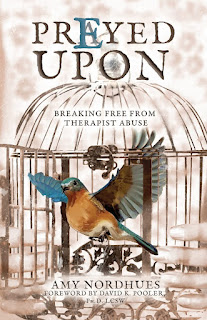
Amy Nordhues, author of Preyed Upon: Breaking Free from Therapist Abuse -- AUTHOR INTERVIEW


 AUTHOR INTERVIEW

Amy Nordhues, author of Preyed Upon: Breaking Free from Therapist Abuse (2021)

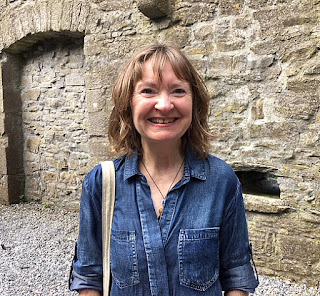
Amy Nordhues was groomed and abused as a young adult by the church-based psychiatrist she went to for help with depression. She struggled with the ongoing trauma of her abuse, especially the shame and self-blame she carried with her. After much work brought healing and peace, Nordhues wanted to write a memoir to share her story. She wrote her book, Preyed Upon, primarily for abuse survivors, but it is comforting to anyone who has faced trauma and helpful for anyone supporting trauma survivors. 


Amy talked with Rose City Reader about her memoir, resources for sexual assault victims, and how others can support survivors of sexual assault: 

How did you come to write your new memoir Prayed Upon?

After I was taken advantage of by a “Christian” therapist/psychiatrist in 2014, I decided to write out my story. Really, I just wanted to understand what happened so that I could begin to forgive myself. As the story unfolded on the pages, I began to see the sneaky and insidious manipulation process. In time, I knew that I needed to share my story with the world so that other adult victims would know they weren’t alone and that what happened to them was not their fault.

Your memoir is intensely personal – did you have any qualms about sharing so much?

Yes! It was a terrifying prospect to put my personal life story into print, but it was an important step in my healing and in reducing the stigma adult victims experience. I respect authors of memoir so much. We take a huge risk when we tell our stories.

Who is your intended audience and what do you hope your readers will gain from your book?

Women, ages 25-65+; adult victims of sexual and/or emotional abuse; survivors of childhood sexual abuse; mental health professionals; Christians, especially those who are struggling to find God in their suffering; and church leaders.

Prayed Upon addresses the following felt needs:

  • The inner workings of the abuse process of adult victims;
  • How past childhood abuse can make an adult vulnerable to predators;
  • The defective beliefs that cause victims to doubt their own realities and become ensnared by abusers;
  • An up-close look at the insidious grooming process a predator uses to trap his victims;
  • The power a therapist has over a client;
  • That the abuse of an adult by a person in a position of power is not a mutual affair;
  • A path towards healing for victims—that with Christ there is hope;
  • How the spouses of adult victims are secondary victims;
  • How loved ones can best support the victims in their lives;
  • Possible routes to justice;
  • The trials victims will likely face once they come forward;
  • God's hand at work amidst the tribulations of victims;
  • That no situation is too dire that God cannot use it for good;
  • How victims can replace their faulty beliefs with God’s truth; and
  • That Christ is the ultimate healer.

Do you think there is benefit to victims of abuse in telling their stories?

I do. Anything that gets it out of the victim has benefit whether that means talking to one person, sharing with a therapist, writing out the story. Holding shame and trauma inside is mentally and physically detrimental. We are not meant to do life alone. Secrets are heavy!

What did you learn from writing your book – either about the experiences you describe or the writing process – that most surprised you?

I was surprised to uncover the lies I was believing about myself, lies that stemmed from early childhood. These negative self-tapes placed a target on my back and made me vulnerable to predators.

Can you recommend any other memoirs that deal with surviving abuse with the honesty and self-forgiveness you put into yours?

What resources would you recommend for survivors of adult sexual abuse? What about their loved ones and supporters?

I have a long list of organizations and other resources to help survivors on my website at this page.

What can friends and family of abuse victims do to support them?

Listen and empathize. Don’t try to understand it unless you have experience with sexual abuse especially abuse as an adult. Don’t ask questions so that you can better understand it yourself. Your words can be extremely hurtful so be slow to speak. What you can do is relate to their pain, betrayal, confusion, hurt. Guide the victim towards support of those who understand, whether that be a ministry or a therapist. Research online and try to find resources for them. Help them find books on the subject. Although you can be a listening ear, friends and family are not equipped to handle this level of trauma. Do not rush victims through their pain! Healing takes as long as it takes!

Please tell us about your work with abuse survivors and advocates.

Besides writing my memoir, Preyed Upon, I also have an Amy Nordhues website full of resources, helpful articles, suggested reading, and interviews I’ve done on the subject. I hope to begin traveling and speaking on the issue of adult abuse. I am considering joining with other ministries as there is strength in numbers. I will respond to anyone who reaches out to me through my website or through social media. I would love to work towards legislation in my state regarding therapist abuse. Currently, it is criminally illegal in only 32 states.

What is the most valuable advice you’ve been given as someone working to help abuse survivors?

Victims of crimes do not owe explanations to anyone regarding the nature of the crime committed against them!

Do you have any events or speaking engagements coming up?

Most of the speaking events and interviews I have done thus far are on the press page of my website. More recently, I spoke last month at two sexual abuse conferences, the Beautifully Broken Conference and the Restoring Hope: Celebrating Resilience Conference. Both those talks will be posted on my website shortly. 

What’s next? What are you working on now?

I would like to record Preyed Upon for audio book.

I am considering a second book to address what happens after the survivor escapes the abuser and all the risks they face in coming forward as well as the challenges they face in healing.

I am also looking for speaking engagements. I can be found on Christian Speaker and Christian Women Speakers.


THANK YOU, AMY!

PREYED UPON IS AVAILABLE ONLINE.


Saturday, November 6, 2021

Laura Thompson, author of Life in a Cold Climate: Nancy Mitford; The Biography -- AUTHOR INTERVIEW


 AUTHOR INTERVIEW: LAURA THOMPSON

Laura Thompson studied acting and dance before turning to nonfiction writing as a career. She has written books about greyhound and horse racing, historical true crimes, a memoir about her publican grandmother, and biographies of Agatha Christie and the Mitford sisters. Her biography of Nancy Mitford, Life in a Cold Climate, was reissued by Pegasus Books in 2019. Incredibly talented, Laura also made a tv movie about her return to ballet as an adult, has filmed several documentaries about Agatha Christie, and writes for Town & Country, Harpers Bazaar, and other publications. 


Laura talked with Rose City Reader about the Mitford sisters, her biography of Nancy Mitford, what makes a good biography, and more:

There are plenty of Mitford fans, but please give us a thumbnail introduction of Nancy and her family for new readers.

As a child I learned a little refrain by which to remember Henry VIII’s wives – divorced, beheaded, died, etc. – and one can, rather flippantly, do something similar with the six Mitford sisters: writer (Nancy); countrywoman (Pamela); Fascist (Diana); Nazi (Unity); Communist (Jessica); duchess (Deborah). Reductive, but accurate. 

They were born between 1904 and 1920 in the heart of England into the minor aristocracy, the daughters of Lord and Lady Redesdale, who also had one son – Tom, who was killed in the Second World War. Their early lives are documented, pretty much accurately, in Nancy’s classic novel The Pursuit of Love, which describes their posh-feral upbringing on their father’s land and their rebellions against convention, although the novel softens the reality about the form that these took. In fact, as depression and division took possession of the world in the lead-up to the war, three of the sisters became intensely politically engaged – two to the Right, one to the Left – and the consequences for their lives, and for the rest of their family, were incalculable.  Diana was imprisoned as the wife of Britain’s Fascist leader, Unity shot herself in despair at the outbreak of war between England and her adored Hitler (it took eight years for the bullet lodged in her brain to kill her), and Jessica, who lived in proud poverty in London and lost a baby there to measles, cut herself off from her family by moving to the US, where for some time she was in the sights of the FBI.

What is so remarkable about the Mitfords, however, is that despite all this they have retained – really thanks to Nancy’s writing – a fascination that is not wholly about their notoriety, but also about their style, funniness, aura of blithe confidence and, above all, their very English and self-aware brand of charm. Their story is astonishing – six bright individualists, coming to adulthood at a time when the world went up in flames – and often desperately sad. Yet in some way they rose above it all and lived by Nancy’s creed that "there is always something to laugh at."

 What is your background and how did it lead you to write a biography of Nancy Mitford?

I grew up in the English countryside and went to a performing arts school – hoped to be a dancer, then to act, wasn’t good enough – then got into Oxford where I read English. I sort of fell into writing, whereupon I realized that this was actually the thing that I should be doing.

The original edition of Nancy, published in 2003, was my first biography – I had adored her, like so many of us, from a teenager and desperately wanted to express my praise for her writing, which at the time was not always highly regarded. Lots of people dismissed her as a snob, who dealt only in superficialities, and I thought that was ridiculous – her authorial voice and style are remarkable, influential – I really wanted to say all this. So in a way the book is less a biography and more a love letter. One of her nephews wrote to me and said, you have taken her seriously, which would have amused her but also pleased her very much. I thought that was lovely. And her reputation has now risen to the place where in my view it belongs to be – I hope my biog played a small part in that.

How did you research Mitford’s life? Did you have access to primary source materials? Did you interview people who knew her?

I was extraordinarily lucky – Nancy’s sister Diana Mosley agreed to speak to me, and I visited her in Paris the year before she died. A remarkable experience, as you may imagine. She was extraordinarily kind to me, terribly funny, and clearly still enraged by the fact that back in 1940 Nancy had suggested to the authorities that Diana should be jailed on account of her dangerous pro-Fascist views. "Nancy was the most disloyal person I ever knew," she said to me. Later she reviewed my book very favorably, and invited me to lunch with her again in Paris. She died before I could go – a great regret. Diana encouraged Deborah to meet me, so I went to Chatsworth to talk to her – wonderful. These were the two surviving sisters, and to experience the Mitford charm first-hand was probably more useful to me than anything else.

There was also a cache of letters at Oxford that hadn’t been written about, between Nancy and Theodore Besterman, who was planning a book about Voltaire at the time that she wrote her biography of him. These were fascinating – so revealing about Nancy’s writing philosophy. She was constantly urging Besterman (who also edited Voltaire’s letters) to say more with fewer words – she said: "you mustn’t confound the letters, which tell all, & the book which tells the essential." He didn’t take the advice but I did!!!!

There are other biographies of Nancy Mitford, alone or with her sisters. What distinguishes yours from the others?

The Mitfords are one of the best subjects – there is almost too much material – so inevitably lots of people are drawn to them. What I tried to do was catch Nancy’s essence. I wanted to analyze from the outside what we find so appealing about her (because many people, women in particular, find her irresistible) - her style, her humor, her deployment of the façade, her blithe self-assurance. But I also wanted to understand, as far as possible, what she herself felt about her life. The accepted view was that she was a desperately sad woman, smiling madly in the face of griefs, somebody who made jokes all the time because she was disappointed in love and didn’t have any children. This may have been partly true, but in no way was it the whole truth. To be honest I found it rather unsisterly and, more importantly, not really relevant to Nancy. It seemed to me to measure her against conventional standards, against other people’s standards in fact, whereas what matters is how she herself viewed her life. She believed in the importance of happiness, and in her own happiness – that’s the kind of thing that a biographer has to penetrate, I feel.

But the main difference between my biog and those of Harold Acton and Selina Hastings (both marvelous) is that I concentrate very much on Nancy’s writing – the nature of her artistry – and how her imagination worked both in her books and upon her life.

What did you learn from writing your biography that most surprised you, either about Nancy or the Mitford family?

Not that much about Nancy, if I’m honest. I had instincts about her that I think were generally proved to be correct. With regard to the other Mitfords, however, I was truly fascinated to learn how much they diverged from their image (as created by Nancy, really, in The Pursuit of Love). For instance her father was rather a weak man, who suffered terribly over his daughters’ behavior and never got over having supported – however briefly – the Nazi regime. His wife was the strongest member of the family, and although I didn’t much like her I found her hugely admirable – for instance how she coped with Unity in between visiting Diana in prison, then with her son’s death - she had astonishing resilience. Today she would probably be a CEO, she was so incredibly capable. I was also surprised to find how much I disliked Pam, supposedly the "nice" and mild sister, whom I suspect of being a bit of a resentful bitch – as when she said to Diana that Nancy, who finally succumbed in 1973 after prolonged agonies with cancer, had wasted years of their lives while they waited for her to die.

So the family dynamic was not quite what I had thought, in fact it was even more complex and multi-layered. The letters (edited by Charlotte Mosley) are so revealing about all this. They left me very glad not to have any sisters, I must say.

What is your favorite Nancy Mitford book?

Probably The Pursuit of Love, which I find intensely moving, but that’s such an obvious answer that I’ll put in a word for The Blessing. The portrait of a marriage between a highly romantic Englishwoman and a charming, adulterous Frenchman, it is intensely adult, brutally sophisticated and spectacularly non-woke (as Nancy often can be, but seems to get away with it). Nancy herself is known for her long affair with a French politician who was similarly incapable of fidelity – the novel often reads as if she is giving herself a bracing lecture on how to handle him – it is certainly not how I would want to conduct my own life, but I find it replete with very feminine wisdom and disconcertingly honest. And hugely funny. My favorite character is the grand old French aristocrat, oozing sex appeal in her 70s and dressed in the latest haute couture, who comes to London and extols the delights of wandering "in the Woolworth."

I think Love in a Cold Climate is the funniest of all the books, however, and Lady Montdore her finest comic creation. "Whoever invented love ought to be shot" (as said by Lady M) is my favorite of all Nancy’s lines.

For readers new to Nancy Mitford, which book do you suggest they read first?

Definitely The Pursuit of Love. It’s the perfect introduction to her glorious authorial voice – light but not trivial, poised exquisitely between art and artlessness – and it contains one of the most beautifully realized love affairs in fiction. Its description of her upbringing is the origin of what one might call the Mitford mythology – without this novel, which gave the family a new life by purging it of darkness and celebrating its bright vital spirit, I think we would see them quite differently. We would certainly not be as bedazzled by (in Evelyn Waugh’s famous phrase) their "creamy English charm."

For you, what makes a biography worth reading?

When it observes the same principles as good fiction. Proper story-telling; selecting the salient facts and details that bring the whole to life; paying attention to the emotional dynamics – and of course when the biographer clearly yearned to write about that particular person. Sometimes one has the sense that a writer has been looking for somebody who hasn’t been "done," whether or not they themselves want to "do" them. I have every sympathy incidentally, it’s very hard to find good subjects!!!!

What are some of your favorite biographies or biography writers?

The best biography I’ve ever read is Meredith Daneman’s 2004 life of Margot Fonteyn. The author was a dancer so could understand Fonteyn’s achievements from within, as it were – and she conveyed a powerful, stunningly perceptive sense of both the star and the woman. I can’t recommend that book highly enough.

But I actually mostly read fiction, so I tend to prefer biographies written by novelists – such as E. F. Benson’s biog of Charlotte Bronte, which I suppose is old-fashioned but has so much atmosphere and intelligence. And I love Nancy’s historical biographies (unsurprisingly). Her book on Madame de Pompadour is rightly revered, it has all her characteristic astuteness about motives – she cuts to the heart of political machinations like a tremendously clever child – "the only time I’ve ever understood the Seven Years War," as her nephew said to me. And it has one of the best last lines of any book I’ve ever read – it hits one like a dark thud.

What's next for you? What are you working on now?

I have a book published in the US next February – Heiresses – about women who inherited vast sums of money and whose lives, perversely, were often destroyed by it: starting with Mary Grosvenor, born in 1665, whose marshy fields were developed into London’s most expensive residential areas, while she herself was a victim of date rape and ended her life described as a "lunatick"; all the way through to Winnaretta Singer, Natalie Barney, and Romaine Brooks, then to Barbara Hutton, Patty Hearst and many in between.

Right now, however, I’m working on a labor of love tentatively entitled Reading Women, about the 20th century female novelists who have shaped our view of life and literature – chief among them Jean Rhys and Elizabeth Taylor, whose worth, I feel, cannot be overstated.

THANK YOU, LAURA!

LIFE IN A COLD CLIMATE IS AVAILABLE IN BOOKSTORES AND ONLINE. READ MY REVIEW HERE.


Tuesday, August 10, 2021

Louis-Philippe Dalembert, Author of The Mediterranean Wall - AUTHOR INTERVIEW


AUTHOR INTERVIEW: LOUIS-PHILIPPE DALEMBERT

The Mediterranean Wall by Louis-Philippe Dalembert, translated by Marjolijn de Jager (2021, Schaffner Press)

Louis-Philippe Dalembert is a prize-winning Haitian poet and novelist, who writes in both French and Haitian creole. He has worked as a teacher and visiting poet at universities in the US, Germany, Switzerland, and (currently) France. He lives in Paris and Port-au-Prince.

Dalembert's latest novel, The Mediterranean Wall, is based on true events of the summer of 2014, off the coast of Italy. It is the story of three women fleeing their homelands -- Nigeria, Somalia, and Syria. They are thrown together aboard a dilapidated refugee boat in the Mediterranean Sea, trying to get to Europe.


Louis-Philippe talked with Rose City Reader about his connection with migration stories, his new novel, The Mediterranean Wall, some of his favorite authors, and what he's reading now:


How did you come to write your new novel, The Mediterranean Wall? What drew you to the story of the Mediterranean refugee crisis?

At a very young age, I was confronted with stories of migration. In my family and my circle of friends, I saw many people leave, especially to the United States and Canada. Later, I was the one who left for Europe. I lived in France, in Italy, in Israel. I taught in Switzerland, Germany, the United States. I have traveled to Africa and the entire American continent. When I write a novel about migration, I naturally draw on my own experiences as a migrant. This allowed me to empathize with my characters.

In fact, the refugee crisis in the Mediterranean was just a trigger, there are other parameters to consider. First of all, I have lived a lot in Italy, where the issue of refugees arriving by boat goes back to the 90s. Secondly, I come from a generation of Caribbean people who were marked by the phenomenon of the Haitian and Cuban boat people, trying to reach the coasts of the United States in the 80s. Finally, the drama of people traveling in the holds of overcrowded boats is part of my identity as a black man from the American continent. All of these elements were at the origin of The Mediterranean Wall.

Your story is based on true events. How did you research the historical information and detail found in your book? Did you have access to primary source materials?

To write this novel, I stayed on the island of Lampedusa, Italy, between January and February, 2018. Lampedusa is an island that, since 1992, has received a large flow of migrants from Africa and the Middle East. I also did a lot of research, read hundreds of articles and books, watched dozens of documentaries. The scenes I describe in the novel are nothing compared to the heartbreaking testimonies I read, or collected from refugees during my stay in Lampedusa. I tried to put the same modesty that they use when they finally accept to tell their story. Some scenes are still quite close to reality.

Why did you choose to tell your story from the point of view of three women protagonists? Was it difficult to get inside the heads of your women characters?

When the media reports on the refugee crisis in the Mediterranean, they often show us boats full of men. But half of these refugees are women. Probably fewer of them reach the end of the journey, victims of all kinds of violence along the way. I had no difficulty getting into the shoes of these characters: I was raised by women, having not known my father, who died when I was less than a year old. Moreover, I have a wonderful editor, a woman who is an tremendous reader. That said, this is still a man's novel, a tribute to women and their courage. Where I come from, you don't have to be a woman to be able to talk about women, or a gay man to be able to talk about gay men. You just have to be a human being capable of empathy.

What is your background? How did it lead to writing fiction?

I have always read a lot since I was a child. I don't play any particular instrument, and I am unable to draw. This is a shame coming from a country like Haiti, where music and painting are the most common art forms. As I grew up, it was only natural that I found my favorite mode of expression in the written word. Like many Haitian writers, I entered literature through poetry. I published my first book of poems at the age of 19. I have never stopped since. However, fiction offers me other alternatives: space; the possibility of multiplying points of view, by slipping into the skin of characters sometimes opposite to what I am; without forgetting the absolute necessity, from my point of view, to tell a story. Also, my dual training as a literary scholar - I have a PhD in comparative literature - and as a journalist have taught me to be very careful also about the story to tell.
 
Who are your three (or four or five) favorite authors? Is your own writing influenced by the authors you read?

You put me in difficulty with this question, there are so many. Let's say those who marked my adolescence and my early youth: Dostoevsky, Isaac Bashevis Singer, Philip Roth, Zora Neale Hurston, Gabriel García Márquez. As you can see, there are no poets among them. I started with poetry, and I keep writing and publishing poetry. The first authors I admired were poets.

That said, I hope I'm too old to write under the influence, unless of course it's a conscious game, a kind of dialogue with an author whose work I've admired, as I did with the poet Saint-John Perse in my last collection Cantique du balbutiement.

What kind of books do you like to read? What are you reading now?

I'm a bulimic reader, and I read everything: novels, essays, short stories... except when I'm in the middle of writing. In that case, I only read newspapers, comics and poetry.

Before writing my new novel, which comes out next month, I read or re-read many books by authors from the United States: Russell Banks' Continental Drift, which I loved when it came out; Madison Smartt-Bell's trilogy, devoted to the history of Haiti; my compatriot Edwidge Danticat; Toni Morrison's Beloved, the novel I love most by her; Colson Whitehead's Underground Railroad, whom I had the opportunity to meet in France at a literature festival; Chester Himes, who knows how to treat very serious subjects with a lot of humor. . . .

What is the most valuable advice you’ve been given as an author?

Read, read and read again. Then write, write and write as if your entire life depended on it; without thinking about anything else, neither about a possible publication nor about possible readers.

What’s next? Are you working on your next book?

For now, I've just finished a new novel, Milwaukee Blues, a fresco on racial tensions in the United States, which was inspired by the George Floyd tragedy. It will be published in Paris at the end of next month, by Sabine Wespieser editions.


THANK YOU, LOUIS-PHILLIPE!

THE MEDITERANNEAN WALL IS AVAILABLE ONLINE.


Tuesday, July 27, 2021

Peter Zheutlin, Author of SPIN: A Novel Based on a (Mostly) True Story -- AUTHOR INTERVIEW


AUTHOR INTERVIEW: PETER ZHEUTLIN

Peter Zheutlin has written several books, including three about the world of rescue dogs and one nonfiction book about his ancestor Annie Londonderry. His new novel SPIN (2020, Pegasus Books) is a fictionalized account of Londonderry's life and adventures. 


Peter talked with Rose City Reader about SPIN, Annie Londonderry, and his own favorite books and authors:

Who was Annie Londonderry?

Annie Londonderry was the alter ego of a Boston housewife and mother whose real name was Annie Cohen Kopchovsky. In June of 1894, leaving her husband and three small children behind, she set off from Boston to go around the world by bicycle, ostensibly to settle a wager over whether a woman could do so. To help finance her trip she solicited corporate sponsors (she was way ahead of her time in many ways) and the first was the Londonderry Lithia Spring Water Co. of Nashua, NH. In exchange for $100 she affixed a placard bearing the Londonderry logo to her bike and called herself Annie Londonderry.

What drew you to Londonderry’s story and made you want to write SPIN, a historical novel about her life?

Annie was my great grandaunt, but I learned about her not from anyone in my family, but from a stranger back in 1993 who was researching her story and thought my mother might be connected to her. She was, but my mother had never heard of her. In 2003, I decided to see if I could learn more about her and four years of research led to my first book about Annie, non-fiction, called Around the World on Two Wheels: Annie Londonderry’s Extraordinary Ride (2007, Citadel Press). In 2019, as part of a special series of obituaries called “Overlooked,” the New York Times did a long piece about her. At that point my wife Judy, who produces a newsletter for book clubs, told me (ordered me, actually) to revisit Annie’s story as a work of historical fiction. I’d written eight books, but never a novel, so I doubted I’d get very far. But, like Annie, I pushed on and finished the journey with the publication of SPIN.

How much of your novel is based on true, historical events and how much did you have to imagine? How much is really known about Londonderry’s bicycle tour, her encounters with famous people like Buffalo Bill, and the other adventures depicted in your book?

The book bears the subtitle A Novel Based on a (Mostly) True Story because Annie, I learned from my research, was quite a storyteller and raconteur who had a casual relationship with the truth. She embellished freely with her accounts of her travels, always ready to entertain a reporter or an audience. You could say that SPIN is historical fiction about a woman who was writing her own historical fiction in real time. That said, and because she was such good copy, she left an extensive trail of newspaper coverage. So SPIN is absolutely based on her bicycle trip around the world, but liberated from the historical record by writing the story as a novel, I was free to fill in a lot of blanks and to imagine the nature of her relationships with real people in her life and even some she never encountered. Book clubs that have read SPIN really enjoy trying to sort of fact from fiction so if I give too much away it will ruin the fun!

How did you research the historical information and detail found in your book? Did you have family access to primary source materials?

The vast majority of what can be known about Annie’s trip comes from contemporaneous newspaper accounts, many hundreds of them from all over the world, including a first person account she wrote (and the only one she ever wrote) for The New York World in October of 1895. But that account is riddled with her exaggerations. In the process of my research, with the help of a specialist in Jewish genealogy, I found Annie’s only direct living descendent, her granddaughter Mary (my second cousin once removed). Mary knew Annie and had many artifacts of her trip, souvenirs and so forth, but no diary, if there ever was one, survived.

You earlier wrote a nonfiction book about Annie Londonderry. Why did a new novel appeal to you as a writer and what new does it offer your readers?

I touched on this earlier. I resisted suggestions when I was working on the first book to write it as historical fiction because I was resurrecting a completely obscure piece of history and didn’t want to cloud the issue. I wanted to tell the story, as best I could with limited information, as it really happened. As it turned out, the “true” story of Annie Londonderry includes her own fabrications and tall tales. Writing it as a novel was, I realize in retrospect, my way of fulfilling a wish I had had since I first started looking into the story – I wished I could sit down with Annie for an hour or a day and have her tell me her story. That’s why SPIN takes the form of a letter written by Annie in old age to her granddaughter Mary. SPIN, I think, brings the story to life in a way that sticking strictly to a rather incomplete historical record could not. And for me, as a writer it was great fun to be freed from a “just the facts” approach. Real-life characters can be brought to life through imagined dialogue, for example.

What did you learn from writing SPIN – either about the subject of the book or the writing process – that most surprised you?

Ha! That I could actually write a novel when I was sure I couldn’t! Whether I wrote a good one is up to each reader to decide, but so far the response has been very positive. People often ask writers about their “process,” a question that always flummoxes me. I’m not aware of having a process other than opening my laptop and writing words that turn into sentences that turn into paragraphs and then chapters so on.

Are there any themes you hope readers will find in your novel?

Annie’s is much more than one woman’s idiosyncratic story; it’s very much the story of the times in which her bicycle trip took place, the women’s movement for social equality and the vote, and the underappreciated role of how the bicycle radically transformed the lives of women in the late 19th century. In 1896, a few months after Annie finished her circuit of the earth, Susan B. Anthony said that “bicycling has done more to emancipate women than anything else in the world.” That quote is on the cover of SPIN.

Were books an important part of your household when you were growing up?

Oh, goodness, yes, although I didn’t become an avid reader until I was an adult. My mother Baila, Annie’s grandniece, was a voracious reader. She was never without a book. So many days I came home from school as a kid and she would be in the backyard on a lawn chair reading.

Who are your three (or four or five) favorite authors? Is your own writing influenced by the authors you read?

The best way to answer this, in part, is to name some of my all-time favorite books. My top three novels are William Styron’s The Confessions of Nat Turner and John Steinbeck’s Grapes of Wrath and East of Eden. Steinbeck directly influenced my previous book before SPIN. At the age of 63 I re-read his Travels with Charley and that inspired to me take a cross country road trip with our (late) rescue dog, Albie. That journey became The Dog Went Over the Mountain: Travels with Albie – An American Journey (2019, Pegasus Books). Another favorite author is Bill Bryson. Some of his books are serious inquiries into all manner of things, but his travel books such as The Lost Continent and A Walk in the Woods make me laugh out loud.

What kind of books do you like to read? What are you reading now?

I enjoy history, especially the work of Joseph Ellis about the founding fathers, and Robert Caro’s monumental multi-volume biography of Lyndon Johnson. Books about racial justice and the never-ending struggle for equality also appeal to me, books such as David Blight’s biography of Frederick Douglass and Isabel Wilkerson’s The Warmth of Other Suns. I am between books at the moment but next up is Sensational: The Hidden History of America’s “Girl Stunt Reporters” by Kim Todd. You see, after her bike trip Annie became one of those “girl stunt reporters,” the most famous being Nellie Bly whose ‘round the world jaunt in 1889-90 to break the fictional record of Jules Verne’s Phileas Fogg in Around the World in Eighty Days almost surely inspired Annie’s bicycle journey. In fact, that first person account of the bike trip she penned for The New York World was bylined “Nellie Bly, Junior.”

Do you have any writing rituals, odd habits, or superstitions?

I’m sure I have some odd habits, but none that pertain to writing! Well, actually, people who know I am a writer and then see me working, at Starbucks, for example, are shocked that I type using only my two index fingers. I never learned to type properly.

What advice has helped you the most as a writer?

The advice I give myself: just do it.

What’s next? Are you working on your next book?

Well, one of the reasons I picked up Sensational is that I think there may be another novel to be based on Annie’s brief career as stunt reporter for The New York World, but I’m not sure yet.


THANKS PETER!

SPIN IS AVAILABLE ONLINE, IN HARDCOVER AND EBOOK.


Tuesday, June 29, 2021

Q&A with Emmanuel Dongala, Author of The Bridgetower Sonata: Sonata Mulattica -- AUTHOR INTERVIEW


AUTHOR INTERVIEW: EMMANUEL DONGALA


Emmanuel Dongala is a Congolese novelist who fled his native country during the civil war in 1997. He was a professor at Bard College at Simon's Rock until 2014 and still lives in Massachusetts. He is the award-winning author of several novels, the latest of which is based on the true story of George Bridgetower, an 18th Century violin virtuoso and the son of a Black man from the Caribbean. 

Bridgetower was a child prodigy who entertained Parisienne high society then fled to London to avoid the French Revolution and enjoyed the patronage of the Prince of Wales. He later moved to Vienna and became the friend and collaborator of Ludwig Van Beethoven. Dongala's new historical novel brings life to this forgotten story. 


Emmanuel talked with Rose City Reader about George Bridgetower, his new book, and researching historical fiction:  

Who was George Bridgetower?

George Bridgetower was a Black musician – he had a Polish mother and a Black father from Barbados. He befriended the young and upcoming composer Beethoven in Vienna. The latter’s most famous violin sonata known today as the Kreutzer sonata was originally written for Bridgetower.

What drew you to Bridgetower’s story and made you want to write The Bridgetower Sonata, a historical novel about his life?

For me, it was both fascinating and challenging to write about this musician, very famous during his time and yet completely forgotten today.

How much of your novel is based on true, historical events and how much did you have to imagine? In particular, how much do historians know about Bridgetower’s interactions with Beethoven, Thomas Jefferson, Alexandre Dumas, and other real people depicted in your book?

The book is based very much on historical events. Examples: The last concert Jefferson attended in Paris where he was the US ambassador was a concert given by Bridgetower. The falling out between Beethoven and Bridgetower was about a woman, Giuletta Giuccardi. Bridgetower was really adopted by the future king George IV etc. However, all the details, the dialogues, the interactions between the protagonists are of my imagination.

How did you research the historical information and detail found in your book? Did you have access to primary source materials?

I used all sources available. I even found a French magazine of 1789, where was the review of the first concert given by Bridgetower in Paris.

Did Beethoven really dedicate a sonata to Bridgetower before changing it to the Kreutzer Sonata? What is the story there?

Yes, he wrote it for Bridgetower. The original title was Sonata Mulattica, as a joke toward his friend who was what they used to call then “mulatto” a person of “mixed race” as they say today.

Why did you choose to write Bridgetower’s story as historical fiction instead of straight biography?

I am a novelist. [Ed. note: Best answer ever to this question.]

What did you learn from writing your book – either about the subject of the book or the writing process – that most surprised you?

The biggest challenge was how to get out of all the historical material I collected during my research and turn it into a novel.

What is your background? How did it lead you to writing fiction?

I am a scientist, a chemistry professor. I was always an avid reader and this led me to try may hand at writing.

Is your own writing influenced by the authors you read?

I think all writers are influenced by other writers. Not necessarily directly, but all that they absorb here and there by reading.

What is the most valuable advice you’ve been given as an author?

The best advice I can give to a would-be writer is to read a lot, be an avid reader in all categories.

What kind of books do you like to read? What are you reading now?

Right now I’m re-reading The Underground Railway by Colson Whitehead.


THANK YOU, EMMANUEL!

THE BRIDGETOWER SONATA IS AVAILABLE ONLINE IN HARDCOVER AND EBOOK.


Monday, June 7, 2021

Q&A with Nicki Chen, Author of When in Vanuatu -- AUTHOR INTERVIEW


AUTHOR INTERVIEW WITH NICKI CHEN

Nicki Chen is a novelist and blogger from Washington state. Tales of her husband's childhood in China inspired her first novel, Tiger Tale Soup. Her new novel, When in Vanuatu (2020, She Writes Press), was influenced by the couple's expatriate years, including time lived in Manila and the island of Vanuatu.


Nicki talked with Rose City Reader about new new book, historical fiction, and expatriate living: 

How did you come to write When in Vanuatu?

My first novel, Tiger Tail Soup, required a lot of research. It was set in China during WWII, a time and place I knew only from stories I’d heard and books I’d read. I thought it was time I wrote a novel about something closer to my own experience. Why not a story about a group of expatriates living in Vanuatu?

The book takes place in Manila and the South Seas island of Vanuatu. Why did you choose to set your novel in these locations? Do you have a personal connection?

My husband and I lived in Vanuatu for three years. It was beautiful and fascinating—the perfect backdrop for a story.

I didn’t settle on Manila until rather late in the process. In fact, I originally wrote a brief section set in Singapore. I was more familiar with Manila, though. My husband, our three daughters, and I lived there for about fifteen years beginning in 1971. Our daughters started nursery school there and went through the grades at the Manila International School. They were in college in the United States during the time of my novel.

Did you know right away, or have an idea, how you were going to end the story? Or did it come to you as you were in the process of writing?

I didn’t decide how to end the story until I was almost there. By then, I knew what would feel right, and I felt that it would work.

What did you learn from writing your book – either about the subject of the book or the writing process – that most surprised you?

During the process of writing the novel, I kept noticing, little by little, how much our lives and particularly the expatriate experience has changed since 1989-90. We didn’t email then, no social media, no cell phones, no blogging. My protagonist, Diana, had only one way to communicate with her friends and family back in the United States: international air mail and occasional (expensive) phone calls.

I didn’t classify When in Vanuatu as “historical fiction,” but recently I learned that the majority of historians consider history anything that happened twenty or thirty years ago. So I guess my novel qualifies.

What do you hope readers will take away from your book?

After sharing Diana’s life for 316 pages, I hope readers will have gained a greater understanding of the expat experience and an appreciation for its pleasures and challenges and that they’ll come away filled with tropical dreams.

What is your favorite review or compliment you received about your book?

I like a review by Tegan Tigani of the Queen Anne Book Company. She ended it like this: “It’s ideal for book clubs or anyone who would want to read a modern, feminist Graham Green.” I’m a big fan of book clubs and also of Graham Green stories.

What is your background and how did it lead to writing fiction?

Who knows how a short and early career teaching kindergarten and a later long-term interest in art, particularly Chinese brush painting and batik, led me on a path to that led to writing fiction? But at some point, I developed a real passion for it. Thanks to some wonderful teachers at Vermont College of Fine Arts, I gained the ability to craft a story and succeeded in earning an MFA. I had to travel half-way around the world several times to do it, though.

Were books an important part of your household when you were growing up?

Yes. I loved fairy tales in every form, from Grimm to Hans Christian Andersen, from Walt Disney to the Hansel and Gretel opera. Mom read to me; then I read to my sister. Dad could recite long Robert Service poems. At bedtime he invented stories for us filled with giants and flying carpets.

Who are your three (or four or five) favorite authors? Is your own writing influenced by the authors you read?

My favorite authors change as time goes by. Some current favorites: Liane Moriarty, Margaret Atwood, Tana French, Kristen Hannah, Ian McEwan, and Jess Walter. Whoops! That’s six. I hope I’m influenced by these talented writers, but I can’t guarantee it.

What are you reading now?

Hour of the Witch by Chris Bohjalian, another favorite author.

You have a terrific website and are also on Facebook and Twitter. From an author's perspective, how important are social networking sites and other internet resources to promote your book?

They’re crucial. Any new product (or book) needs serious marketing if anyone is going to know it exists. For many of us, that marketing will be online. The place to start is having a good website. I recently remodeled mine, and I’m proud if its new look. You’re welcome to visit me at nickichenwrites.com.  

We all have our favorite social media. You will find me more often on Facebook. Occasionally I spend too much time on twitter. I’m just beginning to learn my way around Instagram. It seems to be very popular among readers. 

Do you have any writing rituals, odd habits, or superstitions?

I sit on a stool in my kitchen and write everything longhand. At the end of the day, I type it up and print it. Then, the following day I do a quick revision before carrying on.

What’s next? Are you working on another book?

Currently I’m working on a collection of short stories set in the South Pacific.

THANK YOU, NICKI!

WHEN IN VANUATU IS AVAILABLE ONLINE.  


Related Posts Plugin for WordPress, Blogger...