Thursday, June 25, 2020

Arzak + Arzak and Create Beautiful Food at Home: BOOK BEGINNINGS


It's Friday! Time to share the first sentence (or so) of the book capturing your attention right now. For me, two new cookbooks have captured my attention.

Please share your Book Beginning on Friday by adding the link to your post below, or leaving a comment telling us where to find you on social media. Or just leave a comment with the opening sentence and name of the book.

Please use the hashtag #bookbeginnings so we can find each other.

MY BOOK BEGINNINGS

Arzak + Arzak by Juan Mari & Elena Arzak (Grub Street Books)

Arzak has been a household name in Spain since the 1970s and Juan Mari Arzak, who presides over the family restaurant, is the innovative force behind its rise to the upper echelons in the world of culinary art.

-- from the Introduction by Gabriella Ranelli.

Restaurante Arzak in San Sebastian is legendary. It has had three Michelin stars, the most awarded, since 1989. I’ve never been to Spain, San Sebastian, or Arzak. But I am fascinated by San Sebastian and Restorante Arzak since I watched an episode of Parts Unknown with Anthony Bourdain when he visits Arzak and tours San Sebastian with Juan Mari. Juan Mari is the third generation of chefs at his family's eponymous restaurant. He has shared chef duties with his daughter Elena for 20 years.

This new cookbook is half a history of the New Basque cuisine that Juan Mari pioneered, and half featured recipes from the last ten years. The photographs throughout are stunning. I will most likely never cook out of this book, but I will read it cover to cover.

Creating Beautiful Food at Home by Adrian Martin (Mercier Press)

Food is something that keeps me up at night. I dream of the perfect, balanced recipe.

Adrian Martin is a young, popular Irish chef. His new cookbook takes reasonably easy to make at home recipes and makes them look very, very fancy. His breezy explanations and the lovely photographs have me convinced.

YOUR BOOK BEGINNINGS

Mister Linky's Magical Widgets -- Thumb-Linky widget will appear right here!
This preview will disappear when the widget is displayed on your site.
If this widget does not appear, click here to display it.

THE FRIDAY 56

Please also share a teaser from page 56 of your current book on The Friday 56, hosted by Freda on Freda's Voice.

MY FRIDAY 56s

From Arzak + Arzak:

During the development process, a dish's foundation may depend on a specific ingredient or technique that fascinates the team, but something keeps it from coming together. Time marches on, the search continues until a new element arrives, if it ever does. 

From Create Beautiful Food at Home:

Mushroom soup made from wild mushrooms has the most extraordinary, intense flavour. Don't be afraid to mix and match the mushrooms here. 


WEEKEND COOKING


Weekend Cooking is a weekly blog event hosted by Marg at The Adventures of an Intrepid Reader. Beth Fish Reads started the event in 2009 and bloggers have been sharing book and food related posts ever since.


Tuesday, June 23, 2020

Tina Egnoski - Author Interview

headshot of author Tina Egnoski

Author Tina Egnoski writes poetry and fiction. Her first novel, Burn Down This World, came out this year from Adelaide Books. She is a native of Florida and now lives in Rhode Island where she works in the Liberal Arts Division at the Rhode Island School of Design.

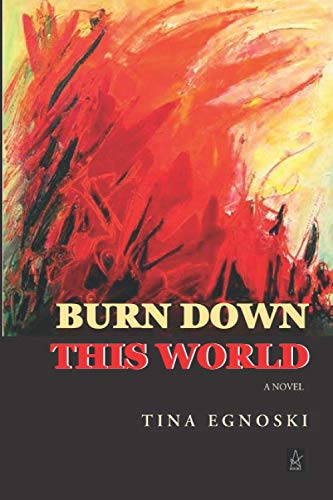
book cover of Burn Down This World by Tina Egnoski

Tina talked with Rose City Reader about Burn Down This World, what inspires her, and books she loves: 

How did you come to write Burn Down this World?

I blame it on Jane Fonda! Seriously. But first, let me step back and give you a quick overview of the book. It centers on Celeste and Reid Leahy, siblings raised in a military family who come-of-age in the South in the late 1960s, at the height of social change and national unrest over the Vietnam War. As students at the University of Florida in the early 1970s, they’re active in antiwar demonstrations. Those activities, which begin as peaceful and soon turn violent, eventually tear the sister and brother apart. The braided narrative tells the story of their history, as well as their reunion after years of estrangement.

The events of the novel were inspired by real anti-Vietnam War demonstrations that took place at the University of Florida in May of 1972. I’m an alumna of the university, although I didn’t attend during the time of the protests. I did, however, work for a time in the university archives.

Now, here’s the Jane Fonda connection. While working in the Photograph Collection, I found a picture of her giving an antiwar speech on campus in 1971. She’s at a podium on a wooden platform at Graham Pond. Students are crowding around the pond and, in the background, many are hanging out of dorm windows. I was fascinated by that picture. It stuck with me. Years later, when I decided to write about student activism, the picture was readily available online. I used it as a jumping-off point.

Jane Fonda giving anti-war speech at University of Florida in 1971


You describe the story as having a "braided narrative." Describe what you mean.

A braided narrative is typically a structure with two or more plotlines interwoven throughout story. This structure allowed me to move between what I call the “present tense” of the story—when Celeste and brother reunite in 1998—and the past tense of the story—the year they spent together in college. The timelines run parallel and each story informs the other. It can be a challenging structure—a bit of a balancing act. I had to give the reader just enough information in each storyline to keep her/him engaged without revealing too soon the twists-and-turns so pivotal to the plot.

Both story lines take place in Florida, one at the University of Florida in 1971-72 and one during the wildfires of 1998. What drew you to these settings for your novel?

Both settings are ripe for drama. While I wasn’t living in Florida in 1998, my mother was. I experience the wildfires through my daily telephone conversations with her and news reports she shared. She did finally have to evacuate. I was lucky to have a sister who lived close by could assist her with that process. It was a scary time, with so many lives, homes, and businesses danger.

In terms of the early 1970s, that time period was futile ground, and not only because of Vietnam War protests. So much was happening. At the University of Florida that academic year, the first African American student body president was elected and the student newspaper was kicked off campus for publishing a list of abortion clinics. I simply couldn’t write about it all. I tried, but the narrative became overrun with subplots. I had to narrow my focus to the protests.

Tell us why you gave Jim Morrison from the Doors a cameo in your new book.

Music is such a powerful connector of people. I knew early in the writing process that the music of the 60s and early 70s would be an important backdrop. The Rolling Stones, Creedence Clearwater Revival, Santana, The Doors: these were iconic rock bands of the time. You can’t think of Crosby, Stills, Nash & Young without thinking of the song “Ohio.”

As for Jim Morrison, well, he and I do share a birthplace. I couldn’t let that personal tidbit go unmentioned. Aside from that, I loved the idea that for Celeste music isn’t just background. Her love of The Doors brings her closer to her brother at an otherwise contentious time in their lives.

What is your background? How did it lead you to writing books?

I began writing at a young age. When I was in my teens, I wrote very, very, very bad love poetry. In high school, I appeared to be industriously taking notes while my teachers lectured, but really I was writing poetry. Everyone assumed I was a diligent student. In reality, I was a daydreamer, more interested in the language and structure of poetry than history or algebra or biology. I turned to fiction while in college.

I studying writing at Emerson College. It was in that program that I began the novel, but in a much different form. It was about Celeste and Reid and their estrangement, but I hadn’t yet figured out the cause. I set it aside for several years. In that time, I had a son and wrote three other books. Then, in 2013 I rediscovered that picture of Jane Fonda and knew I had found the heart of my story.

Who are your three (or four or five) favorite authors? Is your own writing influenced by the authors you read?

There are number of writers who have influenced my writing. In terms of classics, I love James Baldwin, the Brontë sisters, Zora Neale Hurston, Fitzgerald, Flaubert, Toni Morrison, and Edith Wharton. I also write short stories, so I admired short fiction writers like John Cheever, Lauren Groff, Flannery O’Conner, and Alice Monroe.

The one book I re-read every few years is Erica Jong’s Fear of Flying. The reason I love that book so much is because it was one of the first books I read that spoke frankly and from a feminist point of view about love, sex, family, family dysfunction, politics, psychotherapy, literature, and religion. In other words—it has it all!

What kind of books do you like to read? What are you reading now?

I love contemporary literary fiction. Authors I read and admire include Chimamanda Ngozi Adichie, Tracy Chevalier, Karen Joy Fowler, Ian McEwan, Claire Messud, and Zadie Smith.

Recently, I finished The Snakes by Sadie Jones and The Most Fun We Ever Had by Claire Lombardo. Two of the best books I read in 2019. Both are well-written, engaging, with meaty family dysfunction at the center. And what’s better in fiction than a messy family saga?

What is the most valuable advice you’ve been given as an author?

Perfection kills creativity. It’s been said many times, many ways, and it’s true. I have to battle perfectionism with every piece I write. I’ve also had to learn when to let go and send out a story. No creative endeavor is ever going to be perfect. When I deem it “good enough”—and that’s a tricky judgement call—I let it go by submitting it to a journal or press.

What’s next? Are you working on your next book?

I’m working on a collection of short fiction. The stories are historical in nature and focused on writers who have a connection to Florida. For instance, I read recently about the poet Edna St. Vincent Millay and a trip she took to South Florida in 1936. After checking into a hotel on Sanibel Island, she walked down to the beach. Just as she hit the sand, the hotel caught fire. She lost the only copy of a manuscript she was working on. She was able to rewrite the manuscript from memory and the book, Conversation at Midnight, was published in 1937. That’s the kind of fact I love to turn into fiction.


THANKS, TINA!

BURN DOWN THIS WORLD IS AVAILABLE ONLINE IN PAPERBACK AND E-BOOK.


Saturday, June 20, 2020

Writing Wild: Women Poets, Ramblers, and Mavericks Who Shape How We See the Natural World by Kathryn Aalto: REVIEW


I was lucky to grow up in a time and place that allowed little kids to roam. From the time I was five and "old enough" to walk to Kindergarten by myself, my parents considered me old enough to wander my neighborhood by myself. And I did. My memories of childhood summers in Nebraska are a series of explorations, alone or with a best friend, of back yards, the enormous neighborhood park, and, once we got bikes, nearby farms, woods, and creeks. I could spend a whole day alone with a book in the woods. Or spend several days in a row with a friend playing on the Platte River. We were ten.

Despite my early adventures, I didn't grow up to be a rugged outdoor enthusiast. These days, my idea of camping is a cabin at a National Park. But those childhood wanderings taught me a love for the natural world and instilled a yearning for exploration, often solitary. Kathryn Aalto's new book, Writing Wild: Women Poets, Ramblers, and Mavericks Who Shape How We See the Natural World, appeals to both parts of my character.

Aalto set out to rebalance the perception that nature writing is entirely the realm of white male authors. Writing Wild honors women writers whose work has helped readers connect to the natural world from the Romantic poets to today. The book is a collection of Aalto's biographical sketches of 25 influential women writers, drawing on excerpts of their work; select bibliographies; notes on other women poets and prose authors; and ancillary material, all beautifully illustrated by Gisela Goppel.

The book is not an anthology of nature writing; it is an introduction to women nature writers. A few are probably familiar, like Annie Dillard or poet Mary Oliver. Others are new to me and likely new to most readers. The book, of course, does not include every woman who has written about nature. As Aalto described:

Think of these pages as a glance backwards and a look forward, as well as a celebration of women who bring a different dimension to nature writing, rather than a compendium of every woman who ever wrote about the natural world.

Following each five- to seven-page biography, Aalto inserts either the featured author's bibliography or information about three related authors. For example, after the opening essay on Dorothy Wordsworth, Aalto includes a paragraph each on three other women writers under "More About Mountains": Dorothy Pilley, Helen Mort, and Cheryl Strayed. After the essay on Amy Liptrot, she offers three suggestions for "More Recovery Narratives": Sue Hubbell, Olivia Laing, and Jessica Lee.

You can see from these examples that Aalto broadly defines "nature writing." She includes writers of natural history, environmental philosophy, country life, scientific writing, gardening, poetry, memoir, fiction, and meditation. The writing of the women featured spans more than 200 years and many genres, not all easily categorized.

Read and be inspired. I was.


NOTES

The 25 women featured in Katheryn Aalto's Writing Wild are:

Dorothy Wordsworth

Susan Fenimore Cooper

Gene Stratton-Porter

Mary Austin

Vita Sackville-West

Nan Sheppard

Rachel Carson

Mary Oliver

Carolyn Merchant

Annie Dillard

Gretel Ehrlich

Leslie Marmon Silko

Diane Ackerman

Robin Wall Kimmerer

Lauret Savoy

Rebecca Solnit

Kathleen Jamie

Carolyn Finney

Helen MacDonald

Saci Lloyd

Andrea Wulf

Camille T. Dungy

Elena Passarello

Amy Liptrot

Elizabeth Rush

Thursday, June 18, 2020

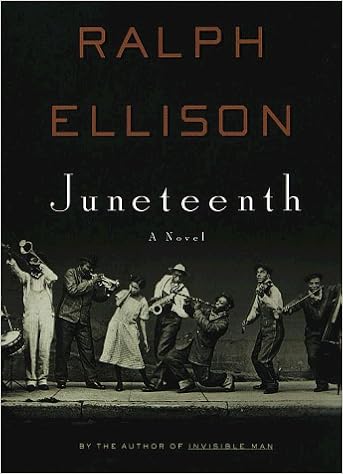
Juneteenth by Ralph Ellison - BOOK BEGINNING


It's time for Book Beginnings on Fridays! Time to share the opening sentence (or so) of the book you are featuring this week.

Post a link to your post below. Or put your book beginning in a comment. You can also participate on social media -- just leave a comment to tell us where to find you.

If you post or crosspost on social media, please use the #bookbeginnings hashtag so we can find each other.

MY BOOK BEGINNING


Two days before the shooting a chartered planeload of Southern Negroes swooped down upon the District of Columbia and attempted to see the Senator.

-- Juneteenth by Ralph Ellison.

JUNETEENTH, THE BOOK

Juneteenth is set in 1950s and is the story Adam Sunraider, a race-baiting senator from a New England state. When he is wounded in an assassination attempt, he shocks all who know him by asking for Hickman, an elderly black minister. The story unfolds that Sunraider, known as a child by the name Bliss, was raised by Reverend Hickman in a joyful black Baptist community steeped in religion an music, a community much like the one Ellison grew up in himself.

Ralph Ellison is best known for his novel Invisible Man, which won the National Book Award in 1952. He started writing Juneteenth in 1954, bit it was still incomplete at his death in 1994 and was published posthumously in 1999. His wife Fanny worked with his literary executor John Callahan to edit the book in preparation for its publication. Callahan was a friend of Ellison's, a leading scholar of his work, and my favorite college professor in my undergraduate days.

JUNETEENTH, THE HOLIDAY

Juneteenth, the holiday, is getting a lot of attention this year. So I thought Ralph Ellison's book of the same name would be a good choice to highlight on June 19, the date Juneteenth is celebrated.

Juneteenth is an unofficial national holiday and an official state holiday in Texas. It marks the date in 1865 that that the Union Army arrived in Galveston, Texas to read the official order proclaiming that slaves in Texas had been freed. President Lincoln had signed the Emancipation Proclamation almost two and a half years earlier, and the American Civil War had ended in April of 1865, but it took a long time for the news to get to Texas.

YOUR BOOK BEGINNING

Mister Linky's Magical Widgets -- Thumb-Linky widget will appear right here!
This preview will disappear when the widget is displayed on your site.
If this widget does not appear, click here to display it.

THE FRIDAY 56

Freda at Freda's Voice hosts The Friday 56 where participants share a two-sentence teaser from page 56 of their current book. Please visit her blog to link your post and find other participants.

MY FRIDAY 56
They relaxed in their chairs, the whiskey between them. Only the air-conditioning unit hummed below their voices. 
Happy Father's Day to all of you celebrating with your dads this weekend!

Monday, June 15, 2020

The Spiral Shell: A French Village Reveals Its Secrets of Jewish Resistance in World War II by Sandell Morse - MAILBOX MONDAY

One book made it's way to my house last week. How about you?


The Spiral Shell: A French Village Reveals Its Secrets of Jewish Resistance in World War II by Sandell Morse (from Schaffner Press).

When she was 71, Morse got a fellowship to travel to France to write a memoir about her family. Over the next five years, she dug into the history of the village of Auvillar, got to know its people,  and learned about their role in the French resistance during WWII.

Her book, The Spiral Shell, is a memoir about her family history, her reconnection with her Jewish heritage, and the story of what she learned about Auvillar's past.

PUBLISHER'S DESCRIPTION

For author Sandell Morse what started out as a research project became an unexpected rediscovery of identity and faith. In this haunting memoir, she uncovers long silenced stories of bravery and resistance among the civilians of a small town in France during WWII, and in turn finds deeper meaning and understanding of her own Jewish heritage. After the war, as the author describes, “truth went underground” and the stories of those who resisted and escaped were left buried and unheard. Morse gradually befriended and gained the trust of several individuals who shared their stories of bravery and resistance during that harrowing time. In a narrative that unfolds and overlaps both past and present, the author in turn discovers truths about her own life and Jewish history, denied her in childhood, and that she now more fully comprehends in light of the brave and selfless actions of those who chose to fight against bigotry, oppression, and genocide.


MAILBOX MONDAY

Leslie of Under My Apple Tree, Serena of Savvy Verse & Wit, and Martha of Reviews by Martha's Bookshelf host Mailbox Monday every week where participants share the books they got the week before. Please visit and play along!

Thursday, June 11, 2020

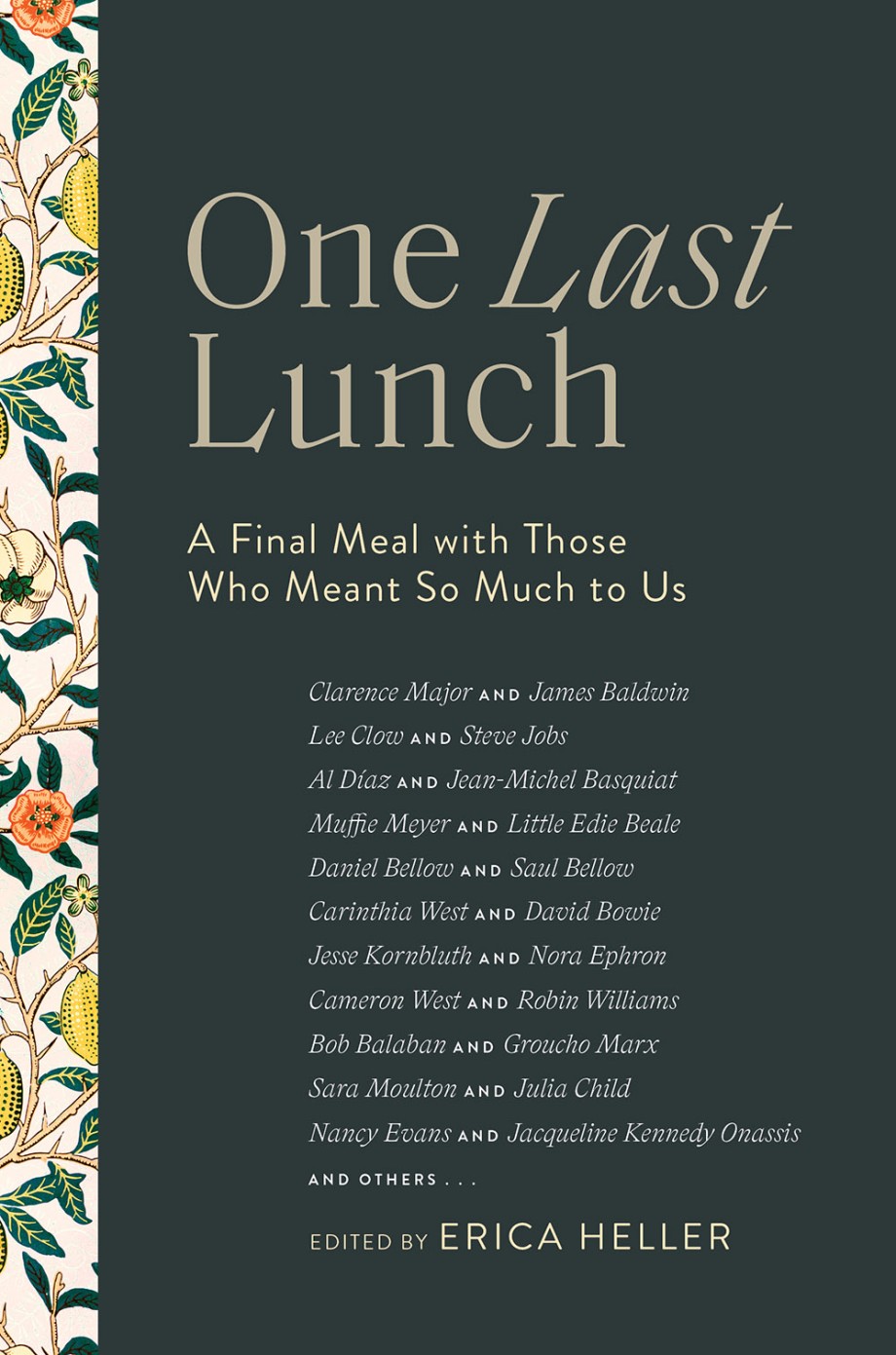
One Last Lunch: A Final Meal with Those Who Meant So Much to Us, edited by Erica Heller: Book Beginning


Another Friday is here and another opportunity to share the first sentence (or so) of the books we are reading.

What book has captured your attention this week? Please share the opening lines on your own blog or social media. Add a link to your post below. If there is no link, leave a comment to let others know where to find your post.

Of course, you can simply leave your Book Beginning in a comment below. Please include the title and author.

Please use the hashtag #bookbeginnings so we can find each other on social media.

MY BOOK BEGINNING


To imagine lunch now with my father, Joe Heller, it would have to be in spring.

-- One Last Lunch: A Final Meal with Those Who Meant So Much to Us, edited by Erica Heller. This wonderful collection of essays is available now from Abrams Books.

Erica Heller, a writer and the daughter of Joseph Heller, the author of Catch-22, gathered essays from 49 people all imagining a final meal with a loved one who has passed away. Contributors include children, friends, acquaintances, professional colleagues of writers, actors, and other well known personalities, such as Julia Child, Paul Newman, Prince, and Nora Ephron.

You can read my recent interview with Erica Heller about One Last Lunch here.

YOUR BOOK BEGINNING

Mister Linky's Magical Widgets -- Thumb-Linky widget will appear right here!
This preview will disappear when the widget is displayed on your site.
If this widget does not appear, click here to display it.

FRIDAY 56

Freda at Freda's Voice hosts The Friday 56, a perfect tie in with Book Beginnings. Join her to share a two-sentence teaser from the book you are featuring this week.


MY FRIDAY 56

We lolled on the divans like pashas, while George brought us coffee on a brass tray and sat down to fill us in on our lunch. It turned out that Burroughs was withdrawing from a heavy heroin habit and was being looked after by his friends, among them Allen Ginsberg and Peter Orlovsky, all of whom were living in a nearby ratbag hotel on rue Git-le-Coeur.

From the essay by Aviva Layton imagining a last lunch with William Burroughs. That is a serendipitous Friday 56 for me because I just this morning finished reading Burroughs' magnum opus, Naked Lunch. I read Naked Lunch as one of my picks for my 2020 Reading Classic Books Challenge -- my LGBT pick since June is Pride Month.

Sometimes you just find Storyline Serendipity!


Monday, June 8, 2020

Billy (the Kid), The Book of V., and Straight White Male: Mailbox Monday


Did you get any new books last week? It was a tumultuous week. Some of us were peeking out from our corona lockdowns for the first time. Others were taking to the streets in protest. Others were still under stay at home orders, following events online or staying as offline as possible.

I can understand pretty much every reaction to current events. I don't agree with all reactions or all events, but I try to understand. And then I mull. I did a lot of mulling last week.

And I acquired a few books, as always happens. Book shopping is my retail therapy. And I get a book here and there from authors or publishers, as I did last week. So there are always books wandering my way. Thank goodness.

Last week, three new books came into my house. Do any look good to you? How about you? What new books came your way last week?


Billy (the Kid) by Peter Meech. This alternate history imagines that Billy the Kid survived Pat Garrett's bullet and, in 1932, is a retired dentist living in Pueblo, Colorado. But when bootleggers start a war, the once-famous outlaw finds himself in the middle of the action, and fighting for his last chance at romance to boot.


The Book of V. by Anna Solomon. This is my book club pick for June. We've been meeting by Zoom, which isn't as fun as meeting in person, but it isn't bad. I don't miss not sitting in Portland traffic for an hour trying to get across town by 6:00. And no one has to worry about driving home after drinking wine. Not that our book club ladies drink wine. Yeah, right!


Straight White Male by John Niven. Oh my! OK, so I ordered this in May, before Pride Month and protests made it probably the least popular book of last week. I didn't dare post it on social media for fear of being banned for life.

I ordered it when I saw it had been short listed for the Bollinger Everyman Wodehouse Prize for best comic literature. It lost out to Lost for Words by Edward St. Aubyn, which may be the funniest book I've ever read, so if this came close, I had to have it.


MAILBOX MONDAY

Leslie of Under My Apple Tree, Serena of Savvy Verse & Wit, and Martha of Reviews by Martha's Bookshelf host Mailbox Monday every week where participants share the books they got the week before. Please visit and play along!

Thursday, June 4, 2020

Empires by John Balaban and Creole Son by E. Kay Trimberger: Book Beginnings


It's Friday, time for Book Beginnings! Time to share the opening sentence (or so) of the book you are featuring this week. What are you reading? What are you planning to read this weekend? What books are sitting on your desk that you have aspirations to read? Hmmmmm . . . . That hits close to home!

Please share your posts with a link below. Or play along on social media and leave a comment with your opening lines or a way to find you.

If you post or share on social media, please use the #BookBeginnings hashtag so we can enjoy each other's company.

Yes, I have several books stacked on my desk that look great and I'd like to spend some time with them. I hope this weekend will give me a chance. Here are two of them:

MY BOOK BEGINNINGS


After most of the bodies were hauled away
and while the FBI and Fire Department and NYPD
were still haggling about who was in charge, as smoke cleared,
the figures in Tyvek suits came, gloved, gowned, masked,
ghostly figures searching rubble for pieces of people,
bagging, then sending the separate and comingled remains
to the temporary morgue set up on site.

-- from "A Finger," the first poem in  Empires by John Balaban (Copper Canyon Press).

This eighth book of poetry from Balaban looks at key moments in history when culture shifts and imperial eras come to an end. Viking traders, Washington crossing the Delaware, a Romanian Jew waiting for the Nazis, and 9/11, all inspire Balaban's verse.


Mine is not the story of how an adopted son finds his birth parents and turns his life around.
-- Creole Son: An Adoptive Mother Untangles Nature and Nurture by E. Kay Trimberger (LSU Press). In 1981, Kay Trimberger became the single white mother of an adopted biracial son she raised in Berkeley, California. After watching him grow into a troubled youth struggling with addiction, Trimberger helped Marc reconnect with his biological Cajun and Creole biological relatives.

Trimberger's new memoir explores how biological heritage and the environment adopted children are raised in interact to shape adult outcomes. She hopes her book will provide support to all parents with troubled offspring. She also suggests a new model for adoption that creates an extended, integrated family of both biological and adoptive relatives.


YOUR BOOK BEGINNINGS


Mister Linky's Magical Widgets -- Thumb-Linky widget will appear right here!
This preview will disappear when the widget is displayed on your site.
If this widget does not appear, click here to display it.


THE FRIDAY 56

Freda's Voice hosts The Friday 56, which is a natural tie in with this event. The idea is to post a teaser from page 56 of the book you are reading and share a link to your post. Find details and the Linky for your Friday 56 post on Freda’s Voice.

MY FRIDAY 56 TEASERS

FROM "BACK THEN" IN EMPIRES
One evening he spotted a mule dear
ambling up a hillside path
and he followed it to higher ground
as a huge moon rose off the ridge
and he caught the scent of pine needles.
So he kept on until dark, reaching a ledge
overlooking Phantom Lake and the ghost town.

FROM CREOLE SON
Our success at building a community sustained the household during these childless years. Our home hosted political meetings, study groups, consciousness-raising sessions, and book talks on feminist and progressive issues.


Monday, June 1, 2020

Books in the Attic: Mailbox Monday


I discovered a forgotten box of books in the attic!

Maybe this isn't exactly an adventure. It's not like I found a matching set of first edition Jane Austen or anything. And it's not like my attic is the romantic, trunk-filled garret of children's books.

My attic is really the top floor of my house, where my home office is. But confessing that I found a box of books I bought at the Friends of the Library store last December and then forgot about in holiday hubbub doesn't sound very exciting. It sounds like real life - messy and disorganized.

These are my "new to me all over again" books in the attic:

French Lessons by Ellen Sussman. The novel takes place in one day, as three Americans spend the day in Paris with their French tutors. Sounds like an interesting premise.

Mrs. Queen Takes the Train by William Kuhn. A novel that imagines what would happen if the Queen went on a little trip by herself.

A Pig in Provence by Georgeanne Brennan. An ex-pat memoir by a woman who moved to the south of France in the late 1970s with her husband and young child.

The White Russian by Tom Bradby. A murder mystery set in St. Petersburg in 1917, the last days of the tsars.

Radiant Angel by Nelson DeMille, the 7th book in the John Corey series, although I can't keep them straight.

The Bookman's Tale by Charlie Lovett. Historical fiction about an antiquarian bookseller searching for the true identity of Shakespeare.

What looks good? What books did you get, or find, last week?

There were other books in the box. But they aren't for me. I bought them for my mom and my sister, intending to give them to them for Christmas, I'm sure. My sister's birthday is this week, so now she will get them for her birthday instead. We are planning to see each other for a six feet a-PARTY, since Portland is still shut down for coronavirus.


Leslie of Under My Apple Tree, Serena of Savvy Verse & Wit, and Martha of Reviews by Martha's Bookshelf host Mailbox Monday, a weekly "show & tell" blog event where participants share the books they acquired the week before. Visit the Mailbox Monday website to find links to all the participants' posts.


Saturday, May 30, 2020

Best 99 Novels in English Since 1939 (to 1984), According to Anthony Burgess -- BOOK LIST


Anthony Burgess made a list of the Best 99 Novels in English. At least, they were the Best 99 Novels in English between 1939 and 1984, according to him.

Burgess was entitled to offer an opinion with some authority. Burgess was a British author who wrote 33 novels as well as poetry, biography, criticism, and other works. He was also a journalist, linguist, and music composer. He died in 1993. He is best known for his dystopian satire, A Clockwork Orange, an excellent book I put off reading for too long because the movie was so disturbing.

In 1984, Burgess published a book he called 99 Novels: The Best in English Since 1939 (reviewed here). The time span of 1939 to 1984 is described as "a period that encompasses the start of a world war and ends with the nonfulfillment of Orwell's nightmare."

His book included mini-reviews of the 99 novels (some are sets or series), which he chose on the basis of personal preference. Burgess described his process and his choices like this:
In my time, I have read a lot of novels in the way of duty; I have read a great number for pleasure as well. The 99 novels I have chosen, I have chosen with some, though not with total, confidence. I have concentrated on works which have brought something new – in technique or view of the world – to the form.

If there is a great deal of known excellence not represented here, that is because 99 is a comparatively low number. The reader can decide on his own hundredth. He may even choose one of my own novels.
The Anthony Burgess list of 99 Best Novels and Erica Jong's list of Top 20th Century Novels by Women are my go to lists when I'm looking for something good to read. There is some crossover with other Must Read lists, but a lot of originality. There are many authors I tried and books I read only because they were on the Anthony Burgess list and they are now all-time favorites.

Also, I would include Burgess's Earthly Powers book as the 100th. I think it deserves a spot on a top 100 midcentury novel list.

Here is the list, in the same chronological order by publication date that Burgess lists them in his book, with notes if I've read the book, it is on my TBR shelf, or if it is available in an audiobook from my library. So far, I've read 58 of the books on this list. There are a few I will most likely never read.

Party Going, Henry Green FINISHED

After Many a Summer Dies the Swan, Aldous Huxley FINISHED

Finnegans Wake, James Joyce (discussed hereFINISHED

At Swim-Two-Birds, Flann O'Brien TBR SHELF

The Power and the Glory, Graham Greene FINISHED

For Whom the Bell Tolls, Ernest Hemingway FINISHED

Strangers and Brothers, C. P. Snow (an 11-novel series George Passant, reviewed here FINISHEDA Time of Hope, reviewed here FINISHEDThe Consciousness of the Rich FINISHEDThe Light and the Dark FINISHEDThe Masters FINISHED; The New Men FINISHED; Homecomings TBR SHELF; The Affair TBR SHELF; Corridors of Power TBR SHELF; The Sleep of Reason TBR SHELF; Last Things TBR SHELF)

The Aerodrome, Rex Warner TBR SHELF

The Horse's Mouth, Joyce Cary FINISHED

The Razor's Edge, Somerset Maugham (reviewed hereFINISHED

Brideshead Revisited, Evelyn Waugh FINISHED

Titus Groan, Mervyn Peake (reviewed hereFINISHED

The Victim, Saul Bellow FINISHED

Under the Volcano, Malcolm Lowry FINISHED

The Heart of the Matter, Graham Greene FINISHED

Ape and Essence, Aldous Huxley FINISHED

The Naked and the Dead, Norman Mailer (reviewed hereFINISHED

No Highway, Nevil Shute

The Heat of the Day, Elizabeth Bowen FINISHED

Nineteen Eighty-Four, George Orwell FINISHED

The Body, William Sansom

Scenes from Provincial Life, William Cooper TBR SHELF

The Disenchanted, Budd Schulberg

A Dance to the Music of Time, Anthony Powell (a 12-novel series; my desert island pick; discussed hereFINISHED

The Catcher in the Rye, J. D. Salinger FINISHED

A Chronicle of Ancient Sunlight, Henry Williamson (a 15-book series, not easy to find, and only gets Burgess's halfhearted endorsement)

The Caine Mutiny, Herman Wouk TBR SHELF

Invisible Man, Ralph Ellison FINISHED

The Old Man and the Sea, Ernest Hemingway FINISHED

The Groves of Academe, Mary McCarthy (one of my favorite books ever; reviewed hereFINISHED

Wise Blood, Flannery O'Connor FINISHED

Sword of Honour, Evelyn Waugh (a trilogy)  FINISHED

The Long Goodbye, Raymond Chandler FINISHED

Lucky Jim, Kingsley Amis (I love this one) FINISHED TWICE

Room at the Top, John Braine FINISHED

The Alexandria Quartet, Lawrence Durrell FINISHED

The London Novels, Colin MacInnes (a trilogy) TBR SHELF

The Assistant, Bernard Malamud (reviewed hereFINISHED

The Bell, Iris Murdoch FINISHED

Saturday Night and Sunday Morning, Alan Sillitoe (I was supposed to read it in college but was hungover - the irony) TBR SHELF

The Once and Future King, T. H. White TBR SHELF

The Mansion, William Faulkner

Goldfinger, Ian Fleming FINISHED

Facial Justice, L. P. Hartley TBR SHELF

The Balkans Trilogy, Olivia Manning TBR SHELF

The Mighty and Their Fall, Ivy Compton-Burnett

Catch-22, Joseph Heller FINISHED

The Fox in the Attic, Richard Hughes TBR SHELF

Riders in the Chariot, Patrick White TBR SHELF

The Old Men at the Zoo, Angus Wilson (my favorite unknown novel) FINISHED

Another Country, James Baldwin ON OVERDRIVE

Error of Judgment, Pamela Hansford Johnson TBR SHELF

Island, Aldous Huxley TBR SHELF

The Golden Notebook, Doris Lessing FINISHED

Pale Fire, Vladimir Nabokov (brilliant) FINISHED

The Girls of Slender Means, Muriel Spark (my favorite Spark) FINISHED

The Spire, William Golding FINISHED

Heartland, Wilson Harris TBR SHELF

A Single Man, Christopher Isherwood (reviewed hereFINISHED

Defense, Vladimir Nabokov (also called The Luzhin Defense)

Late Call, Angus Wilson TBR SHELF

The Lockwood Concern, John O'Hara TBR SHELF

The Mandelbaum Gate, Muriel Spark (reviewed hereFINISHED

A Man of the People, Chinua Achebe

The Anti-Death League, Kingsley Amis (reviewed hereFINISHED

Giles Goat-Boy, John Barth TBR SHELF

The Late Bourgeois World, Nadine Gordimer

The Last Gentleman, Walker Percy FINISHED

The Vendor of Sweets, R. K. Narayan TBR SHELF

Image Men, J. B. Priestley (two volumes)

Cocksure, Mordecai Richler TBR SHELF

Pavane, Keith Roberts TBR SHELF

The French Lieutenant's Woman, John Fowles FINISHED

Portnoy's Complaint, Philip Roth FINISHED

Bomber, Len Deighton

Sweet Dreams, Michael Frayn TBR SHELF

Gravity's Rainbow, Thomas Pynchon ON OVERDRIVE

Humboldt's Gift, Saul Bellow FINISHED

The History Man, Malcolm Bradbury FINISHED

The Doctor's Wife, Brian Moore TBR SHELF

Falstaff, Robert Nye TBR SHELF

How to Save Your Own Life, Erica Jong (reviewed here; I love all the Isadora Wing books) FINISHED

Farewell Companions, James Plunkett TBR SHELF

Staying On, Paul Scott (Booker Prize winnerFINISHED

The Coup, John Updike TBR SHELF

The Unlimited Dream Company, J. G. Ballard

Dubin's Lives, Bernard Malamud TBR SHELF

A Bend in the River, V. S. Naipaul FINISHED

Sophie's Choice, William Stryon (reviewed hereFINISHED

Life in the West, Brian Aldiss

Riddley Walker, Russell Hoban TBR SHELF

How Far Can You Go?, David Lodge (reviewed here) (one of my favorites) FINISHED

A Confederacy of Dunces, John Kennedy Toole FINISHED

Lanark, Alasdair Gray

Darconville's Cat, Alexander Theroux

The Mosquito Coast, Paul Theroux FINISHED

Creation, Gore Vidal

The Rebel Angels, Robertson Davies (reviewed here; my love of Davies started with this one) FINISHED

Ancient Evenings, Norman Mailer TBR SHELF


NOTES

Updated July 3, 2025.


Thursday, May 28, 2020

Book Beginning: The Narcissism of Small Things by Michael Zadoorian


Another week and another chance to share our Book Beginnings! Please share the opening sentence (or so) of the book you are featuring this week.

Leave a link to your post with the linky widget below. Or play along by posting your opening lines in the comments. You can also participate on social media and leave a comment letting us know where to find you.

If you post anything on social media, please use the hashtag #BookBeginnings so we can find each other.

Read more about Book Beginnings here.

MY BOOK BEGINNING


"Are we weird?"
Joe closed his eyes and quietly sighed. Not another on of these conversations.

The Narcissism of Small Things by Michael Zadoorian, new from Akashic Books.

I don't usually include more than the very first sentence, but I like the way this beginning rolls out.

Everything about this book appeals to me. I love the juicy cover, the retro font, the indecipherable title that is so fun to say. And mostly I am curious to read the story about an aging hipster and his long-term girlfriend in Detroit in 2009.

The jacket copy describes the book like this:

Joe Keen and Ana Urbanek have been a couple for a long time, with all the requisite lulls and temptations, yet they remain unmarried and without children, contrary to their Midwestern values (and parents' wishes). Now on the cusp of forty, they are both working at jobs that they're not even sure they believe in anymore, but with significantly varying returns. Ana is successful, Joe is floundering--both in limbo, caught somewhere between mainstream and alternative culture, sincerity and irony, achievement and arrested development.
What do you think? Does The Narcissism of Small Differences appeal to you?

YOUR BOOK BEGINNING

Please be patient with the thumbnail Linky. Once you click Done, it really is done, even if you don't see your Linky. Reload the page and it should be there.

Mister Linky's Magical Widgets -- Thumb-Linky widget will appear right here!
This preview will disappear when the widget is displayed on your site.
If this widget does not appear, click here to display it.


TIE IN: The Friday 56 hosted by Freda's Voice is a natural tie in with Book Beginnings. Post a teaser from page 56 of your book, or 56% of the way through an ebook or audiobook. Find details and the Linky for your Friday 56 post on Freda’s Voice.

MY FRIDAY 56

Incredulous, Ana looked at her. "What? You know what I'm going to say?"


Thursday, May 21, 2020

Book Beginnings: Burn Down this World and Her Sister's Tattoo


Please join me to share your book beginnings on Fridays and join Freda on Freda's Voice to share a teaser on The Friday 56. Read details about both events here.

I have a Book Beginnings twofer this week because these two new books share a theme. I think it is cool how they dovetail. Both are sibling stories with a past story line about Vietnam War protests and a more contemporary story line.

Reading them together is a particularly rich experience, a way to immerse yourself in the Vietnam war period by looking at the similar stories told in different ways.


It was the summer of fire, 1998. The east coast of Florida burned.

Burn Down this World by Tina Egnoski (Adelaide Books). The two stories in Burn Down this World involve a sister and brother who both protested the Vietnam war at the University of Florida but then parted ways. The other part of the story takes place during the 1998 Florida wildfires when the siblings reconnect and try to reconcile -- with each other and their past.


The August air was charged with whiffs of marijuana and patchouli oil, the sulfur stench of asphalt softening in the heat, and the distant admonition of tear gas.

Her Sister's Tattoo by Ellen Meeropol (Red Hen Press). Egnoski uses a "braided narrative" format, going back and forth between events in 1972 and 1998. Meeropol moves chronologically, starting with two sisters joining in anti-war protests in Detroit in 1968, following events through 1980, then jumping to a final section set in 2003.

YOUR BOOK BEGINNING

Mister Linky's Magical Widgets -- Thumb-Linky widget will appear right here!
This preview will disappear when the widget is displayed on your site.
If this widget does not appear, click here to display it.


MY FRIDAY 56

From Burn Down this World:

Dad came into the kitchen. He was in his uniform, ready to leave for work.

From Her Sister's Tattoo:

Under the table, he rested his hand on Rosa's thigh. "Conspiracy is what they charge when they really want to nail you big time."


Wednesday, May 20, 2020

Review: Generation Share: The Change Makers Building the Sharing Economy by Benita Matofska and Sophie Sheinwald


The "sharing economy" is an economic system built around sharing human and physical resources. Author and sharing economy advocate Benita Matofska also sees the sharing economy as a mind set and a way of life, where we share available resources, however we can. Her book, Generation Share: The Change Makers Building the Sharing Economy, features stunning photographs by Sophie Sheinwald and interviews highlighting 200 case studies of an emerging, worldwide sharing movement.

The book is a collection of inspiring, positive stories of sharing and change-making. Participants were asked simply, "What does Sharing mean to you?" The result is an array of perspectives that demonstrate a broad spectrum of the sharing economy. Matofska organized the stories into different demographic categories: age, gender, urban, rural, economic, cultural, disability, and geography. The stories come from 30 countries and cover a variety of sharing initiatives.

Some examples of the stories are:
  • A Share Shed in Devon, UK where people can check out tools and equipment like borrowing a book from a library.
  • A kibbutz in Israel where 350 people live communally.
  • A tour company in India that specializes in organizing trips to rural villages so urban and rural Indians can share each other's cultures.
  • A woman who started an online sharing platform to help people find sharing opportunities.

Matofska's target audience for Generation Share was young, millennial, educated, socially conscious, English speakers. But with its striking visuals and compelling stories, the book has broad appeal for anyone interested in learning more about the sharing economy.

The book is produced from 100% waste materials. Proceeds from the sale of each copy of Generation Share go to help educate girls in Mumbai and to plant trees, so readers "share" with each purchase.


NOTES

Benita Matofska talked with Rose City Reader about the sharing economy, Generation Share, and COVID-19. Read the interview here.


Tuesday, May 19, 2020

Author Interview: Stanley Flink, Due Diligence and the News


Stanley E. Flink had a long career in journalism before teaching "Ethics and the Media" to journalism students for over 25 years. His new book Due Diligence and the News: Searching for a Moral Compass in the Digital Age is a collection of essays drawn from his lectures. The book is timely, readable, and captivating for any newshound, whether journalist or news junky.


Stanley Flink talked with Rose City Reader about Due Diligence and the News, social media, journalism, and ethics:

How did your book, Due Diligence and the News, come about?

After teaching a seminar called “Ethics and the Media” for more than 25 years, beginning at New York University Journalism School and then for many years a Yale undergraduate course, I encountered a great paucity of knowledge about American history---particularly in the Constitutional rights area. For example, after engaging with hundreds of students, it was clear that only a handful knew how many rights there were in the First Amendment. Even the brightest young people were unable to describe the major Supreme Court cases involving freedom of the press. There were exceptions, of course, but very few.

When I retired and came to the lifecare institution I live in now, they asked me to adapt my seminar for the people who were my friends and neighbors. I did so with some reluctance because I didn’t believe there would be much interest. I began lecturing once a week and did so for about a year before settling on every other week. (Let’s face it, I am, after all, retired.) In any event, what emerged was a great deal of interest and remarkable attentiveness. Forty to fifty people showed up for more than four years of these lectures, and many of them wanted to discuss the ideas in separate meetings. 

That’s when I decided to write the book. I wanted it to be a kind of portrait of freedom of expression that covered history, legal conflicts, technology, and the future. I selected what I believed to be the most important events, issues, and key figures in the evolution of free expression in America. Surely there are other sources and examples, but I am content with my selections. I hope these essays, taken together, will provoke a greater interest among the readers in the importance of free expression, and at least a useful understanding of how that presence developed in our democratic system.

What is your work background and how did it lead to your writing essays on the relationship between the press and American civic life?

My background is largely in the field of journalism. I was the editor of my high school newspaper, and in college I was a columnist. Towards the end of World War II I spent a little time working for Yank magazine, and immediately after graduation, in 1948, I went to work for Life magazine. When television news matured and began to assume a major role, I joined NBC News and later CBS. 

Throughout my experience in each of these places, I became increasingly aware of the ethical issues that inevitably arise in reporting the news. I talked about it a lot with my colleagues and read many of the books that were being published each year on the subject of a responsible press. I wrote one of those books myself, called Sentinel Under Siege, which was published in 1999. Before that, in the 1980s, I had been asked to teach a seminar at NYU Journalism School (mentioned earlier). That was the beginning of an interesting focus ever since.

Who is the audience for your book?

I envisioned high school seniors and college freshmen, but I’ve been surprised at how many people of all ages have written me about the book.

What do you hope people will learn or think about when they read your book?

I hope they will become sharply aware of the significant role that a free and responsible press has in our society. I would also hope they will think more urgently about truth and trust in a democracy. The technology has changed the environment in which information and news are conveyed so fundamentally that journalism has to devise new methods and styles of expression.

How do you see social media changing traditional media when it comes to delivering and consumption of straight news?

I see social media as a great threat to the respect for truth. I chose the title Due Diligence and the News because I realized that there was no easy formula for combating the effects of falsity and deliberate fabrication that can manifest themselves on social media platforms, except the careful weighing of fact-based evidence that we call “due diligence.” The enormous size of the circulations of social media on various platforms, and their ability to target audiences, provides limitless opportunities for deception and manipulation. There is no way to identify carefully constructed falsification and distortion of news material except by the most thorough research and comparison and fact-checking.

The major platforms like Facebook can reach millions of people repetitively and insidiously overnight. Obviously, they influence all kinds of activities including voting patterns. The problem in finding a remedy to fight deliberate falsification and distortion is to avoid limiting freedom of expression in the process. I came to the conclusion that there has to be a reevaluation of the First Amendment which will produce some discipline over deliberate misuse of a free press. The damage that can be done by these massive circulations online---often politically targeted---is so great that the means of preventing or managing their use becomes essential.

This dilemma may require legislative and regulatory innovations, but if it is left to the voluntary actions of the corporations that own the platforms, I fear profit will overwhelm principle. Confronting this problem is probably the most difficult and significant challenge the modern news media faces. Public affairs news reporting is vital to the survival of democracy and cannot be left, in my view, to vague assurances of voluntary action.

 I do believe that the two most important factors beyond corporate control, are due diligence and education. Quite a few states have already mandated public school curriculums to include courses in “media literacy.” These programs examine and help to reveal the issues of falsification and misuse. They are reportedly doing well and deserve our support. Education in general deserves our support. There remains the reality that no matter what actions are taken, people who want to use the news media to serve their special interests will find ways that may escape detection. The question then becomes for how long, how deeply, and what corrections are possible.

What is the role of the public, the consumer, in watchdogging the press?

The public has a major responsibility which is, as already cited in these comments, due diligence. The public, however, needs help, which should come from education, fact-checking services, and individual voices of conscience and ethical perception. These voices might be teachers, columnists, writers or philosophers---sometimes called public intellectuals. The single most important factor, in my view, is greater awareness of the need for truth. If we do not respect truth, we will never be able to engender trust. And if we cannot trust our leaders and our press, we cannot sustain democracy.

Can you recommend additional books or resources for people who want to learn more about media and the ethical issues you raised in your book?

I will limit myself in this answer to a few of the books I find the most useful: Alexis de Tocqueville’s Democracy in America; John Stuart Mill’s essay On Liberty; Walter Lippmann’s books, especially Public Opinion; Alexander Bickel’s The Morality of Consent; Richard Clurman’s Beyond Malice; Eugene Goodwin’s Groping for Ethics in Journalism; Edmund Lambeth’s Committed Journalism: An Ethic for the Profession; and Gordon Wood’s The Creation of the American Republic.

What did you learn from writing your book that most surprised you?

The strong connectedness of ideas and commitment to freedom of expression that flows through the history, the philosophy and the education of America since the founding. And, all along the way, the inescapable fact that what is in the public interest doesn’t always interest the public.

What’s next for you?

I will be 96 years old in less than a month---May 28---and I’m still learning.

Thanks Stan!

Due Diligence and the News is available online, like all books these days.

And see Stan Flink on YouTube, discussing his book Due Diligence and the News.


Related Posts Plugin for WordPress, Blogger...